Critical response
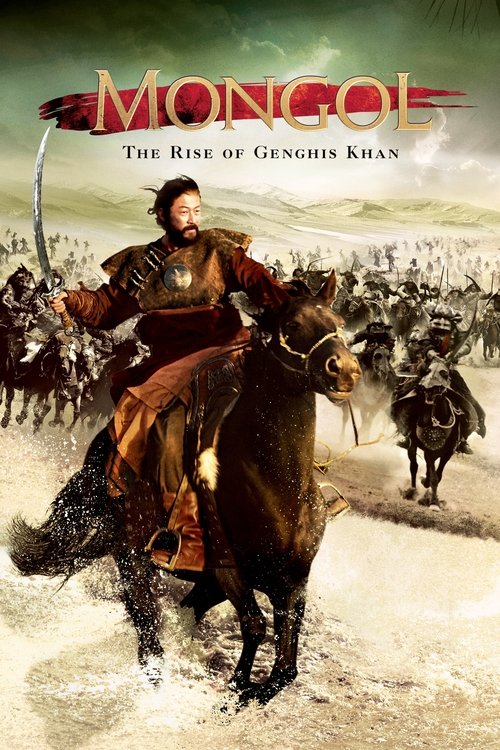
Among mainstream critics in the U.S., the film received mostly positive reviews. Rotten Tomatoes reported that 86% of 102 sampled critics gave the film a positive review, with an average score of 7.10 out of 10. The site's critics' consensus reads: "The sweeping Mongol mixes romance, family drama, and enough flesh-ripping battle scenes to make sense of Ghenghis Khan's legendary stature." At Metacritic, which assigns a weighted average out of 100 to critics' reviews, the film received a score of 74 based on 27 reviews, indicating "Generally favorable reviews". However, the film was criticized in Mongolia for factual errors and historical inaccuracies.
Claudia Puig of USA Today said the film "has a visceral energy with powerful battle sequences and also scenes of striking and serene physical beauty." Noting a flaw, she did comment that Mongol might have included "one battle too many." Although overall, she concluded the film was "an exotic saga that compels, moves and envelops us with its grand and captivating story."
Jonathan Kiefer, writing in the Sacramento News & Review, said "At once sweeping and intimately confidential, with durably magnetic performances by Japan's Asano Tadanobu as the adored warlord and China's Honglei Sun as Jamukha, his blood brother and eventual enemy, Mongol, a 2007 Best Foreign Language Film Oscar nominee, has to be by far the best action epic of 12th- and 13th-century Asian nomads you'll see". He emphatically believed Bodrov's film was "both ancient and authentic." He added that it was "commendably unhurried, and the scope swells up in a way that feels organic to a character-driven story".
Walter Addiego, writing for the San Francisco Chronicle, said that the film offers "everything you would want from an imposing historical drama: furious battles between mass armies, unquenchable love between husband and wife, blood brothers who become deadly enemies, and many episodes of betrayal and treachery". Concerning cinematography, he believed the film included "plenty of haunting landscapes, gorgeously photographed by Sergei Trofimov on location in China, Kazakhstan and Mongolia, along with the sort of warfare scenes that define epics".
Writing for The Boston Globe, Wesley Morris said that Mongol "actually works as an old-fashioned production - one with breathtaking mohawks, a scary yoking, one daring escape, hottish sex, ice, snow, braying sheep, blood oaths, dehydrating dunes, throat singing, a nighttime urination, kidnapping, charged reunions, and relatively authentic entertainment values."
Writing for the Chicago Sun-Times, film critic Roger Ebert called the film a "visual spectacle, it is all but overwhelming, putting to shame some of the recent historical epics from Hollywood." Summing up, Ebert wrote "The nuances of an ancient and ingeniously developed culture are passed over, and it cannot be denied that Mongol is relentlessly entertaining as an action picture."
A. O. Scott of The New York Times stated that Mongol was a "big, ponderous epic, its beautifully composed landscape shots punctuated by thundering hooves and bloody, slow-motion battle sequences." Scott approved of how the film encompassed "rich ethnographic detail and enough dramatic intrigue to sustain a viewer's interest through the slower stretches."
Similarly, Joe Morgenstern wrote in The Wall Street Journal that the film consisted of battle scenes which were as "notable for their clarity as their intensity; we can follow the strategies, get a sense of who's losing and who's winning. The physical production is sumptuous." Morgenstern affirmed that Mongol was "an austere epic that turns the stuff of pulp adventure into a persuasive take on ancient history."
Lisa Schwarzbaum, writing for Entertainment Weekly, lauded the visual qualities of the film, remarking how Mongol "contrasts images of sweeping landscape and propulsive battle with potent scenes of emotional intimacy", while also referring to its "quite grand, quite exotic, David Lean-style epic" resemblance.
Author Tom Hoskyns of The Independent described the film as being "very thin plot-wise." Hoskyns commended the "desolate landscapes and seasonal variations", but he was not excited about the repetitious nature of the story showing the "hero getting repeatedly captured and escaping."
Joshua Rothkopf of Time Out said that Mongol was a "Russian-produced dud." He said that it included "ridiculous dialogue and Neanderthal motivations" as well as bearing "little relation to the raw, immediate work of his countrymates—like Andrei Tarkovsky, whose epic Andrei Rublev really gives you a sense of the dirt and desperation."