Critical response
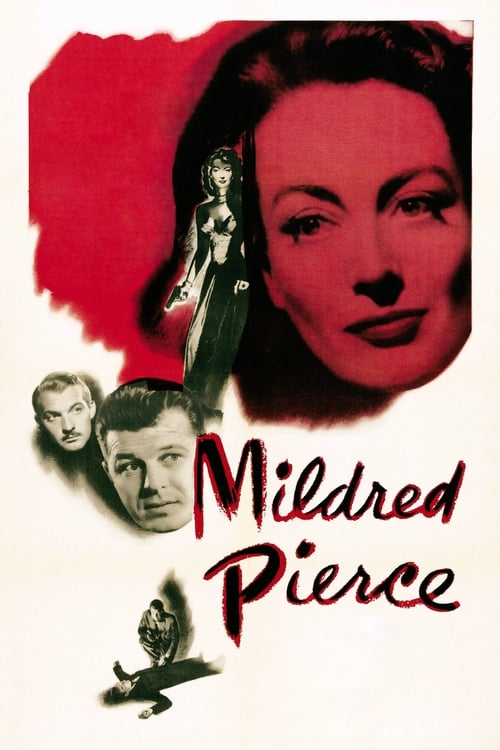
Contemporary reviews praised Crawford's performance but had mixed opinions about other aspects of the film. A review in The New York Times stated that, although Crawford gave "a sincere and generally effective characterization", the film "lacks the driving force of stimulating drama", and it did "not seem reasonable that a level-headed person like Mildred Pierce, who builds a fabulously successful chain of restaurants on practically nothing, could be so completely dominated by a selfish and grasping daughter, who spells trouble in capital letters." Writing in The Nation in 1945, film critic and author James Agee: "Nasty, gratifying version of the James Cain novel ... Attempt made to sell Mildred as noble when she is merely idiotic or at best pathetic; but constant, virulent, lambent attention to money and its effects, and more authentic suggestions of sex than one hopes to see in American films." Pauline Kael wrote: "Miss Crawford's heavy breathing was certified as acting when she won an Academy Award for her performance here." Leslie Halliwell gave it two of four stars: "A woman's picture par excellence, glossily and moodily photographed, with a star suffering in luxury on behalf of the most ungrateful daughter of all time."
Film critic of the time, Pauline Kael, mentions that the film, and others like it, work on the seducing adult being sophisticated and worldly while the manipulated youth are basically innocent kids.
William Brogdon of Variety liked the film, especially the screenplay, and wrote:At first reading James M. Cain's novel of the same title might not suggest screenable material, but the cleanup job has resulted in a class feature, showmanly produced by Jerry Wald and tellingly directed by Michael Curtiz ... The dramatics are heavy but so skillfully handled that they never cloy. Joan Crawford reaches a peak of her acting career in this pic. Ann Blyth, as the daughter, scores dramatically in her first genuine acting assignment. Zachary Scott makes the most of his character as the Pasadena heel, a talented performance.
Harrison's Reports wrote that Crawford delivered a "good performance", but the story "lacks conviction, and the main characterizations are overdrawn. For example, the daughter's hatred for her mother has no logical basis, consequently, it weakens the story."
John McCarten of The New Yorker wrote:Certainly, despite its unconscionable length—it takes almost two hours—Mildred Pierce contains enough excitement to jolt even the most lethargic customer...it is pleasant to report that Miss Crawford is no longer as frantic in appearance as she once was. Despite all kinds of chances to go berserk as a Cain mother, Miss Crawford remains subdued and reasonable, like most of the rest of a highly competent cast.
In a 2005 review, Jeremiah Kipp of Slant Magazine gave the film a mixed review:Mildred Pierce is melodramatic trash, constructed like a reliable Aristotelian warhorse where characters have planted the seeds of their own doom in the first act, only to have grief-stricken revelations at the climax. Directed by studio favorite Michael Curtiz in German Expressionistic mode, which doesn't quite go with the California beaches and sunlight but sets the bleak tone of domestic film noir, and scored by Max Steiner with a sensational bombast that's rousing even when it doesn't match the quieter, pensive mood of individual scenes, Mildred Pierce is professionally executed and moves at a brisk clip.
In 1978, historian June Sochen argued the film lies at the intersection of the "weepie" and "independent woman" genres of the 1930s and 1940s. It accentuates common ground of the two: Women must be submissive, live through others, and remain in the home.
In his 1986 book Guide for the Film Fanatic, Danny Peary wrote,
[Mildred Pierce] is essentially a film noir piece where it's a woman, [Joan] Crawford, rather than a man, who is led by a greedy, manipulative, evil femme fatale – in this case, the woman's daughter, [Ann] Blyth – down a fatalistic path full of deception, money for greedy people, murder, and doom (only here an optimistic ending is added). Like classic femme fatales, Blyth is the catalyst for the moral protagonist to reveal not so admirable traits – indeed, Blyth personifies Crawford's sublimated greed and ambition due to an impoverished upbringing. [Mildred Pierce] is also a standard "woman's picture," a soap opera about suffering mothers in the Stella Dallas tradition. But here is the rare case in which we think the mother is foolish for leading her life to please her daughter – because, unlike the daughters in those other films who were basically flawed but decent girls, Blyth isn't worthy of anyone's devotion.
Peary also wrote,
Crawford's faltering career was saved with her Oscar-winning portrayal of Mildred Pierce, regarded by many as her quintessential role, one that melded together several of her screen personae. But she's really not very good, playing every scene in an understated manner. Her Mildred isn't an interesting character to begin with – despite her strength, despite being a working woman/businesswoman. Since she's the type of woman who attracts bland losers such as [Bruce] Bennett, [Zachary] Scott, and Jack Carson, one can't be too impressed.
The February 2020 issue of New York Magazine lists Mildred Pierce as among "The Best Movies That Lost Best Picture at the Oscars."
On the review aggregator website Rotten Tomatoes, the film holds an approval rating of 88% based on 50 reviews, with an average rating of 8.1/10. The website's critics consensus reads, "Tied together by a powerhouse performance from Joan Crawford, Mildred Pierce blends noir and social drama to soapily intoxicating effect.".
Gay Following
Mildred Pierce is the focus of David M. Halperin's 2012 book How to be Gay, which describes the film as "a gay male cult classic," which "helped Crawford achieve her status as a notorious gay icon."









.jpg?width=400)