1980s
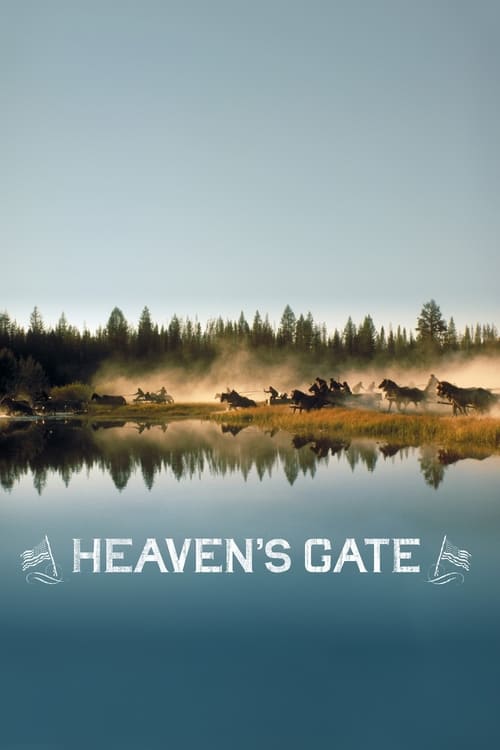
After editing the footage shot in Montana, filming for the Heaven's Gate prologue and epilogue began in March 1980. A rough edit of the film ended up screening for United Artists in June, running over five hours long. On November 18, Heaven's Gate had its world premiere in New York City. "I remember going to the New York premiere," said Jeff Bridges, one of the film's stars. "I'm not sure he [Cimino] had seen the movie complete; he was scrambling to put it together." In the 219-minute version that was shown, sound-editing problems in critical scenes made the plot hard for audiences to follow, and Cimino and cinematographer Vilmos Zsigmond tinted the film "with a kind of yellow glow" that was supposed to give an antique look, removed in the 2012 restoration. "Afterward, we heard that terrible stuttering applause," said Bridges, "and it was that sinking feeling. We tried to tell ourselves, 'Well, maybe they liked it so much that they are stunned into silence.' " The reviews were devastating. Before the film opened in Los Angeles, Cimino asked for it to be withdrawn and re-edited. In 1981, a shorter version was released, with added narration. A new poster campaign and a submission into the Cannes Film Festival slate did little to make a dent in financial losses. The failure of the film was also blamed for the collapse of United Artists, which was then sold by the Transamerica Corporation, having lost confidence in the company and its management. As a result, UA executive Steven Bach wrote an entire book devoted to the topic, Final Cut: Art, Money, and Ego in the Making of Heaven's Gate, the Film That Sank United Artists. Cimino referred to the book as "work of fiction" by a "degenerate who never even came on the set." Bach retorted when he told a reporter he didn't resent Cimino or wish the movie ill: "It would be like wishing ill of a corpse." With its scathing reviews and financial loss, Heaven's Gate quickly became a Hollywood legend.
Cimino intended to follow up Heaven's Gate with Conquering Horse through his two-picture deal with United Artists, but was never realized after its failure. The film, based on the Western novel written by Frederick Manfred, would have been a generational saga set in pre-white America that dealt with a young Sioux boy's rite of passage. "It's a story of the American Plains," said Cimino in 1982, "[taking] place in the Dakotas and Montana." Also at this time, Cimino had been attached as the director of The King of Comedy, which he withdrew from when Heaven's Gate was green lit, but vowed to return to once production ended. The film was first reported in 1979 as a Joann Carelli production, with Buck Henry making revisions to the script. However, by 1981, Martin Scorsese had already entered negotiations to direct. According to Cimino, in his version he would have cast Andy Kaufman in the lead role as Rupert Pupkin. "I shot videotape of Andy for weeks," he said. His version was to have also starred Meryl Streep and Orson Welles.
Following Heaven's Gate, Joann Carelli quickly landed him a picture deal at CBS Theatrical Films to direct Nitty Gritty, described by The New York Times as "a black comedy about news reporting". The film was scheduled to be released in 1982, alongside a slate of films including Table for Five, however, Cimino's never went into production, just as with several of the other reported projects. It was later listed as a lost project of Cimino's by the Los Angeles Times, who reported that it had been retitled Live on Tape prior to being dropped by CBS. He also allegedly proposed his Frank Costello biopic, then retitled Proud Dreamer, to CBS with Robert De Niro in mind to star, but his script was rejected due to the project's budget.
In early September 1982, Cimino approached short story writer Raymond Carver and his wife Tess Gallagher (both fans of Heaven's Gate) to rework a screenplay based on the life of Fyodor Dostoevsky, in hopes that he would direct it. According to Carver, Cimino presented him an existing screenplay commissioned by the veteran Italian film producer Carlo Ponti. The first draft had been written by Russian novelist Aleksandr Solzhenitsyn, and then translated to English by two Italian writers. Heavily researched, and taking Dostoevsky's near-execution as the film's focal point, Carver and Gallagher opted to rewrite the entire script, delivering a 220-page draft to Cimino in November. Cimino was impressed with the results, but Ponti returned to Europe shortly thereafter, halting further development. Fragments were later published in 1985, by Capra Press.
In December 1982, after being unable to finalize a deal with director Herbert Ross at the time, Paramount Pictures offered the job of directing Footloose to Cimino. Producer Daniel Melnick warned him that if the film went over its budget of $7.5 million, Cimino would have to cover the expenses himself and he agreed. Cimino's proposed reimagination of the film, "a John Steinbeck inspired musical-comedy" set during the Great Depression, was to have followed a rich girl from Houston who falls in love with a dancer from a shanty town. Working from Dean Pitchford's original script, Cimino was at the helm of the film for several months, making more and more extravagant demands in terms of set construction and overall production. Just when the film was to begin shooting, he asked Melnick to let him rewrite the screenplay for an additional $250,000 and to delay the start date. Melnick fired him, and Herbert Ross directed Footloose instead. According to Melnick, "It might have been a good film [if Cimino had directed], but it wasn't the film we wanted to make. It wasn't the film we came to the party with." Craig Zadan, one of the film's producers, also stated, "Cimino wanted to make a darker film. We wanted to make entertainment."
Several other unproduced projects followed, including a collaboration with Steven Spielberg and Gary David Goldberg on a script titled Reel to Reel, which he was going to direct for Columbia Pictures, and a second collaboration with Raymond Carver on a film which they gave the elliptical title of Purple Lake. The latter of the two was written partly from a CBS documentary found by Joann Carelli called VisionQuest which was the name of an unorthodox social program to rehabilitate delinquent teenagers by sending them on a wagon train across the Rockies. Cimino also apparently tried to revive his Fountainhead adaptation again, even attracting the interest of Barbra Streisand for the role of Dominique Francon.
In August 1983, after Ronald F. Maxwell was dismissed as the director of The Pope of Greenwich Village, Cimino was named as a possible replacement. Cimino wanted to finesse its screenplay with some rewriting and restructuring, which would have taken beyond the mandated start date for shooting. Instead, as a favor to the producers who were on a deadline, Cimino generously went over his copious notes written on the script with the new director they hired, Stuart Rosenberg. According to MGM president Freddie Fields, Cimino's contributions to the film were invaluable; "He's been a terrific consultant."
In the summer of 1984, an old project Cimino had been attached to finally seemed to be moving toward production. The film was The Yellow Jersey, based upon a novel by Ralph Hurne about an aging, woman-chasing professional cyclist who nearly wins the Tour de France. The rights had been optioned back in 1973 by film producer Gary Mehlman, who then made a development deal with Columbia Pictures. In 1975, Cimino had been brought on board to direct the film and visited the Tour for the first time, for research. Over the next decade, the film generated expenses of nearly $2 million, and been in development with four studios and several independent production companies. Then, when Dustin Hoffman indicated an interest in starring in it, Mehlman took it back to Columbia in 1983. With Hoffman coming off the success of Columbia's Tootsie, "the film would have gone [into production] the moment he was ready," said Mehlman. By then, Colin Welland and Carl Foreman were brought aboard as scriptwriters, as well as Danish filmmaker Jørgen Leth (who had made the 1976 bicycle-racing documentary A Sunday in Hell), as Hoffman's research adviser. Cimino said that production was long controlled by Foreman, who died in June 1984. The following month, Mehlman, Leth, Cimino, Welland and Hoffman went to France for the Tour, for yet more research. Shooting with the Tour de France was initially scheduled for 1980 and nearly every year since. Welland was still working on the script and hoped to have a draft by October of that year. It has been rumored that Hoffman fired Cimino from the production, although multiple sources claim that the deal simply "fell apart with Cimino". After he exited, none of the replacement directors that Mehlman or the studio suggested were satisfactory to Hoffman, so he too left and the film continued to sink further into development hell.
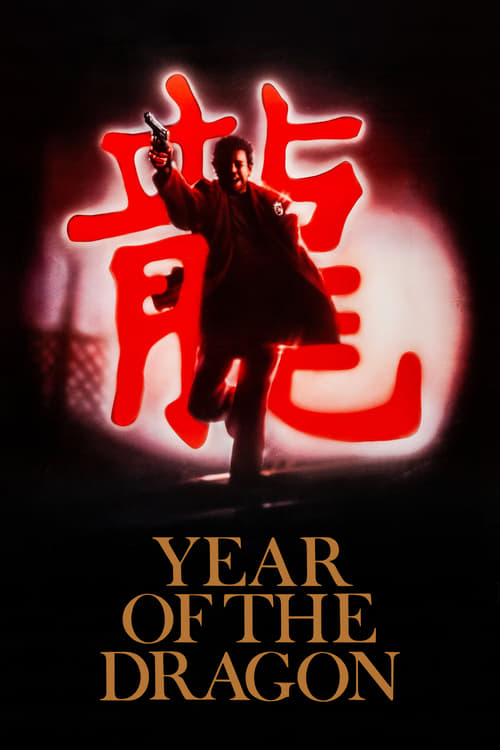
After working on a script about the role of Chinese immigrants in the construction of the first transcontinental railroad in the American West, Cimino finally accepted Dino De Laurentiis' offer to adapt Robert Daley's novel Year of the Dragon into a feature film, due to similarities in subject matter. Cimino accepted under the conditions that the book be nothing more than a point of departure, that he keep the freedom to tell the story his way and to change characters, and De Laurentiis agreed. Since the project already had a set start date for shooting, Cimino enlisted the help of Oliver Stone in writing the screenplay. The two apparently did over a year of research for the film, frequenting several Chinatown nightclubs and bars each night "to insinuate ourselves into their life." "With Michael, it's a 24-hour day," Stone later said of working with Cimino. "He doesn't really sleep... he's truly an obsessive personality. He's the most Napoleonic director I ever worked with." At this time, Cimino was simultaneously doing extensive work for the production of The Yellow Jersey. Several actors were considered for the lead role of Stanley White, including Jeff Bridges, Christopher Walken and Nick Nolte. Cimino eventually settled on Mickey Rourke after collaborating with him briefly on the production of The Pope of Greenwich Village, as well as Heaven's Gate several years prior. "Mickey is a true original," Cimino said of Rourke, "He's like a slugger, a battler... Mickey's like Joe Frazier and John [Lone] is like Ali." Cimino took note of the design of other Chinatowns throughout the world, and used the research to replicate New York's Chinatown and Mott Street for a detailed backlot which was constructed in Wilmington, North Carolina. Since its construction, the set for the film has been re-used extensively for other Hollywood film productions. The street was re-created in such extraordinary detail that even Stanley Kubrick (who was born in the Bronx), thought it had been the real Chinatown. Cimino, who often liked to shoot interiors in one city and exteriors in another, also filmed parts in New York City, Toronto, Vancouver, Bangkok, Thailand and Chiang Rai. Confident that he'd deliver on time and within budget, Cimino had a wager going with De Laurentiis that if he didn't go over budget, he would get the luxurious Mercedes that John Lone's character drove in the film. If not, Cimino would forfeit $50,000 of his salary. "It was four days over schedule, but $130,000 under-budget," said production manager Randolph Cheveldave, so Cimino collected. Upon its release, Year of the Dragon was sharply criticized for what many saw as offensively stereotypical depictions of Chinese Americans, but still managed to turn a profit at the box office. Afterwards, De Laurentiis signed a picture deal for Cimino to direct a film adaptation of the Truman Capote novella, "Handcarved Coffins". De Laurentiis had planned to release the film in 1986 following his purchase of Embassy Pictures.
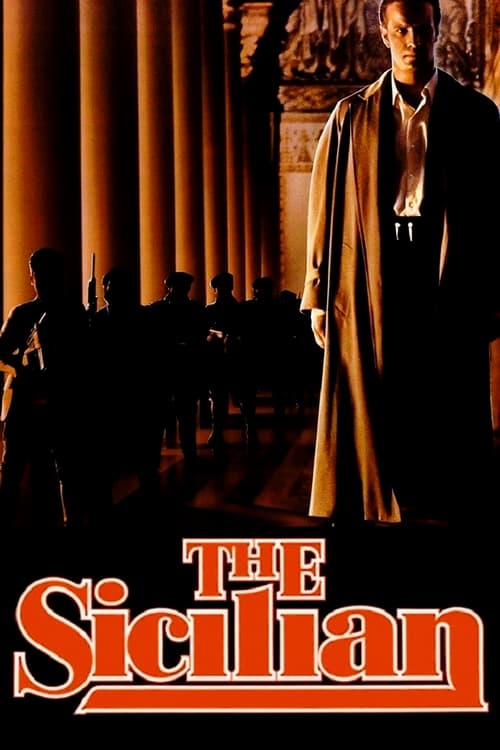
In 1986, Cimino accepted the deal to direct the adaptation of the best-selling Mario Puzo novel The Sicilian, after Dino De Laurentiis cancelled the production of Hand Carved Coffins. The Sicilian had been offered previously to directors Francis Ford Coppola, Martin Scorsese and Brian De Palma, who all declined. At the time Cimino boarded the project, it initially had Michael Corleone set up as a character, but due to rights issues, all Godfather references were removed. There had already been a screenplay by Steve Shagan, but since Cimino felt the film needed more "political bite", he brought aboard novelist Gore Vidal to help rewrite the script. Around 80 pages of material were added to Shagan's initial draft, either by Cimino himself or Vidal, who later sued the Writers Guild for receiving no credit. According to film critic F. X. Feeney, Cimino's first casting choice for Salvatore Giuliano was Daniel Day-Lewis, but since he was relatively unknown at the time, the producers suggested Christopher Lambert, whom Cimino accepted because his name guaranteed financing. During production, Cimino worked closely with Umberto Tirelli (a frequent collaborator of Luchino Visconti's, whom Cimino admired) on the period wardrobe required for the film. Cimino had specifically requested that he work with him directly during the fitting, much to Tirelli's chagrin, who exclaimed in rage, "Goddamn it! I promised myself when Luchino died that I would never work this hard again!" Cimino said this was the best backhanded compliment he ever received in his career. Filming began in Sicily that July, shot extensively in the capital city of Palermo as well as in the mountains of western Sicily. Soon after production ended in September, Cimino turned in his cut of the film, which ran over the agreed runtime of 105–125 minutes stipulated in his contractual obligation. When Gladden tried to re-edit the film, Cimino filed a lawsuit to stop them. Cimino's contract granted him final cut privilege as well as two test screenings of his longer version, which he was never given. Cimino lost, and the film was released a year later, in October. When released in 1987, the film did poorly, but received some critical acclaim, notably by F. X. Feeney, who saw Cimino's director's cut, released only in France.
In 1987, before the release of The Sicilian, Cimino began work on an epic saga chronicling the life of the Irish patriot Michael Collins, based on a screenplay by Eoghan Harris. After disagreements with Harris over Collins as a character, his draft was heavily rewritten by Cimino with the assistance of Robert Bolt, which the two developed in London. Their script, now titled Blest Souls, was described by the Los Angeles Times as "a love story set against the backdrop of the Irish rebellion". Joann Carelli assisted with casting for the project; finding Sean Bean and Tilda Swinton for the leads. Cimino started scouting for locations in Edinburgh, Liverpool and in Ireland. While there, him and his team of production managers sought permission from the Irish Government to use their army for the production, which they got. Bono and Bob Geldof were also signed on to compose the music. The film was backed by Nelson Entertainment and would have re-teamed Cimino with his Deer Hunter co-producer Barry Spikings. David Puttnam of Columbia Pictures reportedly gave Cimino the green light to begin shooting; however, the project became a casualty of The Coca-Cola Company pulling out of Columbia. Instead, an unrelated script by Neil Jordan was made into a film in 1996 that starred Liam Neeson as Collins. Bolt later admitted he didn't know what came of the project or their script: "Yes, [Cimino] fled back to America, and all of a sudden, that was that. I don't know what happened."
Less than three weeks after the Collins biopic was cancelled, Cimino started pre-production work on Santa Ana Wind, a contemporary romantic drama set in L.A. offered to him by Barry Spikings. Budgeted at roughly $15 million, the set start date for shooting was early December 1987. The screenplay was written by Floyd Mutrux and the film was to be bankrolled again by Nelson Entertainment. Cimino's representative added that the film was "about the San Fernando Valley and the friendship between two guys" and "more intimate" than Cimino's previous big-budget work like Heaven's Gate and the then unreleased The Sicilian. However, Nelson Holdings International Ltd. cancelled the project after disclosing that its banks, including Security Pacific National Bank, had reduced the company's borrowing power after Nelson failed to meet certain financial requirements in its loan agreements. A spokesman for Nelson said the cancellation occurred "in the normal course of business," but declined to elaborate. The film, also intended for distribution by Columbia, did not feature any major stars.
Cimino finished out his picture deal with Dino De Laurentiis in 1989 when Mickey Rourke suggested he direct the remake of the 1955 home invasion thriller The Desperate Hours. The film had been in preparation for several years with directors Christopher Cain and William Friedkin attached at different points. Rourke only agreed to do the film if Cimino would direct it due to his ability to transcend the material, "Michael's one of the few directors able to elevate beyond what an actor's capable of doing." Since Alex Thomson was unavailable, Cimino enlisted the services of rookie cinematographer Doug Milsome, whom he got to know through Stanley Kubrick. While shot on 35 mm film, Desperate Hours is the first of Cimino's works not to be photographed in his preferred Anamorphic aspect ratio. Principal photography began in October 1989 at Trout Lake near Telluride, Colorado. From there, the production moved to Salt Lake City. Like many of Cimino's works, the film was shot in a variety of locations, mainly in Utah. Although Cimino was allegedly shooting from his own separate script, Writers Guild arbitration established that since the first draft by Lawrence Konner and Mark Rosenthal (along with the original author Joseph Hayes), was the one Cimino agreed to, his name was removed from the credit. The interior house from the film, which was also designed by Cimino, was built at the Ventura Entertainment Center in Orem, Utah, with fully constructed rooms in order to create a look and feel of claustrophobia. It was also designed "with complete fluidity of movement, in any direction" featuring hidden compartments and passages so that the camera could be placed anywhere throughout the house. According to Cimino, co-star Anthony Hopkins would often get angered by Rourke's unprepared habits and improvisations on set: "Mickey's been shot in the head with Brando. This whole 'I don't have to know my fucking lines' thing. Tony Hopkins wanted to kill him." Filming wrapped that December, five days ahead of the schedule. De Laurentiis took a two-page ad in The Hollywood Reporter congratulating Cimino for finishing on time and within budget, dubbing the film "a picture of shattering importance." After poor previews however, De Laurentiis apparently edited out several scenes, including an intense, eight-minute confrontation between Lindsay Crouse and Kelly Lynch in "a huge, empty football field" because test audiences "read lesbian overtones" into their relationship. Cimino's original cut apparently lasted over two and half hours. The only known evidence of additional footage are from a few stills, which seemingly show a few of them.