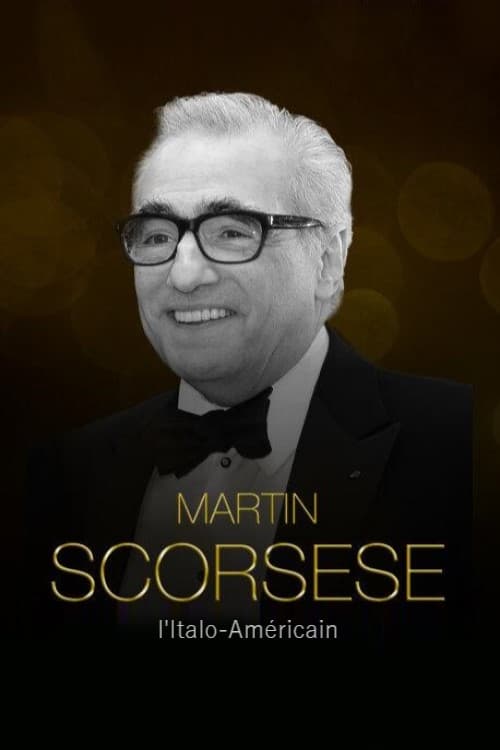
Martin Charles Scorsese ( skor-SESS-ee; Italian: [skorˈseːze, -se]; born November 17, 1942) is an American filmmaker. One of the major figures of the New Hollywood era, he is widely considered one of the greatest and most influential directors in the history of cinema. He has received numerous accolades including an Academy Award, four BAFTA Awards, three Emmy Awards, a Grammy Award, and three Golden Globe Awards. Scorsese has also been honored with the AFI Life Achievement Award in 1997, the Film Society of Lincoln Center tribute in 1998, the Kennedy Center Honor in 2007, the Cecil B. DeMille Award in 2010, and the BAFTA Fellowship in 2012. Five of his films have been inducted into the National Film Registry by the Library of Congress as "culturally, historically or aesthetically significant".
Scorsese received a Master of Arts degree from New York University in 1968. His directorial debut, Who's That Knocking at My Door (1967), was accepted into the Chicago Film Festival. In the 1970s and 1980s, Scorsese's films, much influenced by his Italian-American background and upbringing in New York City, centered on macho-posturing men and explore crime, machismo, nihilism and Catholic concepts of guilt and redemption. His trademark styles of extensive use of slow motion and freeze frames, voice-over narration, graphic depictions of extreme violence, liberal use of profanity and collaboration with Robert De Niro were first shown in Mean Streets (1973).
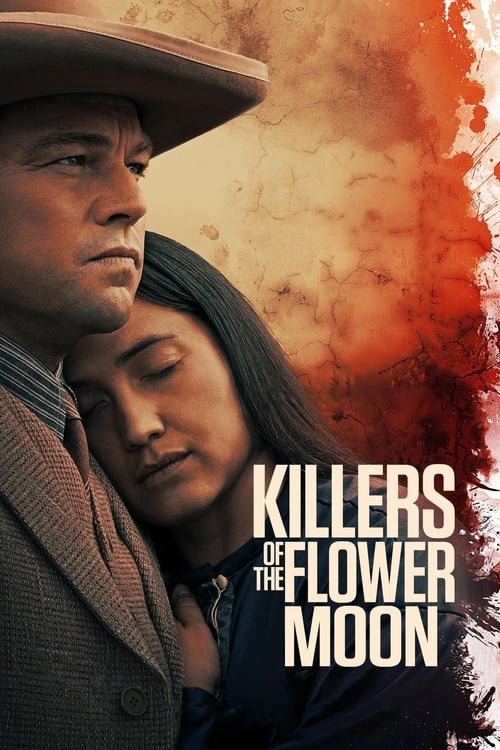
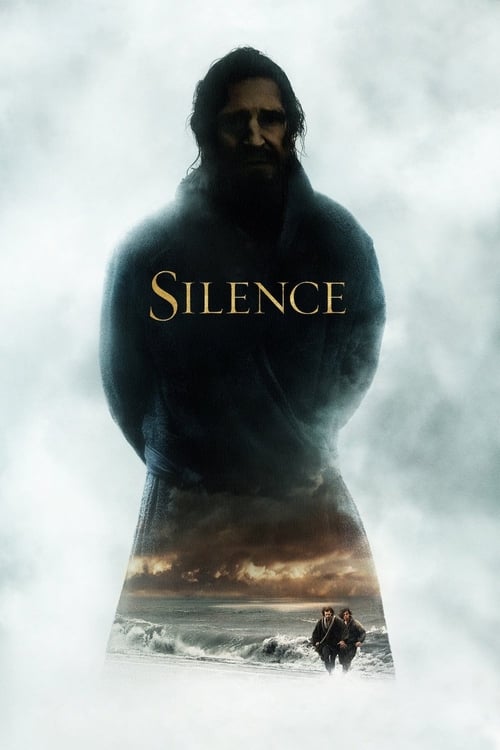
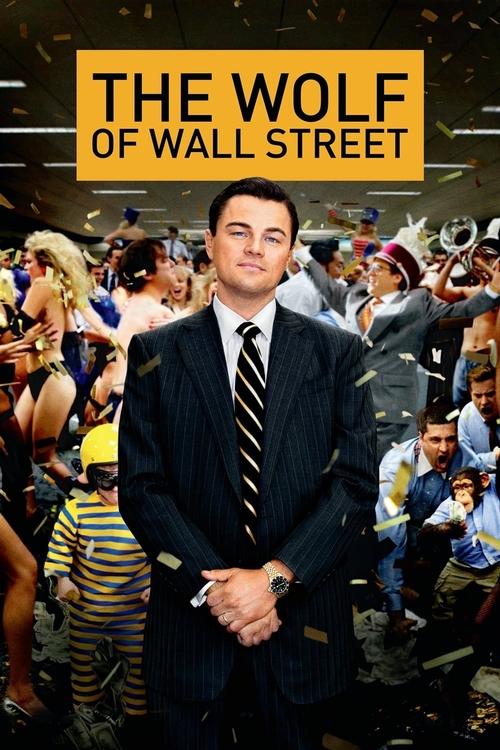
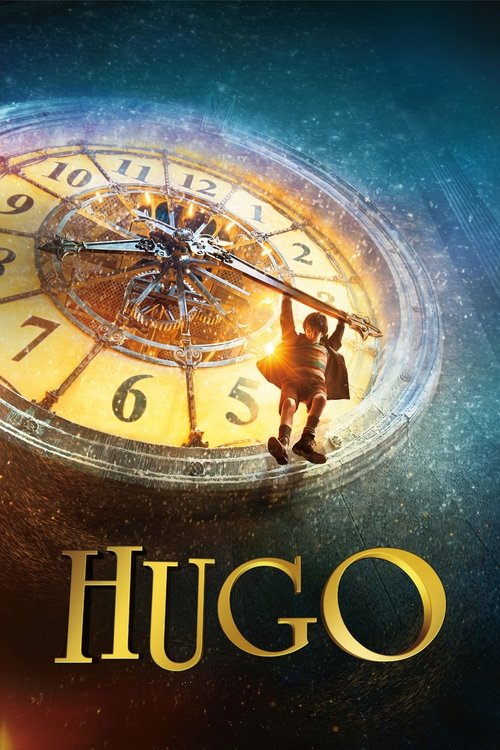
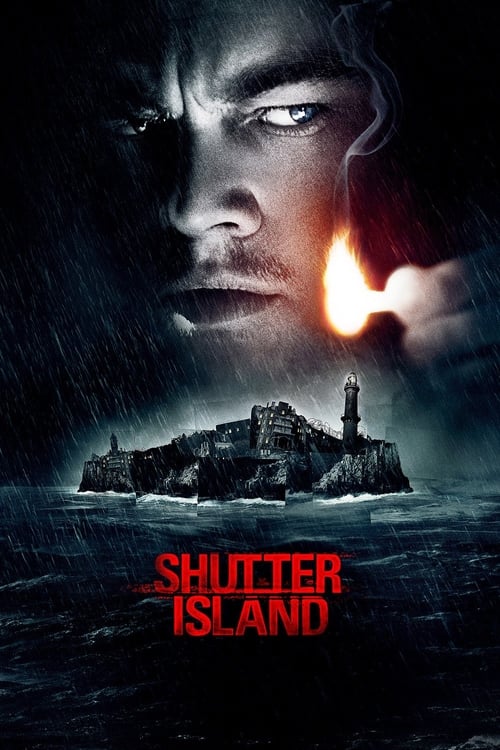
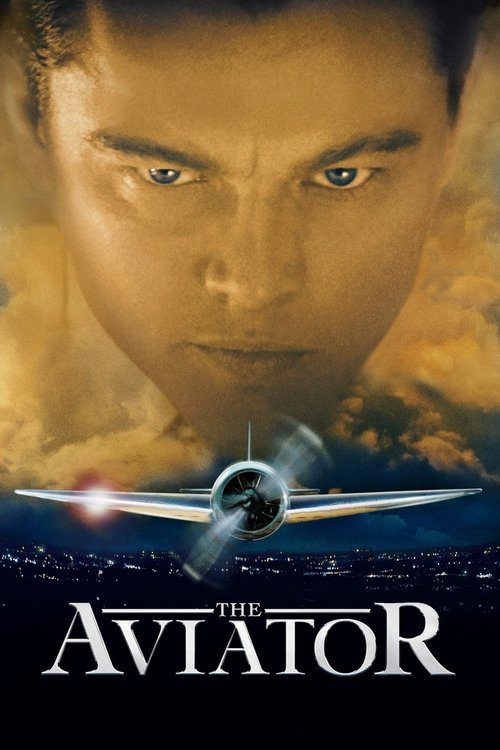
Scorsese continued his association with De Niro directing him in nine more films, including Taxi Driver (1976), New York, New York (1977), Raging Bull (1980), The King of Comedy (1982), Goodfellas (1990), Cape Fear (1991), Casino (1995), and The Irishman (2019). In the following decades, he also garnered box office success with a series of six collaborations with Leonardo DiCaprio, including Gangs of New York (2002), The Aviator (2004), The Departed (2006)—which won him the Academy Award for Best Director—Shutter Island (2010), and The Wolf of Wall Street (2013). He worked with both De Niro and DiCaprio on Killers of the Flower Moon (2023). He also directed After Hours (1985), The Color of Money (1986), The Last Temptation of Christ (1988), The Age of Innocence (1993), Kundun (1997), Hugo (2011), and Silence (2016).
In television, Scorsese has directed episodes for the HBO series Boardwalk Empire (2010–2014) and Vinyl (2016), as well as the HBO documentary Public Speaking (2010) and the Netflix docu-series Pretend It's a City (2021). He has also made several documentaries focusing on rock music such as The Last Waltz (1978), No Direction Home (2005), and Shine a Light (2008) as well as film history with A Personal Journey with Martin Scorsese Through American Movies (1995) and My Voyage to Italy (1999). An advocate for film preservation and restoration, he has founded three nonprofit organizations including The Film Foundation in 1990. His life was profiled in the Apple TV+ docuseries Mr. Scorsese (2025).
Contents
Early life and education
Martin Charles Scorsese was born in the Flushing neighborhood of New York City's Queens borough on November 17, 1942. He grew up in the Little Italy neighborhood of the city's Manhattan borough. Both of his parents, Catherine Scorsese (née Cappa) and Charles Scorsese, worked in the Garment District. Charles was a clothes presser and actor, while Catherine was a seamstress and an actress. All four of Scorsese's grandparents were Italian immigrants from Sicily, hailing from Polizzi Generosa on his father's side and Ciminna on his mother's side. The original surname of the family was Scozzese, meaning "Scot" or "Scottish" in Italian, and was changed to Scorsese because of a transcription error.
Scorsese was raised in a predominantly Catholic environment. As a boy, he had asthma and could not play sports or take part in any activities with other children, so his parents and his older brother would often take him to movie theaters; it was at this stage in his life that he developed a passion for cinema. He has spoken of the influence on him of Powell and Pressburger's Black Narcissus (1947) and The Red Shoes (1948). As a teenager living in Brooklyn, he frequently commuted to the Bronx to rent Powell and Pressburger's film, The Tales of Hoffmann (1951), from a store which had only one copy of the reel. He was one of only two people who regularly rented it; the other, George A. Romero, who then lived in that borough, also became a director.
Scorsese has named Sabu and Victor Mature as his favorite actors in his youth. He recalls his father taking him to see Jean Renoir's The River (1951) and being fascinated by its depiction of India. He became "obsessed" with Renoir's La Grande Illusion (1937) when it was rereleased. He names John Ford's The Quiet Man (1952) and The Searchers (1956) as formative influences. In a documentary on Italian neorealism, he commented on how Roberto Rossellini's Rome, Open City (1945) and Vittorio De Sica's Bicycle Thieves (1946) inspired him and influenced his view of his Sicilian roots. In his documentary Il Mio Viaggio in Italia (My Voyage to Italy), Scorsese noted that the Sicilian episode of Rossellini's Paisà (1946), which he first saw on television with his relatives who were themselves Sicilian immigrants, had a significant impact on his life. He remembers responding "very strongly" to Alfred Hitchcock's Vertigo (1958). He acknowledges owing a great debt to the French New Wave and has stated that "the French New Wave has influenced all filmmakers who have worked since, whether they saw the films or not." He has also cited the works of Satyajit Ray, Ingmar Bergman, Andrzej Wajda, Michelangelo Antonioni, Federico Fellini, Ishirō Honda and Eiji Tsuburaya as major influences on his career. Although there was no habit of reading at home, towards the end of the 1950s, Scorsese began to approach literature, being marked in particular by Fyodor Dostoevsky's Notes from Underground (1864), James Joyce's A Portrait of the Artist as a Young Man (1916) and Graham Greene's The Heart of the Matter (1948).
Career
1963–1972: Short films and feature debut
While attending the Tisch School of the Arts, Scorsese made the short films What's a Nice Girl like You Doing in a Place like This? (1963) and It's Not Just You, Murray! (1964). His most famous short of the period is the darkly comic The Big Shave (1967), which features Peter Bernuth. The film is an indictment of America's involvement in Vietnam, suggested by its alternative title Viet '67. Scorsese has mentioned on several occasions that he was greatly inspired in his early days at New York University by Armenian-American film professor Haig P. Manoogian, calling his teachings "the most precious gift I have ever received". Scorsese's first professional job was when he was at NYU; he was the assistant cameraman to cinematographer Baird Bryant on the John G. Avildsen directed short film Smiles (1964). Scorsese stated: "It was really important because they were filming on 35mm". He stated he was terrible at the job because he could not judge the distance of the focus. He also worked as a gaffer for Albert and David Maysles and as an editor for CBS News, the latter of whom offered him a full time position, but Scorsese declined due to his pursuit in film.
In 1967, Scorsese made his first feature-length film, the black and white I Call First, later retitled Who's That Knocking at My Door, with his fellow students actor Harvey Keitel and editor Thelma Schoonmaker, both of whom were to become long-term collaborators. Roger Ebert saw the film at the 1967 Chicago International Film Festival and wrote, in Scorsese's first published review: "it brings together two opposing worlds of American cinema. On the one hand, there have been traditional films like Marty, View from the Bridge, On the Waterfront and David and Lisa -- all sincere attempts to function at the level where real lives are led and all suffering to some degree from their makers' romantic and idealistic ideas, about such lives. On the other hand, there have been experimental films from Jonas Mekas, Shirley Clarke and other pioneers of the New York underground. In The Connection, Shadows and Guns of the Trees, they used improvised dialog and scenes and hidden and hand-held cameras in an attempt to capture the freshness of a spontaneous experience ... I Call First brings these two kinds of films together into a work that is absolutely genuine, artistically satisfying and technically comparable to the best films being made anywhere. I have no reservations in describing it as a great moment in American movies."
Scorsese became friends with the influential "movie brats" of the 1970s: Brian De Palma, Francis Ford Coppola, George Lucas and Steven Spielberg. It was De Palma who introduced Scorsese to Robert De Niro. During this period, Scorsese worked as the assistant director and one of the editors on Michael Wadleigh's documentary Woodstock (1970) and met actor–director John Cassavetes, who became a close friend and mentor.
1973–1989: Breakthrough and acclaim
Mean Streets was a breakthrough for Scorsese, Keitel and Robert De Niro. Pauline Kael wrote: "Martin Scorsese's Mean Streets is a true original of our time, a triumph of personal filmmaking. It has its own hallucinatory look; the characters live in the darkness of bars, with lighting and color just this shade of lurid ... It's about American life here and now, and it doesn't look like an American movie, or feel like one. If it were subtitled, we could hail a new European or South American talent — a new Buñuel steeped in Verdi, perhaps." By now the signature Scorsese style was in place: macho posturing, bloody violence, Catholic guilt and redemption, gritty New York locale (though the majority of Mean Streets was shot in Los Angeles), rapid-fire editing, and a soundtrack with contemporary music. Although the film was innovative, its wired atmosphere, edgy documentary style, and gritty street-level direction owed a debt to Cassavetes, Samuel Fuller and early Jean-Luc Godard. In 1974, actress Ellen Burstyn chose Scorsese to direct her in Alice Doesn't Live Here Anymore, for which she won an Academy Award for Best Actress. Although well regarded, the film remains an anomaly in Scorsese's early career as it focuses on a central female character. Returning to Little Italy to explore his ethnic roots, Scorsese directed Italianamerican (1974), a documentary featuring his parents Charles and Catherine Scorsese.
Scorsese followed with Taxi Driver in 1976, which depicted a Vietnam veteran who takes the law into his own hands on New York's crime-ridden streets. The film established him as an accomplished filmmaker and also brought attention to cinematographer Michael Chapman, whose style tends towards high contrasts, strong colors, and complex camera movements. The film starred De Niro as the angry and alienated Travis Bickle, and co-starred Jodie Foster in a highly controversial role as an underage prostitute, with Harvey Keitel as her pimp. Taxi Driver also marked the start of a series of collaborations between Scorsese and writer Paul Schrader, whose influences included the diary of would-be assassin Arthur Bremer, John Ford's The Searchers (1956), and Robert Bresson's Pickpocket (1959). Already controversial upon its release, Taxi Driver hit the headlines again five years later, when John Hinckley Jr. made an assassination attempt on then-president Ronald Reagan. He subsequently blamed his act on his obsession with Jodie Foster's Taxi Driver character (in the film, De Niro's character, Travis Bickle, makes an assassination attempt on a senator).
Taxi Driver won the Palme d'Or at the 1976 Cannes Film Festival, also receiving four Oscar nominations, including Best Picture. The critical and financial success of Taxi Driver encouraged Scorsese to move ahead with his first big-budget project: the highly stylized musical New York, New York. This tribute to Scorsese's home town and the classic Hollywood musical was a box-office failure. The film was the director's third collaboration with De Niro, co-starring with Liza Minnelli. The film is best remembered today for the title theme song, which was popularized by Frank Sinatra. Although possessing Scorsese's usual visual panache and stylistic bravura, many critics felt its enclosed studio-bound atmosphere left it leaden in comparison with his earlier work. Despite its weak reception, the film is regarded positively by some critics. Richard Brody wrote: For Scorsese, a lifelong cinephile, the essence of New York could be found in its depiction in classic Hollywood movies. Remarkably, his backward-looking tribute to the golden age of musicals and noirish romantic melodramas turned out to be one of his most freewheeling and personal films.
1990–1999: Established director
After a decade of films considered by critics to be mixed results, some considered Scorsese's gangster epic Goodfellas (1990) his return to directorial form, and his most confident and fully realized film since Raging Bull. De Niro and Joe Pesci offered a virtuoso display of Scorsese's bravura cinematic technique in the film and re-established, enhanced, and consolidated his reputation. After the film was released, Roger Ebert, a friend and supporter of Scorsese, named Goodfellas "the best mob movie ever". It is ranked No. 1 on Ebert's movie list for 1990, along with those of Gene Siskel and Peter Travers', and is widely considered one of the director's greatest achievements. The film was nominated for six Academy Awards, including Best Picture and Best Director, and Scorsese earned his third Best Director nomination but again lost to a first-time director, Kevin Costner (Dances with Wolves). Joe Pesci earned the Academy Award for Best Supporting Actor for his performance. Scorsese and the film also won many other awards, including five BAFTA Awards, a Silver Lion and more. The American Film Institute placed Goodfellas at No. 94 on the AFI's 100 Years ... 100 Movies list. On the 2007 updated version, they moved Goodfellas up to No. 92 on the AFI's 100 Years ... 100 Movies list (10th Anniversary Edition) and put Goodfellas at No. 2 on their list of the top 10 gangster films (after The Godfather).
In 1990, he released his only short-form documentary: Made in Milan about fashion designer Giorgio Armani. The following year brought Cape Fear, a remake of a cult 1962 movie of the same name and the director's seventh collaboration with De Niro. Another foray into the mainstream, the film was a stylized thriller taking its cues heavily from Alfred Hitchcock and Charles Laughton's The Night of the Hunter (1955). The film garnered two Oscar nominations, and earned $80 million in domestic box office, placing it as Scorsese's most commercially successful release until The Aviator (2004), and then The Departed (2006). The film also marked the first time Scorsese used wide-screen Panavision with an aspect ratio of 2.39:1.
In 1990, Scorsese acted in a small role as Vincent van Gogh in the film Dreams by Japanese director Akira Kurosawa. Scorsese's 1994 cameo appearance in the Robert Redford film Quiz Show is remembered for the telling line: "You see, the audience didn't tune in to watch some amazing display of intellectual ability. They just wanted to watch the money."
In 1994, Scorsese and producer Barbara De Fina formed the production company
2000–2015: Film and television work
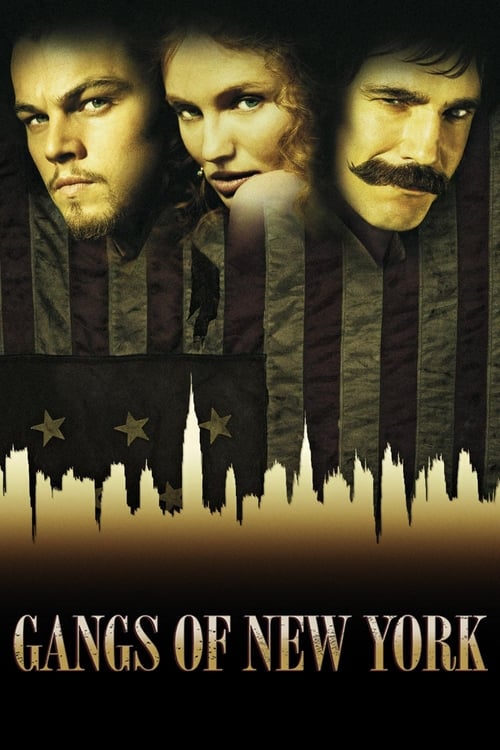
In 1999, Scorsese directed a documentary on Italian filmmakers titled Il Mio Viaggio in Italia, also known as My Voyage to Italy. The documentary foreshadowed Scorsese's next project, the epic Gangs of New York (2002), influenced by (amongst many others) major Italian directors such as Luchino Visconti and filmed in its entirety at Rome's famous Cinecittà film studios. With a production budget said to be in excess of $100 million, Gangs of New York was Scorsese's biggest and arguably most mainstream venture to date. Like The Age of Innocence, it was set in 19th-century New York, although focusing on the other end of the social scale (and like that film, also starring Daniel Day-Lewis). The film marked the first collaboration between Scorsese and actor Leonardo DiCaprio, who became a fixture in later Scorsese films. The production was highly troubled, with many rumors referring to the director's conflict with Miramax Films boss Harvey Weinstein. The final cut of the movie ran to 168 minutes, while Scorsese's original cut was over 180 minutes long.
Despite denials of artistic compromise, some felt that Gangs of New York was Scorsese's most conventional film, featuring standard film tropes that Scorsese had traditionally avoided, such as characters existing purely for exposition purposes and explanatory flashbacks. Even so, the film received generally positive reviews with the review aggregator Rotten Tomatoes reporting that 75 percent of the reviews for the film they tallied were positive and summarizing the critics writing, "Though flawed, the sprawling, messy Gangs of New York is redeemed by impressive production design and Day-Lewis's electrifying performance." The film's central themes are consistent with Scorsese's established concerns: New York, violence as culturally endemic, and subcultural divisions down ethnic lines. Originally filmed for a release in the winter of 2001 (to qualify for Academy Award nominations), Scorsese delayed the final production of the film until after the beginning of 2002; Miramax Films consequently delayed the film until its release in the Oscar season of late 2002. Gangs of New York earned Scorsese his first Golden Globe for Best Director. In February 2003, Gangs of New York received 10 Academy Award nominations, including Best Picture, Best Director, and Best Actor for Daniel Day-Lewis; however, it did not win in any category.
The following year, Scorsese completed production of The Blues, an expansive seven-part documentary tracing the history of blues music from its African roots to the Mississippi Delta and beyond. Seven filmmakers including Wim Wenders, Clint Eastwood, Mike Figgis, and Scorsese himself each contributed a 90-minute film (Scorsese's entry was titled Feel Like Going Home). In the early 2000s, Scorsese produced several films for up-and-coming directors, such as You Can Count on Me (directed by Kenneth Lonergan), Rain (directed by Katherine Lindberg), Lymelife (directed by Derick Martini) and The Young Victoria (directed by Jean-Marc Vallée). At that time, he established Sikelia Productions. In 2003, producer Emma Tillinger Koskoff joined the company. Scorsese also produced several documentaries, such as The Soul of a Man (directed by Wim Wenders) and Lightning in a Bottle (directed by Antoine Fuqua).
2016–present
Scorsese had long anticipated filming an adaptation of Shūsaku Endō's novel Silence, a drama about the lives of two Portuguese Jesuit priests in Japan during the 17th century. He had originally planned Silence as his next project following Shutter Island. On April 19, 2013, financing was secured for Silence by Emmett/Furla Films, and filming began in January 2015. By November 2016, the film had completed post-production. It was written by Jay Cocks and Scorsese, based on the novel, and stars Andrew Garfield, Liam Neeson, and Adam Driver. The film was released on December 23, 2016, to positive reviews from critics. Scorsese was recognized as an Italian citizen by jus sanguinis in 2018.
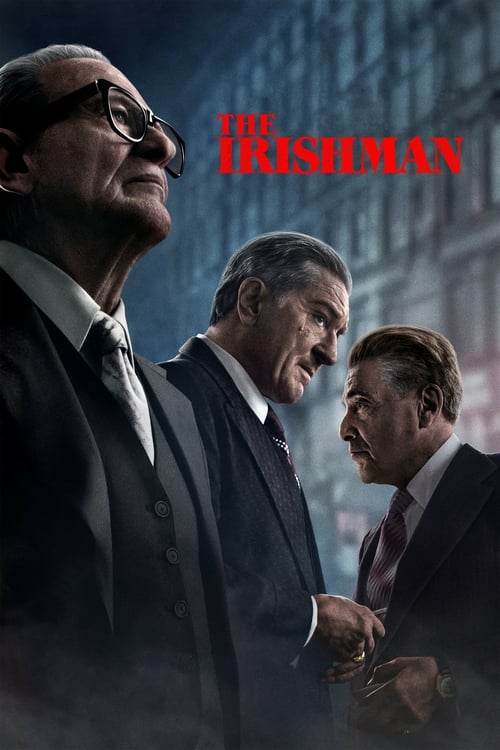
On January 10, 2019, Variety's Chris Willman reported that Scorsese's long-anticipated documentary of Bob Dylan's 1975 tour, the Rolling Thunder Revue, would be released by Netflix: "Rolling Thunder Revue: A Bob Dylan Story by Martin Scorsese captures the troubled spirit of America in 1975 and the joyous music that Dylan performed during the fall of that year. Part documentary, part concert film, part fever dream, Rolling Thunder is a one of a kind experience, from master filmmaker Martin Scorsese." On April 25, 2019, it was announced that the documentary would be released on Netflix on June 12, 2019, with a concurrent theatrical engagement in twenty American, European, and Australian cities the night before, and an extended theatrical schedule in Los Angeles and New York so that the film will qualify for award consideration. After years of development, principal photography on Scorsese's crime film The Irishman, based on the book I Heard You Paint Houses by Charles Brandt, began in August 2017, starring Robert De Niro, Joe Pesci, and Al Pacino. The film had its world premiere at the 57th New York Film Festival on September 27, 2019. It received a limited theatrical release on November 1, 2019, followed by digital streaming on November 27, 2019, on Netflix. In January 2020, The Irishman received ten Academy Award nominations, including for Best Picture, Best Director, Best Adapted Screenplay, and Best Supporting Actor for Pacino and Pesci.
On December 29, 2020, the trailer for Scorsese's Netflix documentary series Pretend It's a City was released. The series features Fran Lebowitz and Scorsese as they delve into her personal beliefs and thoughts on New York City. The project was released January 8, 2021, on Netflix. This is Scorsese's second documentary featuring Lebowitz, the first being Public Speaking (2010), which was released on HBO. In October 2022, Scorsese and David Tedeschi premiered their collaborative film Personality Crisis: One Night Only, at the New York Film Festival. The film is a documentary about David Johansen, featuring both contemporary concert footage shot for the project as well as archival footage.
Filmmaking style and technique
Several recurring filmmaking techniques are identifiable in many of Scorsese's films. He has established a filmmaking history which involves repeat collaborations with actors, screenwriters, film editors, and cinematographers, sometimes extending over several decades, such as that with recurring cinematographers Michael Ballhaus, Robert Richardson, and Rodrigo Prieto.
Slow motion and freeze frame
Scorsese is known for his frequent use of slow motion, for example, in Who's That Knocking at My Door (1967) and Mean Streets (1973). He is also known for using freeze frames, such as: in the opening credits of The King of Comedy (1983), throughout Goodfellas (1990), Casino (1995), The Departed (2006), and in The Irishman (2019). His blonde leading ladies are usually seen through the eyes of the protagonist as angelic and ethereal; they wear white in their first scene and are photographed in slow motion—Cybill Shepherd in Taxi Driver; Cathy Moriarty's white bikini in Raging Bull; Sharon Stone's white minidress in Casino. This may be a nod to director Alfred Hitchcock.
Scorsese often uses long tracking shots, as seen in Taxi Driver, Goodfellas, Casino, Gangs of New York, and Hugo. MOS sequences set to popular music or voice-over are regularly seen in his films, often involving aggressive camera movement or rapid editing. Scorsese sometimes highlights characters in a scene with an iris, an homage to 1920s silent film cinema (as scenes at the time sometimes used this transition). This effect can be seen in Casino (it is used on Sharon Stone and Joe Pesci), Life Lessons, The Departed (on Matt Damon), and Hugo. Some of his films include references/allusions to Westerns, particularly Rio Bravo, The Great Train Robbery, Shane, The Searchers, and The Oklahoma Kid. Slow motion flashbulbs and accented camera/flash/shutter sounds are often used, as is the song "Gimme Shelter" by The Rolling Stones heard in several of Scorsese's films: Goodfellas, Casino, and The Departed.
Cameo appearances
Scorsese usually has a quick cameo in his films (Who's That Knocking at My Door, Boxcar Bertha, Mean Streets, Alice Doesn't Live Here Anymore, Taxi Driver, The King of Comedy, After Hours, The Last Temptation of Christ (albeit hidden under a hood), The Age of Innocence, Gangs of New York, Hugo, Killers of the Flower Moon), he is also known to contribute his voice to a film without appearing on screen (e.g. as in The Aviator and The Wolf of Wall Street). In The Age of Innocence, for example, he appears in the non-speaking role of a large format portrait photographer in one of the passing scenes of the film. He provides the opening voice-over narration in Mean Streets and The Color of Money; plays the off-screen dressing room attendant in the final scene of Raging Bull, and provides the voice of the unseen ambulance dispatcher in Bringing Out the Dead. He also appears as the director of fictional newly formed Vatican Television in the Italian comedy In the Pope's Eye and played himself in the first episode of the TV series The Studio.
Religious guilt
Guilt is a prominent theme in many of his films, as is the role of Catholicism in creating and dealing with guilt (Who's That Knocking at My Door, Mean Streets, Raging Bull, Bringing Out the Dead, The Departed, Shutter Island, and The Irishman). In a similar manner, Scorsese considered Silence a "passion project": it had been in development since 1990, two years after the release of his film The Last Temptation of Christ, which also contained strongly religious themes. When asked why he retained interest in a project dealing with strong theological themes for over 26 years, Scorsese said,As you get older, ideas go and come. Questions, answers, loss of the answer again and more questions, and this is what really interests me. Yes, the cinema and the people in my life and my family are most important, but ultimately as you get older, there's got to be more ... Silence is just something that I'm drawn to in that way. It's been an obsession, it has to be done ... it's a strong, wonderful true story, a thriller in a way, but it deals with those questions.
Political corruption
Beginning in the early 2000s, his films have featured corrupt authority figures, such as policemen in The Departed and politicians in Gangs of New York and The Aviator. He is also known for his liberal usage of profanity, dark humor, and violence.
Scorsese's interest in political corruption as depicted in his films was expanded further in his 2019 film The Irishman. Richard Brody writing for The New Yorker found the main interpretation of the film to be a dark allegory of a realist reading of American politics and American society stating: The real-life Hoffa... (was) a crucial player in both gangland politics and the actual practical politics of the day, and the movie's key through line is the inseparability of those two realms. The Irishman is a sociopolitical horror story that views much of modern American history as a continuous crime in motion, in which every level of society—from domestic life through local business through big business through national and international politics—is poisoned by graft and bribery, shady deals and dirty money, threats of violence and its gruesome enactment, and the hard-baked impunity that keeps the entire system running.
Frequent collaborators
Scorsese often casts the same actors in his projects, particularly Robert De Niro, who has collaborated with Scorsese on ten feature films and one short film. Included are the three films (Taxi Driver, Raging Bull, and Goodfellas) that made AFI's 100 Years ... 100 Movies list. Scorsese has often said he thinks De Niro's best work under his direction was Rupert Pupkin in The King of Comedy. After the turn of the century, Scorsese found a new muse with younger actor Leonardo DiCaprio, collaborating on six feature films and one short to date. Several critics have compared Scorsese's new partnership with DiCaprio with his previous one with De Niro. Frequent collaborators also include: Victor Argo (6), Harvey Keitel (6), Harry Northup (6), J. C. MacKenzie (5), Murray Moston (5), Illeana Douglas (4), Joe Pesci (4), Frank Vincent (3), Barry Primus (3), and Verna Bloom (3). Others who have appeared in multiple Scorsese projects include Daniel Day-Lewis, who had become very reclusive to the Hollywood scene, Alec Baldwin, Willem Dafoe, Ben Kingsley, Jude Law, Dick Miller, Liam Neeson, Emily Mortimer, Jesse Plemons, John C. Reilly, David Carradine, Barbara Hershey, Kevin Corrigan, Jake Hoffman, Frank Sivero, Ray Winstone and Nick Nolte. Before their deaths, Scorsese's parents, Charles Scorsese and Catherine Scorsese, appeared in bit parts, walk-ons or supporting roles, such as in Goodfellas.
For his crew, Scorsese frequently worked with editors Marcia Lucas and Thelma Schoonmaker, cinematographers Michael Ballhaus, Robert Richardson, Michael Chapman and Rodrigo Prieto, screenwriters Paul Schrader, Mardik Martin, Jay Cocks, Terrence Winter, John Logan and Steven Zaillian, costume designer Sandy Powell, production designers Dante Ferretti and Bob Shaw, music producer Robbie Robertson, and composers Howard Shore and Elmer Bernstein. Schoonmaker, Richardson, Powell, and Ferretti have each won Academy Awards in their respective categories on collaborations with Scorsese. Elaine and Saul Bass, the latter being Hitchcock's frequent title designer, designed the opening credits for Goodfellas, The Age of Innocence, Casino and Cape Fear.
Artificial intelligence
In June 2026, Scorsese became an advisor to the artificial intelligence company Black Forest Labs, in a bid to "push the bounds of creativity to create deeper and richer experiences for audiences." In a statement, Scorsese said he utilized the company’s FLUX technology to assist in creating storyboards on a upcoming film, because according to him, "there’s always been this problem of how do you communicate what you see in your head to your cast and crew".
Personal life
Marriages, relationships, and children
Scorsese has been married five times.
In 1965, Scorsese married Laraine Marie Brennan. They have a daughter, Catherine, who was named after Scorsese's mother. The couple remained together until 1971.
In 1976, Scorsese married writer Julia Cameron. They have a daughter, Domenica Cameron-Scorsese, an actress who appeared in The Age of Innocence. After one year of marriage, the couple had an acrimonious divorce which served as the basis of Cameron's first feature, the dark comedy God's Will, which also starred their daughter. The latter had a small role in Cape Fear using the name Domenica Scorsese and has continued to act, write, direct and produce.
In 1979, Scorsese married actress Isabella Rossellini. The couple divorced in 1983.
In March 1983, Scorsese met Dawn Steel (then-junior executive at Paramount) at an annual ShoWest Convention (in Las Vegas, Nevada), after which the pair began a romantic relationship. Scorsese moved from New York to live in her Sunset Plaza residence while his Last Temptation of Christ was initially in development at Paramount (Steel reportedly recused herself from her boyfriend's passion project). In her 1993 memoir, Steel discussed their relationship, including attending the Cannes Film Festival premiere of The King of Comedy and later location scouting in Tunisia together. The two would reconnect professionally in 1987, jump-starting the restoration of Lawrence of Arabia (shortly after Steel's installation as president at Columbia Pictures).
In 1985, Scorsese married producer Barbara De Fina. The couple divorced in 1991.
From 1989 to 1997, Scorsese was romantically involved with actress Illeana Douglas.
In 1999, Scorsese married Helen Schermerhorn Morris. They have a daughter, actress and filmmaker Francesca, who appeared in his films The Departed, Hugo, and The Aviator, and had a leading role in HBO/Sky's miniseries We Are Who We Are in 2020.
Political views
Scorsese was an opponent of the Iraq War, wearing a white dove pin to the 75th Academy Awards in 2003 and clapping for Michael Moore's acceptance speech wherein he criticized President George W. Bush and the invasion. In June 2025, Scorsese said of Donald Trump's administration: "I do not see compassion in this administration. Indeed, it seems that it takes pleasure in the opposite: hurting, humiliating."
Legal issues
In March 2024, Scorsese settled a lawsuit with aspiring screenwriter Simon Afram. Afram accused him of pocketing $500,000 to help handle casting, production and postproduction of his screenplay about World War II's Operation Fortitude, which was titled Operation Fortitude, only for Scorsese to then do nothing.
Religious beliefs
Scorsese previously identified as a lapsed Catholic, declaring: "I'm a lapsed Catholic. But I am Roman Catholic; there's no way out of it." In 2016, Scorsese identified himself as a Catholic again, saying: "My way has been, and is, Catholicism. After many years of thinking about other things, dabbling here and there, I am most comfortable as a Catholic. I believe in the tenets of Catholicism."
Filmography
As of 2026, Scorsese has directed 27 full-length narrative films and 16 full-length documentary films.
Other work
Film preservation
Scorsese had been at the forefront in film preservation and restoration ever since 1990, when he created The Film Foundation, a non-profit film organization which collaborates with film studios to restore prints of old or damaged films. Scorsese launched the organization with Woody Allen, Robert Altman, Francis Ford Coppola, Clint Eastwood, Stanley Kubrick, George Lucas, Sydney Pollack, Robert Redford, and Steven Spielberg, who all sat on the foundation's original board of directors. In 2006, Paul Thomas Anderson, Wes Anderson, Curtis Hanson, Peter Jackson, Ang Lee and Alexander Payne joined them. In 2015, Christopher Nolan also joined the board. Recent members include Spike Lee, Sofia Coppola, Guillermo del Toro, Barry Jenkins, Lynne Ramsay, Joanna Hogg and Kathryn Bigelow.
The foundation has restored more than 800 films from around the world and conducts a free educational curriculum for young people on the language and history of film. Scorsese and the Foundation spearheaded fundraising for the film restoration of Michael Powell, and Emeric Pressburger's The Red Shoes (1948). For his advocacy in film restoration he received the Robert Osborne Award at the 2018 TCM Film Festival. The award was given to Scorsese as "an individual who has significantly contributed to preserving the cultural heritage of classic films".
In November 2020, The Criterion Channel released a 30-minute video titled, 30 Years of The Film Foundation: Martin Scorsese and Ari Aster in Conversation, celebrating the "mission, evolution, and ongoing work of The Film Foundation". Scorsese stated as of 2020, the Foundation has helped restore 850 films.
On April 20, 2024, Scorsese partnered with Seth MacFarlane to showcase Back From the Ink: Restored Animated Shorts at the 2024 TCM Classic Film Festival. Macfarlane and Scorsese funded the restoration, and worked with the UCLA Film and Television Archive and The Film Foundation with Paramount Pictures Archives.
In 2007, Scorsese established the World Cinema Project with the mission to preserve and present marginalized and infrequently screened films from regions generally ill-equipped to preserve their own cinema history. Scorsese's organization has worked with the Criterion Collection to not only preserve the films but to allow them to be released on DVD and Blu-ray boxsets and on streaming services such as The Criterion Channel. Films in the WCP include Ousmane Sembène's Black Girl (1966), and Djibril Diop Mambéty's Touki Bouki (1973).
Film activism
Scorsese has mentioned his mentors being such filmmakers as John Cassavetes, Roger Corman, and Michael Powell. In film critic Roger Ebert's book, Scorsese by Ebert, Ebert praised Scorsese for championing and supporting other filmmakers by serving as an executive producer on projects of filmmakers such as Antoine Fuqua, Wim Wenders, Kenneth Lonergan, Stephen Frears, Allison Anders, Spike Lee, and John McNaughton. More recently he has executive produced the films of the Safdie Brothers, Joanna Hogg, Kornél Mundruczó, Josephine Decker, Danielle Lessovitz, Alice Rohrwacher, Jonas Carpignano, Amélie van Elmbt, and Celina Murga. Scorsese has also chosen to name filmmakers throughout the years that he admires such as fellow New York City-based directors Woody Allen and Spike Lee, as well as other artists such as Wes Anderson, Bong Joon-ho, Greta Gerwig, Ari Aster, Kelly Reichardt, Claire Denis, Noah Baumbach, Paul Thomas Anderson, Christopher Nolan, the Coen Brothers, and Kathryn Bigelow.
Favorite films
Scorsese listed Pickup on South Street as one of his favorite films. The Band Wagon is his favorite musical.
In 2012, Scorsese participated in the Sight and Sound directors' poll. Held every ten years to select the greatest films of all time, contemporary directors were asked to select ten films of their choice. Scorsese, however, picked 12, which are listed below in alphabetical order:
Ten years later, Scorsese participated again in the Sight and Sound polls, picking 15 films, the same 12 of the 2012 list, plus the following:
In 1999, after the death of Gene Siskel, Scorsese joined Roger Ebert as the guest co-host for an episode of Siskel & Ebert where they each stated their 10 favorite films of the 1990s. Scorsese's list numerically is:
In 2012, Scorsese recommended 39 foreign films to Colin Levy.
In 2019, Martin Scorsese contributed his list of favorite films to LaCinetek, a streaming platform that compiles film lists from filmmakers worldwide. As a tireless cinephile, Scorsese submitted two lists: one featuring 73 "founding" films and another "alternative list" with 106 films. He also included a letter to Cédric Klapisch, one of LaCinetek's founders, explaining his selections and noting that many filmmakers and films he admires are not included in these lists.
Legacy and honors
Scorsese's films have been nominated for numerous awards both nationally and internationally, with an Academy Award win for The Departed. In 1991, he received the Golden Plate Award of the American Academy of Achievement. In 1997, Scorsese received the AFI Life Achievement Award. In 1998, the American Film Institute placed three Scorsese films on their list of the greatest American movies: Raging Bull at No. 24, Taxi Driver at No. 47, and Goodfellas at No. 94. For the tenth-anniversary edition of their list, Raging Bull was moved to No. 4, Taxi Driver was moved to No. 52, and Goodfellas was moved to No. 92. In 2001, the American Film Institute placed two Scorsese films on their list of the most "heart-pounding movies" in American cinema: Taxi Driver at No. 22 and Raging Bull at No. 51. At a ceremony in Paris, France, on January 5, 2005, Martin Scorsese was awarded the French Legion of Honour in recognition of his contribution to cinema. On February 8, 2006, at the 48th Annual Grammy Awards, Scorsese was awarded the Grammy Award for Best Long Form Music Video for No Direction Home.
Lynda Myles organized a retrospective of Scorsese's work at the Edinburgh International Film Festival in 1975.
In 2007, Scorsese was listed among Time magazine's 100 Most Influential People in The World. In August 2007, Scorsese was named the second-greatest director of all time in a poll by Total Film magazine, in front of Steven Spielberg and behind Alfred Hitchcock. In 2007, Scorsese was honored by the National Italian American Foundation (N.I.A.F.) at the nonprofit's thirty-second Anniversary Gala. During the ceremony, Scorsese helped launch N.I.A.F.'s Jack Valenti Institute in memory of former foundation board member and past president of the Motion Picture Association of America (M.P.A.A.) Jack Valenti. The Institute provides support to Italian film students in the U.S. Scorsese received his award from Mary Margaret Valenti, Jack Valenti's widow. Certain pieces of Scorsese's film-related material and personal papers are contained in the Wesleyan University Cinema Archives, to which scholars and media experts from around the world may have full access. On September 11, 2007, the Kennedy Center Honors committee, which recognizes career excellence and cultural influence, named Scorsese as one of the honorees for the year. On June 17, 2008, the American Film Institute placed two of Scorsese's films on the AFI's 10 Top 10 list: Raging Bull at number one for the Sports genre and Goodfellas at number two for the Gangster genre. In 2013, the staff of Entertainment Weekly voted Mean Streets the seventh greatest film ever made.
Accolades
Directed Academy Award performances
Under Scorsese's direction, these actors have received Academy Award wins and nominations for their performances in their respective roles.