Critical reception
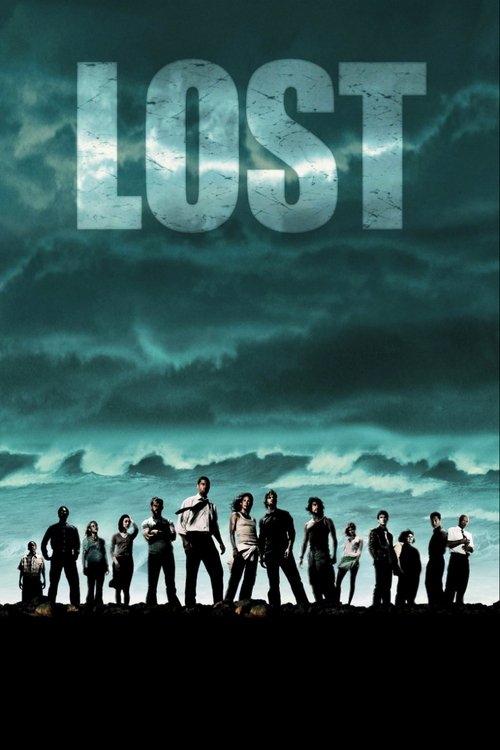
Lost has been described by numerous critics as being among the greatest television series of all time. Bill Carter, television reporter of The New York Times, defined Lost as "the show with perhaps the most compelling continuing story line in television history." Entertainment Weekly put the show on its end-of-the-decade, "best-of" list, saying, "Name another network drama that can so wondrously turn a ? into a !" In 2012, Entertainment Weekly also listed the show at #10 in the "25 Best Cult TV Shows from the Past 25 Years", with a hot-and-cold description: "Lost was initially celebrated as a moving character-driven drama with a broad humanistic worldview that also presented itself as dramatic cryptography that demanded to be solved. The appeal narrowed as seasons progressed and the mythology became more complex, culminating in a still-debated finale that was deeply meaningful to some and dissatisfying poppycock to others." In 2007, TV Guide ranked Lost as the #5 cult show. In 2013, TV Guide ranked it as the #5 sci-fi show and the #36 best series of all time. In September 2019, The Guardian ranked the show 71st on its list of the 100 best TV shows of the 21st century.
The first season received critical acclaim. USA Today said a "totally original, fabulously enjoyable lost-at-sea series", Lost had taken "an outlandish Saturday-serial setup and imbued it with real characters and honest emotions, without sacrificing any of the old-fashioned fun." The Los Angeles Times praised the production values and said "it knows the buttons it wants to push (fear of flying, fear of abandonment, fear of the unknown) and pushes them, repeatedly, like a kid playing a video game." IGN noted that the first season "succeeded first and foremost in character development." Lost season one was ranked number one in the "Best of 2005 TV Coverage: Critic Top Ten Lists" by Matthew Gilbert of The Boston Globe, Tom Gliatto of People Weekly, Charlie McCollum of the San Jose Mercury News, and Robert Bianco of USA Today.
The second season received favorable reviews, but it was noted that the season "stumbled with some storylines going nowhere and some characters underutilized." IGN also noted the addition of Desmond Hume as a standout new character. The San Francisco Chronicle called Season 2 an "extended, mostly unsatisfying foray into deeper mythology with very little payoff." After winning "Best Drama Series" for season one, Lost was snubbed by the Emmy Awards in Season 2. Near the end of Lost's second season, USA Today listed the most popular fan theories during Season 2—the island as a psychological experiment, that the hatch had electromagnetic properties, string theory of time, and that everyone on the island had developed a "collective consciousness" that allowed them to appear in each other's past. One fan interview by USA Today said that "Real suspense comes from answers, not questions. Suspense comes not from wondering what's going on but from wondering what happens next. If you withhold answers, it becomes impossible to satisfy."
The first block of episodes of the third season was criticized for raising too many mysteries and not providing enough answers. Complaints were also made about the limited screen time for many of the main characters in the first block. Locke, played by Terry O'Quinn, who had tied for the highest second-season episode count, appeared in only 13 of 23 episodes in the third season—only two more than guest star M.C. Gainey, who played Tom. Reaction to two new characters, Nikki and Paulo, was generally negative, and Lindelof even acknowledged that the couple was "universally despised" by fans. The decision to split the season and the American time-slot switch after the hiatus were also criticized. Cuse acknowledged that, "No one was happy with the six-episode run." The second block of episodes was critically acclaimed, however, with the crew dealing with problems from the first block. More answers were written into the show, and Nikki and Paulo were killed off. It was also announced that the series would end three seasons after the third season, which Cuse hoped would tell the audience that the writers knew where the story was going.
Metacritic gave season four a weighted average of 87 based on 12 critical reviews, For the first time since season one, Lost received an Emmy nomination for 'Outstanding Drama Series'. Tim Goodman of the San Francisco Chronicle said that the Season 4 episodes were "roller coasters of fast action and revelation" and that series was "back on track." In a survey conducted by TVWeek of professional critics, Lost was voted the best show on television in the first half of 2008 "by a wide margin", apparently "crack[ing] the top five on nearly every critic's submission" and receiving "nothing but praise." The New York Times said the show reveled in critiques of capitalism, using the fictional Mittelos Bioscience and the "malevolent British industrialist" character of Charles Widmore as examples. The critic also said that the show was "in the dark business of exploring just how futile the modern search for peace, knowledge, recovery or profit really is." The critic did go on to say that the series was not as "philosophically refined" as The Sopranos or The Wire but that it "has maximized the potential of narrative uncertainty and made it a beguiling constant."
The fifth season once again received mostly positive critical reception. Season 5 was given a weighted average of 78 out of 100 by Metacritic. Variety said that "The ABC series remains one of primetime's most uncompromising efforts, and this year's latest wrinkle on flashbacks, flash-forwards and island-disappearing flashes of light does nothing to alter that perception." Alan Sepinwall of The Star-Ledger said that season 5 may finally be "a day of reckoning between those viewers who embrace the show's science-fiction trappings, and those who prefer not to think about them." Sepinwall also related that "I loved every minute. But I'm also a geek who read Ray Bradbury and Isaac Asimov growing up."
Heather Havrilesky of Salon.com criticized the use of time travel, saying that "when a narrator brings magic or time travel or an act of God into the picture, then uses it without restraint, the story loses its anchor to real life." The critic also asked "Why does it matter what Locke and Richard Alpert and Daniel Faraday or anyone else does, when they all seem as clueless and unfettered from reality as we are as viewers? How can these characters have any concrete agenda or strategic approach or philosophical perspective on anything when the rug is pulled out from under them by another Act of God every few seconds?"
The New York Times also commented that "what has been most dispiriting about the current season is the show's willingness to abandon many of the larger and more compelling themes that grounded the elaborate plot: the struggles between faith and reason; the indictments of extreme capitalism, the futility of recovery. All that remains is the reductively limned battle between fate and free will largely playing out, now, in Jack Shephard's belief that returning to the island is his Destiny." The A.V. Club said of the fifth-season finale, "Me? I found the ending frustrating, but in a good way. This finale was entertaining as all get-out to me, and despite the occasional groaner moment, I think this may be Lost's most purposeful, surprising finale."
Season six opened to much hype and curiosity. The A.V. Club asked, "I'm guessing that one of the biggest fears of Lost fans as we ride out this sixth and final season—bumps and all—is that we're going to come to the end and find a big nothing in return for all we've invested in these characters. We don't just need answers, we need justifications. Why has whatever happened, happened? Who has called this particular meeting to order, and does it really matter who showed up?" The episodes "The Substitute", "Dr. Linus", "Ab Aeterno", "Happily Ever After", "The Candidate", and "What They Died For" opened to highly positive critical reception while the third-to-last episode "Across the Sea" was the episode with the most polarized reception of the season. The time spent at the Others' temple was criticized. E! Online described the show as "lightning in a bottle" and picked it as "Top TV Drama of 2010".
The series finale opened to highly polarized critical and fan reception. "The End" received "generally favorable reviews" with a Metacritic score of 74 out of 100 based on 31 critic reviews. IGN reviewer Chris Carbot gave the finale a 10 out of 10, tying it with the initial review of "Pilot, Part 1", "Through the Looking Glass", "The Constant", and "There's No Place Like Home, Parts 2 & 3" as the best-reviewed episode of Lost. He described it as "one of the most enthralling, entertaining and satisfying conclusions I could have hoped for." Carbot also noted that the discussions about the episode may never end, saying "Lost may be gone, but it will hardly be forgotten." Eric Deggans of the St. Petersburg Times also gave the finale a perfect score, stating "Sunday's show was an emotional, funny, expertly measured reminder of what Lost has really centered on since its first moments on the prime time TV landscape: faith, hope, romance and the power of redemption through belief in the best of what moves mankind." Robert Bianco of USA Today rated the episode perfect as well, deeming the finale "can stand with the best any series has produced." Hal Boedeker of Orlando Sentinel cited the finale being "a stunner."
The Guardian and The Daily Telegraph both reported that "The End" had received negative reviews and disappointed its viewers. Alan Sepinwall of Star-Ledger was less enthusiastic of the finale, stating "I'm still wrestling with my feelings about 'The End'... I thought most of it worked like gangbusters. ... But as someone who did spend at least part of the last six years dwelling on the questions that were unanswered—be they little things like the outrigger shootout or why The Others left Dharma in charge of the Swan station after the purge, or bigger ones like Walt—I can't say I found 'The End' wholly satisfying, either as closure for this season or the series. ... There are narrative dead ends in every season of 'Lost,' but it felt like season six had more than usual." Mike Hale of The New York Times gave "The End" a mixed review, as the episode showed that the series was "shaky on the big picture—on organizing the welter of mythic-religious-philosophical material it insisted on incorporating into its plot—but highly skilled at the small one, the moment to moment business of telling an exciting story. Rendered insignificant ... were the particulars of what they had done on the island." David Zurawik of the Baltimore Sun gave the episode a highly negative review, writing "If this is supposed to be such a smart and wise show, unlike anything else on network TV (blah, blah, blah), why such a wimpy, phony, quasi-religious, white-light, huggy-bear ending. ... Once Jack stepped into the church it looked like he was walking into a Hollywood wrap party without food or music—just a bunch of actors grinning idiotically for 10 minutes and hugging one another."