1944–1959: Hollywood contract and leading roles
After meeting Bacall in Hollywood, Hawks immediately signed her to a seven-year contract with a weekly salary of $100 and personally began to manage her career. He changed her first name to Lauren, and she chose Bacall, a variant of her mother's maiden name, as her screen surname. Slim Hawks also took Bacall under her wing, dressing Bacall stylishly and guiding her in matters of elegance, manners and taste. At Hawks's suggestion, Bacall was trained by a voice coach to speak with a lower, deeper voice rather than her normally high-pitched, nasal voice. As part of her training, Bacall was required to shout verses of Shakespeare for hours every day. Her voice was characterized as a "smoky, sexual growl" by most critics and a "throaty purr". Bacall stood 5 feet 8+1⁄2 inches (1.74 metres), unusually tall for actresses of the era and a half-inch taller than Humphrey Bogart.
During her screen tests for To Have and Have Not (1944), Bacall was so nervous that, to minimize her quivering, she pressed her chin against her chest, faced the camera and tilted her eyes upward. This effect, which came to be known as "The Look", became another Bacall trademark, along with her sultry voice. Bacall's character in the film used Slim Hawks's nickname, "Slim" and Bogart used Howard Hawks's nickname "Steve". The on-set chemistry between the two was immediate, according to Bacall. She and Bogart, who was unhappily married to Mayo Methot, began a romantic relationship several weeks into shooting. Bacall's role in the script was originally much smaller, but during production, the part was revised and extended several times.
After its release, To Have and Have Not catapulted Bacall into instant stardom and her performance became the cornerstone of her star image that extended into popular culture at large, even influencing fashion as well as filmmakers and other actors. Warner Bros. launched an extensive marketing campaign to promote the picture and to establish Bacall as a movie star. As part of the public-relations push, Bacall visited the National Press Club in Washington, D.C., on February 10, 1945, and sat on a piano as Vice President Harry S. Truman played it.
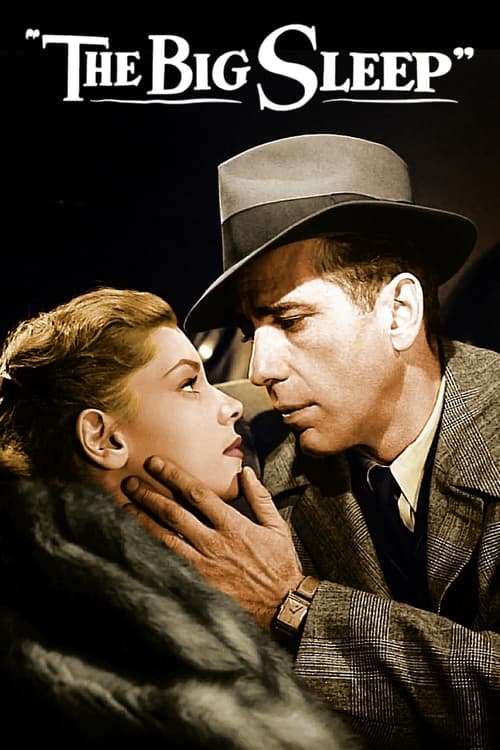
After To Have and Have Not, Bacall appeared with Charles Boyer in Confidential Agent (1945), which was poorly received by critics. By her own estimation, she had been terribly miscast and the film could have caused considerable damage to her career, but her next performance as the mysterious, acid-tongued Vivian Rutledge in Hawks's film noir The Big Sleep (1946), co-starring Bogart, provided a quick career resurgence. The Big Sleep laid the foundation for Bacall's status as an icon of film noir, with which she would be strongly associated for the rest of her career. She was often cast in roles that were variations of the independent and sultry femme fatale character of Vivian. As described by film scholar Joe McElhaney, "Vivian displays an almost total command of movement and gesture. She never crawls."
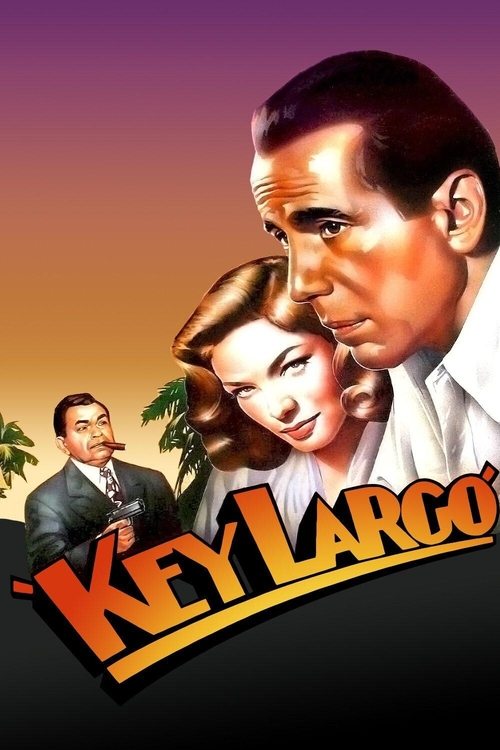
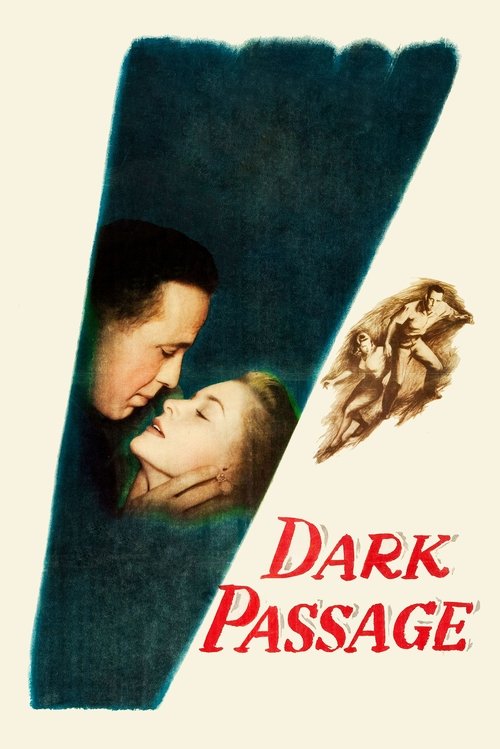
Bacall was cast with Bogart in two more films. In the film noir Dark Passage (1947), she played an enigmatic San Francisco artist. Bosley Crowther of The New York Times wrote: "Miss Bacall ... generates quite a lot of pressure as a sharp-eyed, knows-what-she-wants girl." Bacall appeared in John Huston's melodramatic suspense film Key Largo (1948) with Bogart, Edward G. Robinson and Lionel Barrymore. In the film, according to film critic Jessica Kiang, "Bacall brings an edge of ambivalence and independence to the role that makes her character much more interesting than was written." Bacall and Bogart were parodied in the Warner Brothers Merrie Melodies shorts Bacall to Arms (1946) and Slick Hare (1947).
Bacall rejected scripts that she did not find interesting and thereby earned a reputation of being difficult. However, she further solidified her star status in the 1950s by appearing as the leading lady in a string of films that won favorable reviews. Bacall was cast with Gary Cooper in Bright Leaf (1950) and as a two-faced femme fatale in Young Man with a Horn (1950), a jazz musical co-starring Kirk Douglas, Doris Day and Hoagy Carmichael. From 1951 to 1952, Bacall costarred with Bogart in the syndicated action-adventure radio series Bold Venture.
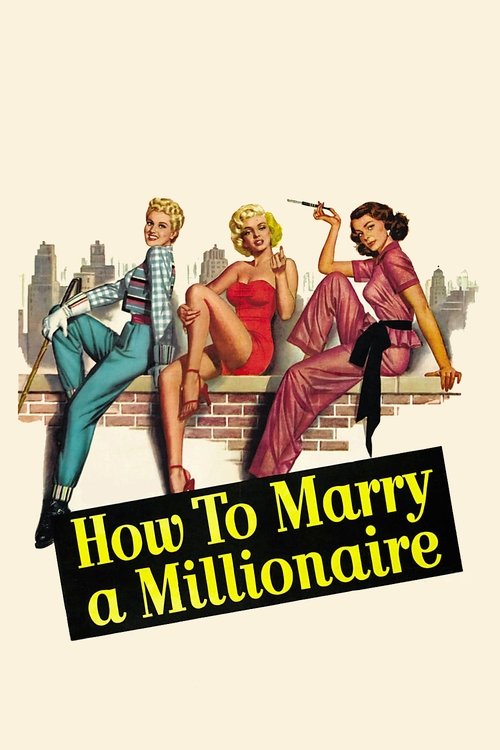
Bacall starred in the first CinemaScope comedy, How to Marry a Millionaire (1953), a runaway hit among critics and at the box office that was directed by Jean Negulesco. She received positive notices for her turn as witty gold-digger Schatze Page. "First honors in spreading mirth go to Miss Bacall," wrote Alton Cook in the New York World-Telegram & Sun, "The most intelligent and predatory of the trio, she takes complete control of every scene with her acid delivery of viciously witty lines." After the success of How to Marry a Millionaire, Bacall declined the opportunity to press her handprints and footprints in the Grauman's Chinese Theatre's famed cement forecourt. She felt that "anyone with a picture opening could be represented there, standards had been so lowered" and did not feel that she had yet achieved the status of a major star and was thereby unworthy of the honor: "I want to feel I've earned my place with the best my business has produced."
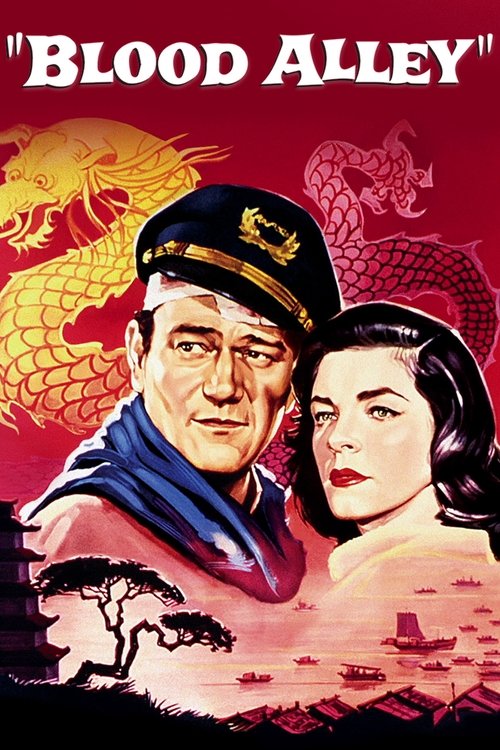
Bacall was under contract to 20th Century-Fox. Following How to Marry a Millionaire, she appeared in yet another CinemaScope comedy directed by Negulesco, Woman's World (1954), which failed to match its predecessor's success at the box office. A television version of Bogart's early film success The Petrified Forest was performed as a 1955 live installment of the weekly dramatic anthology Producers' Showcase, featuring Bogart in his original role of Duke Mantee and starring Bacall and Henry Fonda. In the late 1990s, Bacall donated the only known kinescope of the performance to the Museum of Television & Radio (now the Paley Center for Media), where it remains archived for viewing in New York City and Los Angeles. Bacall starred in two feature films, The Cobweb and Blood Alley, both released in 1955. Directed by Vincente Minnelli, The Cobweb takes place at a mental institution where Bacall's character works as a therapist. It was her second collaboration with Charles Boyer and the film also stars Richard Widmark and Lillian Gish. A New York Times critic wrote: "In the only two really sympathetic roles, Mr. Widmark is excellent and Miss Bacall shrewdly underplays."
Many film scholars consider Written on the Wind (1956), directed by Douglas Sirk, a landmark melodrama. Appearing with Rock Hudson, Dorothy Malone and Robert Stack, Bacall plays a career woman whose life is unexpectedly turned around by a family of oil magnates. Bacall wrote in her autobiography that she did not think much of her role, but reviews were favorable. Variety wrote: "Bacall registers strongly as a sensible girl swept into the madness of the oil family." While supporting Bogart as he suffered from terminal esophageal cancer, Bacall starred with Gregory Peck in Designing Woman (1957) to solid reviews. The comedy was her second feature directed by Minnelli and was released in New York on May 16, 1957, four months after Bogart's death on January 14. Bacall appeared in two more films in the 1950s: the Negulesco-directed melodrama The Gift of Love (1958) with Robert Stack and the British adventure film North West Frontier (1959), which was a box-office hit.