Production
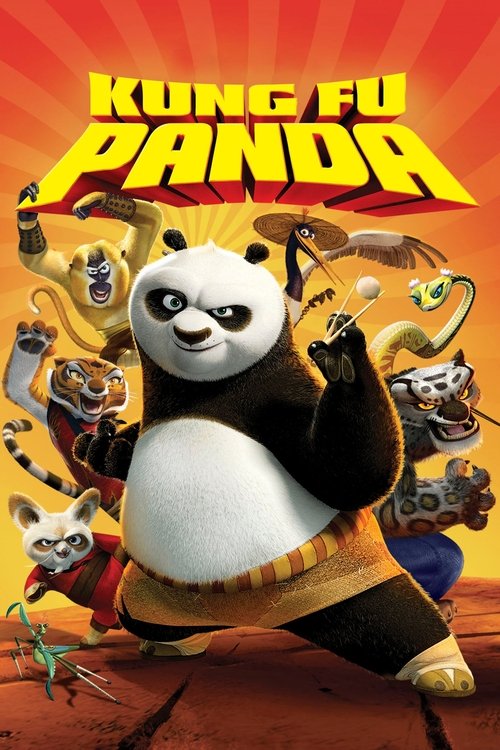
DreamWorks Animation had previously produced a PlayStation video game with a similar premise, T'ai Fu: Wrath of the Tiger, in 1999 under its defunct video game division, DreamWorks Interactive (later known as Danger Close Games). In spring 2004, Eric Whitacre wrote a setting of The Seal Lullaby, the opening poem of The White Seal by Rudyard Kipling, which DreamWorks intended to adapt for an animated feature. A few weeks later, it was decided to abandon the idea and start production on Kung Fu Panda instead. Publicized work on the film began in October 2004. In September 2005, DreamWorks announced the film alongside Jack Black, who was selected to be the main voice star.
In November 2005, DreamWorks announced that Dustin Hoffman, Jackie Chan, Lucy Liu and Ian McShane would join Black in the cast. This is also the second DreamWorks Animation film in which Black and Angelina Jolie have co-starred together (the first being 2004's Shark Tale).
The idea for the film was conceived by Michael Lachance, a DreamWorks Animation executive. Initially, the idea was to make it a spoof, but co-director John Stevenson was not particularly keen on it and instead chose the direction of a character-based wuxia comedy.
The screenplay for the film was written by Jonathan Aibel and Glenn Berger, who before were writers and producers for various TV series, including The George Carlin Show, Mad TV, and King of the Hill, with a story conceived by Ethan Reiff and Cyrus Voris. Reportedly inspired by Stephen Chow's 2004 martial arts action comedy film, Kung Fu Hustle, the directors wanted to make sure the film had an authentic Chinese and kung fu feel to it. Production designer Raymond Zibach and art director Tang Heng spent years researching Chinese painting, sculpture, architecture and kung fu films to help create the look of the film. Zibach said that some of the biggest influences for him were the more artful martial arts films, such as Hero, House of Flying Daggers and Crouching Tiger, Hidden Dragon. Stevenson's aim for the film, which took four years to make, was to make "the best looking film DreamWorks has ever made".
Animator Joel Crawford served as a storyboard artist for Kung Fu Panda beginning in early 2007, marking his first animation work for a DreamWorks film.
The hand-drawn animation sequence at the beginning of the film was made to resemble Chinese shadow puppetry. The opening, which was directed by Jennifer Yuh Nelson and produced by James Baxter, was praised by The New York Times reviewer Manohla Dargis as "striking" and "visually different from most mainstream American animations".
Other reviewers have compared the opening to the evocative style of Genndy Tartakovsky's Cartoon Network series Samurai Jack. The rest of the film is modern computer animation, which uses bright, offbeat colors to evoke the natural landscape of China. The end credit sequence also features hand-drawn characters and still paintings in the background.
The computer animation used throughout the film was more complex than anything DreamWorks had done before. When the head of the production handed the script to VFX Supervisor Markus Manninen, she reportedly laughed and wished him "good luck". "When we started talking", said Manninen, "the movie was still a high concept. But for everyone that looked at it, it screamed complexity. We launched off by saying, how can you make this movie tangible? How can you find smart ways to bring this world to life in a way that makes it a great movie and not feel like the complexity becomes the driver of the story, but the story and the emotion being the driver?" In preparation, the animators took a six-hour kung fu class.
Producer Melissa Cobb said that Po was originally "more of a jerk", but that the character changed after they heard Black. According to Black, he worked mostly "in isolation", although he and Dustin Hoffman did spend a day together, which Cobb said helped with the scene in which their characters face off. Lucy Liu said that the film "was quite different because it was such a long process". Liu said that when she was presented with the project, they already had artwork of her character, as well as a "short computerized video version of what she would look like when she moved".