Pre-war Paris and rise to fame
A 1936 interview with Baker in The New York Times reported that, After the Plantation Club there was a Mrs. Caroline Dudley. "She was interested in art and she got up a Negro revue and took us to Europe." The "Revue Nègre" that was, bound for a tour of European capitals.
Baker sailed to Paris in 1925 and opened on October 2 in La Revue nègre at Théâtre des Champs-Élysées, performing Danse Sauvage with fr:Joe Alex, barely wearing a feather skirt. She was 19 at the time. In a 1974 interview with The Guardian, she explained that her first big break came in this bustling European city:No, I didn't get my first break on Broadway. I was only in the chorus in 'Shuffle Along' and 'Chocolate Dandies.' I became famous first in France in the twenties. I just couldn't stand America and I was one of the first coloured Americans to move to Paris. Oh yes, Bricktop was there as well. Me and her were the only two, and we had a marvellous time. Of course, everyone who was anyone knew Bricky. And they got to know Miss Baker as well.
In Paris, she became an instant success for her erotic dancing and for appearing practically nude onstage. After a successful tour of Europe, she broke her contract and returned to France in 1926 to star at the Folies Bergère, setting the standard for her future acts. In a 1926 performance in the revue La Folie du jourat the popular concert hall Folies Bergère, Baker first wore her iconic banana skirt costume.
Baker's success coincided with the 1925 Exposition des Arts Décoratifs, which gave birth to the term "Art Deco", as well as a renewed interest in non-Western art forms, including those of African origin, which Baker would represent. In later shows in Paris, she was often accompanied on stage by her pet cheetah, "Chiquita", donning a diamond collar. Chiquita frequently escaped into the orchestra pit, terrorizing the musicians and adding another element of excitement to the show.
After a while, Baker became the most successful American entertainer in France. Ernest Hemingway called her "the most sensational woman anyone ever saw." The author spent hours talking with her in Parisian bars, Picasso depicted her alluring beauty, and Jean Cocteau became friendly with her. Baker endorsed a "Bakerfix" hair gel, as well as bananas, shoes, and cosmetics, among other products.
In 1929, Baker became the first African-American star to visit Yugoslavia, which she included on a tour through Central Europe via the Orient Express. In Belgrade, she performed at Luxor Balkanska, then the city's most luxurious venue. In a nod to local culture, she included a Pirot kilim in her routine and donated some of the show's proceeds to poor children of Serbia. In Zagreb, adoring crowds greeted her at the train station, but opposition from local clergy and morality police led to the cancellation of some of her shows.
During her travels in Yugoslavia, Baker was accompanied by "Count" Giuseppe "Pepito" Abatino. At the start of her career in France, Abatino, a Sicilian former stonemason who passed himself off as a count, persuaded her to let him manage her. He became not only Baker's manager, but her lover as well. The two could not marry because she was not yet divorced from her second husband, Billy Baker. In 1926, Abatino established the first Chez Josephine cabaret at 40 Rue Fontaine, in Montmartre, Paris, as a gift to Baker.
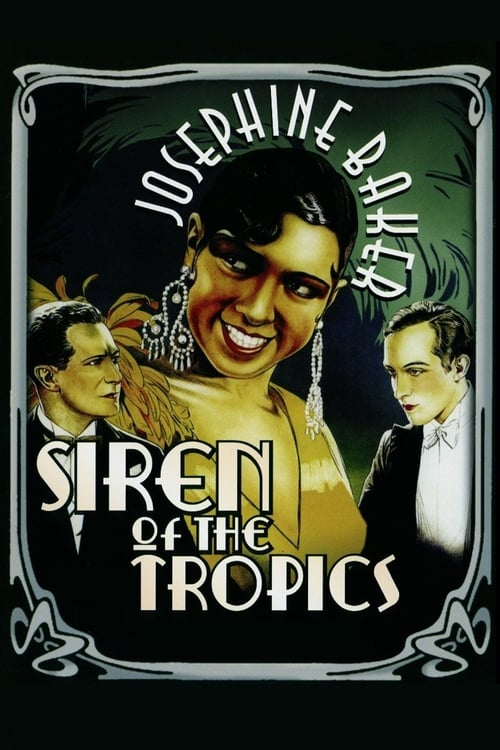
In 1930, Baker sang professionally for the first time. During this period, she released her most successful song, "J'ai deux amours" (1930, "I have two loves: my country and Paris."). The song expresses the sentiment that "I have two loves, my country and Paris." In a 2007 book, Tim Bergfelder, Sue Harris, and Sarah Street claimed that "by the 1930's, Baker's assimilation into French popular culture had been completed by her association with the song." She starred in four films, which found success only in Europe: the silent film Siren of the Tropics (1927), and the sound films Zouzou (1934), Princesse Tam Tam (1935), and Fausse alerte (1940). Bergfelder, Harris, and Street wrote that Siren of the Tropics "rehearses the 'primitive-to-Parisienne' narrative that would become the staple of Baker's cinema career, and exploited in particular her comic stage persona based on loose-limbed athleticism and artful clumsiness." Zouzou and Princesse Tam Tam were both star vehicles for Baker.
Under the management of Abatino, Baker's stage and public persona, as well as her singing voice, were transformed. In 1934, she took the lead in a revival of Jacques Offenbach's opera La créole, which premiered in December of that year for a six-month run at the Théâtre Marigny on the Champs-Élysées of Paris. In preparation for her performances, she went through months of training with a vocal coach. In the words of Shirley Bassey, who has cited Baker as her primary influence, "... she went from a petite danseuse sauvage with a decent voice to la grande diva magnifique... I swear in all my life I have never seen, and probably never shall see again, such a spectacular singer and performer."
Despite her popularity in France, Baker never attained the equivalent reputation in America. Her star turn in a 1936 revival of "Ziegfeld Follies" on Broadway was not commercially successful, and later in the run she was replaced by Gypsy Rose Lee. Time magazine referred to her as a "Negro wench ... whose dancing and singing might be topped anywhere outside of Paris", while other critics said her voice was "too thin" and "dwarf-like" to fill the Winter Garden Theatre. She returned to Europe heartbroken. This contributed to Baker's becoming a legal citizen of France and giving up her American citizenship.
In 1936, Paul Derval (1880–1966) brought Baker from New York City to Paris to lead the revue En Super Folies, opening in October 1936. The show starred Baker in 1936, and continued in 1937. A film of En Super Folies was released.
In 1936, she established a second "Chez Josephine" cabaret in New York City, the first of which Baker had invested her own money. "Josephine Baker, the famous colored star who faintly shocked Paris with her daring stage appearances, is the owner of a supper-club in New York. It is called 'Chez Josephine Baker,' and on the opening night (25 February 1936), complete with paper snowballs, serpentine, and all the other weapons of all-night-club warfare, Josephine was handed a beribboned parcel that revealed a tiny snorting piglet in a crate" (November 2, 1936). On December 17, 1948, a Chez Josephine cabaret opened in Paris. In 1986, Jean-Claude Baker opened Chez Josephine in New York City.
In 1937, Baker married the French industrialist Jean Lion, thus becoming a French citizen. They were married in the French town of Crèvecœur-le-Grand, in a wedding presided over by the mayor, Jammy Schmidt.
Between 1933 and 1937, Baker was a guest at the start of the Tour de France on four occasions. After enduring severe hostility in Germany and Eastern Europe during the late 1920s—where she was targeted by storm troopers with ammonia bombs and told to "Go back to Africa"—she was spurred to actively participate in the French Resistance against the Nazis.