The Sternberg-Dietrich Hollywood Collaborations: 1930–1935
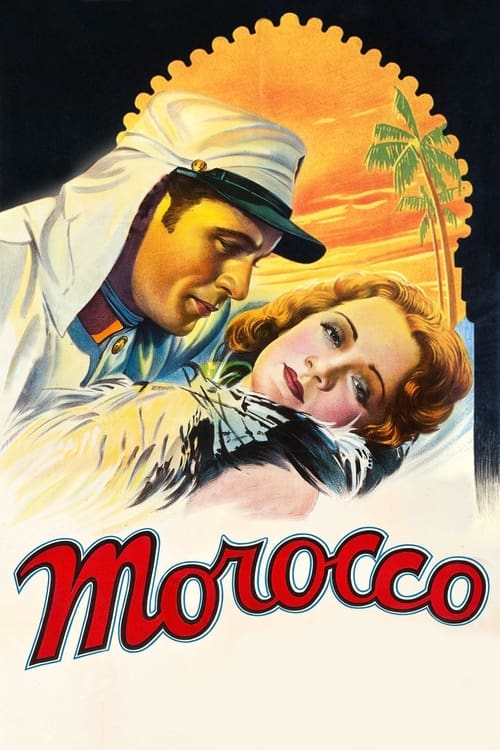
Sternberg and Dietrich would unite to make six brilliant and controversial films for Paramount: Morocco (1930), Dishonored (1931), Shanghai Express (1932), Blonde Venus (1932), The Scarlet Empress (1934), and The Devil is a Woman (1935).
The stories are typically set in exotic locales including Saharan Africa, World War I Austria, revolutionary China, Imperial Russia, and fin-de-siècle Spain.
Sternberg's "outrageous aestheticism" is on full display in these richly stylized works, both in technique and scenario. The actors in various guises represent figures from Sternberg's "emotional biography", the wellspring for his poetic dreamscapes.
Sternberg, largely indifferent to the studio publicity or to his movies' commercial success, enjoyed a degree of control over these pictures that permitted him to conceive and execute these works with Dietrich.
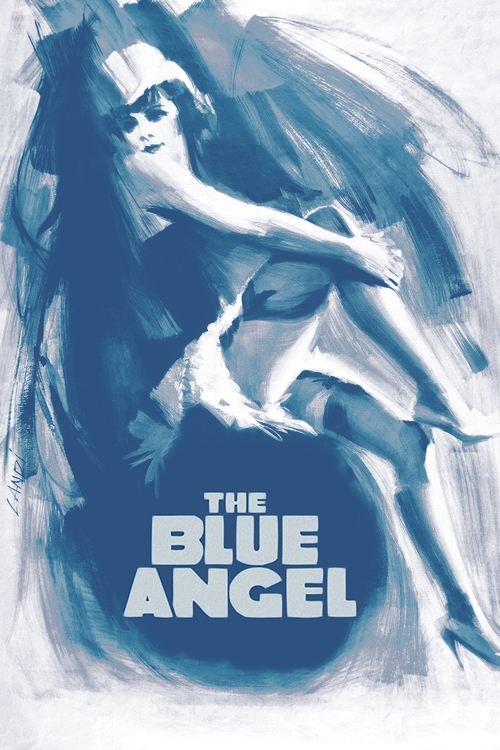
Seeking to capitalize on the immense European success of The Blue Angel, though not yet released to American audiences, Paramount launched the Hollywood production of Morocco, an intrigue-romance starring Gary Cooper, Dietrich and Adolphe Menjou. The all-out promotional campaign declared Dietrich "the woman all women want to see", providing a fascinated public with salacious hints about her private life and adding to the star's glamor and notoriety. The fan press inserted an erotic component into her collaboration with Sternberg, encouraging Trilby-Svengali analogies. The publicity tended to distract critics from the genuine merits of the five movies that would follow and overshadowing the significance of Sternberg's lifetime cinematic output.
Morocco serves as Sternberg's exploration of Dietrich's aptitude for conveying onscreen his own obsession with "feminine mystique", a mystique that allowed for a sexual interplay blurring the distinction between male and female gender stereotypes. Sternberg demonstrates his fluency in the visual vocabulary of love: Dietrich dresses in drag and kisses a pretty female; Cooper flourishes a ladies' fan and places a rose behind his ear. In terms of romantic complexity, Morocco "is Sternberg's Hollywood movie par excellence".
The box-office success of Morocco was such that both Sternberg and Dietrich were awarded with contracts for three more films and generous increases in salary. The film earned Academy Award nominations in four categories.
Dishonored, Sternberg's second Hollywood film, featuring Dietrich opposite Victor McLaglen, was completed before Morocco was released. A film of considerable levity but plot-wise one of his slightest works, this espionage-thriller is a sustained romp through the vicissitudes of spy-versus-spy deception and desire. The feature closes with the melodramatic military execution of Dietrich's Agent X-27 (based on Dutch spy Mata Hari), the love-struck femme fatale, a scene that balances "gallantry and ghoulishness."
Dishonored had not met with the studio's profit expectations at the box-office, and Paramount New York executives were struggling to find a vehicle to commercially exploit the "mystique and glamor" with which they had endowed the Sternberg-Dietrich productions. While Dietrich was visiting her husband, Rudolf Sieber and their daughter Maria Riva in Europe during the winter of 1930–31, Paramount enlisted Sternberg to film an adaption of novelist Theodore Dreiser's novel An American Tragedy.
The production was initially under the direction of preeminent Soviet filmmaker Sergei Eisenstein. His socially deterministic filmic treatment of the novel was rejected by Paramount, and Eisenstein withdrew from the project. Already heavily invested financially in the production, the studio authorized a complete revision of the planned feature. While retaining Dreiser's basic plot and dialogue, Sternberg eliminated its contemporary sociological underpinnings to present a tale of a sexually obsessed middle-class youth (Phillips Holmes) whose deceptions lead to the death of a poor factory girl (Sylvia Sidney). Dreiser was outraged at Sternberg's failure to adhere to his themes in the adaptation and sued Paramount to stop distribution of the movie, but lost his case.
Images of water abound in the film and serve as a motif signaling Holmes' motivations and fate. The photography by Lee Garmes invested the scenes with a measure of intelligence and added visual polish to the overall production. Sternberg's role as replacement director curbed his artistic investment in the project. As such, the picture bears little resemblance to his other works of that decade. Sternberg expressed indifference to the mixed critical success it received and banished the picture from his oeuvre.
When Dietrich returned to Hollywood in April 1931, Sternberg had emerged as a top-ranking director at Paramount and was poised to begin "the richest and most controversial phase of his career." In the next three years he would create four of his greatest films. The first of these was Shanghai Express.
The theme of the work, as in most of Sternberg's films, is "an examination of deception and desire" in a spectacle pitting Dietrich against Clive Brook, a romantic struggle in which neither can satisfactorily prevail. Sternberg strips the denizens of the train, one-by-one, of their carefully crafted masks to reveal their petty or sordid existences. Dietrich's notoriously enigmatic character, Shanghai Lily, transcends precise analysis but reflects Sternberg's own personal involvement with his star and lover. Scriptwriter Jules Furthman famously provided Dietrich with the poignant admission, "It took more than one man to change my name to Shanghai Lily."
Sternberg honored the former filmmaker and early mentor Émile Chautard by casting him as the bemused Major Lenard.
With Shanghai Express, Sternberg exhibits complete mastery over every element of his work: décor, photography, sound and acting. Lee Garmes, who would serve as cinematographer on this suite of films, won an Academy Award, and both Sternberg and the movie were nominated in their categories.
When Sternberg embarked on his next feature, Blonde Venus, Paramount Pictures' finances were in jeopardy. Profits had plummeted due to a decline in theatre attendance among working class moviegoers. Fearing bankruptcy, the New York executives tightened control over Hollywood film content. Dietrich's heretofore forthright portrayals of demi-mondes (Dishonored, Shanghai Express) were suspended in favor of a heroine who embraced a degree of American-style domesticity. Producer B. P. Schulberg was banking on the success of further Sternberg-Dietrich collaborations to help the studio survive the financial downturn.
Sternberg's original story for Blonde Venus and the screenplay by Furthman and S.K. Lauren presents a narrative of a fallen woman, with the caveat that she is ultimately forgiven by her long suffering husband. The narrative exhibited the "sordid self-sacrifice" that was de rigueur for Hollywood's top female performers, yet the studio balked at the redemptive denouement.
When Sternberg declined to alter the ending, Paramount put the project on hold and threatened the filmmaker with a lawsuit. Dietrich joined Sternberg in defying the New York executives. Minor adjustments were made that satisfied the studio, but Sternberg's compromises would revert to him after the less than stellar critical and box-office success of the movie.
Paramount's toleration of the duo's defiance was conditioned largely by the considerable profits that they were reaping from Shanghai Express, over $3 million in early distribution.
Blonde Venus opens with the idealized courtship and marriage of Dietrich and mild-mannered chemist Herbert Marshall. Quickly ensconced as a Brooklyn, New York housewife and burdened with an impish son Dickie Moore, she is compelled to make herself a mistress to politico and nightclub gangster Cary Grant when her husband requires expensive medical treatment for radiation exposure. The plot grows increasingly improbable as Dietrich resurrects her theatrical career that takes to exotic locations around the world – with her little boy in tow.
The movie is ostensibly about the devotion of a mother for her child, a subject that Sternberg uses to dramatize the traumas of his own childhood and his harsh experiences as a transient laborer in his youth. With Blonde Venus, Sternberg reached his apogee stylistically. A film of great visual beauty achieved through multiple layers of evocative décor where style displaces and transcends personal characterizations.
Between the highly episodic narrative, disparate locales, and an unimpressive supporting cast, the movie is frequently dismissed by critics.
Blonde Venus's "camp" designation is attributable in part to the outrageous and extremely stylized "Hot Voodoo" nightclub sequence. Dietrich, the beauty, assumes the role of the beast and emerges from an ape costume.
Paramount's expectations for Blonde Venus were out of proportion to realities of declining theatre attendance. Though not an unprofitable picture, the less than robust critical acclaim weakened the studio's commitment to sustaining further Sternberg-Dietrich creations.
At odds with Paramount and their individual contracts nearly expired, Sternberg and Dietrich privately conceived of forming an independent production company in Germany. Studio executives were suspicious when Sternberg offered no objections when Dietrich was scheduled to star in director Rouben Mamoulian's The Song of Songs (1933) in the final weeks of her term. When Dietrich balked at the assignment, Paramount quickly sued her for potential losses. Courtroom testimony revealed that she was preparing to abscond to Berlin to pursue filmmaking with Sternberg. Paramount prevailed in court, and Dietrich was required to remain in Hollywood and complete the film. Any hopes for such a venture were dashed when the National Socialists were ushered into power in January 1933 and Sternberg returned to Hollywood in April 1933. Abandoning their plans for independent filmmaking, both Sternberg and Dietrich reluctantly signed a two-film contract with the studio on May 9, 1933.
Reacting to Paramount's increasing coolness towards his films and to the general disarray that plagued studio management since 1932, Sternberg prepared to make one of his most monumental movies: The Scarlet Empress, a "relentless excursion into style" that would antagonize Paramount and mark the onset of a distinct phase in his creative output.
The Scarlet Empress, an historical drama concerning the rise of Catherine the Great of Russia, had been adapted to film on several occasions by American and European directors when Sternberg began organizing the project. In this, his penultimate film starring Dietrich, Sternberg abandoned contemporary America as a subject and contrived a fantastical 18th-century Imperial Russia, "grotesque and spectacular", stupefying contemporary audiences with its stylistic excesses.
The narrative follows the rise of the child Sophia "Sophie" Frederica through adolescence to become Empress of Russia, with special emphasis on her sexual awakening and her inexorable sexual and political conquests. Sternberg's decision to examine the erotic decadence among 18th-century Russian nobility was partly an attempt to blindside censors, as historical dramas ipso facto were granted a measure of decorum and gravity. The sheer sumptuousness of the sets and décor obscure the allegorical nature of the film: the transformation of the director and star into pawns controlled by the corporate powers that exalt ambition and wealth, "a nightmare vision of the American dream."
The film portrays 18th-century Russian nobility as developmentally arrested and sexually infantile, a disturbed and grotesque portrayal of Sternberg's own childhood experiences, linking eroticism and sadism. The opening sequence examines the young Sophia (later Catherine II) early sexual awareness, conflating eroticism and torture, that serves as a harbinger of the sadism that she will indulge in as an empress. Whereas Blonde Venus portrayed Dietrich as a candidate for mother love, the maternal figures in The Scarlet Empress make a mockery of any pretense to such idealizations. Dietrich is reduced to a fantastic and helpless clothes horse, bereft of any dramatic function.
Despite withholding distribution of the film for eight months, so as not to compete with the recently issued United Artists film The Rise of Catherine the Great (1934), starring Elisabeth Bergner, the movie was dismissed by critics and the public. Americans, preoccupied with the challenges of the financial crisis were in no mood for a picture that appeared to be an exercise in self-indulgence. The film's conspicuous failure among moviegoers was a blow to Sternberg's professional reputation, recalling his 1926 disaster, A Woman of the Sea.
Sternberg embarked on the final film of his contract knowing that he was finished at Paramount. The studio was undergoing a realignment in management that was the fall of producer Schulberg, a Sternberg stalwart, and the rise of Ernst Lubitsch, which did not bode well for the director. As his personal relationship with Dietrich deteriorated, the studio made clear that her professional career would proceed independently of his. With the cynical blessing of incoming production manager Ernst Lubitsch, Sternberg was given full control over what would be his final film with Marlene Dietrich: The Devil is a Woman.
The Devil is a Woman is Sternberg's cinematic tribute and confession to his collaborator and muse Marlene Dietrich. In this final tribute he sets forth his reflections on their five-year professional and personal association.
His key thematic preoccupation is fully articulate here: the spectacle of an individual's conspicuous loss of prestige and authority as the price demanded for surrendering to a sexual obsession. To this endeavor Sternberg brought to bear all the sophisticated filmic elements at his disposal. Sternberg's official handling of the photography is a measure of this.
Based on a novel by Pierre Louÿs, The Woman and the Puppet (1908), the drama unfolds in Spain's famous carnival at the end of the 19th century. A love triangle develops pitting the young revolutionary Antonio (Cesar Romero) against the middle-aged former military officer Don Pasqual (Lionel Atwill) in a contest for the love of the devastatingly beautiful demi-mondaine Concha (Dietrich). Despite the gaiety of the setting, the film has a dark, brooding, reflective quality. The contest ends in a duel where Don Pasqual is wounded, perhaps mortally: the denouement is never made explicit.
More so than any of his previous pictures, Sternberg picked a leading man (Atwill) who is the director's double in more than facial appearance: short stature, stern countenance, proud bearing, verbal mannerisms and immaculate attire. Sternberg has effectively stepped from behind the camera to play opposite Dietrich. This deliberate self-portraiture signals that the film is a submerged commentary on the decline of his career in the movie industry as well as his loss of Dietrich as a lover. The sharp exchanges between Concha and Pasqual are filled with bitter recriminations. The players do not emote to convey feeling. Rather, Sternberg carefully applies layer upon layer of décor in front of the lens to create a three-dimensional effect. When an actor steps into this pictorial canvas, the most delicate gesture registers emotion. His outstanding control over the visual integrity is the foundation for much of the eloquence and force of Sternberg's cinema.
The March 1935 premiere of The Devil is a Woman in Hollywood was accompanied by a press statement from Paramount announcing that Sternberg's contract would not be renewed. The director anticipated his termination with his own declaration before the film's release explicitly severing his professional ties with Dietrich, writing "Miss Dietrich and I have progressed as far as possible ... if we continued, we would get into a pattern that would be harmful to both of us."
Even with better than expected reviews, The Devil is a Woman cost Sternberg his reputation in the film industry. Sternberg would never again enjoy the largesse nor the prestige that had been conferred on him at Paramount.
A postscript to the release of The Devil is a Woman concerns a formal protest issued by the Spanish government protesting the film's purported disparagement of "the Spanish armed forces" and an insult to the character of the Spanish people. The objectionable scenes depict Civil Guards as inept at controlling carnival merrymakers, and a shot of a policeman consuming an alcoholic beverage in a café. Paramount president Adolph Zukor agreed to suppress the picture in the interest of protecting US-Spain trade agreements – and to protect Paramount film distribution in the country.