Early
Milius's first completed script was Los Gringos (1968). "It actually wasn't bad", he later said. "It was sort of like The Wild Bunch ... there was a lot of killing and shooting and riding and dust ... sombreros. ... It was a pretty good idea, actually. It had everything, and it was certainly as original as The Wild Bunch, but it wasn't as skillfully written as later stuff."
He followed this with The Last Resort which was optioned by Michael S Laughlin in 1969. Milius says, "Neither of them were ever made, but I was able to option them. I had them rented out for like $5,000 a year."
Milius then got a summer job working at the story department of American International Pictures through a student colleague of his who had begun working there, Willard Huyck. Huyck and Milius worked at AIP under producer Larry Gordon, reading scripts. They eventually collaborated on a rewrite of the screenplay for The Devil's 8 (1968), an action drama about moonshine drivers which ripped off The Dirty Dozen (1968).
Milius's name had been mentioned in a 1968 Time magazine article about the new generation of Hollywood filmmakers, which also referred to George Lucas and Martin Scorsese. This was read by Mike Medavoy, who became Milius's agent. Medavoy called Milius "a badboy mad genius in a teenager's body, but he was a good and fast writer with original ideas."
Milius began to get writing commissions. He wrote a script entitled The Texans for Al Ruddy at Paramount, a contemporary version of Red River (1948) (never made, although Sam Peckinpah was going to direct it in 1979)— Milius later said it "wasn't very good". He also wrote an original called Truck Driver (aka The Haul) which was purchased by Levy-Garner-Laven, although that film too was not made.
Milius later said he "didn't do a good job" with these two early scripts "because in both cases I was influenced by the people who had hired me. They said put this in and put that in, and I went along with it. Every time I went along with something in my whole career it usually didn't work. Usually there's a price to pay. You think of selling out, but there is a price to pay. Usually what people want you to do is make it current."
Milius then wrote Jeremiah Johnson, a story loosely based on the life of the mountain man Liver-Eating Johnson.
Milius later said this was "the real breaking point" where he knew "almost overnight ... that I had become a good writer with a voice.":
I knew that material. I'd lived in the mountains, I had a trapline, I hunted, and I had a lot of experiences with characters up there. So, it was real easy to write that and there was a humor to it, a kind of bigger-than-life attitude. I was inspired by Carl Sandburg. I read a lot of his poetry and it's this kind of abrupt description—"a train is coming, thundering steel, where are you going? Wichita." That great kind of feeling that he had, that's what I was trying to do there. I remember there was a great poem about American braggarts. You know, American liars—"I am the ring-tailed cousin to the such and such that ate so and so and I can do this and I can do that better than Mike Fink the river man ..." I just realized that this was the voice that the script had to have. It was as clear as a bell. I knew that writing was particular to me.
Milius sold the script to Warner Bros. in 1970 for $5,000, going up to $50,000 if it was ever made. Warner Bros. had other writers work on the original script based on The Crow Killer. Milius was also called back to work on it, and his fee grew each time. (He eventually made $90,000 on the film.) Eventually, Robert Redford agreed to play the lead and Sydney Pollack signed to direct.
Milius wrote an uncredited draft of Dirty Harry (1971). He says his contribution to the film was "A lot of guns. And the attitude of Dirty Harry, being a cop who was ruthless. I think it's fairly obvious if you look at the rest of my work what parts are mine. The cop being the same as the killer except he has a badge. And being lonely." Dirty Harry was an enormous box office hit.
George Hamilton hired Milius to rewrite Evel Knievel (1971), a biopic of the stunt rider, at a fee of $1,000 a day. Milius re-did the entire script over seven days.
He wrote an original script, The Life and Times of Judge Roy Bean, about the famous judge. He offered it for $150,000 if he could direct, but could find no takers. He sold it to First Artists for $300,000, then extremely high for a script. Directed by John Huston and starring Paul Newman, it was a moderate hit, although Milius disliked the final result. "I fought every day", he said. "And I was blooded well. I was treated horribly." More popular was Jeremiah Johnson.
Milius did some work with David Giler on the script which became The Black Bird.
By now Milius was one of the most sought after screenwriters in Hollywood, seen as a colorful character with a talent for lively interviews. His self-styled "Zen Anarchist"/"American samurai" persona made him stand out in Hollywood. For instance, he rewrote Dirty Harry only on the condition that he be given an expensive gun. He was also one of the inspirations for the character of John Milner in the enormously successful American Graffiti (1973). Milius said of this film, "I guess he [Lucas] saw me in that light because I was a surfer going past my time."
He also wrote the first draft of the Dirty Harry sequel, Magnum Force (1973). Milius later said "I don't like Magnum Force. Of all the films I had anything to do with, I like it least. They changed a lot of things in a cheap and distasteful manner." It was however successful at the box office.
Milius wanted to move behind the camera. "Being a director is the only way anyone will listen to you in Hollywood", he said. "It's the next best thing to being a star."
Gangster films were popular at the time and AIP offered him the chance to direct one if he would write it for a fraction of his regular fee. Milius agreed and wrote and directed Dillinger (1973). "I deliberately chose Dillinger because he was a pure criminal", said Milius. "Robbing banks to right social wrongs did not come into it."
The movie was moderately successful and launched Milius's directing career. He worked on the script for a TV sequel, Melvin Purvis: G-Man (1974), a pilot for a proposed series about Melvin Purvis (there was a second TV movie, but no series), but did not like the director, Dan Curtis, or the experience of working for TV.
Contemporary film critics grouped Milius in with the emerging "movie brats" generation of filmmakers that also including Lucas, Coppola, Terrence Malick, and Scorsese.
In 1974, David Picker announced he would produce Ranch Life and the Hunting Trail directed by Milius and written by Winfred Blevins, about Theodore Roosevelt. The film was never made. Neither was The Life and Times of Joe McCarthy, a proposed biopic about the famous anti-Communist Senator, which Milius declared interest in making.
Milius next wrote and directed the popular adventure film The Wind and the Lion (1975), which starred Sean Connery and Candice Bergen. He later said he felt this was his first "real" movie.
He intended to follow this with Give Your Heart to the Hawks, a story about mountain man Jedediah Smith in the 1820s based on the novel by Winfred Blevins "It's my interpretation of Jedediah Smith, which might not be exactly historical", said Milius. "It'll be about exploration, about the need to see what's over the next ridge and what that does, what price you pay, to find out. Like Dirty Harry, Smith is a classic lone man, with a searing loneliness about him. A leader of men is always alone." It was never made; neither was Man-Eaters of Kumoan (1976) based on book by Jim Corbett about a tiger hunter in India which Milius worked on.
For several years, he developed with Stanley Kubrick an adaptation of Night Drop by S. L. A. Marshall. "We talked about it for years and years and worked on it for a long time, but we never did it."
Milius did come close to making Extreme Prejudice, based on his script, in 1976. However he decided to make Big Wednesday instead; Extreme Prejudice would be made a decade later, much rewritten, and directed by Walter Hill.
In 1975, Milius formed his own production company, The A Team, with Buzz Feitshans, who had edited Dillinger. They had a five-year deal with Warner Bros.. Milius said, "Our motto is Civitas Sine Prudentia, which really translates to Social Irresponsibility; I believe in it. It's refreshing, it's liberating. Americans are basically socially irresponsible ... Who else would have invented the atomic bomb quite the same way? The Nazis would have invented it with the desire to conquer the world; we were the only people that could have invented it with the desire not to conquer the world"
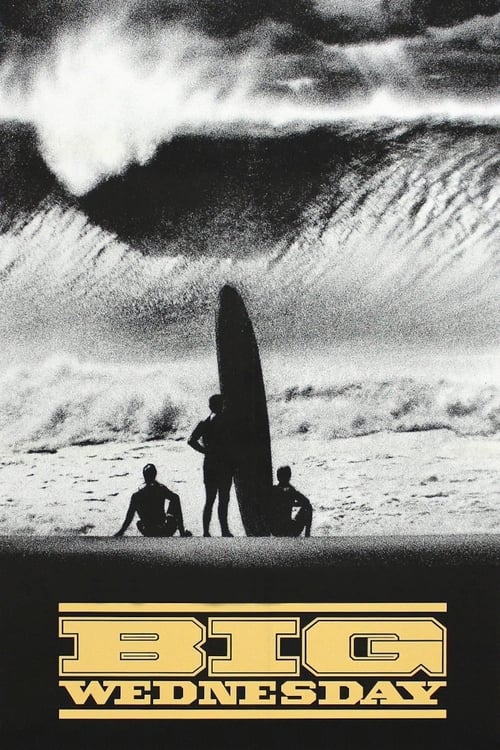
Its first production was an autobiographical surfing picture, Big Wednesday (1978), which he called "a surfing How Green Was My Valley". This was a major commercial disappointment although it has gone on to be a cult film. Milius's friendship with George Lucas saw him given a percentage of the profits for Star Wars, which Mike Medavoy estimated earned Milius $1.5 million—in exchange Milius gave Lucas a percentage of the profits for Big Wednesday which amounted to virtually nothing.
In 1979, Milius said "the ultimate aim of the A Team is that it will become a company that makes lots of projects. I shall be the figurehead and the father figure and take a percentage and I won't have to do anything except go off and direct my movie once every three years."
The A Team made a number of movies not directed by Milius. Notably, they produced the first three films from Robert Zemeckis and Bob Gale: I Wanna Hold Your Hand, 1941 (directed by Steven Spielberg), and Used Cars. He also produced Hardcore, directed by friend Paul Schrader.
Schrader once described Milius's writing as containing too many good lines and scenes. He says Warren Beatty once "told John something I've been telling him too: 'You come too soon and you come too often.'... He's so full of juice he just can't stop coming, rather than holding back and tightening the situation and building characters. That releasing diffuses the energy, the characters are too broad because they never have time to build up the inner strength."
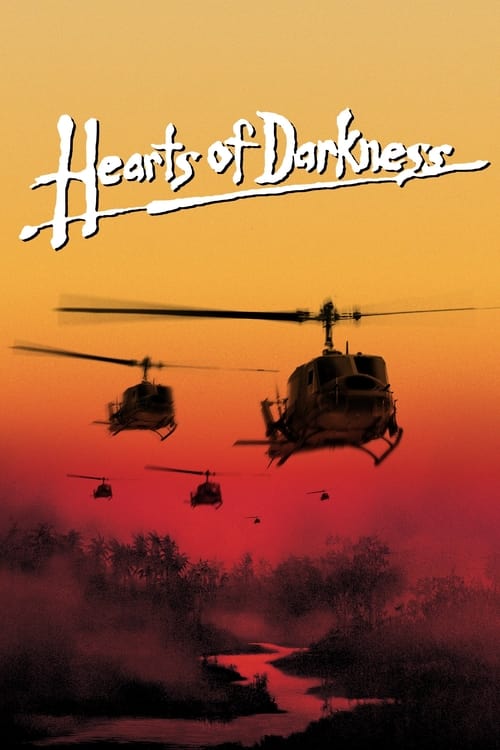
Milius says he was offered $17,000 to rewrite Skin Game (1971) but then Francis Ford Coppola made a competing offer of $15,000 for Milius to write Apocalypse Now. Apocalypse Now was an adaptation of Heart of Darkness set in the Vietnam War which George Lucas intended to direct as a follow-up to his first feature THX 1138 (1971). Milius says Coppola:
Offered that wonderful fork in the road where I could go do my own thing rather than just rewrite some piece of crap that would probably be rewritten by somebody else. That was the most important decision I made in my life as a writer. That sort of steered me onto the path of doing my own work and being a little more like a novelist ... I tackled an unpopular subject that no one was going to make a movie about where the chances were really slim that I could pull it off. There was no book, nothing but me and the blank page. And that was wonderful because I had followed my heart. One of the nicest times in my life was writing Apocalypse Now.
The commercial failure of THX 1138 delayed production plans for Apocalypse Now. Milius later said of the Apocalypse Now script, "No one would touch it because of the Vietnam War. Everyone loved it, it did more for my career than any other script because it was always considered a work of genius; from the minute it came out, it really stirred people up. It's a good script, it's certainly no work of genius. It churns people up, and that's what they think works of genius are supposed to do."
However, the following year saw the release of Apocalypse Now, directed by Francis Ford Coppola. Coppola rewrote the script, which Milius disliked. "He wanted to ruin it, liberalize it, and turn it into Hair", said Milius in 1976. "He sees himself as a great humanitarian, an enlightened soul who will tell you such wonderful things as he does at the end of Godfather 2 -- that crime doesn't pay ... Talent-wise, he's no John Ford; character-wise, he's no Steve Spielberg. Francis can't stand to have any other creative influence around ... Francis Coppola has this compelling desire to save humanity when the man is a raving fascist, the Bay Area Mussolini."
The film was released in 1979 to great acclaim.
Milius's old agent, Mike Medavoy, helped establish Orion Pictures in 1978 and one of their first movies was going to be East of Suez, written and directed by Milius. It was not made.
Spielberg said in 1978 that Milius was key to the group of young filmmakers known as the New Hollywood, which included himself, Lucas, and Coppola:
John is our Scoutmaster. He's the one who will tell you to go on a trip and only take enough food, enough water for one day, and make you stay out longer than that. He's the one who says, "Be a man. I don't want to see any tears." He's a terrific raconteur, a wonderful story teller. John has more life than all the rest of us put together.
(Quentin Tarantino said he could imagine the film Deliverance being about "Hollywood filmmakers: you can imagine Spielberg, Lucas, and Scorsese as the husbands. And you can really imagine John Milius as Lewis.")
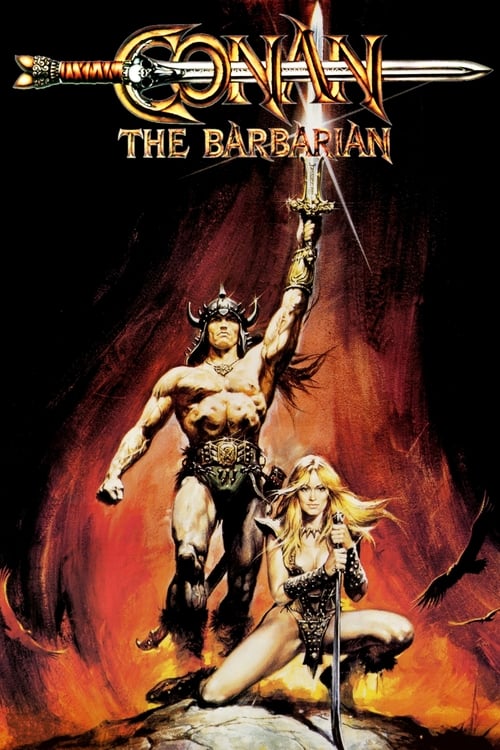
In 1982, Milius directorial effort Conan the Barbarian was released, based on the character created by Robert E. Howard. The film is credited for turning its lead, Arnold Schwarzenegger, into a star. Milius was interested in the project since the late 1970s. While he was about to get hired for scripting duties, he had to pass due to his commitment to Big Wednesday. Instead, Oliver Stone was hired to write the project. Eventually, producer Dino De Laurentiis with whom Milius had contractual obligations joined the project. Milius returned to the project as its director re-working Stone's script. Upon its release the film was popular. The film was the 15th highest-grossing film in the USA that year, making $39,565,475 domestically.
In 1983, he was among the producers of Ted Kotcheff's Uncommon Valor, and credited as a "spiritual adviser" in the action film Lone Wolf McQuade.
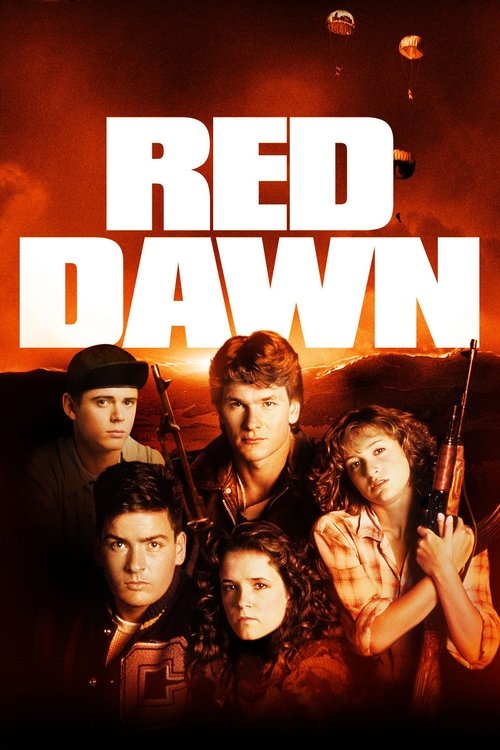
In 1984, he directed the popular action film, Red Dawn. The film is about a Russian invasion in the United States, and a rogue commando group of teenagers standing up to the invaders. Some critics perceived it to be "warmongering propaganda" while Milius said it was "anti-war". The film was the 19th highest-grossing film in the USA that year, making $38,376,497 domestically.
He wrote and directed an episode for The New Twilight Zone (1985) and a story of his, "Viking Bikers from Hell", was used in an episode of Miami Vice (season 3, episode 22).
In 1986, it was reported that he was writing the script for Fatal Beauty which he hoped to direct with Cher; the film was made by Tom Holland and starred Whoopi Goldberg.
There was some talk that he would direct a movie for HBO, Capone, but it was not made.
In the late 1980s Milius wrote and directed a Pacific War adventure film Farewell to the King (1989). This flopped at the box office. In 1989, he tried to get funding for adaptations of Allan W. Eckert's "The Frontiersmen: A Narrative", about settling the Ohio River Valley, and "Half of the Sky", about a Rocky Mountains explorer.
Sean Connery was hired to star in the film The Hunt for Red October for producer Mace Neufeld, based on Tom Clancy's novel of the same name. Connery thought the script was "too American" and insisted Neufeld hire John Milius to rewrite the Russian sequences. Connery thought with Milius, he could "get a different sort of image, different speech patterns."
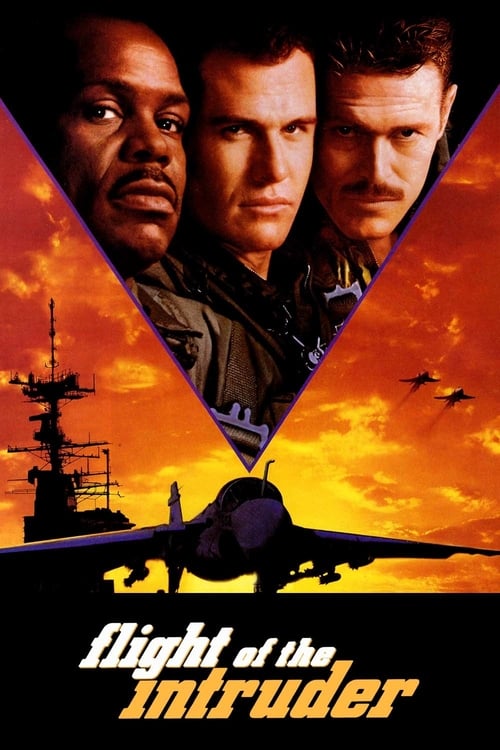
Neufeld then hired Milius to write and direct Flight of the Intruder, based on the book by Stephen Coonts. It too was not a financial success.
"I think the culture had changed and that is why my films were less accepted", he reflected later. "I still think those are also great films, Farewell to the King especially."