




John Gregg (12 January 1939 – 29 May 2021) was an Australian actor, whose credits span six decades.
Contents
Early life
Gregg was born on a dairy farm in Campbell Town, a remote rural district in southern Tasmania. In his early years he milked cows and ploughed fields for neighbouring farms, and was interested in Aussie Rules football, cricket and rowing.
When Gregg began taking public speaking lessons, his teacher, a graduate of Royal Academy of Dramatic Art, suggested he could find success as an actor. He subsequently auditioned for Sydney's newly formed National Institute of Dramatic Art (NIDA) at the age of 18, performing a monologue from Richard III at the school's Hobart auditions. He was accepted – knowing nothing about theatre and never having even seen a play. He began studying with the school's first intake of students in 1959, alongside Robyn Nevin, Elspeth Ballantyne, Elaine Cusack, Teddy Hodgeman and Peter Couchman.
Career
After graduating from NIDA, Gregg was chosen, alongside fellow classmate Robyn Nevin, to work with the Elizabethan Theatre Trust. He appeared in The Merchant of Venice with the John Alden Shakespeare Company in 1961, and then performed with Melbourne Theatre Company for a season, before making his television debut in a 1964 episode of Consider Your Verdict. That same year, he starred in an ABC TV play of Othello. In 1965, he played Gavin Turley in the miniseries My Brother Jack.
From the 1960s, Gregg also worked with the newly formed ABC drama department, with an ongoing role as Charles Keally in drama series Contrabandits from 1967 to 1968. and the lead role of Jeff Mallow in Delta in 1969, while continuing to work in theatre. Other television credits around that time included Australian Playhouse, Wandjina!, Adventures of the Seaspray, Hunter, Riptide and Dynasty.
In the early 1970s, Gregg headed to London to further his acting career, appearing in a 1972 stage of Jumpers at London's Royal Court Theatre opposite Diana Rigg. He spent two years with London's Royal National Theatre, where he took over the role of Edmund from Ronald Pickup in a 1971 production of Long Day's Journey into Night, appearing alongside Laurence Olivier. He also landed television work, including playing Lycett in a 1975 story arc of long-running sci-fi series Doctor Who featuring alongside Nigel Havers in Frederic Raphael's 1976 semi-autobiographical miniseries The Glittering Prizes for the BBC, and appearing in 1978 political drama miniseries Disraeli: Portrait of a Romantic.
On his return to Australia towards the end of the decade, Gregg had a guest role in Chopper Squad, before landing the main role of talkback radio host Steve Black in The Oracle in 1979. He then continued to alternate between the UK and Australia.
Gregg appeared as Philip Lawson in 1982 film Heatwave, with Judy Davis and Bill Hunter. In 1984, he landed the role of cricket legend and journalist Percy Fender in 1984 miniseries Bodyline and appeared in TV movie Crime of the Decade. That same year, he played Jason in a stage production of Medea, at the Melbourne Arts Centre. The following year he had a role in 1985 TV movie Bootleg, before going on to portray botanist Joseph Banks in miniseries Captain James Cook, and featuring in Travelling North, both in 1987. He then performed in Victoria State Opera's production of My Fair Lady in 1988.
Gregg continued to appear in Australian television series throughout the 1980s and 1990s, including A Country Practice, Rafferty's Rules, Cluedo, G.P., Heartbreak High, Grass Roots and Home and Away. He appeared in 1994 thriller Ebbtide with Harry Hamlin and 1997 TV movie The Ripper with Patrick Bergin and Gabrielle Anwar. The following year he had a recurring role as Dr Peter Michaels in medical series Medivac. He followed this with a regular role as Alan Carson in teen drama series Heartbreak High in 1999.
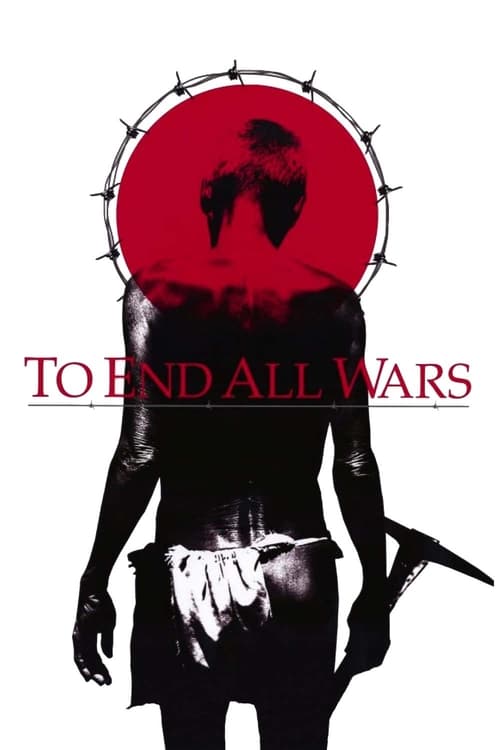
In 2001, Gregg appeared opposite Kiefer Sutherland and Robert Carlyle in the WWII drama film To End All Wars. The following year, he had a role alongside Craig McLachlan in TV movie Heroes' Mountain, the true story of the 1997 Thredbo landslide and the rescue of Stuart Diver. He also reunited with Robert Carlyle in political drama film Black and White, which also starred Charles Dance and Ben Mendelsohn.
Gregg's later television credits included Rake, Crownies, Old School and Operation Buffalo. He made appearances in miniseries Power Games: The Packer–Murdoch War and House of Bond. He was also a voiceover artist for advertisements and recorded five novels for ABC Radio.
Gregg was Chair of the Actors Benevolent Fund (ABF) for six years from 2013, having joined the Committee in 2008, succeeding actress Noeline Brown. He passed the position on to actor Bruce Spence in 2019, upon his retirement.
Personal life
Gregg met his future wife Jane Seldon on the set of David Hare's 1991 production of Racing Demon at Sydney Theatre Company, where Seldon was working as Wardrobe Mistress. The couple had four children – Sophie Gregg (who is also an actor), Alice, Ben and Sam, and eight grandchildren, as well as two stepsons and step-grandchildren.
Gregg was a long-time ambassador of the Sydney Swans AFL football club.
Death
Gregg died on 29 May 2021, aged 82.
Filmography
Theatre
Sources: