Dominance at Paramount and filmmaking
Lewis remained at Paramount and started off with his first solo film The Delicate Delinquent (1957) then starred in The Sad Sack (1957). Frank Tashlin, whose background as a Looney Tunes cartoon director for Warner Bros. suited Lewis's brand of humor and came on board. The pair did new films, first with Rock-A-Bye Baby (1958) and then The Geisha Boy (1958). Billy Wilder asked Lewis to play the lead role of an uptight jazz musician, who winds up on the run from a mob in Some Like It Hot, but he turned it down. Lewis then appeared in Don't Give Up The Ship (1959) and cameoed in Li'l Abner (1959).
A 1959 contract between Paramount and Jerry Lewis Productions specified a payment of $10 million plus 60% of the profits for 14 films over seven years. This made Lewis the highest paid individual Hollywood talent to date and was unprecedented in that he had unlimited creative control, including final cut and the return of film rights after 30 years. Lewis's clout and box office were so strong that Barney Balaban, head of production at Paramount, told the press, "If Jerry wants to burn down the studio I'll give him the match!"
Lewis ended his association with Hal Wallis, their last joint venture being Visit to a Small Planet (1960). His next film was Cinderfella (1960), directed by Frank Tashlin; it was supposed to be Lewis's summer release, but Paramount withheld it in preparation for a Christmas 1960 release. Paramount, needing a quickie movie for its summer 1960 schedule, insisted that Lewis must produce one.
This resulted in Lewis's sudden transformation from movie clown to all-around filmmaker. He produced, directed, co-wrote, and starred in The Bellboy (1960). Using the Fontainebleau Hotel in Miami as his setting—on a small budget, with a very tight shooting schedule—Lewis shot the film during the day and performed at the hotel in the evenings. Bill Richmond collaborated with him on many of the episodic blackouts and sight gags. The film presented a new approach for the usually frenetic and highly vocal comedian: in The Bellboy Lewis doesn't speak at all—he only whistles—until a punchline at the very end of the film.
This was really a time-saving device; by concentrating on visual action, Lewis could film the scenes faster without bothering to remember written dialogue. Another time-saver was his innovative use of "video assist"—instant video playback, which allowed Lewis to review each scene on videotape immediately after filming it, thus eliminating film-laboratory delays and expenses. Trade reviewer Pete Harrison noted the sight gags but felt that Lewis was not a true pantomime artist: "As a mute, there are only brief moments of his work coming close to Chaplin, Jacques Tati, or Harpo Marx. Lewis, always laughed at, fails to win the viewer's heart."
Lewis later revealed that Paramount was not happy about financing a "silent movie" and withdrew backing. Lewis used his own funds to cover the movie's $950,000 budget. The Bellboy turned out to be a hit, ranking with his better successes. Variety's Gene Arneel reported independent producer Hall Bartlett's observation, "Lewis is the only star whose pictures all turn out in the black."
Lewis continued to direct more films that he co-wrote with Bill Richmond, including The Ladies Man (1961), where Lewis constructed a three-story dollhouse-like set spanning two sound stages, with the set equipped with state-of-the-art lighting and sound, eliminating the need for boom microphones in each room. His next movie The Errand Boy (1961), used the same formula as The Bellboy, with Lewis turned loose in a movie studio for blackouts and sight gags.
Lewis was also somewhat active in television. NBC released him from a long-term contract in 1960; the official reason given was that Lewis was devoting more time to his motion pictures. A more probable reason was the difficulty in finding a weekly television vehicle for Lewis. (NBC did announce two series in development, "Permanent Waves" and "The Comedy Concert.")
Lewis's TV appearances were usually guest shots. He appeared in The Wacky World of Jerry Lewis, Celebrity Golf, The Garry Moore Show, The Soupy Sales Show, It's Only Money (1962) and guest hosted The Tonight Show during the transition from Jack Paar to Johnny Carson in 1962, and his appearance on the show scored the highest ratings thus far in late night, surpassing other guest hosts and Paar.
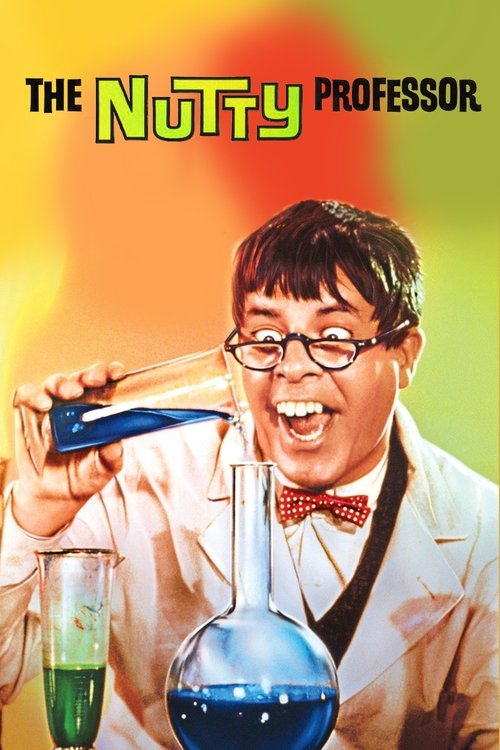
The three major networks began a bidding war, wooing Lewis for his own talk show. Lewis then directed, co-wrote and starred in The Nutty Professor (1963). A parody of Dr. Jekyll and Mr. Hyde, it featured him as Professor Kelp, a socially inept scientist who invents a serum that turns him into a handsome but obnoxious ladies' man. It is often considered to be Lewis's best film.
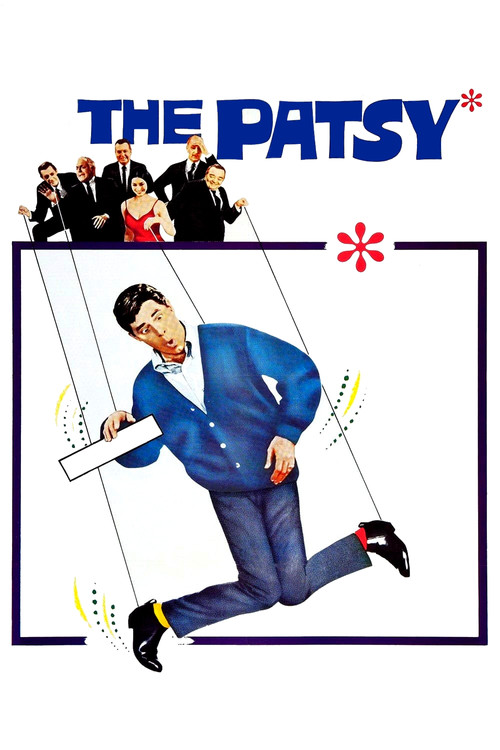
In 1963, he had a cameo in It's a Mad, Mad, Mad, Mad World (1963), fully starred in Who's Minding the Store? (1963) and hosted The Jerry Lewis Show, a lavish 13-week, big-budget show which aired on ABC from September to December in 1963. Lewis next starred in The Patsy (1964), his satire about the Hollywood star-making industry and The Disorderly Orderly (1964), the only film executive produced by Lewis and his final collaboration with Tashlin.
Following a cameo on The Joey Bishop Show, he starred in The Family Jewels (1965) about a young heiress who must choose among six uncles, one of whom is up to no good and out to harm the girl's beloved bodyguard who practically raised her. The six uncles and the bodyguard were all played by Lewis.
In 1965, Lewis went on The David Susskind Show, starred in his final Paramount-released film Boeing Boeing (1965), in which he received a Golden Globe nomination, then guest appeared on Ben Casey, The Andy Williams Show and Hullabaloo with son Gary Lewis. Lewis left Paramount in 1966, after 17 years, as the studio was undergoing a corporate shakeup, with the industrial conglomerate Gulf + Western taking over the company. Gulf + Western, scrutinizing the balance sheets, noted the diminishing box office returns of Lewis's recent pictures and did not renew his contract.