Cinema and television
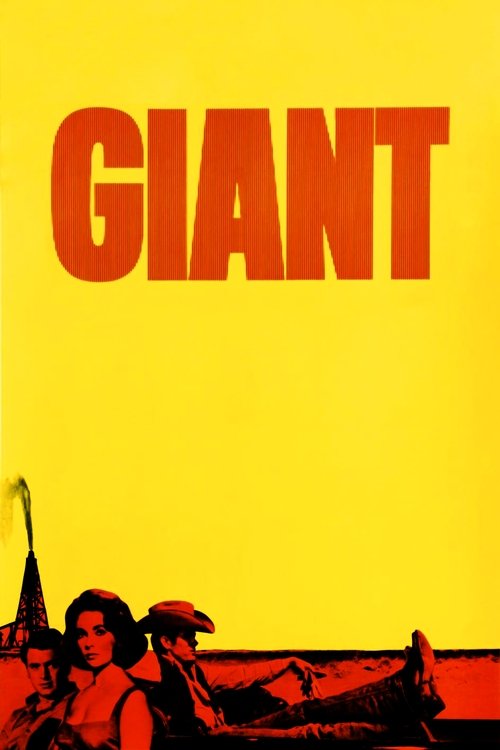
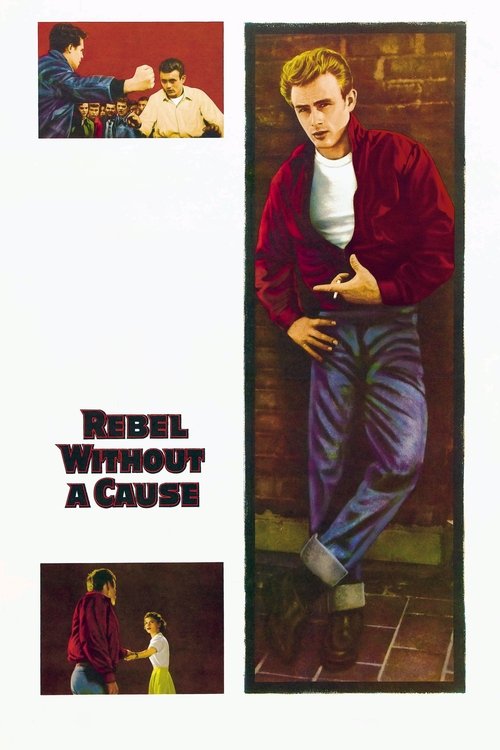
In 1960, Dean received a star on the Hollywood Walk of Fame. In 1999, the American Film Institute ranked him the 18th-greatest male legend of Golden Age Hollywood in its AFI's 100 Years...100 Stars list. All three of Dean's films have been preserved in the United States National Film Registry by the Library of Congress. American teenagers of the mid-1950s, when Dean's major films were first released, strongly identified with him and the characters he portrayed, especially Jim Stark in Rebel Without a Cause. The film depicts the dilemma of a teenager who feels misunderstood by both adults and peers. After Dean's death, Humphrey Bogart remarked on his emerging legend: "Dean died at just the right time. He left behind a legend. If he had lived, he'd never have been able to live up to his publicity."
Historian David Halberstam writes that the success of East of Eden was "stunning", and that it was perhaps director Kazan's best film. He calls Dean's performance a sensation and quotes Pauline Kael, the influential film critic: "There is a new image in American films, [...] the young boy as beautiful, disturbed animal." Halberstam says even Kazan was surprised by Dean's impact, surpassing that of the young Marlon Brando. Years later Kazan said Dean had cast a spell over the youth of America. In Halberstam's estimation, the screenplay of Rebel Without a Cause is weak, and what power the movie has is in Dean's performance. He posits that the actor's "myth" is largely interwoven with his role as Jim Stark, "the prototype for the alienated youth blaming all injustice on parents and their generation."
Terence Pettigrew writes that Dean's acting had an immediate effect on the youth of the mid‑1950s, influencing how young people dressed and behaved more than any other actor. Pettigrew describes how the youth revolution brought about by the post‑World War II economic boom in the United States reflected a universal desire among young people across all social levels for recognition of their individuality. Freed from the hardships of the Great Depression and the war endured by earlier generations, teenagers sought their own identity. Dean embodied the alienation and confusion felt by both middle‑class college students and disaffected youth in lower‑income environments. The characters he played onscreen made him a potent symbol of their doubts and inarticulate desires, and his young audience recognised in him their own anger and distrust of the adult world.
The film scholar Timothy Shary argues that Jim Stark, the role played by Dean in Rebel Without a Cause, became the most influential teenage rebel in American cinema. He notes that while Warner Bros. aimed to capitalize on a trend of depicting tormented adolescents in films made by smaller studios, the movie created by Nicholas Ray and his team addressed genuine tensions in teenage life. These feelings were given voice and personified by Dean, leading to his veneration as an icon of cool. His image made the film an "indelible symbol of youth trying to discover themselves and declare their identity."
The film critic David Thomson says James Dean was oneself, and that "one marveled in the way a savage might be awed by a mirror." For Thomson, Dean's potency was not as a rebel without a cause. He cites Dean's anguished cry when Sal Mineo is shot as the "very antithesis" of the film's title. In his view, Dean as shown on the screen projected sensitivity and vulnerability, but he never seemed callow—he appeared more experienced, older, and sadder than the grownups in his films. He appealed to young people because he understood that they knew some truths about the world, too. Thomson declares that Dean is not dated—new generations still fall under his sway. In a very short time he changed the milieu of American culture, and now Dean's intelligence and his sexual ambiguity are more obvious.
Joe Hyams says that Dean was "one of the rare stars, like Rock Hudson and Montgomery Clift, whom both men and women find sexy." According to Marjorie Garber, this quality is "the indefinable extra something that makes a star". Dean biographer George Perry attributed Dean's exalted status to the public's need for someone to stand up for the disenfranchised young of the era, and to the air of androgyny that he projected onscreen.
François Truffaut, the filmmaker and critic who "likened Dean's style of performance to rock and roll" and praised his originality, wrote an essay about Dean, James Dean is Dead. He writes:James Dean's acting flies in the face of fifty years of filmmaking; each gesture, attitude, each mimicry is a slap at the psychological tradition. [...] Dean's acting is more animal than human, and that makes him unpredictable. What will his next gesture be? He may keep talking and turn his back to the camera as he finishes a scene; he may suddenly throw his head back or let it droop; he may raise his arms to heaven, stretch them forward, palms up to convince, down to reject. [...] He can laugh when another actor would cry—or the opposite. He killed psychology the day he appeared on the set. [...] Dean's power of seduction was so intense that he could have killed his parents every night on the screen with the blessing of the snobs and the general public alike. [...] It is easier to identify with James Dean than with Humphrey Bogart, Cary Grant, or Marlon Brando. Dean's personality is truer.
Dean has been a touchstone of many television shows, films, books, and plays. The film September 30, 1955 (1977) depicts how various characters in a small Southern town in the US react to Dean's death. The play Come Back to the Five and Dime, Jimmy Dean, Jimmy Dean, written by Ed Graczyk, depicts a reunion of Dean fans on the 20th anniversary of his death. It was staged by the director Robert Altman in 1982 but was poorly received and closed after only 52 performances. While the play was still running on Broadway, Altman shot a film adaptation that was released by Cinecom Pictures in November 1982.
On April 20, 2010, a long "lost" live episode of the General Electric Theater called "The Dark, Dark Hours" featuring Dean in a performance with Ronald Reagan was uncovered by NBC writer Wayne Federman while working on a Ronald Reagan television retrospective. The episode, originally broadcast on December 12, 1954, drew international attention, and highlights were featured on numerous national media outlets including: CBS Evening News, NBC Nightly News, and Good Morning America. It was later revealed that some footage from the episode had first featured in the 2005 documentary, James Dean: Forever Young.
As of January 2020, Dean's estate had its best showing on Forbes' annual list of the top-earning dead celebrities in 2015, with an income that year of US$8.5 million. On November 6, 2019, it was announced that Dean's likeness would be used, via CGI, for a Vietnam War film called Finding Jack, based on the Gareth Crocker novel. Prior to being shelved, the movie was to have been directed by Anton Ernst and Tati Golykh, and another actor would have voiced Dean's part. Although the directors obtained the rights to use Dean's image from his family, the announcement was met with derision by people in the industry.
Martin Sheen has been vocal throughout his career about being influenced by Dean. Speaking of the impact Dean had on him personally, Sheen stated, "All of his movies had a profound effect on my life, in my work and all of my generation. He transcended cinema acting. It was no longer acting, it was human behavior."
Johnny Depp credited Dean as the catalyst for his wanting to become an actor. Nicolas Cage also said he wanted to go into acting because of Dean. "I started acting because I wanted to be James Dean. I saw him in Rebel Without a Cause, East of Eden. Nothing affected me—no rock song, no classical music—the way Dean affected me in Eden. It blew my mind. I was like, 'That's what I want to do,'" Cage said. Robert De Niro cited Dean as one of his acting inspirations in an interview. Leonardo DiCaprio also cited Dean as one of his favorite and most influential actors. When asked which performances stayed with him the most, DiCaprio responded, "I remember being incredibly moved by Jimmy Dean, in East of Eden. There was something so raw and powerful about that performance. His vulnerability ... his confusion about his entire history, his identity, his desperation to be loved. That performance just broke my heart." Salman Shah, commonly regarded as one of the most popular and influential figures in Bangladesh's film history, is often compared to Dean, because of the similarities in their lives and careers. Shah had an ephemeral but prolific impact as an actor, was a major enthusiast of fashion and automobiles, died when he was 24—the same age as Dean—and has an enduring legacy.