Career problems and unrealised projects
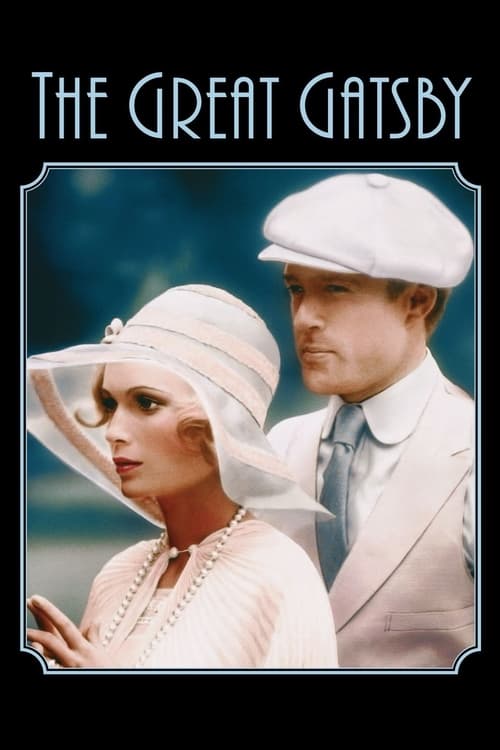
Despite his high critical standing, Clayton encountered repeated career setbacks after the release of Our Mother's House and over the decade and a half between the release of Our Mother's House (1967) and Something Wicked This Way Comes (1983), he was only able to complete one feature as a director, The Great Gatsby (1974). One reason was Clayton's own perfectionism as a filmmaker; he was known for his discernment and taste, his painstaking and meticulous approach to his work, and his desire not to repeat himself, and in his biographer's words, Clayton "never made a film he did not want to make". Consequently, he rejected many notable films in the wake of Room at the Top. In 1969, despite his love of the book, he turned down the chance to direct They Shoot Horses, Don't They? because he did not want to take over a film that had already been prepared and cast, and was ready to shoot – although his decision opened up a career-making opportunity for his replacement, Sydney Pollack. Later still, in 1977, he turned down the chance to direct the film that was eventually made as Alien by Ridley Scott.
Clayton's output was also compromised by the inherent riskiness of the film business. As his biographer Neil Sinyard elucidates, Clayton worked intensively on many projects throughout his directing career, but for various reasons most never came to fruition. Among the projects that Clayton was never able to bring to the screen, or which were eventually made by other directors, were:
Sweet Autumn (1966), an original screenplay by Edna O'Brien, which was never made.
The Walking Stick (1968), adapted from the novel by Winston Graham. Clayton was offered the project but had to decline due to the illness and subsequent death of his mother; it was eventually made in 1970, directed by Eric Till and starring Samantha Eggar and David Hemmings.
The Looking Glass War (Columbia, 1968–69) – Clayton was originally attached to direct the screen adaptation of the John le Carré novel, with a script by his friend Mordecai Richler. Richler later claimed that he and Clayton walked off the project due to interference from Columbia Pictures (thereby earning Clayton a reputation for being 'difficult'). Richler's biographer Reinhold Kramer suggested that the real problem was that Clayton was unable to raise enough money to get the movie into production, but Neil Sinyard asserts that Columbia cancelled the film after Clayton refused to accede to changes the studio had ordered to Richler's script, and he and Richler resigned from the production. Clayton himself also opined (in a letter to Le Carré) that he suspected that Columbia was short of money after the expensive failure of Casino Royale, and that the studio had bought the rights to the novel without realising that it was "not James Bond". The project was eventually revived under director Frank R. Pierson, who jettisoned Richler's screenplay and made the film from his own adapted script, although that proved to be a critical and commercial flop.
Zaharoff, Pedlar of Death (1969) was one of Clayton's most cherished projects, a biopic about the notorious early 20th century arms dealer and political manipulator Basil Zaharoff. It was originally slated to be made for Universal, and Clayton reportedly did extensive research for it, but it was never given approval. He tried to revive the project twice more, in 1978 and 1990, but was never able to get it made.
The Tenant (1969–75) – Clayton was originally attached to make a film adaptation of Roland Topor's psychological horror novel for Universal around 1970, but this project never made it into production. He revived it while working for Paramount in the early 1970s, intending to make it after The Great Gatsby, but to Clayton's great chagrin studio head Barry Diller wrongly assumed Clayton had lost interest in the film and gave it to Roman Polanski, without consulting Clayton. When he discovered this, Clayton phoned Diller and excoriated him for taking away a project that had been acquired specifically for him, and giving it to another director without his knowledge.
Another complicating factor in Clayton's career was that several film projects were cancelled without warning when pre-production was well advanced – in one case, just two weeks before shooting was to have started. Neil Sinyard nominates three major projects, Casualties of War, Fall Creek, and Silence, the successive failures of which reportedly devastated Clayton, and Clayton himself later opined that these setbacks contributed to his subsequent health problems:
Casualties of War (Paramount, 1970) was a controversial Vietnam War drama, based on a true story by Daniel Lang, published in The New Yorker in 1969. The story concerns four American soldiers who are charged with the rape and murder of a young Vietnamese woman after one of their comrades (who had refused to take part in the crime) informs on them. An early script by Peter Hammill was rejected, and many leading writers were considered for the project, before novice screenwriter David Giler submitted a first-draft script that Clayton deemed "magnificent". According to Neil Sinyard, Paramount cancelled the film at the behest of the Pentagon, who feared that it might erode public support for the war effort. It was eventually made for Columbia by Brian De Palma in 1989, with Michael J. Fox in the lead role.
Fall Creek (1976), another collaboration with producer David Merrick, Fall Creek was a 'revisionist' look at the American frontier, in a similar vein to contemporary "new wave westerns" like Little Big Man and McCabe & Mrs. Miller. The script by Larry McMurtry was adapted from the novel by Jessamyn West, and dealt with a notorious 1824 massacre of Native Americans in Indiana, and the racial and political crisis that followed. The project was originally conceived with Robert Redford as the star, but he turned it down. Larry McMurtry discusses the production in his book Hollywood: A Third Memoir, calling the screenplay "one of my better early scripts" and describing Clayton as "much the most fun" of any director he worked with. According to McMurtry, the project collapsed after David Merrick (ominously) suffered a stroke, after which he used wheelchair. Its cancellation was a bitter blow for Clayton, who was an ardent fan of the genre, and had long hoped to direct a western.
Silence (Fox, 1977) was a contemporary urban thriller about racial tensions, based on the James Kennaway novel about a white man who escapes from a pursuing black gang by hiding out in the apartment of a mute African-American woman. The film was reportedly cancelled just two weeks before filming was scheduled to start, and according to Sinyard this was a devastating blow to Clayton. In a curious turn of events, Hollywood executive Barry Diller was responsible for the demise three of the films Clayton planned to make in the 1970s. In 1970 Clayton's plans for a film adaptation of Ray Bradbury's Something Wicked This Way Comes temporarily fell foul of a power struggle between Diller (who had just been appointed President of Paramount Pictures) and Paramount's head of production David Picker, and Diller cancelling the project. Five years later, Diller took The Tenant from Clayton without consulting him, and gave it to Roman Polanski. Finally, in 1977, Silence was cancelled just two weeks before it was due to go into production – ironically, again by Diller, who had recently left Paramount to become the head of 20th Century Fox.
In 1977, as compensation for the cancellation of Silence, Fox offered Clayton the chance to film a new science fiction script co-credited to David Giler and Dan O'Bannon, but Clayton turned down the film (Alien), and it was ultimately given to Ridley Scott who, like Sydney Pollack before him, scored a career-making hit. A few months later, Clayton suffered a major stroke which robbed him of the ability to speak. He was helped to recover by his wife Haya, and a group of close friends, but he later revealed that he deliberately kept his condition secret because he feared he might not get work again if his affliction became known. He did not commit to another assignment for five years.
The Bourne Identity (1983) – after completing Something Wicked This Way Comes, Clayton was hired to direct a film adaptation of Robert Ludlum's best-selling espionage thriller, which was to have starred Burt Reynolds as Jason Bourne. Clayton had met Reynolds several years earlier, while working with Reynolds' then-partner, Sally Field, on another unrealised project, and Clayton felt that Reynolds was a star whose acting potential had not been fully explored. The production was repeatedly postponed due to location issues and problems with Reynolds' schedule, and it went into "development hell." Clayton was not involved in the 1988 telefilm version or the successful 2002 theatrical film with Matt Damon (which bore little resemblance to Ludlum's novel).