1950s
In 1950, Honda worked on two films by Kajirō Yamamoto: Escape from Prison and Elegy, the last film produced by Film Art Associations. Honda had also worked as an assistant director on Senkichi Taniguchi's Escape at Dawn.
Between working on films as an assistant director, Honda began pre-production on Newspaper Kid, which would have been his feature directorial debut. However, the project was canceled. Instead, he began working on another documentary titled Story of a Co-op (also known as Flowers Blooming in the Sand and Co-op Way of Life) Story of a Co-op was a documentary about the rise of consumer cooperatives in post-war Japan. It was also written by Honda, with the production overseen by Jin Usami and with the support of the Ministry of Health and Welfare. Some records indicated that some animation was used to explain the functions of co-ops but these reports have been unconfirmed. The film was completed on 6 October 1950 and has since been lost. However, Honda recalled that the film was successful enough to convince Toho to assign Honda his first feature film.
Between filming the documentaries, Toho had offered Honda the chance to develop and direct a war film titled Kamikaze Special Attack Troop. Toho then chose not to proceed with the project after finding Honda's script, which openly criticized leaders of World War II, to be too grim and realistic. Honda recalled that the studio felt it was "too soon after the war" to produce such a film. Had the project proceeded, it would have been Honda's first directorial feature. The script has since been lost.
At the age of 40, Honda completed his first feature film The Blue Pearl. Released on 3 August 1951, it was one of the first Japanese feature films to utilize underwater photography and the first studio film to be shot in the Ise-Shima region.
Honda initially chose not to direct war films, but changed his mind after Toho offered to have him direct Eagle of the Pacific, a film about Isoroku Yamamoto, a figure with whom Honda shared the same feelings regarding the war. It was the first film where Honda collaborated with Eiji Tsuburaya. Eagle of the Pacific was a box-office hit and reportedly was Toho's first postwar film to earn over ¥100 million (approximately $278,000). Subsequently, Honda would direct another war film, entitled Farewell Rabaul, which was released on February 10, 1954.
A month after the release of Farewell Rabaul, Honda met assistant director Kōji Kajita to commence production on a film titled Sanshiro the Priest. Possibly connected to Kurosawa's 1943 film Sanshiro Sugata; Hideo Oguni, one of Kurosawa's frequent collaborators, wrote the script for the film. Authors Steve Ryfle and Ed Godziszewski stated that the project never came to fruition because Oguni and Honda "couldn't see eye to eye about the screenplay". According to Kajita, the film would have been about a priest and a judo expert.
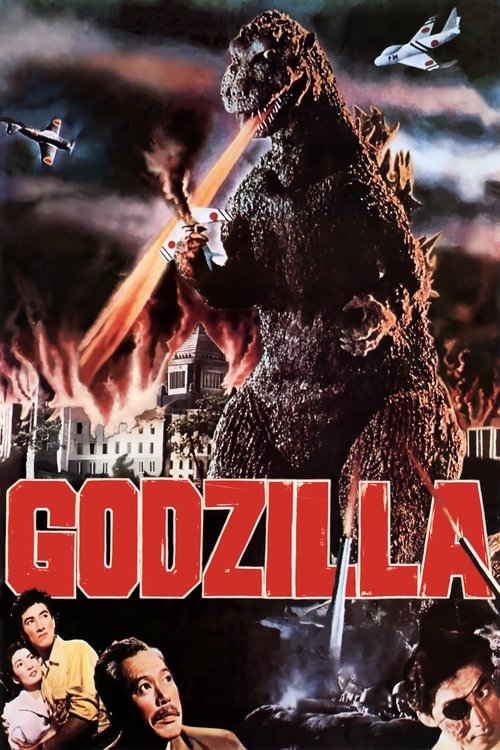
Following the cancellation of a highly anticipated drama film titled In the Shadow of Glory, producer Tomoyuki Tanaka quickly converted the idea of a giant monster film. He was influenced by reports of a nuclear test in the Pacific that caused a Japanese fishing boat to be exposed to nuclear fallout, with disastrous results, and had heard of a recently released American monster film The Beast from 20,000 Fathoms. Honda accepted the offer to direct the film after planned In the Shadow of Glory director Taniguchi declined the assignment. Honda and screenwriter Takeo Murata confined themselves in a three-week secluded residence at an inn in Tokyo's Shibuya ward to write the screenplay for this film, entitled Godzilla. The film was Honda's first kaiju film, the genre for which he would become most famous. The simple story, about a giant monster that rises near Odo Island and attacks Tokyo causing catastrophic destruction, is a metaphor for a nuclear holocaust.
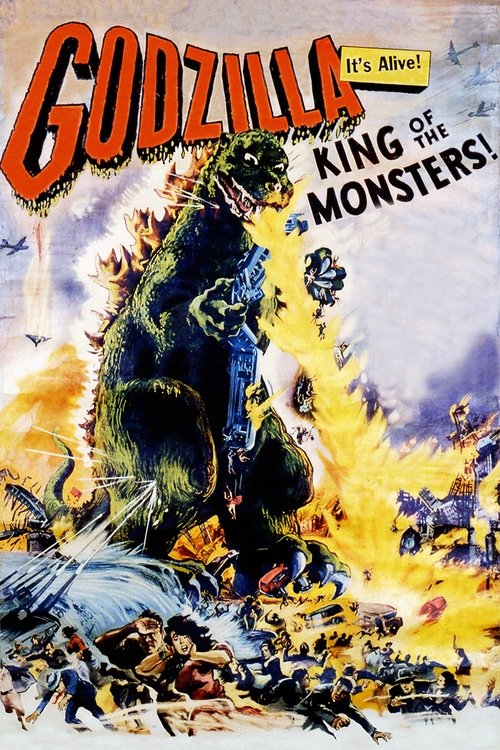
Principal photography for Godzilla began on August 2, 1954, and wrapped in late September, taking 51 days. It became a box office success in Japan and was nominated for two Japanese Movie Association awards: winning an award for best special effects but losing to Kurosawa's Seven Samurai for best picture. Because of the film's success in Japan, it spawned a multimedia franchise, being recognized by Guinness World Records as the longest-running film franchise in history. Two years later, a heavily localized version of Godzilla was released in the United States as Godzilla, King of the Monsters!.
Honda's next film was Lovetide, based on Hidemi Kon's story Blow, River Wind and adapted by screenwriter Dai Nishijima. Toho promoted the film by calling it a "gorgeous love melodrama with Toho's best cast, meant for all the woman fans". The film's stars Mariko Okada and Chieko Nakakita (Tanaka's wife) also played in Mikio Naruse's film Floating Clouds, featuring a similar plot and released around a week after Lovetide. Tanaka had stated that if he had not made Honda predominantly direct science-fiction films, he would have become "a director like Mikio Naruse."
During the start of production on Motoyoshi Oda's Godzilla Raids Again, Honda began filming Half Human in the Japanese Alps. Upon his return to Tokyo, Tsuburaya was working on Godzilla Raids Again. Thus, production on Half Human was halted and Honda moved on to shooting a drama film titled Mother and Son. Principal photography for Half Human recommenced in June, and the film was released on August 14, 1955, around a month after filming concluded. Half Human has been infrequently seen following its release. Ryfle and Godziszewski noted this is possibly due to Toho fearing the mountain tribe, described by Nobuo Nakamura's character as "mysterious buraku", is depicted in the film as "an uncivilized, primitive colony of subhuman freaks", could enrage burakumin's rights groups such as the Buraku Liberation League. Some sources suggest it was aired on television in the 1960s or early 1970s and was screened at a film retrospective in Kyoto in 2001. Toho has never released the complete film in any home video format.
In 1956, Honda directed four films. The first, Young Tree, concerns a young girl who moves to Tokyo and endures the rivalries between other high school girls of varying economic and cultural backgrounds. The second, entitled Night School, was his solo film ever directed outside of Toho and was among the first films about night schooling. The third, titled People of Tokyo, Goodbye, follows young lovers who try to listen to their hearts despite their parents' interjections. The fourth, Rodan, was Honda's first-ever film shot in color and depicted a winged monster named Rodan wreaking havoc in Japan after its awakening by nuclear bomb testing.
Although Japanese cinema is known for its samurai films, Honda did not show any interest in directing a jidaigeki film since his stage was contemporary Japan. Nonetheless, in May 1956, Kurosawa reported that he would produce three jidaigeki films beginning that September, with Honda directing Throne of Blood, Hideo Suzuki directing The Hidden Fortress, and Hiromichi Horikawa directing Revenge (became Yojimbo). Kurosawa would eventually direct all three of these films; now regarded as some of his best films.
The year 1957 marked a turning point in Honda's directing career, as he directed five films, with his first, Be Happy, These Two Lovers, filmed by Hajime Koizumi, who would work on 21 of his films thereon. Ryfle and Godziszewski called his camera work "the perfect complement to Honda's conservative, risk-averse style of composition".
His next film, A Teapicker's Song of Goodbye, was the second in Honda's trilogy of films starring enka singer Chiyoko Shimakura (the first film was People of Tokyo, Goodbye). The third film in the trilogy, entitled A Farewell to the Woman Called My Sister, was released the month after A Teapicker's Song of Goodbye. A Rainbow Plays in My Heart, a black-and-white two-part film based on Seiichi Yashiro and Ryunosuke Yamada's radio drama of the same name, was released on July 9, 1957 (a week after A Teapicker's Song of Goodbye). The film is notable for being the third and final film featuring Godzilla stars Momoko Kochi and Akira Takarada in leading roles.
Honda's only tokusatsu film of 1957, The Mysterians, was released just over a year after Japan joined the United Nations and features affairs reflecting the Japan's return to global politics. The story concerned a young scientist (Kenji Sahara) who becomes involved in a globally threatening alien invasion. The film was shot on an enormous budget of ¥200 million and was his debut movie to be filmed in Toho Scope.
Song for a Bride, released in February 1958, is regarded as one of the director's best films of the 1950s. It is a comedy-drama film that explores the clash between traditional and modern ethics among Japanese youth. Following its release, Honda would direct two science fiction films in the same year for the first time. His second film of 1958, The H-Man, premiered on June 24, 1958 to mixed reviews. It is a distinctive Honda picture about a liquid creature who terrorizes Tokyo's gangland. Some scenes in the film were shot on the same sets used in Kurosawa's 1948 film Drunken Angel. In May 1959, Columbia Pictures released a shortened version of this film in the United States. Upon its release, U.S. critics erroneously believed it was a rip-off Irvin Yeaworth's The Blob, despite The H-Man being released prior to The Blob in Japan.
The successful distributions of Honda's Godzilla and Rodan in the United States, lead Toho to seek further Hollywood connections. In 1957, the company agreed to co-produce a made-for-television film with AB-PT Pictures (who would go bankrupt during production). This project would eventually become a black-and-white theatrical feature film directed by Honda, entitled Varan the Unbelievable, released in 1958. Considered his "weakest effort", it is a simple story about scientists who unintentionally awake a giant monster dubbed Varan while seeking scarce species of butterfly in Tōhoku region.
An Echo Calls You, his twenty-third feature film, centers on an uneducated bus conductor, Tamako, who falls in love with Nabeyama, her bus driver after she fails to have a relationship with a man from Kōfu's wealthiest family. Featuring Ryō Ikebe in his fourth major role in a Honda movie, and with a possibly Hideko the Bus Conductor-inspired screenplay by Gorō Tanada, the film premiered in January 1959 to generally positive reviews from critics.
Honda quickly moved on to his next project, Inao, Story of an Iron Arm. It is a biographical film based on the life of professional baseball pitcher Kazuhisa Inao, featuring Inao portraying himself as an adult. Additionally, it features Godzilla actors Takashi Shimura as his father and Ren Yamamoto and Sachio Sakai as his older brothers. The film was released in March 1959 and was later screened in honor of Inao following his death in 2007.