



Sir Ian Murray McKellen (born 25 May 1939) is an English actor. Widely considered one of Britain’s greatest actors, he is noted for his versatile roles on stage and screen, in genres ranging from Shakespearean dramas and modern theatre to popular fantasy and science fiction. He is regarded as a British cultural icon and was knighted by Queen Elizabeth II in 1991. He has received numerous accolades, including a Tony Award, six Laurence Olivier Awards, two Actor Awards and a Golden Globe Award, in addition to nominations for two Academy Awards, five BAFTAs and five Emmy Awards.
McKellen made his stage debut in 1961 at the Belgrade Theatre as a member of its repertory company, and in 1965 made his first West End appearance. In 1969, he was invited to join the Prospect Theatre Company to play the lead parts in Shakespeare's Richard II and Marlowe's Edward II. In the 1970s McKellen became a stalwart of the Royal Shakespeare Company and the National Theatre of Great Britain. He has earned five Olivier Awards for his roles in Pillars of the Community (1977), The Alchemist (1978), Bent (1979), Wild Honey (1984), and Richard III (1995). McKellen made his Broadway debut in The Promise (1965). He went on to receive the Tony Award for Best Actor in a Play for his role as Antonio Salieri in Amadeus (1980). He was further nominated for Ian McKellen: Acting Shakespeare (1984). He returned to Broadway in Wild Honey (1986), Dance of Death (1990), No Man's Land (2013), and Waiting for Godot (2013), the latter two being a joint production with Patrick Stewart.
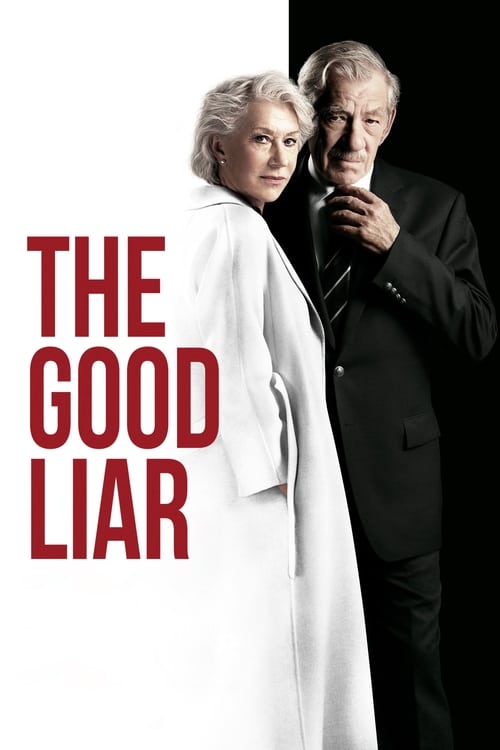
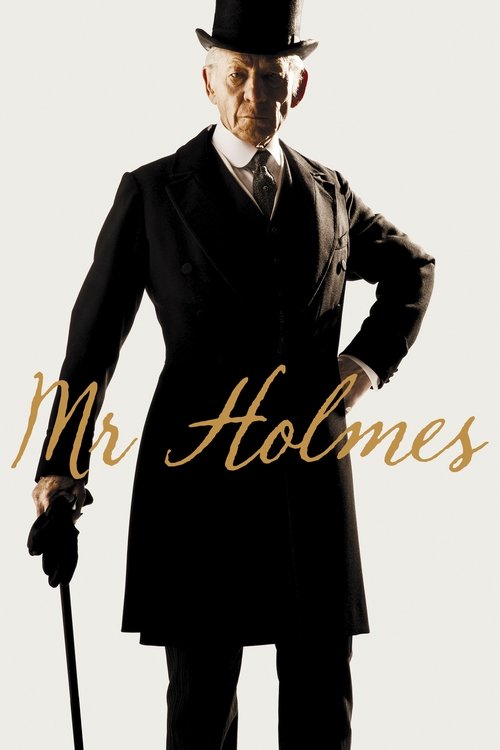
McKellen achieved worldwide fame for his film roles, including King Richard III in Richard III (1995), James Whale in Gods and Monsters (1998), Magneto in the X-Men films (2000–2014; 2026), Cogsworth in Beauty and the Beast (2017) and Gandalf in The Lord of the Rings (2001–2003) and The Hobbit (2012–2014) trilogies. He also appears in A Touch of Love (1969), Plenty (1985), Six Degrees of Separation (1993), Restoration (1995), Flushed Away (2006), Mr. Holmes (2015), and The Good Liar (2019).
McKellen came out as gay in 1988, and has since championed LGBT social movements worldwide. He was awarded the Freedom of the City of London in October 2014. McKellen is a cofounder of Stonewall, an LGBT rights lobby group in the United Kingdom, named after the Stonewall riots. He is patron of LGBT History Month, Pride London, Oxford Pride, GayGlos, LGBT Foundation and FFLAG.
Contents
Early life and education
McKellen was born on 25 May 1939 in Burnley, Lancashire, the son of Margery Lois (née Sutcliffe) and Denis Murray McKellen. He was their second child, with a sister, Jean, five years his senior. At four months old, shortly before the outbreak of the Second World War in September 1939, his family moved to Wigan. They lived there until Ian was twelve years old, before relocating to Bolton in 1951 after his father had been promoted. The experience of living through the war as a young child had a lasting impact on him, and he later said that "only after peace resumed ... did I realise that war wasn't normal". When an interviewer remarked that he seemed quite calm in the aftermath of the 11 September attacks, McKellen said: "Well, darling, you forget—I slept under a steel plate until I was four years old".
McKellen's father was a civil engineer and lay preacher, and was of Protestant Irish and Scottish descent. Both of McKellen's grandfathers were preachers, and his great-great-grandfather, James McKellen, was a "strict, evangelical Protestant minister" in Ballymena, County Antrim. His home environment was strongly Christian, but non-orthodox. "My upbringing was of low nonconformist Christians who felt that you led the Christian life in part by behaving in a Christian manner to everybody you met". When he was 12, his mother died of breast cancer; his father died when he was 25. After his coming out as gay to his stepmother, Gladys McKellen, who was a Quaker, he said, "Not only was she not fazed, but as a member of a society which declared its indifference to people's sexuality years back, I think she was just glad for my sake that I wasn't lying any more". His great-great-grandfather Robert J. Lowes was an activist and campaigner in the ultimately successful campaign for a Saturday half-holiday in Manchester, the forerunner to the modern five-day work week, thus making Lowes a "grandfather of the modern weekend".
McKellen attended Bolton School (Boys' Division), of which he is still a supporter, attending regularly to talk to pupils. McKellen's acting career started at Bolton Little Theatre, of which he is now the patron. An early fascination with the theatre was encouraged by his parents, who took him on a family outing to Peter Pan at the Manchester Opera House when he was three. When he was nine, his main Christmas present was a fold-away wood and bakelite Victorian theatre from Pollocks Toy Theatres, with cardboard scenery and wires to push on the cut-outs of Cinderella and of Laurence Olivier's reenactment of Shakespeare's "Hamlet".
Career
1965–1985: National Theatre acclaim
McKellen made his first professional appearance in 1961 at the Belgrade Theatre in Coventry, as Roper in A Man for All Seasons, although an audio recording of the Marlowe Society's Cymbeline had gone on commercial sale as part of the Argo Shakespeare series. After four years in regional repertory theatres, McKellen made his first West End appearance, in A Scent of Flowers, regarded as a "notable success". In 1965, he was a member of Laurence Olivier's National Theatre Company at the Old Vic, which led to roles at the Chichester Festival. With the Prospect Theatre Company, McKellen made his breakthrough performances of Shakespeare's Richard II (directed by Richard Cottrell) and Christopher Marlowe's Edward II (directed by Toby Robertson) at the Edinburgh Festival in 1969, the latter causing a storm of protest over the enactment of the homosexual Edward's lurid death.
One of his first major roles on television was as the title character in the BBC's 1966 adaptation of David Copperfield, which achieved 12 million viewers on its initial airings. After some rebroadcasting in the late 60s, the master videotapes for the serial were wiped, and only four scattered episodes (3, 8, 9 and 11) survive as telerecordings, three of which feature McKellen as adult David. McKellen had taken film roles throughout his career—beginning in 1969 with his role of George Matthews in A Touch of Love, and his first leading role was in 1980 as D. H. Lawrence in Priest of Love, but it was not until the 1990s that he became more widely recognised in this medium after several roles in blockbuster Hollywood films. In 1969, McKellen starred in three films, Michael Hayes's The Promise, Clive Donner's epic film Alfred the Great, and Waris Hussein's A Touch of Love (1969).
In the 1970s, McKellen became a well-known figure in British theatre, performing frequently at the Royal Shakespeare Company and the Royal National Theatre, where he played several leading Shakespearean roles. From 1973 to 1974, McKellen toured the United Kingdom and Brooklyn Academy of Music portraying Lady Wishfort's Footman, Kruschov, and Edgar in the William Congreve comedy The Way of the World, Anton Chekhov's comedic three-act play The Wood Demon and William Shakespeare tragedy King Lear. The following year, he starred in Shakespeare's King John, George Colman's The Clandestine Marriage, and George Bernard Shaw's Too True to Be Good. From 1976 to 1977, he portrayed Romeo in the Shakespeare romance Romeo & Juliet at the Royal Shakespeare Theatre. The following year he played King Leontes in The Winter's Tale.
1986–2000: Established actor
In 1986, he returned to Broadway in the revival of Anton Chekhov's first play Wild Honey alongside Kim Cattrall and Kate Burton. The play concerned a local Russian schoolteacher who struggles to remain faithful to his wife, despite the attention of three other women. McKellen received mixed reviews from critics in particular Frank Rich of The New York Times who praised him for his "bravura and athletically graceful technique that provides everything except, perhaps, the thing that matters most—sustained laughter". He later wrote, "Mr. McKellen finds himself in the peculiar predicament of the star who strains to carry a frail supporting cast". In 1989 he played Iago in production of Othello by the Royal Shakespeare Company. McKellen starred in the British drama Scandal (1989) a fictionalised account of the Profumo affair that rocked the government of British prime minister Harold Macmillan. McKellen portrayed John Profumo. The film starred Joanne Whalley, and John Hurt. The film premiered at the 1989 Cannes Film Festival and competed for the Palme d'Or. When his friend and colleague, Patrick Stewart, decided to accept the role of Captain Jean-Luc Picard in the American television series, Star Trek: The Next Generation, McKellen strongly advised him not to throw away his respected theatrical career to work in television. However, McKellen later conceded that Stewart had been prudent in accepting the role, which made him a global star and later followed his example such as co-starring with Stewart in the X-Men superhero film series.
From 1990 to 1992, he acted in a world tour of a lauded revival of Richard III, playing the title character. The production played at the Brooklyn Academy of Music for two weeks before continuing its tour where Frank Rich of New York Times was able to review it. In his piece, he praised McKellen's performance writing, "Mr McKellen's highly sophisticated sense of theatre and fun drives him to reveal the secrets of how he pulls his victims' strings whether he is addressing the audience in a soliloquy or not". For his performance he received the Laurence Olivier Award for Best Actor.
In 1992, he acted in Pam Gems's revival of Chekov's Uncle Vanya at the Royal National Theatre alongside Antony Sher, and Janet McTeer. In 1993, he starred in the film Six Degrees of Separation based on the Pulitzer Prize and Tony Award nominated play of the same name. McKellen starred alongside Will Smith, Donald Sutherland and Stockard Channing. The film was a critical success. That same year, he appeared in the western The Ballad of Little Jo opposite Bob Hoskins and the action comedy Last Action Hero starring Arnold Schwarzenegger. The following year, he appeared in the superhero film The Shadow with Alec Baldwin and the James L. Brooks directed comedy I'll Do Anything starring Nick Nolte.
2000–2011: International stardom
In 1999, McKellen was cast, again under the direction of Bryan Singer, to play the comic book supervillain Magneto in the 2000 film X-Men and its sequels X2: X-Men United (2003) and X-Men: The Last Stand (2006). He later reprised his role of Magneto in 2014's X-Men: Days of Future Past, sharing the role with Michael Fassbender, who played a younger version of the character in 2011's X-Men: First Class.
While filming the first X-Men film in 1999, McKellen was cast as the wizard Gandalf in Peter Jackson's film trilogy adaptation of The Lord of the Rings (consisting of The Fellowship of the Ring, The Two Towers, and The Return of the King), released between 2001 and 2003. He won the Screen Actors Guild Award for Best Supporting Actor in a Motion Picture for his work in The Fellowship of the Ring and was nominated for the Academy Award for Best Supporting Actor for the same role. He provided the voice of Gandalf for several video game adaptations of the Lord of the Rings films.
McKellen returned to the Broadway stage in 2001 in an August Strindberg play The Dance of Death alongside Helen Mirren and David Strathairn at the Broadhurst Theatre. The New York Times Theatre critic Ben Brantley praised McKellen's performance writing, "[McKellen] returns to Broadway to serve up an Elysian concoction we get to sample too little these days: a mixture of heroic stage presence, actorly intelligence, and rarefied theatrical technique". McKellen toured with the production at the Lyric Theatre in London's West End and to the Sydney Art's Festival in Australia. On 16 March 2002, he hosted Saturday Night Live.
In 2002 McKellen appeared in a solo performance at the Beverly Hills Canon Theatre, where he performed his personally written scene from a Shakespeare annexe piece. An essay on the event was published May 2026 in the Lincoln England international magazine "The Lincoln Review".
In 2003 McKellen made a guest appearance as himself on the American cartoon show The Simpsons in a special British-themed episode entitled "The Regina Monologues", along with the then UK Prime Minister Tony Blair and author J. K. Rowling. In April and May 2005, he played the role of Mel Hutchwright in Granada Television's long-running British soap opera, Coronation Street, fulfilling a lifelong ambition, where in 2015 he was gifted a cobble from the soap's exterior set for his seventy-sixth birthday. He narrated Richard Bell's film Eighteen as a grandfather who leaves his World War II memoirs on audio-cassette for his teenage grandson.
Since 2012: Career expansion
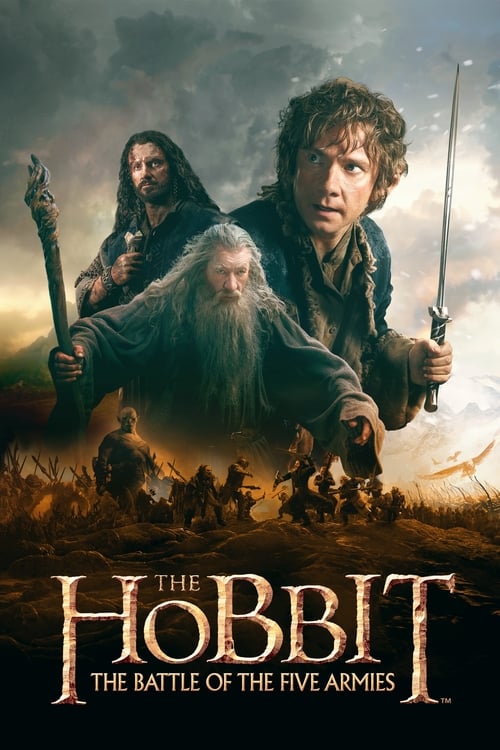
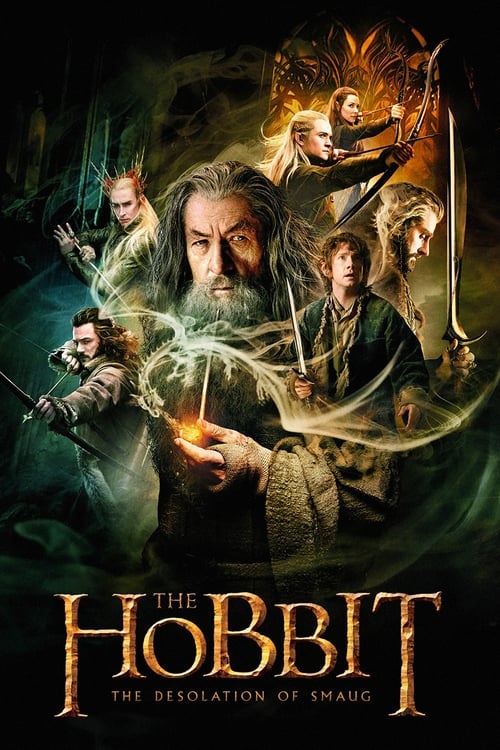
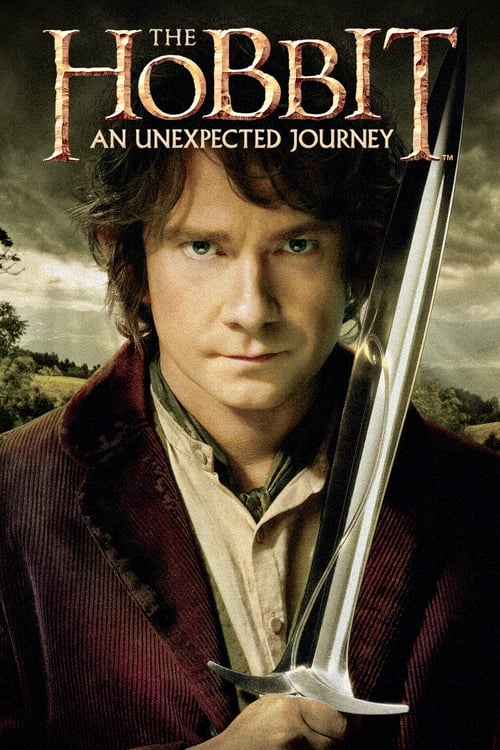
McKellen reprised the role of Gandalf on screen in Peter Jackson's three-part film adaptation of The Hobbit starting with The Hobbit: An Unexpected Journey (2012), followed by The Hobbit: The Desolation of Smaug (2013), and finally The Hobbit: The Battle of the Five Armies (2014). Despite the series receiving mixed reviews, it emerged as a financial success. McKellen
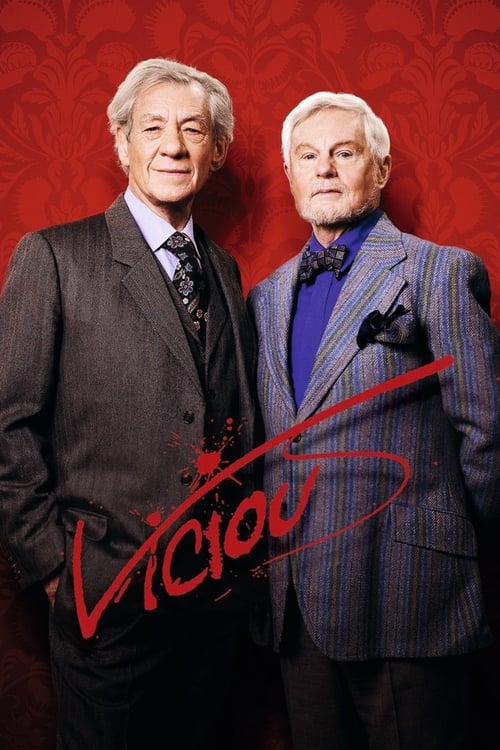
reprised his role as Erik Lehnsherr/Magneto in James Mangold's The Wolverine (2013), and Singer's X-Men: Days of Future Past (2014). In November 2013, McKellen appeared in the Doctor Who 50th anniversary comedy homage The Five(ish) Doctors Reboot. From 2013 to 2016, McKellen co-starred in the ITV sitcom Vicious as Freddie Thornhill, alongside Derek Jacobi. The series revolves around an elderly gay couple who have been together for 50 years. The show's original title was "Vicious Old Queens". There are ongoing jokes about McKellen's career as a relatively unsuccessful character actor who owns a tux because he stole it after doing a guest spot on "Downton Abbey" and that he holds the title of "10th Most Popular 'Doctor Who' Villain". Liz Shannon Miller of IndieWire noted that while the concept seemed "weird as hell", "Once you come to accept McKellen and Jacobi in a multi-camera format, there is a lot to respect about their performances; specifically, the way that those decades of classical training adapt themselves to the sitcom world. Much has been written before about how the tradition of the multi-cam, filmed in front of a studio audience, relates to theatre, and McKellen and Jacobi know how to play to a live crowd".
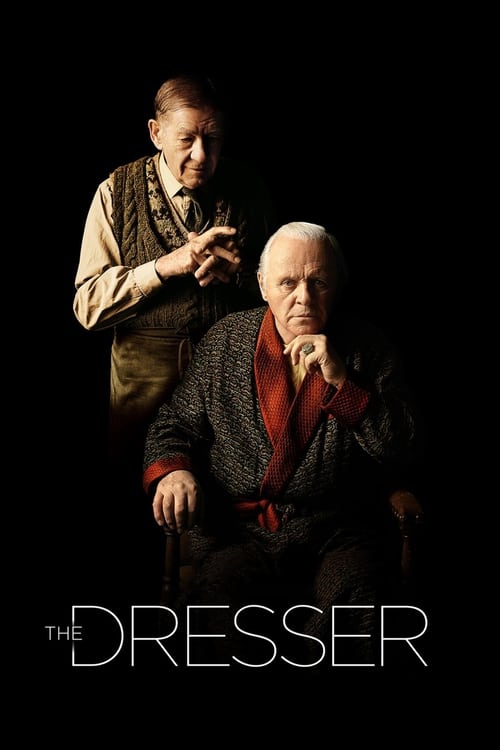
In 2015, McKellen reunited with director Bill Condon playing an elderly Sherlock Holmes in the mystery film Mr. Holmes alongside Laura Linney. In the film based on the novel A Slight Trick of the Mind (2005), Holmes now 93, struggles to recall the details of his final case because his mind is slowly deteriorating. The film premiered at the 65th Berlin International Film Festival with McKellen receiving acclaim for his performance. Rolling Stone film critic Peter Travers praised his performance writing, "Don't think you can take another Hollywood version of Sherlock Holmes? Snap out of it. Apologies to Robert Downey Jr. and Benedict Cumberbatch, but what Ian McKellen does with Arthur Conan Doyle's fictional detective in Mr Holmes is nothing short of magnificent ... Director Bill Condon, who teamed superbly with McKellen on the Oscar-winning Gods and Monsters, brings us a riveting character study of a lion not going gentle into winter". In October 2015, McKellen appeared as Norman to Anthony Hopkins's Sir in a BBC Two production of Ronald Harwood's The Dresser, alongside Edward Fox, Vanessa Kirby, and Emily Watson. Television critic Tim Goodman of The Hollywood Reporter praised the film and the central performances writing, "there's no escaping that Hopkins and McKellen are the central figures here, giving wonderfully nuanced performances, onscreen together for their first time in their acclaimed careers". For his performance McKellen received a British Academy Television Award nomination for his performance.
Personal life
McKellen and his first partner, Brian Taylor, a history teacher from Bolton, began their relationship in 1964. Their relationship lasted for eight years, ending in 1972. They lived in Earls Terrace, Kensington, London, where McKellen continued to pursue his career as an actor. In 1978, he met his second partner, Sean Mathias, at the Edinburgh Festival. This relationship lasted until 1988, and according to Mathias, it was tempestuous, with conflicts over McKellen's success in acting versus Mathias's somewhat less-successful career. The two remained friends, with Mathias later directing McKellen in Waiting for Godot at the Theatre Royal Haymarket in 2009. The pair entered into a business partnership with Evgeny Lebedev, purchasing the lease of The Grapes public house in Narrow Street. As of 2005, McKellen had been living in Narrow Street, Limehouse, for more than 25 years, more than a decade of which had been spent in a five-storey Victorian house.
He is an atheist. In the late 1980s, he lost his appetite for every kind of meat but fish, and has since followed a mainly pescetarian diet. In 2001, he received the Artist Citizen of the World Award (France). He has a tattoo of the Elvish number nine, written using J. R. R. Tolkien's constructed script of Tengwar, on his shoulder in reference to his involvement in the Lord of the Rings and the fact that his character was one of the original nine companions of the Fellowship of the Ring. All but one of the other actors of "The Fellowship" (Elijah Wood, Sean Astin, Orlando Bloom, Billy Boyd, Sean Bean, Dominic Monaghan and Viggo Mortensen) have the same tattoo (John Rhys-Davies did not get the tattoo, but his stunt double Brett Beattie did).
He was diagnosed with prostate cancer in 2006. In 2012, he stated on his blog that "There is no cause for alarm. I am examined regularly and the cancer is contained. I've not needed any treatment". He registered as a marriage officiant in early 2013 to preside over the marriage of his friend and X-Men co-star Patrick Stewart to the singer Sunny Ozell.
McKellen was awarded an honorary Doctorate of Letters by the University of Cambridge on 18 June 2014. He was made a Freeman of the City of London on 30 October 2014. The ceremony took place at Guildhall in London. He was nominated by London's Lord Mayor Fiona Woolf, who said he was an "exceptional actor" and "tireless campaigner for equality". He is an emeritus Fellow of St Catherine's College, Oxford.
Activism
LGBT rights
While McKellen had made his sexual orientation known to fellow actors early on in his stage career, it was not until 1988 that he came out to the general public while appearing on the BBC Radio programme Third Ear hosted by conservative journalist Peregrine Worsthorne. The context that prompted McKellen's decision, overriding any concerns about a possible negative effect on his career, was that the controversial Section 28 of the Local Government Act 1988, was then under consideration in the British Parliament. Section 28 proposed prohibiting local authorities from promoting homosexuality "... as a kind of pretended family relationship". McKellen has stated that he was influenced in his decision by the advice and support of his friends, among them noted gay author Armistead Maupin. In a 1998 interview that discusses the 29th anniversary of the Stonewall riots, McKellen commented, I have many regrets about not having come out earlier, but one of them might be that I didn't engage myself in the politicking. He has said of this period: My own participating in that campaign was a focus for people [to] take comfort that if Ian McKellen was on board for this, perhaps it would be all right for other people to be as well, gay and straight.
In 2003, during an appearance on Have I Got News For You, McKellen claimed when he visited Michael Howard, then Environment Secretary (responsible for local government), in 1988 to lobby against Section 28, Howard refused to change his position but did ask him to leave an autograph for his children. McKellen agreed, but wrote, "Fuck off, I'm gay". McKellen described Howard's junior ministers, Conservatives David Wilshire and Jill Knight, who were the architects of Section 28, as the 'ugly sisters' of a political pantomime.
McKellen has continued to be very active in LGBT rights efforts. In a statement on his website regarding his activism, the actor commented:
I have been reluctant to lobby on other issues I most care about—nuclear weapons (against), religion (atheist), capital punishment (anti), AIDS (fund-raiser) because I never want to be forever spouting, diluting the impact of addressing my most urgent concern: legal and social equality for gay people worldwide.
McKellen is a co-founder of Stonewall, an LGBT rights lobby group in the United Kingdom, named after the Stonewall riots. McKellen is also patron of LGBT History Month, Pride London, Oxford Pride, GAY-GLOS, LGBT Foundation and FFLAG where he appears in their video "Parents Talking".
Charity work
In April 2010, along with actors Brian Cox and Eleanor Bron, McKellen appeared in a series of TV advertisements to support Age UK, the charity recently formed from the merger of Age Concern and Help the Aged. All three actors gave their time free of charge.
A cricket fan since childhood, McKellen umpired in March 2011 for a charity cricket match in New Zealand to support earthquake victims of the February 2011 Christchurch earthquake.
McKellen is an honorary board member for the New York City- and Washington, D.C.–based organisation Only Make Believe. Only Make Believe creates and performs interactive plays in children's hospitals and care facilities. He was honoured by the organisation in 2012 and hosted their annual Make Believe on Broadway Gala in November 2013.
McKellen also has a history of supporting individual theatres. While in New Zealand filming The Hobbit in 2012, he announced a special New Zealand tour "Shakespeare, Tolkien and You!", with proceeds going to help save the Isaac Theatre Royal, which suffered extensive damage during the 2011 Christchurch earthquake. McKellen said he opted to help save the building as it was the last theatre he played in New Zealand (Waiting for Godot in 2010) and the locals' love for it made it a place worth supporting. In July 2017, he performed a new one-man show for a week at Park Theatre (London), donating the proceeds to the theatre.
Together with a number of his Lord of the Rings co-stars (plus writer Philippa Boyens and director Peter Jackson), on 1 June 2020 McKellen joined Josh Gad's YouTube series Reunited Apart which reunites the cast of popular movies through video-conferencing, and promotes donations to non-profit charities.
Other work
A friend of Ian Charleson and an admirer of his work, McKellen contributed an entire chapter to For Ian Charleson: A Tribute. A recording of McKellen's voice is heard before performances at the Royal Festival Hall, reminding patrons to ensure their mobile phones and watch alarms are switched off and to keep coughing to a minimum. He took part in the 2012 Summer Paralympics opening ceremony in London as Prospero from Shakespeare's The Tempest.
Accolades and honours
McKellen has received two Academy Award nominations for his performances in Gods and Monsters (1999), and The Lord of the Rings: The Fellowship of the Ring (2001). He has received five Primetime Emmy Award nominations. McKellen has received two Tony Award nominations, winning for Best Actor in a Play for his performance in Amadeus in 1981. He has received 12 Olivier Award nominations, winning six awards for his performances in Pillars of the Community (1977), The Alchemist (1978), Bent (1979), Wild Honey (1984), Richard III (1991), and Ian McKellen on Stage: With Tolkien, Shakespeare, Others and YOU (2020).
He has received honorary awards including Pride International Film Festival's Lifetime Achievement & Distinction Award in 2004 and the Olivier Awards' Society Special Award in 2006. He received The Lebedev Special Award in the 2009 Evening Standard Theatre Awards. The following year he received the Empire Awards' Empire Icon Award. In 2017 he received the Honorary Award from the Istanbul International Film Festival. McKellen was awarded an Honorary Fellowship of the British Shakespeare Association in 2020.
McKellen was appointed a Commander of the Order of the British Empire (CBE) in the 1979 Birthday Honours, then knighted in the 1991 New Year Honours for services to the performing arts, and made a Member of the Order of the Companions of Honour (CH) in the 2008 New Year Honours for services to drama and to equality.