




Hiram Keller Undercofler Jr. (May 3, 1944 – January 20, 1997) was an American actor and model. Early in his career, Keller appeared in the original Broadway production of Hair and he had a leading role as Ascyltus in Federico Fellini's film Satyricon (1969). Keller appeared in several European-produced films in the 1970s, and his last role was in the Jamaican production Countryman (1982). He worked as a furrier prior to this death from cancer in 1997.
Contents
Early life and education
Hiram Keller Undercofler Jr. was born to Hiram Keller Undercofler Sr. and Flora Gatewood in Valdosta, Georgia on May 3, 1944. His father was a lieutenant in the United States Army Air Corps stationed at Souther Field in Americus, Georgia. He later became Chief Justice of the Supreme Court of Georgia.
Keller studied law at the University of Georgia before dropping out and moving to Palm Beach, Florida, where he worked as a window designer. After a vacation in California, he moved to New York to live with an uncle.
Career
In 1966, Keller attended classes taught by Stella Adler at Lee Strasberg's Actors Studio at Carnegie Hall. "I sat in on a lot of classes and I really couldn't get into it. It just wasn't my cup of tea," he said. He did not adopt Adler's method acting style. "If you tell a producer you're a Method actor, he doesn't want to know you … It costs a fortune to work with Method actors. It's very tedious, and very long."
He used the stage name Rusty Underkoffer before actress Monique van Vooren suggested that he go by Hiram Keller. When Monique invested in the original production of Hair in 1968, she asked producer Michael Butler to put Keller in the cast. Keller was a member of "the tribe, a group of politically active, long-haired hippies of the 'Age of Aquarius' living a bohemian life in New York City and fighting against conscription into the Vietnam War. Hiram was the first male "nudie" on Broadway, which caused controversy.
Keller is German model Veruschka were photographed by Franco Rubartelli for the April 1, 1969 issue of Vogue magazine. Keller was photographed by Mary Russell for the October 1, 1970 issue and by Olivier Gelbsman in the January 15, 1971 issue.
Keller and his Hair co-star Emmaretta Marks appeared on the cover of the November 1969 issue of After Dark for a special feature on erotica.
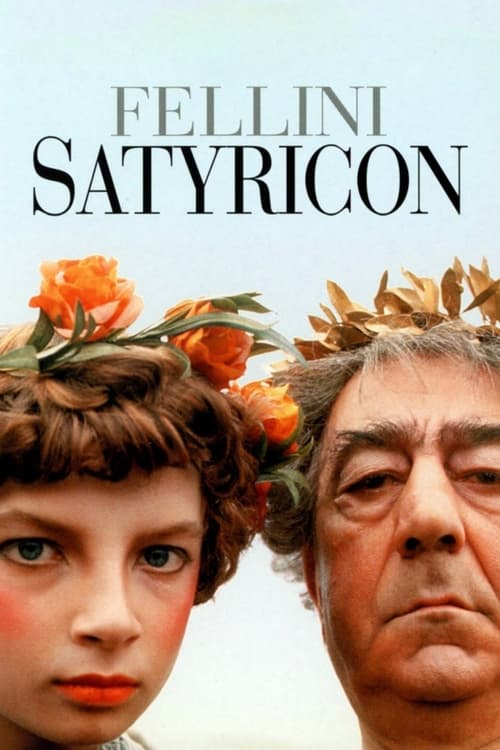
Keller caught the attention of Italian filmmaker Franco Zeffirelli, who gave his picture to Italian director Federico Fellini. Fellini invited him to fly out to Rome for an audition and cast him in the role of Ascyltus in his surreal adaptation of the surviving portions of Gaius Petronius's work of fiction Satyricon. Describing the character Ascyltus, Keller said: "He's vulgar. He lived for his own self-satisfaction. He's a product of the time. He's me." This role boosted Keller's career internationally. Fellini's screenwriter Bernardino Zapponi said of Keller's representation:"[He] has a very photogenic smile and is full of knowledge as required by his role."
After this success, Keller received major roles in the European film market. He had the leading role in the Greek motion picture Orestis (1969), in 1970 he appeared with John Phillip Law in Strogoff, an Italian-French-German-Bulgarian co-production based on Jules Verne's Michel Strogoff; two years later, he starred with Giancarlo Giannini in Alberto Lattuada's comedy Sono stato io and had the male lead role opposite Jane Birkin in the Antonio Margheriti-directed horror movie Seven Deaths in the Cat's Eye.
In 1973, Keller had the opportunity to play the role of Jean, L'ange in Marcel Carné's La Merveilleuse Visite however he lost the role to Gilles Kohler after failing to fulfill the obligations in his contract to learn French.
He appeared in 1974 in two productions for Italian television, Miklós Jancsó's historical drama Roma rivoule Cesare and in the series Orlando furioso, based on Ludovico Ariosto's epic poem.
Keller and his Satyricon co-star Donyale Luna appeared on the cover of the October 1974 issue of Interview magazine.
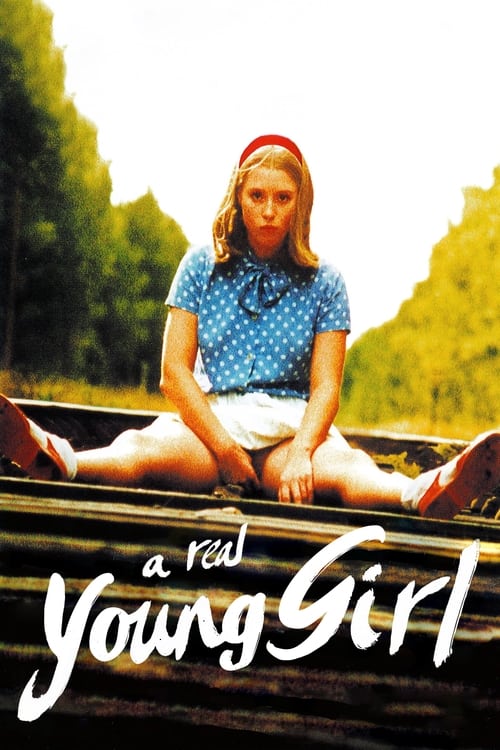
In 1975, he had the main role in the science fiction thriller Lifespan, with Tina Aumont and Klaus Kinski, followed by Catherine Breillat's A Real Young Girl (1976).
In 1982, Keller starred with his then-wife Kristina St. Clair in the cult film Countryman, his last film.
In his later years Keller was worked as a furrier. He was associated with Birger-Christensen, Inc. at Saks Fifth Avenue in Atlanta.
Personal life
Keller was bisexual. He was romantically involved with actress Monique van Vooren, ballet dancer Rudolf Nureyev, actress Talitha Getty, film director Wallace Potts, Warhol superstar Jackie Curtis, and singer Joni Mitchell.
He learned to speak basic Italian while living in Europe.
He was married to actress Kristina St. Clair from 1981 to 1987, and they had a daughter named Serena Keller Undercofler, also known as Cole Keller Undercofler, who works in the film industry as a music supervisor. That was Keller's second marriage.
Death
Keller died of cancer at age 52 in Atlanta, Georgia, on January 20, 1997. His resting place is located at the Oak Grove Cemetery in Americus, Georgia.
Filmography
1969 Fellini Satyricon - Ascyltus
1969 Fellinikon - Himself
1969 Orestis - Orestis
1970 Ciao, Federico! - Himself
1970 Strogoff (The Courier of the Czar) - Ivan Ogareff
1972 La notte dei fiori - Hiram
1972 Grazie signore p... - Marco Rossetti
1972 Smile Before Death - Paolo - Dorothy's Lover
1972 Rosina Fumo viene in città... per farsi il corredo - Francesco
1973 Sono stato io - Kid
1973 Seven Deaths in the Cat's Eye - Lord James MacGrieff
1974 Roma rivuole Cesare (for TV) - Ottavio
1974 Orlando furioso (for TV) - Brandimarte
1974 Noa Noa - Fletcher Christian
1975 Lifespan - Dr. Ben Land
1976 A Real Young Girl - Pierre-Evariste Renard / "Jim" / "Earthworm Jim"
1982 Countryman - Bobby Lloyd