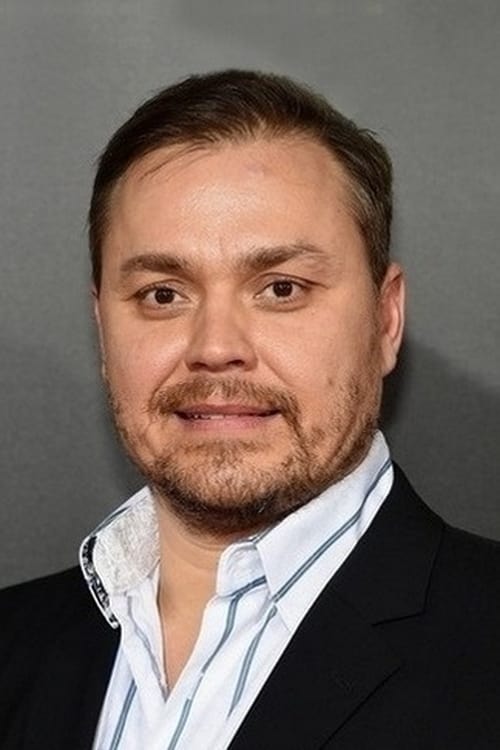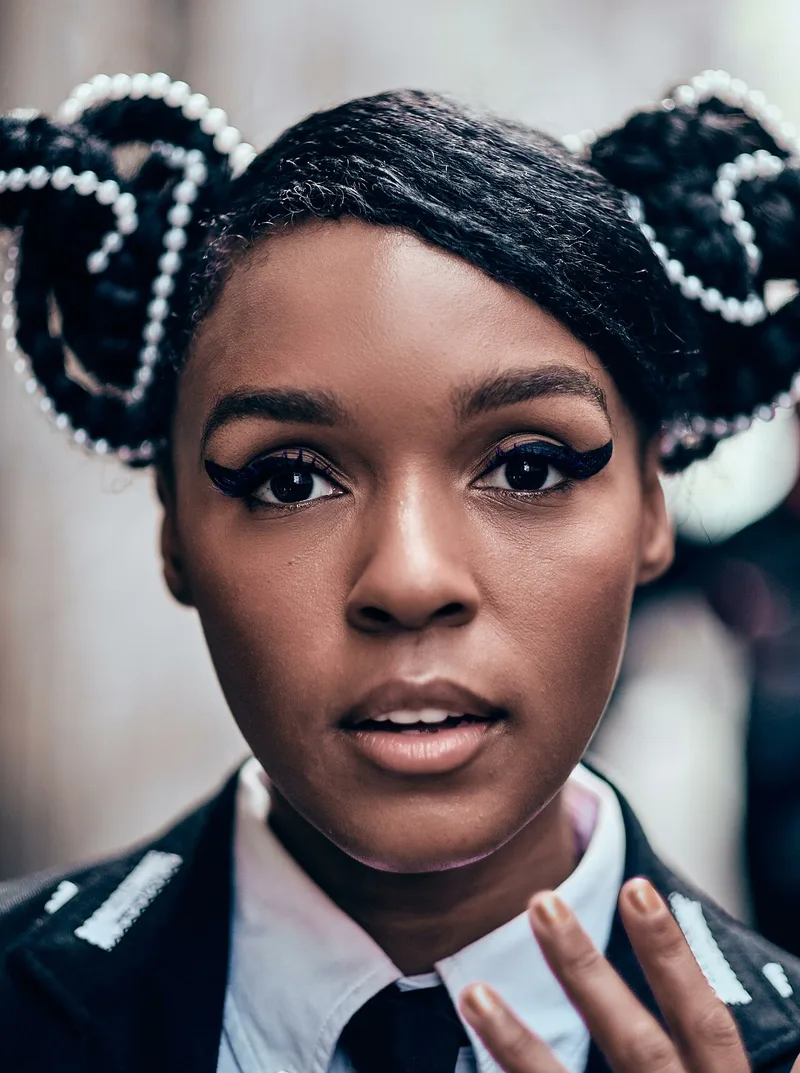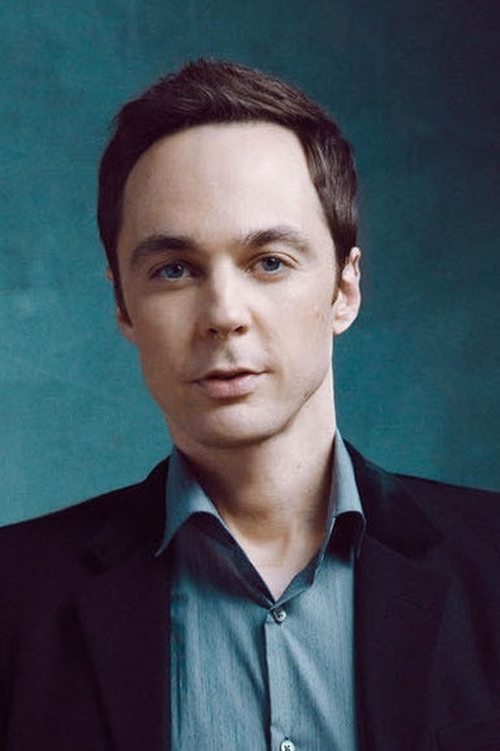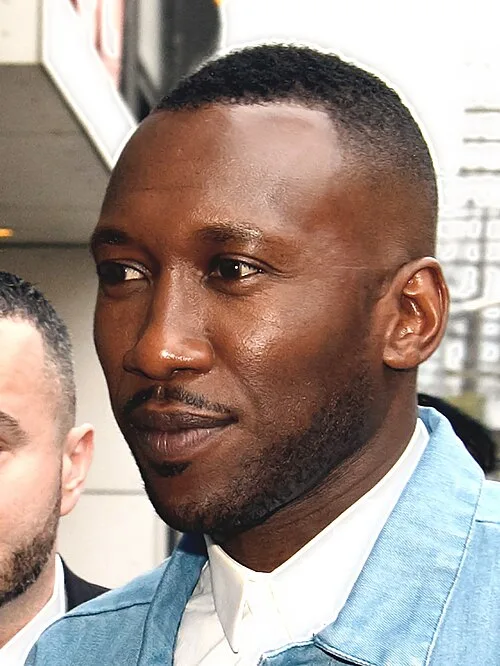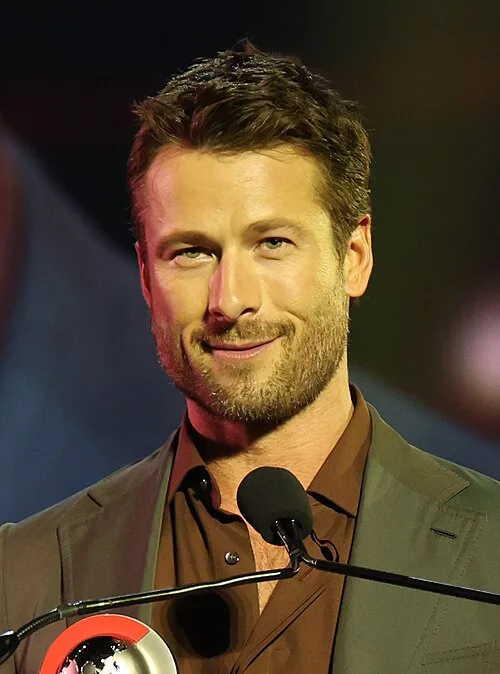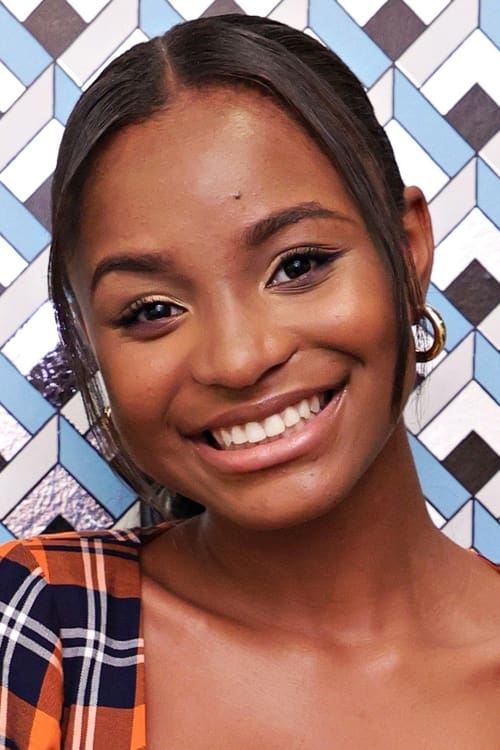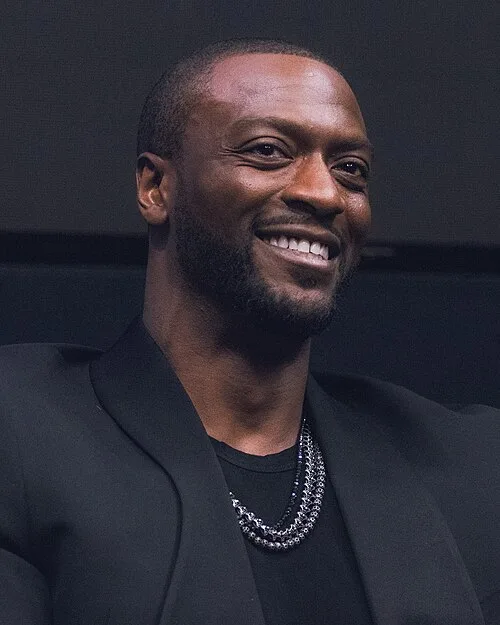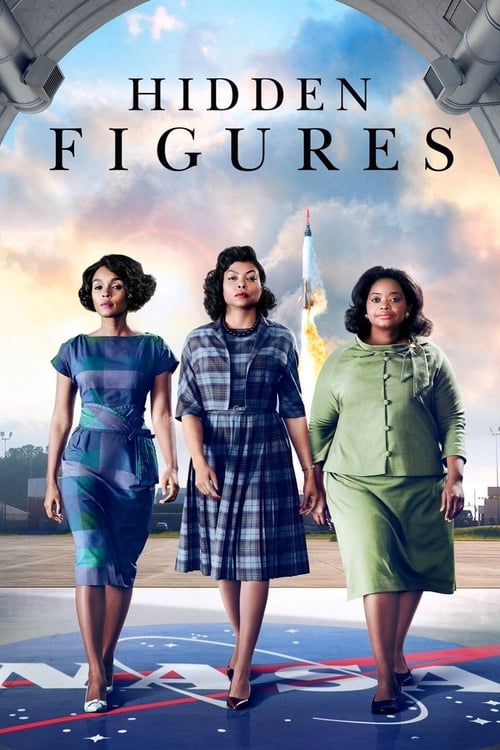


Hidden Figures is a 2016 American biographical drama film co-produced and directed by Theodore Melfi, who co-wrote the screenplay with Allison Schroeder. It is loosely based on the 2016 book by Margot Lee Shetterly. It follows three female African-American mathematicians, Katherine Goble Johnson (Taraji P. Henson), Dorothy Vaughan (Octavia Spencer), and Mary Jackson (Janelle Monáe), who worked at NASA during the Space Race in the 1950s and 1960s. Other stars include Kevin Costner, Kirsten Dunst, Jim Parsons, Mahershala Ali, Aldis Hodge, and Glen Powell.
Principal photography began in March 2016 in Atlanta, Georgia, and wrapped up in May 2016. Other filming locations included several other locations in Georgia, including East Point, Canton, Monroe, Columbus, and Madison.
Hidden Figures had a limited release on December 25, 2016, by 20th Century Fox, before going wide in on January 6, 2017. The film received positive reviews, with praise for the performances (particularly Henson, Spencer and Monáe), the writing, direction, cinematography and emotional tone. Some critics and historians wrote that the film conflated timelines, condensed several real figures into composite characters, and dramatized or invented incidents depicting segregation at Langley, and some argued it featured a white savior narrative. The film was a commercial success, grossing $236 million worldwide against its $25 million production budget.
The film was chosen by the National Board of Review as one of the top ten films of 2016 and received various awards and nominations, including three nominations at the 89th Academy Awards, including Best Picture. It also won the Screen Actors Guild Award for Outstanding Performance by a Cast in a Motion Picture.
Contents
Plot
Katherine Goble works at the West Area of Langley Research Center in Hampton, Virginia, in 1958 through 1961, alongside her colleagues Mary Jackson and Dorothy Vaughan, as lowly "computers", performing mathematical calculations without being told what they are for. All of them are African-American women; the unit is segregated by race and sex. White supervisor Vivian Mitchell assigns Katherine to assist Al Harrison's Space Task Group, given her skills in analytic geometry. She becomes the first Black woman on the team; head engineer Paul Stafford is especially dismissive.
Mary is assigned to the space capsule heat shield team, where she immediately identifies a design flaw. Encouraged by her team leader, Karl Zielinski, a Polish-Jewish Holocaust survivor, Mary applies for a NASA engineer position. She is told by Mitchell that, regardless of her degree in mathematics and physical science, the position requires additional courses. Mary files a petition for permission to attend all-white Hampton High School, despite her husband's opposition. Pleading her case in court, she wins over the local judge by appealing to his sense of history, allowing her to attend night classes.
Katherine meets African-American National Guard Lt. Col. Jim Johnson, who voices skepticism about women's mathematical abilities. He later apologizes and begins to spend time with Katherine and her three daughters (from her marriage to her late husband James Goble). The Mercury 7 astronauts visit Langley, and astronaut John Glenn goes out of his way to greet the West Area women. Katherine impresses Harrison by solving a complex mathematical equation from redacted documents, as the Soviet Union's successful launch of Yuri Gagarin increases pressure to send American astronauts into space.
Harrison confronts Katherine about her "breaks," unaware that she is forced to walk half a mile (800 meters) to use the nearest restroom designated for "colored" people. She angrily explains the discrimination she faces at work, which leads Harrison to destroy the "colored" restroom signs and abolish restroom segregation. He allows Katherine to be included in high-level meetings to calculate the space capsule's re-entry point. Stafford instructs Katherine to remove her name from the reports, insisting that "computers" cannot be credited as authors, and her work is credited solely to Stafford.
Informed by Mitchell that there are no plans to assign a "permanent supervisor for the colored group," Dorothy learns that NASA has installed an IBM 7090 electronic computer, which threatens to replace human computers. When a librarian scolds her for visiting the whites-only section, Dorothy sneaks out a book about Fortran and teaches herself and her West Area co-workers programming. She visits the computer room, successfully starts the machine, and is promoted to supervise the Programming Department; she agrees to do so if thirty of her co-workers are transferred as well. Mitchell finally addresses her as "Mrs. Vaughan".
Production
Development and casting
In 2015, producer Donna Gigliotti acquired Margot Lee Shetterly's nonfiction book Hidden Figures, about a group of Black female mathematicians that helped NASA win the Space Race. Allison Schroeder wrote the script, which was developed by Gigliotti through Levantine Films. Schroeder grew up by Cape Canaveral and her grandparents worked at NASA, where she also interned as a teenager, and as a result saw the project as a perfect fit for herself. Levantine Films produced the film with Peter Chernin's Chernin Entertainment. Fox 2000 Pictures acquired the film rights, and Theodore Melfi signed on to direct. After coming aboard, Melfi revised Schroeder's script, and in particular focused on balancing the home lives of the three protagonists with their careers at NASA. After the film's development was announced, actresses considered to play the lead roles included Oprah Winfrey, Viola Davis, Octavia Spencer, and Taraji P. Henson.
Chernin and Jenno Topping produced, along with Gigliotti and Melfi. Fox cast Henson to play the lead role of mathematician Katherine Goble Johnson. Spencer was selected to play Dorothy Vaughan, one of the three lead mathematicians at NASA. Kevin Costner was cast in the film to play the fictional head of the space program. Singer Janelle Monáe signed on to play the third lead mathematician, Mary Jackson. Kirsten Dunst, Glen Powell, and Mahershala Ali were cast in the film: Powell to play astronaut John Glenn, and Ali as Johnson's love interest.
Filming
Principal photography began in March 2016 on the campus of Morehouse College in Atlanta, Georgia. Scenes were also shot on location in Historic Downtown Canton, Georgia. Filming also took place at Lockheed Martin Aeronautics at Dobbins Air Reserve Base. Jim Parsons was cast in the film to play the head engineer of the Space Task Group at NASA, Paul Stafford. Pharrell Williams (a native of Virginia Beach, near Langley Research Center) came on board as a producer on the film. He also wrote original songs and handled the music department and soundtrack of the film, with Hans Zimmer and Benjamin Wallfisch. Morehouse College mathematics professor Rudy L. Horne was brought in to be the on-set mathematician.
Historical accuracy
The film, set at NASA Langley Research Center in 1961, depicts segregated facilities such as the West Area Computing unit, where an all-Black group of female mathematicians were originally required to use separate dining and bathroom facilities. However, in reality, Dorothy Vaughan was promoted to supervisor of West Computing much earlier, in 1949, becoming the first Black supervisor at the National Advisory Committee for Aeronautics (NACA) and one of its few female supervisors. In 1958, when NACA became NASA, segregated facilities, including the West Computing office, were abolished. Vaughan and many of the former West computers transferred to the new Analysis and Computation Division (ACD), a racially and gender-integrated group.
It was Mary Jackson, not Katherine Goble Johnson, who had difficulty finding a colored bathroom, in a 1953 incident she experienced while on temporary assignment in the East Area, a region of Langley unfamiliar to her and where few Blacks worked. Katherine Goble Johnson, for her part, was initially unaware that the bathrooms at Langley were segregated (in both its East and West areas during the NACA era), and used the "whites-only" bathrooms (many were not explicitly labeled as such) for years before anyone complained. She ignored the complaint, and the issue was dropped.
In an interview with WHRO-TV, Goble Johnson denied the feelings of segregation. "I didn't feel the segregation at NASA, because everybody there was doing research. You had a mission and you worked on it, and it was important to you to do your job [...] and play bridge at lunch. I didn't feel any segregation. I knew it was there, but I didn't feel it."
Mary Jackson did not have to get a court order to attend night classes at the whites-only high school. She asked the city of Hampton for an exception, and it was granted. The school turned out to be run down and dilapidated, a hidden cost of running two parallel school systems. She completed her engineering courses and earned a promotion to engineer in 1958.
Katherine Goble Johnson worked mostly in Langley's West Area, not the East Area – working mainly in Building 1244 starting in mid-1953, and remaining in 1244 even after joining the Space Task Group, through at least the early 1960s and John Glenn's historic flight.
Release
The film began a limited release on December 25, 2016, before a wide release on January 6, 2017.
Charity screenings
After Hidden Figures was released on December 25, 2016, certain charities, institutions and independent businesses who regard the film as relevant to the cause of improving youth awareness in education and careers in the science, technology, engineering, and mathematics (STEM) fields, organized free screenings of the film in order to spread the message of the film's subject matter. A collaborative effort between Western New York STEM Hub, AT&T and the Girl Scouts of the USA allowed more than 200 Buffalo Public Schools students, Girl Scouts and teachers to see the film. WBFO's Senior Reporter Eileen Buckley stated the event was designed to help encourage a new generation of women to consider STEM careers. Research indicates that by 2020, there will be 2.4 million unfilled STEM jobs. Aspiring astronaut Naia Butler-Craig wrote of the film: "I can't imagine what that would have been like: 16-year-old, impressionable, curious and space-obsessed Naia finding out that Black women had something to do with getting Americans on the moon."
Also, the film's principal actors (Henson, Spencer, Monáe and Parsons), director (Melfi), producer/musical creator (Williams), and other non-profit outside groups have offered free screenings to Hidden Figures at several cinema locations around the world. Some of the screenings were open to all-comers, while others were arranged to benefit girls, women and the underprivileged. The campaign began as individual activism by Spencer, and made a total of more than 1,500 seats for Hidden Figures available, free of charge, to poor individuals and families. The result was seven more screenings for people who otherwise might not have been able to afford to see the film – in Atlanta (sponsored by Monáe), in Washington, D.C. (sponsored by Henson), in Chicago (also Henson), in Houston (by Parsons), in Hazelwood, Missouri (by Melfi and actress/co-producer Kimberly Quinn), and in Norfolk and Virginia Beach, Virginia (both sponsored by Williams).
In February 2017, AMC Theatres and 21st Century Fox announced that free screenings of Hidden Figures would take place in celebration of Black History Month in up to 14 select U.S. cities (including Atlanta, Chicago, Dallas, Los Angeles and Miami). The statement described the February charity screenings as building broader awareness of the film's true story of Black women mathematicians who worked at NASA during the Space Race. 21st Century Fox and AMC Theatres also invited schools, community groups and non-profit organizations to apply for additional special screenings to be held in their towns. "As we celebrate Black History Month and look ahead to Women's History Month in March, this story of empowerment and perseverance is more relevant than ever," said Liba Rubenstein, 21st Century Fox's Senior Vice President of Social Impact, "We at 21CF were inspired by the grassroots movement to bring this film to audiences that wouldn't otherwise be able to see it – audiences that might include future innovators and barrier-breakers – and we wanted to support and extend that movement".
Merchandising
Following the 2017 Lego Ideas Contest, Denmark-based toy maker The Lego Group announced plans to manufacture a fan-designed Women of NASA figurine set of five female scientists, engineers and astronauts, as based on real women who have worked for NASA. The minifigures planned for inclusion in the set were Katherine Johnson, computer scientist Margaret Hamilton; astronaut, physicist and educator Sally Ride; astronomer Nancy Grace Roman; and astronaut and physician Mae Jemison (who is also African American). The finished set did not include Johnson. The Women of NASA set was released November 1, 2017.
Maia Weinstock’s original Lego Ideas submission also included Katherine Johnson, a NASA mathematician who calculated trajectories for the Mercury and Apollo programs, and who was recently featured in the film, Hidden Figures. But Johnson unfortunately isn’t included in Lego’s final version of this set. A company representative told Gizmodo, “In order for us to move forward with a partner we need to obtain approval from all key people, which was not possible in this case. We naturally fully respect this decision.”
Home media
Hidden Figures was released on Digital HD on March 28, 2017, and Blu-ray, 4K Ultra HD, and DVD on April 11, 2017. The film debuted at No. 3 on the home video sales chart.
Reception
Box office
Hidden Figures grossed $169.6 million in the United States and Canada, and $66.3 million in other territories, for a worldwide gross of $236 million, against a production budget of $25 million. Domestically, Hidden Figures was the highest-grossing Best Picture nominee at the 89th Academy Awards. Deadline Hollywood calculated the net profit of the film to be $95.55 million, when factoring together all expenses and revenues for the film, making it one of the top twenty most profitable release of 2016.
Critical response
On review aggregator Rotten Tomatoes, the film has an approval rating of 93% based on 325 reviews, with an average rating of 7.6/10. The website's critical consensus reads, "In heartwarming, crowd-pleasing fashion, Hidden Figures celebrates overlooked—and crucial—contributions from a pivotal moment in American history." On Metacritic, the film has a weighted average score of 74 out of 100, based on 47 critics, indicating "generally favorable" reviews. Audiences polled by CinemaScore gave the film an average grade of "A+" on an A+ to F scale, one of fewer than 90 films in the history of the service to receive such a score.
Simon Thompson of IGN gave the film a rating of nine out of ten, writing, "Hidden Figures fills in an all too forgotten, or simply too widely unknown, blank in US history in a classy, engaging, entertaining and hugely fulfilling way. Superb performances across the board and a fascinating story alone make Hidden Figures a solid, an accomplished and deftly executed movie that entertains, engages and earns your time, money and attention." Ty Burr of The Boston Globe wrote, "the film's made with more heart than art and more skill than subtlety, and it works primarily because of the women that it portrays and the actresses who portray them. Best of all, you come out of the movie knowing who Katherine Johnson and Dorothy Vaughn and Mary Jackson are, and so do your daughters and sons."
Clayton Davis of Awards Circuit gave the film three and a half stars, saying "Precisely marketed as terrific adult entertainment for the Christmas season, Hidden Figures is a faithful and truly beautiful portrait of our country's consistent gloss over the racial tensions that have divided and continue to plague the fabric of our existence. Lavishly engaging from start to finish, Hidden Figures may be able to catch the most inopportune movie-goer off guard and cause them to fall for its undeniable and classic storytelling. The film is not to be missed."
Other reviews criticized the film for its fictional embellishments and conventional, feel-good style. Tim Grierson, writing for Screen International, states that "Hidden Figures is almost patronisingly earnest in its depiction of sexism and racism. An air of do-gooder self-satisfaction hovers over the proceedings", while Jesse Hassenger at The A.V. Club comments that "lack of surprise is in this movie's bones." Eric Kohn of IndieWire argues that the film "trivializes history; as a hagiographic tribute to its brilliant protagonists, it doesn't dig into the essence of their struggles" and similarly, Paul Byrnes concludes that "When a film purports to be selling history, we're entitled to ask where the history went, even if it offers a good time instead."
Accolades
Among its many achievements, Octavia Spencer was particularly lauded for her portrayal of Dorothy Vaughan and was nominated for the Academy Award for Best Supporting Actress, Golden Globe Award for Best Supporting Actress – Motion Picture and Screen Actors Guild Award for Outstanding Performance by a Female Actor in a Supporting Role. The film's ensemble cast won the Screen Actors Guild Award for Outstanding Performance by a Cast in a Motion Picture. The film itself garnered a nomination for the Academy Award for Best Picture and several nominations its screenplay (including for the Oscar and BAFTA), soundtrack and score.
Overall, the film received three nominations for the 89th Academy Awards in 2017, winning none:
Best Picture — Donna Gigliotti, Peter Chernin, Jenno Topping, Pharrell Williams and Theodore Melfi (lost to Moonlight)
Best Supporting Actress — Octavia Spencer (lost to Viola Davis for Fences)
Best Adapted Screenplay — Allison Schroeder and Theodore Melfi (based on the book Hidden Figures: The American Dream and the Untold Story of the Black Women Who Helped Win the Space Race) (lost to Moonlight)