Production
Screenwriter James Carabatsos, a Vietnam War veteran of the 1st Cavalry Division, was inspired by an account of American paratroopers of the 82nd Airborne Division using a pay telephone and a credit card to call in fire support during the invasion of Grenada, and fashioned a script of a Korean War veteran career Army non-commissioned officer passing on his values to a new generation of soldiers. Eastwood was interested in the script and asked his producer, Fritz Manes, to contact the US Army with a view of filming the movie at Fort Bragg.
However, the Army read the script and refused to participate, due to Highway being portrayed as a hard drinker, divorced from his wife, and using unapproved motivational methods to his troops, an image the Army did not want. The Army called the character a "stereotype" of World War II and Korean War attitudes that did not exist in the modern army and also did not like the obscene dialogue and lack of reference to women in the army. Eastwood pleaded his case to an Army general, contending that while the point of the film was that Highway was a throwback to a previous generation, there were values in the World War II- and Korean War-era army that were worth emulating.
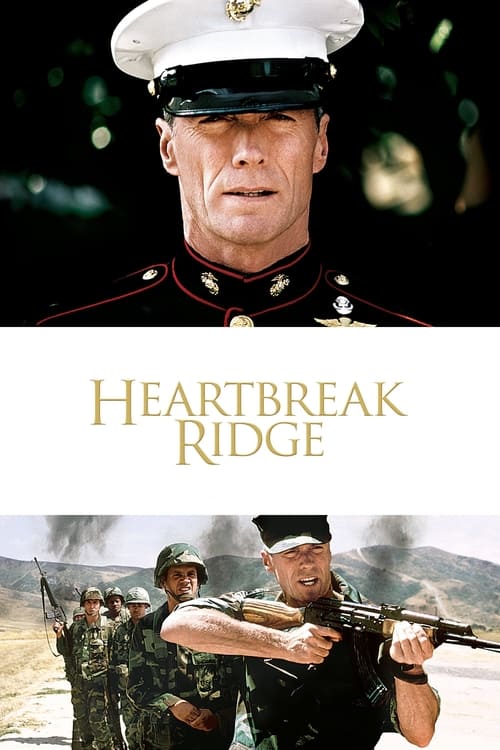
Eastwood approached the United States Marine Corps, which expressed some reservations about some parts of the film, but provided support. The character was then changed to a Marine. (This raised some conceptual difficulties, given that the Battle of Heartbreak Ridge primarily involved the Army. This is explained very briefly in the film when Sergeant Major Choozoo tells Stitch Jones that he and Highway were in the Army's 23rd Infantry Regiment at the time and "joined the Corps later"; the 23rd Regiment was at Heartbreak Ridge.) The Marine Corps first cooperated with the film project by allowing much of the filming to be done at Camp Pendleton. The Marines planned to use it to promote its "Toys for Tots" campaign, but upon viewing a first cut, quickly disowned the film because of the language.
Marines who viewed the film cited numerous issues with the way they were portrayed. Major Powers, the battalion's inexperienced S-3 Operations Officer, is repeatedly shown disparaging and insulting Gunny Highway, as well as showing blatant favoritism regarding "his" Marines of the First Platoon. In reality, this would not have happened, given Highway's Medal of Honor. Much of the "training" done before the Grenada invasion was highly inaccurate, including the fact that Highway's Marine Recon unit did not have a Navy corpsman to deal with his men if injured. Even on a relatively small budget, the technical advice was poor. The Defense Department originally supported the film, but withdrew its backing after seeing a preview in November 1986. Issues were drawn with the use of profanity, as well as the depiction of Eastwood's character shooting a wounded Cuban soldier in the back, which would constitute a war crime. The Marine Corps were also forbidden by the Department from promoting the film. The original screenplay depicted Highway's squad as being rerouted to Grenada after being sent to Lebanon to replace marines killed in the 1983 Beirut barracks bombings, but the Department wanted this plot point removed despite its historical accuracy. Eastwood initially refused before eventually relenting and accepting a script rewrite, but referred to the decision as "altering history" and stated that he was "sure relatives of people killed in Beirut wouldn’t like having that history denied." Eastwood was paid $6 million for directing and starring in the film.
Beginning in summer 1986, Heartbreak Ridge was filmed at Camp Talega (the location of the barracks), Chappo Flats (the location of the parachute rigging scene) and Mainside (the 1st Marine Division headquarters) on California's Camp Pendleton Marine Corps Base, the former campus of the San Diego Military Academy, SDMA Solana Beach and Puerto Rico's Vieques Island.
The sequence involving the bulldozer is based on a real event during the invasion of Grenada involving Army General John Abizaid, former commander of US Central Command. The American attack on Grenada is in some respects accurate, although it was really U.S. Army Rangers that secured the University Medical School. The scene in which Lieutenant Ring must resort to using a credit card in order to communicate with his commanders was also based on real-life events involving Army paratroopers.
The film was the 1,000th to be released in Dolby Stereo.