Later years
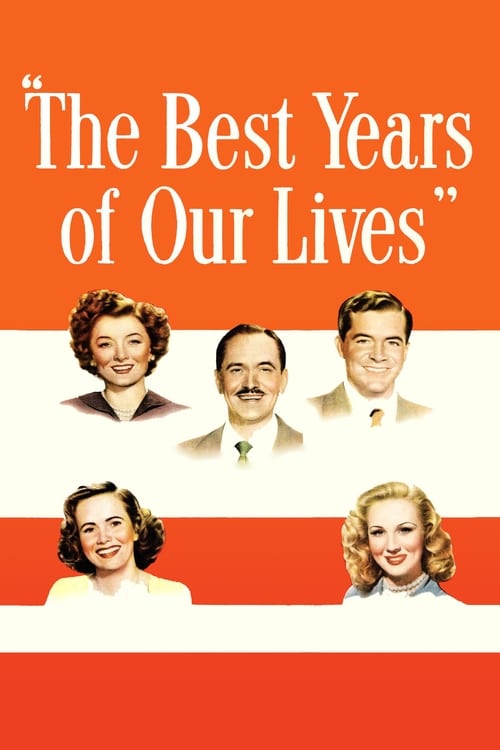
Upon completion of the film, Russell returned to school at Wyler's urging and earned a business degree from Boston University. Speaking with the Los Angeles Times in 1996, Russell recalled:
Wyler told me I should go back to college because there wasn't much call for a guy with no hands in the motion picture industry. I figured he was right. [In the few roles I've taken since then,] I always play a disabled veteran. And this is what Wyler said—'After a while they're going to run out of ideas'—and he was absolutely right. How many times can you play the same role?
Russell became active in AMVETS (American Veterans), serving three terms as National Commander. He was first elected in 1949 and was elected to his third term in 1960. He was also vice-president of the World Veterans Fund, Inc., the fundraising branch of the World Veterans Federation.
As head of AMVETS, Russell wrote to President Truman in 1951 supporting his decision to dismiss General Douglas MacArthur during the Korean War. Russell's telegram to Truman cited MacArthur's "repeated insubordination in violation of basic American principles governing civil versus military authority." His telegram asserted that those were "obvious grounds" to relieve MacArthur. Erle Cocke, Jr., commander of the American Legion, said that he was "shocked by the news" that AMVETS and the American Veterans Committee supported MacArthur's firing.
From the early 1960s to the late 1980s, Russell served as chairman of the President's Commission on Employment of the Handicapped, an unpaid position.
In 1965, Russell received the Golden Plate Award of the American Academy of Achievement.
Russell appeared in two films after his debut, Inside Moves in 1980 and Dogtown in 1997. He also appeared in an episode of Trapper John, M.D., in 1981 and a two-part episode of the television series China Beach in 1989.
Russell authored two autobiographies, Victory in My Hands (1949) and The Best Years of My Life (1981).
In 1992, Russell consigned his Oscar for Best Supporting Actor to Herman Darvick Autograph Auctions, and, on August 6, 1992, in New York City, the Oscar sold to a private collector for $60,500. Russell defended his action by saying that he needed money for his wife's medical expenses, though this was later disputed. Russell did not sell the special Oscar. After his death, the unidentified collector was identified as Lew Wasserman (who died five months after Russell), a studio executive and talent agent, who then donated it back to the Academy.
On January 29, 2002, Russell died 15 days after his 88th birthday at a nursing home in Needham, Massachusetts and was interred in Lakeview Cemetery in the nearby town of Wayland.