



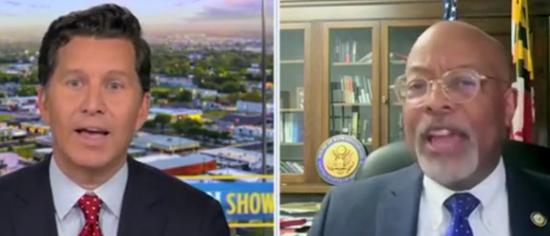
Glenn Frederick Ivey (born February 27, 1961) is an American politician and attorney serving as the U.S. representative for Maryland's 4th congressional district since 2023. The district covers most of the black-majority areas on the Maryland side of the Washington metropolitan area.
A partner at the law firm of Ivey & Levetown, he served as the state's attorney for Prince George's County, Maryland, from 2002 to 2011. Ivey won the 2022 Democratic primary for the 4th congressional district over Donna Edwards, who previously represented the district for four terms, and then defeated the Republican nominee. According to the Cook Partisan Voting Index, his district is tied with California's 12th for the most Democratic in the country, with an index rating of D+40.
Ivey served on Capitol Hill as chief counsel to Senate majority leader Tom Daschle, as counsel to U.S. senator Paul Sarbanes during the Whitewater controversy, as chief majority counsel to the Senate Banking Committee, and on the staff of U.S. representative John Conyers. He also worked for U.S. attorney Eric Holder as an assistant U.S. attorney and as chair of the Maryland Public Service Commission. He was twice elected state's attorney for Prince George's County, Maryland.
Contents
Early life and education
Ivey was born in Chelsea, Massachusetts, but grew up in Rocky Mount, North Carolina, where much of his extended family lived and his mother worked as the first Black teacher at an all-white school. His immediate family later moved to Dale City, Virginia, after his father got a job with the United States Department of Labor. Ivey graduated with honors from Princeton University, where he earned an A.B. degree in politics in 1983. In 1986, he received a J.D. degree from Harvard Law School.
Career
After graduating from Harvard Law School in 1986, Ivey worked for the Baltimore law firm of Gordon-Feinblatt. From 1987 to 1988, he worked on Capitol Hill as an aide to U.S. representative John Conyers, after which he returned to law, working for Preston, Gates, Ellis & Rouvelas.
In 1989, the United States Department of Justice hired Ivey as an assistant U.S. attorney in Washington, D.C. He worked for U.S. Attorney for the District of Columbia Eric Holder. Afterward, Ivey returned to Capitol Hill to serve as majority counsel to U.S. Senate Banking Committee chairman Donald Riegle. From 1995 to 1997, he served as the counsel for senator Paul Sarbanes during the Senate Whitewater investigations and coordinated the Senate investigation into the suicide of Vince Foster. Eventually, Ivey served as chief counsel to Senate Democratic leader Tom Daschle until 1998.
In March 1998, Governor Parris Glendening named Ivey to serve as chairman of the Maryland Public Service Commission. As chairman, Ivey oversaw the deregulation of Maryland's electric power industry and helped the PSC determine how to monitor telephone services and foster competition in the telecommunications industry. On October 18, 2000, Ivey announced that he would resign from the PSC by the end of the month to become a partner at the K&L Gates law firm, and said he was contemplating a 2002 run for Prince George's county state's attorney.
Ivey ran for Prince George's county state's attorney in 2002, seeking to succeed outgoing state's attorney Jack B. Johnson. In the primary, he was endorsed by U.S. representative Albert Wynn, U.S. senator Paul Sarbanes, and The Washington Post. He defeated deputy state's attorney Mark Spencer in the primary with 60.0% of the vote. He ran unopposed in the general election.
Following the end of his second term as state's attorney, Ivey became a partner at Venable LLP before moving to a position as a partner at Leftwich & Ludaway, in Washington, D.C., from 2012 to 2017. Afterward, he was a partner at the District-based law firm Price Benowitz. In 2020, Ivey opened his own law firm, Ivey & Levetown, in Greenbelt, Maryland.
Ivey taught trial advocacy at Harvard Law School during winter sessions from 2013 to 2021 and was an adjunct professor at the University of Maryland School of Law from 1995 to 2014. He is a past president of the D.C. chapter of the Harvard Law School Association, a former chair of the Maryland Legal Services Corporation, and a former member of the D.C. Bar Association's board of governors.
Prince George's State's Attorney (2002–2011)
Ivey ran and was elected twice as state's attorney for Prince George's county and served from January 2003 to January 2011. In November 2009, he declined to run for Prince George's county executive or for a third term as state's attorney, instead forming an exploratory committee to look at challenging U.S. representative Donna Edwards in the 2010 elections. In January 2010, he decided against running for a third term or against Edwards, saying he wanted to return to the private sector after the end of his term.
When Ivey took office in December 2002, Prince George's county had the second-highest crime rate in Maryland. During his two terms as state's attorney, he oversaw reductions in crime and led reform measures that put cameras in police interrogation rooms and prosecuted officers accused of excessive force. He sought to involve community groups in crafting policies and strategies for tackling crime in the county and partnered with faith leaders to assist domestic violence survivors and to gain tougher sentences for convicted offenders.
In October 2002, following the arrest of D.C. snipers Lee Boyd Malvo and John Allen Muhammad, Ivey declined to prosecute them in his county because of their murder convictions in both Maryland and Virginia.
In 2005, Montgomery County Executive Doug Duncan said he considered Ivey as his running mate in the 2006 Maryland gubernatorial election. Ivey declined, running for re-election instead.
In July 2008, Ivey's office faced intense public scrutiny to hold someone accountable following the strangulation death of 19-year-old Ronnie White, who was accused of killing a police officer. In December, the grand jury involved in the death investigation had concluded its deliberations, determining that it had insufficient evidence to bring down indictments in the case. After a yearlong investigation, Ivey announced that there was no evidence to support murder charges against jail employees. The Department of Justice also reviewed the case and concluded that there was insufficient evidence to charge anyone with murder or manslaughter.
In August 2010, Ivey endorsed Angela Alsobrooks, the executive director of the Prince George's county revenue authority, to succeed him as Prince George's county state's attorney.
U.S. House of Representatives (2023–present)
Ivey was sworn into the United States House of Representatives on January 3, 2023, succeeding Anthony Brown.
Committee assignments
For the 119th Congress:
Committee on Appropriations
Subcommittee on Commerce, Justice, Science, and Related Agencies
Subcommittee on Financial Services and General Government
Committee on Ethics
Caucus memberships
Congressional Black Caucus
Congressional Caucus for the Equal Rights Amendment
Congressional Equality Caucus
Bipartisan HBCU Caucus
Bipartisan Artificial Intelligence Caucus
Caucus on Homelessness
Black Maternal Health Caucus
High Tech Caucus
Pro-Choice Caucus
New Democrat Coalition
Second Chance Task Force
Democratic Faith Working Group
Substance Abuse / Mental Health Task Force
Gun Violence Prevention Task Force
Sustainable Energy and Environment Coalition
Ivey voted with President Joe Biden's stated position 96.2% of the time in the 118th Congress.
Ivey voted with President Donald Trump's stated position 10.5% of the time in the 119th Congress through 2025. The median House Democrat voted with President Trump 10% of the time.
On July 29, 2024, Ivey was announced as one of six Democratic members of a bipartisan task force investigating the attempted assassination of Donald Trump.
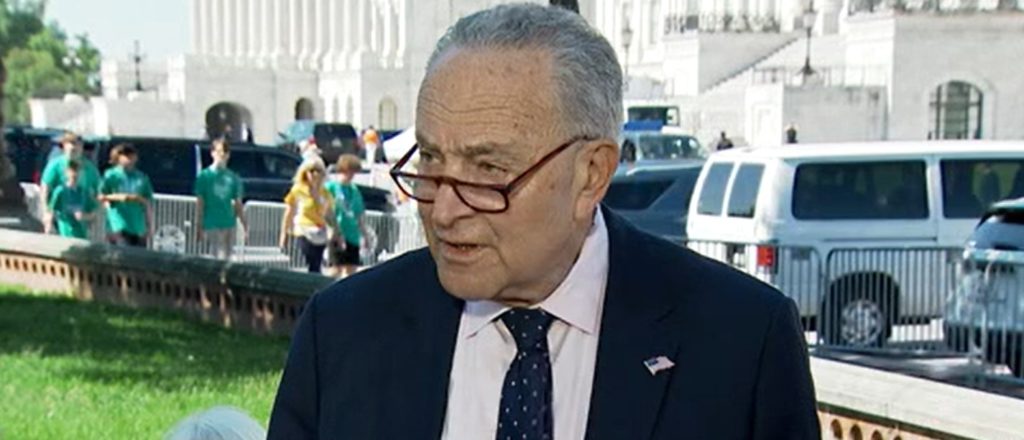
On March 19, 2025, Ivey became the first member of Congress to call for Chuck Schumer to step down as Senate Minority Leader, after Schumer allowed the Republican government funding bill to pass.
Political positions
When Ivey first took office as state's attorney in 2002, he said he believed in using the death penalty. He sought the death penalty several times during his tenure as state's attorney, and said in November 2007 that he filed notice of his intent to seek death in case about once a year.
In February 2009, Ivey testified before the Maryland House of Delegates' Judicial Proceedings Committee that he had had a change of heart during his time as state's attorney, particularly because of the effect the process had on victims' families. In January 2012, he called the death penalty a "political tool". Ahead of the 2013 legislative session, Ivey pushed for a bill that would repeal the death penalty in Maryland, which became law.
In July 2022, an Ivey campaign aide told Environment & Energy Publishing that Ivey supported the Green New Deal and a quick transition away from fossil fuels.
Ivey opposes the Iran nuclear deal negotiated by the Obama administration in 2015. In December 2021, he said he wanted a commitment to "full and neutral inspections [of Iranian nuclear sites]" and an end to Iran's funding of Hamas and Hezbollah before the U.S. reenters the deal. In February 2026, Ivey criticized U.S. and Israeli strikes on Iran, citing Trump's campaign promises to end U.S. involvement in foreign wars and describing the attack as a distraction from domestic issues such as the cost of living, the economy, and the Epstein files.
In 2006, Ivey traveled to Israel with other local elected officials on a Jewish Community Relations Council trip. He took two trips between September 2023 and October 2024 organized by AIPAC.
Ivey supports a two-state solution to the Israeli–Palestinian conflict and "Israel's right to exist and defend itself". In December 2021, he said he would vote to fund Israel's Iron Dome missile-defense system and opposed placing conditions on U.S. foreign aid to Israel to leverage components of negotiations about a two-state solution.
Ivey opposes the Boycott, Divestment, and Sanctions (BDS) movement against Israel.
Personal life
Ivey met his future wife, Jolene Stephenson, through a mutual friend who attended Stephenson's high school and Ivey's law school. They have been married since 1988, have five children—including Maryland delegate Julian Ivey—and live in Cheverly, Maryland. Ivey also has another daughter from a previous relationship. He is a Protestant.
In February 2004, Ivey took a leave of absence of several weeks to undergo surgery to remove a bean-sized cancer tumor on his kidney. His doctors told him that the cancer was detected early and his chances of a full recovery were good. He has been cancer-free since.