Later career: 1970–2007
In 1970 Menotti made the difficult decision to end his lengthy romantic relationship with Samuel Barber. Barber had battled depression and alcoholism following the harsh critical reaction to his 1966 opera Antony and Cleopatra which had a negative impact on his creative productivity and his relationship with Menotti.' Barber had already begun to self isolate for long periods of time at a chalet in Santa Christina, Italy, and spent less and less time at Capricorn. Tensions grew between Menotti and Barber, leading Menotti to end their romantic attachment and put Capricorn up for sale in 1970. Capricorn sold in 1972, and the two men remained friends after their romantic involvement ceased.
In 1972 Menotti purchased Yester House, an 18th-century estate in the Lammermuir Hills, East Lothian, Scotland. He lived there until his death 35 years later. While there, he jokingly stated his Scottish neighbors referred to him as "Mr McNotti".
In 1974, he adopted Francis "Chip" Phelan, an American actor and figure skater he had known since the early 1960s. Chip, and later his wife, lived with Menotti at Yester House.
In 1970 Menotti's second drama without music, The Leper, was first performed in Tallahassee, Florida, on April 24, 1970. His opera The Most Important Man was commissioned by the New York City Opera, and was given its premiere at Lincoln Center in 1971. An opera focusing on racial tensions in America with a central black hero, the work was poorly received by most critics. However, Menotti personally believed that this was one of his best operas on par with The Consul and The Saint of Bleecker Street. His opera Tamu-Tamu premiered in 1973 at the Studebaker Theatre in Chicago as part of the IX Congress of the International Union of Anthropological and Ethnological Sciences.
The year 1976 was particularly fruitful for Menotti, with a series of premieres commissioned in honor of the bicentennial of the Declaration of Independence. The first of these was the cantata in nine parts for soloists, chorus and orchestra, "Landscapes and Remembrances," which premiered on May 8 in a performance by the Bel Canto Chorus and Milwaukee Symphony in Milwaukee. Filmed for national broadcast on PBS, the piece is Menotti's most autobiographical work with the text consisting of personal memories and incidents of the composer's own life in America. On June 1 the Opera Company of Philadelphia performed the world premiere of the comedic opera The Hero (1976) which satirized American politics, particularly the Watergate scandal. On August 4 of that same year the Philadelphia Orchestra presented the world premiere of Menotti's Symphony No. 1 ("Halcyon Symphony") at the Saratoga Performing Arts Center under the baton of Eugene Ormandy.
In 1977 Menotti founded Spoleto Festival USA, a companion festival to his Spoleto Festival (the other of its Two Worlds), in Charleston, South Carolina. For three weeks each summer, Spoleto is visited by nearly a half-million people. These festivals were intended to bring opera to a popular audience and helped launch the careers of such artists as singer Shirley Verrett and choreographers Paul Taylor and Twyla Tharp. In 1986, he extended the concept to a Spoleto Festival in Melbourne, Australia. Menotti was the artistic director during the period of 1986–88, but after three festivals there, he decided to withdraw – and took the naming rights with him. The Melbourne Spoleto Festival has now become the Melbourne International Arts Festival. Menotti left Spoleto USA in 1993 to take the helm of the Rome Opera.
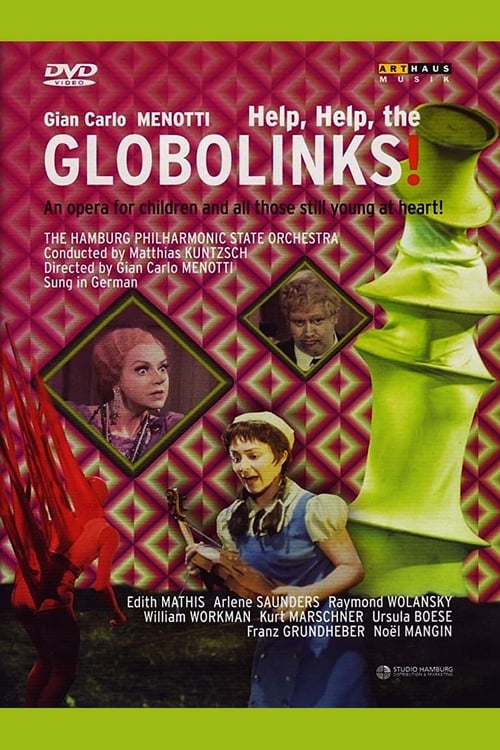
In spite of these festival's claims on Menotti's time, which included directing plays as well as operas, he maintained an active artistic career. Many of his later operas are directed towards children, both as subjects and as performers, including The Egg (1976), The Trial of the Gypsy (1978), Chip and his Dog (1979), A Bride from Pluto (1982), The Boy who Grew too Fast (1982), and his final opera The Singing Child (1993). The San Diego Opera commissioned the opera La Loca (1979) as a 50th birthday gift for soprano Beverly Sills, and she performed the work both in San Diego and with the New York City Opera. The work tells the story of the daughter of Isabella and Ferdinand of Spain, and was the last opera Sills added to her repertory before retiring. In 1986 his opera Goya, written for Plácido Domingo, was given its première by the Washington National Opera. With Goya (1986), he utilized a traditional giovane scuola Italian style. His last opera for adults, The Wedding Day, premiered in Seoul, South Korea, in conjunction with the 1988 Summer Olympics conducted by Daniel Lipton.
In 1992, Menotti was appointed artistic director of the Teatro dell'Opera di Roma, a post he maintained for two years before being asked to resign over conflicts with the theatre's managers involving Menotti's insistence of staging Wagner's Lohengrin. In honour of the 1995 Nobel Peace Prize, the American Choral Directors Association commissioned Gloria as part of the Mass celebrating the occasion. In 1996 Menotti directed his second filmed version of Amahl and the Night Visitors.
Menotti died on February 1, 2007, at the age of 95, at Princess Grace Hospital in Monaco, where he had a home. He was buried near his home, at Yester Kirkyard, Gifford, East Lothian. In June and July 2007 the Festival of Two Worlds, which Menotti founded and oversaw until his death, dedicated the 50th anniversary of the festival to his memory, organised by his son Francis. Menotti works performed during the festival included For the Death of Orpheus, Two Spanish Visions, Muero porque no muero (Santa Teresa D'Avila), Oh llama de amor viva! (San Giovanni della Croce), Missa O Pulchritudo.