Gérard Blain (23 October 1930 – 17 December 2000) was a French actor and film director. He is perhaps best known for his roles in Claude Chabrol's Le Beau Serge and Les Cousins (both 1959), Howard Hawks' Hatari! (1962) and Wim Wenders' The American Friend. (1977) He began directing in the 1970s, becoming known for his ascetic style. His first film as a director, The Friends (1971) won the Golden Leopard at the Locarno Film Festival.
Contents
Biography
Blain had a difficult childhood and adolescence after his father abandoned his family. He left school at aged 13 and became a street urchin. He had his first sexual experiences with older men and women while still a young teenager, a period later echoed in his semi-autobiographical film A Child in the Crowd (Un enfant dans la foule, 1976). Wishing to become an actor, Blain starting working as a film extra in 1943.
Blain had his breakthrough role in the crime drama Deadlier Than the Male (Voici le temps des assassins, 1956), opposite Jean Gabin: French media hailed him at the time as "the French James Dean". He starred in François Truffaut's short film Les Mistons (1957), Claude Chabrol's first two feature films Le Beau Serge (1958) and Les Cousins (1959), and appeared in Jean-Luc Godard's short film Charlotte and Her Boyfriend (1960). This led him to be associated to the French New Wave, though he later disparaged the movement, calling it "fake, except for Godard".
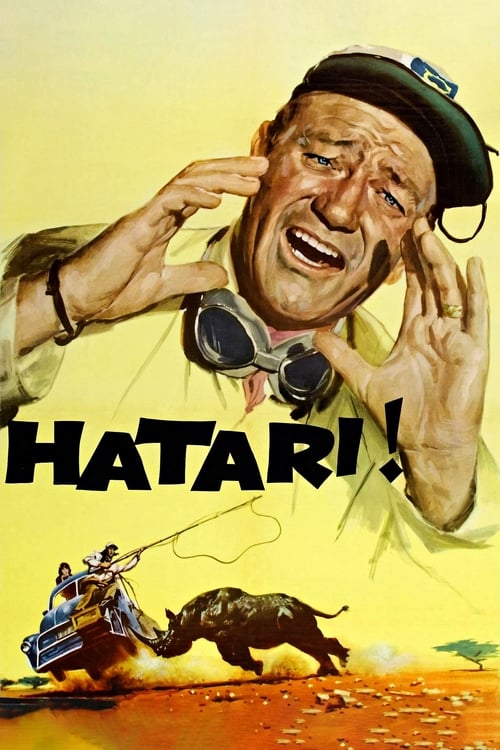
The French-Italian co-production system of the time also led him to star in Italian films, including Mauro Bolognini's Young Husbands (1958) and Carlo Lizzani's The Hunchback of Rome (1960) and Gold of Rome (1961). In 1962, he essayed a Hollywood career with a supporting role in Howard Hawks' Hatari! opposite John Wayne, but found himself ill-suited to American filmmaking. Later on, unhappy with his acting career, he became a film director, making nine films between 1971 and 2000.
His first film as a director, The Friends, a drama about male homosexuality, won the Golden Leopard at the 1971 Locarno International Film Festival.
Blain's directing choices were rigorous and deliberately austere, closely emulating Robert Bresson's style: he mostly employed non-professional actors, one major exception being his film Second Wind (1978) which starred Robert Stack. An outspoken critic of mainstream filmmaking and modern society in general, and reportedly a difficult man to work with, Blain had an outsider status within the French film industry; although they were well-received by critics, his films as a director met with little commercial success. While focusing on his directing work he kept appearing occasionally as an actor, notably in Wim Wenders' The American Friend (1977).
In 1987, Blain's career was affected when his film Pierre and Djemila, an ostensibly anti-racist tragic love story, was accused of being racist due to co-writer Michel Marmin being a member of the French New Right.
Personal life
Blain married three times; his first two wives were actresses Estella Blain and Bernadette Lafont. One of his sons, Paul Blain, also had an acting career and starred in his final film as a director, Ainsi soit-il (1999).