American folk hero, 1936–1943
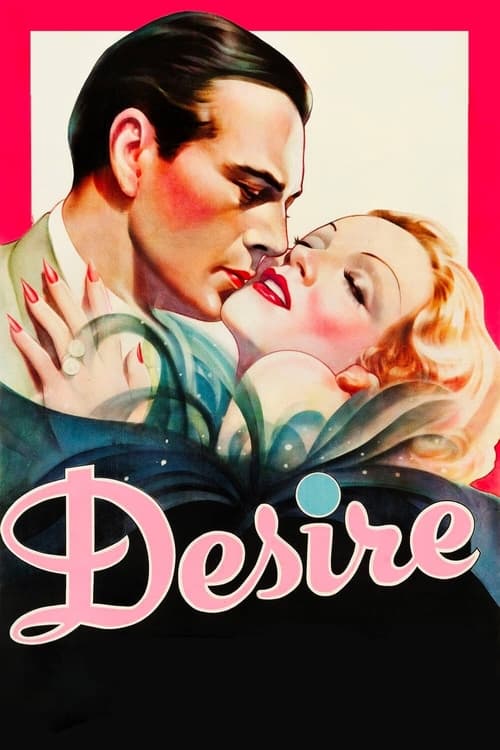
Cooper's career took an important turn in 1936. After making Frank Borzage's romantic comedy film Desire at Paramount, in which he co-starred again with Marlene Dietrich and delivered a performance considered by some contemporary critics as one of his finest, he returned to Poverty Row for the first time since his early silent-film days to make Frank Capra's Mr. Deeds Goes to Town with Jean Arthur for Columbia Pictures. In the film, Cooper plays Longfellow Deeds, a quiet, innocent writer of greeting cards who inherits a fortune, leaves behind his idyllic life in Vermont, and travels to New York City, where he faces a world of corruption and deceit. Capra and screenwriter Robert Riskin were able to use Cooper's well-established screen persona as the "quintessential American hero"—a symbol of honesty, courage, and goodness—to create a new type of "folk hero" for the common man. Of Cooper's impact on the character and the film, Capra said:
As soon as I thought of Gary Cooper, it wasn't possible to conceive anyone else in the role. He could not have been any closer to my idea of Longfellow Deeds, and as soon as he could think in terms of Cooper, Bob Riskin found it easier to develop the Deeds character in terms of dialogue. So it just had to be Cooper. Every line in his face spelled honesty. Our Mr. Deeds had to symbolize incorruptibility, and in my mind Gary Cooper was that symbol.
Both Desire and Mr. Deeds opened in April 1936 to critical praise and were major box-office successes. In his review in The New York Times, Frank Nugent wrote that Cooper was "proving himself one of the best light comedians in Hollywood". For his performance in Mr. Deeds, Cooper received his first Academy Award nomination for Best Actor.
Cooper appeared in two other Paramount films in 1936. In Lewis Milestone's adventure film The General Died at Dawn with Madeleine Carroll, he plays an American soldier of fortune in China who helps the peasants defend themselves against the oppression of a cruel warlord. Written by playwright Clifford Odets, the film was a critical and commercial success.
In Cecil B. DeMille's sprawling frontier epic The Plainsman, his first of four films with the director, Cooper portrays Wild Bill Hickok in a highly fictionalized version of the opening of the American western frontier. The film was an even greater box-office hit than its predecessor, due in large part to Jean Arthur's definitive depiction of Calamity Jane and Cooper's inspired portrayal of Hickok as an enigmatic figure of "deepening mythic substance". That year, Cooper appeared for the first time on the Motion Picture Herald exhibitor's poll of top-10 film personalities, where he remained for the next 23 years.
In late 1936, Paramount was preparing a new contract for Cooper that would raise his salary to $8,000 a week, when Cooper signed a contract with Samuel Goldwyn for six films over six years with a minimum guarantee of $150,000 per picture. Paramount brought suit against Goldwyn and Cooper, and the court ruled that Cooper's new Goldwyn contract afforded the actor sufficient time to also honor his Paramount agreement. Cooper continued to make films with both studios, and by 1939, the United States Treasury reported that Cooper was the country's highest wage earner, at $482,819 (equivalent to $11.18 million in 2025).
In contrast to his output the previous year, Cooper appeared in only one picture in 1937, Henry Hathaway's adventure film Souls at Sea. A critical and box-office failure, Cooper called it an "almost picture", saying, "It was almost exciting, and almost interesting. And I was almost good." In 1938, he appeared in Archie Mayo's biographical film The Adventures of Marco Polo. Plagued by production problems and a weak screenplay, the film became Goldwyn's biggest failure to date, losing $700,000. During this period, Cooper turned down several important roles, including that of Rhett Butler in Gone with the Wind. Cooper was producer David O. Selznick's first choice for the part. Selznick made several overtures to Cooper, but Cooper had doubts about the project and did not feel suited to the role. He later said: "It was one of the best roles ever offered in Hollywood ... But I said no. I didn't see myself as quite that dashing, and later, when I saw Clark Gable play the role to perfection, I knew I was right."
Back at Paramount, Cooper returned to a more comfortable genre in Ernst Lubitsch's romantic comedy Bluebeard's Eighth Wife (1938) with Claudette Colbert. Cooper plays a wealthy American businessman in France who falls in love with an impoverished aristocrat's daughter and persuades her to become his eighth wife. Despite the clever screenplay by Charles Brackett and Billy Wilder and solid performances by Cooper and Colbert, American audiences had trouble accepting Cooper in the role of a shallow philanderer. It succeeded only at the European box-office market.
In the fall of 1938, Cooper appeared in H. C. Potter's romantic comedy The Cowboy and the Lady with Merle Oberon, about a sweet-natured rodeo cowboy who falls in love with the wealthy daughter of a presidential hopeful, believing her to be a poor, hard-working lady's maid. While more successful than its predecessor, the film was Cooper's fourth consecutive box-office failure in the American market.
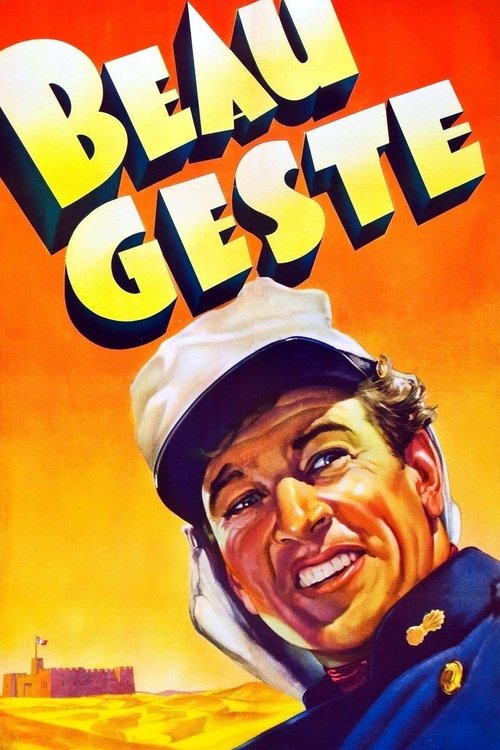
In the next two years, Cooper was more discerning about the roles he accepted and made four successful large-scale adventure and cowboy films. In William A. Wellman's adventure film Beau Geste (1939), he plays one of three daring English brothers who join the French Foreign Legion in the Sahara to fight local tribes. Filmed in the same Mojave Desert locations as the original 1926 version with Ronald Colman, Beau Geste provided Cooper with magnificent sets, exotic settings, high-spirited action, and a role tailored to his personality and screen persona. This was the last film in Cooper's contract with Paramount.
In Henry Hathaway's The Real Glory (1939), Cooper plays a military doctor who accompanies a small group of U.S. Army officers to the Philippines to help the Christian Filipinos defend themselves against Muslim radicals. Many critics praised Cooper's performance, including author and film critic Graham Greene, who said he "never acted better".
Cooper returned to the Western genre in William Wyler's The Westerner (1940) with Walter Brennan and Doris Davenport, about a drifting cowboy who defends homesteaders against Roy Bean, a corrupt judge known as the "law west of the Pecos". Screenwriter Niven Busch relied on Cooper's extensive knowledge of Western history while working on the script. The film received positive reviews and did well at the box office, with reviewers praising the two lead actors' performances. That same year, Cooper appeared in his first all-Technicolor feature, Cecil B. DeMille's adventure film North West Mounted Police (1940). Cooper plays a Texas Ranger who pursues an outlaw into western Canada, where he joins forces with the Royal Canadian Mounted Police who are after the same man, a leader of the North-West Rebellion. While not as popular with critics as its predecessor, the film was another box-office success, the sixth-highest grossing film of 1940.
The early 1940s were Cooper's prime years as an actor. In a relatively short period, he appeared in five critically successful and popular films that produced some of his finest performances. When Frank Capra offered him the lead role in Meet John Doe before Robert Riskin even developed the script, Cooper accepted the offer, saying, "It's okay, Frank, I don't need a script." Cooper plays Long John Willoughby, a down-and-out bush-league pitcher hired by a newspaper to pretend to be a man who promises to commit suicide on Christmas Eve to protest all the hypocrisy and corruption in the country. Considered by some critics to be Capra's best film at the time, Meet John Doe was received as a "national event" with Cooper appearing on the front cover of Time on March 3, 1941. In his review in the New York Herald Tribune, Howard Barnes called Cooper's performance a "splendid and utterly persuasive portrayal" and praised his "utterly realistic acting which comes through with such authority". In The New York Times, Bosley Crowther wrote, "Gary Cooper, of course, is 'John Doe' to the life and in the whole—shy, bewildered, nonaggressive, but a veritable tiger when aroused."
That same year, Cooper made two films his good friend director Howard Hawks. In the biographical film Sergeant York, Cooper plays war hero Alvin C. York, one of the most decorated American soldiers in World War I. The film chronicles York's early backwoods days in Tennessee, his religious conversion and subsequent piety, his stand as a conscientious objector, and finally his heroic actions at the Battle of the Argonne Forest, which earned him the Medal of Honor. Initially, Cooper was nervous and uncertain about playing a living hero, so he traveled to Tennessee to visit York at his home, and the two men established a rapport and discovered they had much in common. Inspired by York's encouragement, Cooper delivered a performance that Howard Barnes of the New York Herald Tribune called "one of extraordinary conviction and versatility" and that Archer Winston of the New York Post called "one of his best". After the film's release, Cooper was awarded the Distinguished Citizenship Medal by the Veterans of Foreign Wars for his "powerful contribution to the promotion of patriotism and loyalty". York admired Cooper's performance and helped promote the film for Warner Bros. Sergeant York became the top-grossing film of the year and was nominated for 11 Academy Awards. Accepting his first Academy Award for Best Actor from his friend James Stewart, Cooper said, "It was Sergeant Alvin York who won this award. Shucks, I've been in the business 16 years and sometimes dreamed I might get one of these. That's all I can say ... Funny when I was dreaming I always made a better speech."
Cooper concluded the year back at Goldwyn with Hawks to make the romantic comedy Ball of Fire with Barbara Stanwyck. Cooper plays a shy linguistics professor who leads a team of seven scholars who are writing an encyclopedia. While researching slang, he meets Stanwyck's flirtatious burlesque stripper Sugarpuss O'Shea, who blows the dust off their staid life of books. The screenplay, by Charles Brackett and Billy Wilder, gave Cooper the opportunity to exercise the full range of his light comedy skills. In the New York Herald Tribune, Howard Barnes wrote that Cooper handled the role with "great skill and comic emphasis" and called his performance "utterly delightful". Though small in scale, Ball of Fire was one of the top-grossing films of the year and Cooper's fourth consecutive picture to make the top 20.
Cooper's only film appearance in 1942 was also his last under his Goldwyn contract. In Sam Wood's biographical film The Pride of the Yankees, Cooper portrays baseball star Lou Gehrig, who established a record with the New York Yankees for playing in 2,130 consecutive games. Cooper was reluctant to play the seven-time All-Star, who had died only the previous year from ALS (now commonly called "Lou Gehrig's disease"). Beyond the challenges of effectively portraying such a popular and nationally recognized figure, Cooper knew very little about baseball and was not left-handed like Gehrig.
After Gehrig's widow visited the actor and expressed her desire that he portray her husband, Cooper accepted the role that covered a 20-year span of Gehrig's life: his early love of baseball, his rise to greatness, his loving marriage, and his struggle with illness, culminating in his farewell speech at Yankee Stadium on July 4, 1939, before 62,000 fans. Cooper quickly learned the physical movements of a baseball player and developed a fluid, believable swing. The handedness issue was solved by reversing the print for certain batting scenes. The film was one of the year's top-10 pictures and received 11 Academy Award nominations, including Best Picture and Best Actor (Cooper's third).
Soon after the publication of Ernest Hemingway's novel For Whom the Bell Tolls, Paramount paid $150,000 for the film rights with the express intent of casting Cooper in the lead role of Robert Jordan, an American explosives expert who fights alongside the Republican loyalists during the Spanish Civil War. The original director, Cecil B. DeMille, was replaced by Sam Wood, who brought in Dudley Nichols for the screenplay. After the start of principal photography in the Sierra Nevada in late 1942, Ingrid Bergman was brought in to replace ballerina Vera Zorina as the female lead, a change supported by Cooper and Hemingway. The love scenes between Bergman and Cooper were "rapturous" and passionate. In the New York Herald Tribune Howard Barnes wrote that both actors performed with "the true stature and authority of stars". While the film distorted the novel's original political themes and meaning, For Whom the Bell Tolls was a critical and commercial success and received 10 Academy Award nominations, including Best Picture and Best Actor (Cooper's fourth).
Due to his age and health, Cooper did not serve in the military during World War II, but like many of his colleagues, he got involved in the war effort by entertaining the troops. In June 1943, he visited military hospitals in San Diego, and often appeared at the Hollywood Canteen serving food to the servicemen. In late 1943, Cooper undertook a 23,000-mile (37,000 km) tour of the South West Pacific with actresses Una Merkel and Phyllis Brooks and accordionist Andy Arcari.
Traveling on a B-24A Liberator bomber, the group toured the Cook Islands, Fiji, New Caledonia, Queensland, Brisbane—where General Douglas MacArthur told Cooper he was watching Sergeant York in a Manila theater when Japanese bombs began falling—New Guinea, and Jayapura, then throughout the Solomon Islands.
The group often shared the same sparse living conditions and K-rations as the troops. Cooper met with the servicemen and women, visited military hospitals, introduced his colleagues, and participated in occasional skits. The shows concluded with Cooper's moving recitation of Lou Gehrig's farewell speech. When he returned to the U.S., he visited military hospitals throughout the country. Cooper later called his time with the troops the "greatest emotional experience" of his life.