Francis Albert Sinatra (; December 12, 1915 – May 14, 1998) was an American singer, conductor, and actor. Nicknamed the "Chairman of the Board" and "Ol' Blue Eyes", he is regarded as one of the most influential entertainers of the 20th century.
Born to Italian immigrants in Hoboken, New Jersey, Sinatra began his musical career in the swing era. He joined the Harry James band as the vocalist in 1939 before signing with Columbia Records four years later and becoming the idol of the "bobby soxers". In 1946, Sinatra released his debut album, The Voice of Frank Sinatra. He then signed with Capitol Records and released several albums with arrangements by Nelson Riddle, notably In the Wee Small Hours (1955) and Songs for Swingin' Lovers! (1956). In 1960, Sinatra left Capitol Records to start his own record label, Reprise Records, releasing a string of successful albums. He collaborated with Count Basie on Sinatra-Basie: An Historic Musical First (1962) and It Might as Well Be Swing (1964). In 1965, he recorded September of My Years and starred in the Emmy-winning television special Frank Sinatra: A Man and His Music.
After releasing Sinatra at the Sands in 1966, Sinatra recorded one of his most famous collaborations with Tom Jobim, Francis Albert Sinatra & Antonio Carlos Jobim. It was followed by 1968's Francis A. & Edward K. with Duke Ellington. Sinatra retired in 1971 following the release of "My Way" but came out of retirement two years later. He recorded several albums and released "New York, New York" in 1980. Sinatra is among the world's best-selling music artists, with an estimated 150 million record sales globally.
Sinatra also forged a highly successful acting career. After winning the Academy Award for Best Supporting Actor for From Here to Eternity (1953), he starred in The Man with the Golden Arm (1955) and The Manchurian Candidate (1962). Sinatra also appeared in musicals such as On the Town (1949); Guys and Dolls (1955); High Society (1956); and Pal Joey (1957), the last of which won him a Golden Globe Award. Toward the end of his career, Sinatra frequently played detectives, including the title character in Tony Rome (1967) and the titular The Detective (1968). He received the Golden Globe Cecil B. DeMille Award in 1971. Sinatra also directed the anti-war drama None but the Brave (1965). On television, The Frank Sinatra Show began on CBS in 1950, and Sinatra continued to make appearances on television throughout the 1950s and 1960s.
Sinatra was recognized at the Kennedy Center Honors in 1983, awarded the Presidential Medal of Freedom in 1985, and received the Congressional Gold Medal in 1997. He earned 13 Grammy Awards, including the Grammy Trustees Award, Grammy Legend Award, and the Grammy Lifetime Achievement Award. American music critic Robert Christgau called Sinatra "the greatest singer of the 20th century" and he continues to be regarded as an iconic figure.
Contents
Early life
Francis Albert Sinatra was born on December 12, 1915, in a tenement at 415 Monroe Street in Hoboken, New Jersey, the only child of Italian immigrants Natalina "Dolly" Garaventa and Antonino Martino "Marty" Sinatra. His mother was from Genoa, Liguria, while his father was from Lercara Friddi, Sicily. Sinatra weighed 13.5 pounds (6.1 kg) at birth and had to be delivered with the aid of forceps, which caused severe scarring to his left cheek, neck, and lifelong damage to his left eardrum, delaying his baptism to April 2, 1916. A childhood operation left major scarring on his neck, and during adolescence, Sinatra was further scarred by cystic acne. His excessively skinny frame as a child and young man later became the subject of jokes during stage shows. He was raised in the Catholic Church.
Sinatra's mother, Dolly, was energetic and driven; biographers believe that she was the dominant factor in the development of her son's personality and self-confidence. Sinatra's fourth wife, Barbara, would later claim that Dolly "knocked him around a lot" when he was a child. Dolly became influential in Hoboken and in local Democratic Party circles. During the Great Depression, Dolly provided money to her son for outings with friends and to buy expensive clothes, resulting in neighbors describing him as the "best-dressed kid in the neighborhood".
Sinatra's illiterate father, Marty, was a bantamweight boxer who later worked at the Hoboken Fire Department, working his way up to captain. Due to his illiteracy, Marty stressed the importance of a "complete and full" education and had instilled in his son the desire to become a civil engineer and enroll at Stevens Institute of Technology in Hoboken. Sinatra spent much time at his parents' tavern in Hoboken, working on his homework and occasionally singing for spare change.
At a young age, Sinatra developed an interest in music, particularly big band jazz and listened to Gene Austin, Rudy Vallée, Russ Colombo, and Bob Eberly while idolizing Bing Crosby. For his 15th birthday, Sinatra received a ukulele from his uncle Domenico, with which he performed at family gatherings. Sinatra attended David E. Rue Jr. High School from 1928, and A. J. Demarest High School (since renamed Hoboken High School) in 1931, where he arranged bands for school dances, but left without graduating after having attended only 47 days before being expelled for "general rowdiness".
Music career
1935–1942: Career beginnings
Sinatra began singing professionally as a teenager. He never learned to read music but learned by ear. Sinatra got his first break in 1935 when his mother persuaded a local singing group called the 3 Flashes, who were auditioning for the Major Bowes Amateur Hour show, to let him join. Baritone Fred Tamburro stated, "Frank hung around us like we were gods or something", admitting that they took him on board only because he owned a car and could chauffeur the group.
The group became the "Hoboken Four" and passed an audition from Major Bowes to appear on the show. They each earned $12.50, and attracted 40,000 votes to win first prize—a six-month contract to perform on stage and radio across the U.S. Sinatra quickly became the group's lead singer, and, much to the jealousy of his fellow group members, garnered most of the attention from the girls. Due to the success of the group, Bowes kept asking for them to return, disguised under different names, varying from "The Secaucus Cockamamies" to "The Bayonne Bacalas," although this may be apocryphal, sourced from Sinatra's humorous stage patter during his appearance with the Count Basie orchestra at the Sands (1966).
In March 1939, saxophone player Frank Mane, who knew Sinatra from Jersey City radio station WAAT, arranged for him to audition and record "Our Love", his first solo studio recording. In June, bandleader Harry James, who had heard Sinatra sing on "Dance Parade", signed him to a two-year contract of $75 a week after a show at the Paramount Theatre in New York. It was with the James band that Sinatra released his first commercial record "From the Bottom of My Heart" in July. No more than 8,000 copies were sold, and further records released with James through 1939, such as "All or Nothing at All", also had weak sales on their initial release. Thanks to his vocal training, Sinatra could now sing two tones higher, and developed a repertoire that included songs such as "My Buddy", "Willow Weep for Me", "It's Funny to Everyone but Me", "Here Comes the Night", "On a Little Street in Singapore", "Ciribiribin", and "Every Day of My Life".
Sinatra became increasingly frustrated with the Harry James band, feeling that he was not achieving the major success and acclaim he was looking for. Sinatra's pianist and close friend Hank Sanicola persuaded him to stay with the group, but Sinatra left James in November 1939 to replace Jack Leonard as the lead singer of the Tommy Dorsey band. Sinatra earned $125 a week, appearing at the Palmer House in Chicago, and James released Sinatra from his contract.
1942–1948: Established solo singer
By May 1941, Sinatra topped the male singer polls in Billboard and DownBeat magazines. His appeal to bobby soxers, a subculture of teenage girls, revealed a new audience for popular music, which had previously been recorded mainly for adults. The phenomenon became known as "Sinatramania" after his opening at the Paramount Theatre in New York on December 30, 1942.
According to Nancy Sinatra, Jack Benny later said, "I thought the goddamned building was going to cave in. I never heard such a commotion ... All this for a fellow I never heard of." Sinatra performed for four weeks at the theatre, his act following the Benny Goodman orchestra, after which his contract was renewed for another four weeks by Bob Weitman due to his popularity. Sinatra became known as "Swoonatra" or "The Voice", and his fans "Sinatratics". They organized meetings and sent masses of letters of adoration, and within a few weeks of the show, some 1,000 Sinatra fan clubs had been reported across the US.
Sinatra's publicist, George Evans, encouraged interviews and photographs with fans and was the man responsible for depicting Sinatra as a vulnerable, shy, Italian–American with a rough childhood who made good. When Sinatra returned to the Paramount in October 1944, only 250 persons left the first show, and 35,000 fans left outside caused a near riot, known as the Columbus Day Riot, outside the venue because they were not allowed in. Such was the bobby-soxer devotion to Sinatra that they were known to write his song titles on their clothing, bribe hotel maids for an opportunity to touch his bed, and steal clothing Sinatra was wearing.
Sinatra did not serve in the military during World War II. However, Army files reported that Sinatra had actually been rejected because he was "not acceptable material from a psychiatric viewpoint." Sinatra's emotional instability was hidden to avoid "undue unpleasantness for both the selectee and the induction service". Rumors reported by columnist Walter Winchell stated that Sinatra paid $40,000 to avoid military service, but the FBI found this to be without merit.
Toward the end of the war, Sinatra entertained the troops during several successful overseas USO tours with comedian Phil Silvers. Sinatra worked frequently with the popular Andrews Sisters in radio in the 1940s, and many USO shows were broadcast to troops via the Armed Forces Radio Service (AFRS). In 1944, he released "I Couldn't Sleep a Wink Last Night" as a single and recorded his own version of Irving Berlin's "White Christmas". The following year, Sinatra released "I Dream of You (More Than You Dream I Do)", "Saturday Night (Is the Loneliest Night of the Week)", "Dream", and "Nancy (with the Laughing Face)" as singles.
1948–1952: Career slump
When Sinatra was featured as a priest in The Miracle of the Bells, due to press negativity surrounding his Mafia connections at the time, it was announced that Sinatra would donate his $100,000 in wages from the film to the Catholic Church. By the end of 1948, Sinatra had slipped to fourth on DownBeat's annual poll of most popular singers, and the following year, he was pushed out of the top spots in polls for the first time since 1943. Frankly Sentimental (1949) was panned by DownBeat, who commented that "for all his talent, it seldom comes to life."
Although "The Hucklebuck" reached the top ten, it was his last single release under the Columbia label. Sinatra's last two albums with Columbia, Dedicated to You and Sing and Dance with Frank Sinatra, were released in 1950. He would later feature a number of the Sing and Dance with Frank Sinatra album's songs, including "Lover", "It's Only a Paper Moon", and "It All Depends on You", on his 1961 Capitol release, Sinatra's Swingin' Session!!!.
Culminating the low of Sinatra's career was the death of publicist George Evans in January 1950. According to Jimmy Van Heusen, Sinatra's close friend and songwriter, Evans' death to him was "an enormous shock which defies words", as he had been crucial to Sinatra's career and popularity with the "bobby soxers".
Sinatra's reputation continued to decline as reports broke in February of his affair with Ava Gardner and the destruction of his marriage to Nancy, although Sinatra insisted that his marriage had long been over even before meeting Gardner. In April, he was engaged to perform at the Copa club in New York, but had to cancel five days of the booking due to a submucosal hemorrhage of the throat. Evans once said that whenever Sinatra suffered from a bad throat and loss of voice, it was always due to emotional tension, which "absolutely destroyed him".
In financial difficulty following his divorce and career decline, Sinatra was forced to borrow $200,000 from Columbia to pay his back taxes after MCA refused to front the money. Rejected by Hollywood, Sinatra turned to Las Vegas and made his debut at the Desert Inn in September 1951.
Sinatra's decline in popularity was evident in his concert appearances. At a brief run at the Paramount in New York, Sinatra drew small audiences. At the Desert Inn in Las Vegas, he performed to half-filled houses. At a concert at Chez Paree in Chicago, only 150 people turned up in a 1,200-seat venue. By April 1952, Sinatra was performing at the Kauai County Fair in Hawaii. Sinatra's relationship with Columbia Records was disintegrating, with A&R executive Mitch Miller claiming he "couldn't give away" Sinatra records. However, several notable recordings were made during this time period, such as "If I Could Write a Book" in January 1952, which Granata sees as a "turning point", forecasting his later work with its sensitivity,
1953–1960: Career revival
The release of the August 1953 film From Here to Eternity, in which he won the Academy Award for Best Supporting Actor, marked the beginning of a remarkable career revival. Tom Santopietro notes that Sinatra began to bury himself in his work, with an "unparalleled frenetic schedule of recordings, movies and concerts", in what authors Anthony Summers and Robbyn Swan describe as "a new and brilliant phase". On March 13, 1953, Sinatra met with Capitol Records vice president Alan Livingston and signed a seven-year recording contract. Sinatra's first session for Capitol took place at KHJ studios at Studio C, 5515 Melrose Avenue in Los Angeles, with Axel Stordahl conducting. The session produced four recordings, including "I'm Walking Behind You", Sinatra's first Capitol single.
After spending two weeks on location in Hawaii filming From Here to Eternity, Sinatra returned to KHJ on April 30 for his first recording session with Nelson Riddle, an established arranger and conductor at Capitol who was Nat King Cole's musical director. After recording the first song, "I've Got the World on a String", Sinatra offered Riddle a rare expression of praise, "Beautiful!", and after listening to the playbacks, he could not hide his enthusiasm, exclaiming, "I'm back, baby, I'm back!" In subsequent sessions in May and November 1953, Sinatra and Riddle developed and refined their musical collaboration, with Sinatra providing specific guidance on the arrangements. Sinatra's first album for Capitol, Songs for Young Lovers, was released on January 4, 1954, and it included "A Foggy Day", "I Get a Kick Out of You", "My Funny Valentine", "Violets for Your Furs", and "They Can't Take That Away from Me", songs that became staples of his later concerts.
That same month, Sinatra released the single "Young at Heart", which reached No. 2 and was awarded Song of the Year. In March, he recorded and released the single "Three Coins in the Fountain", a "powerful ballad" that reached No. 4. Sinatra's second album with Riddle, Swing Easy!, which reflected his "love for the jazz idiom" according to Granata, was released on August 2 and included "Just One of Those Things", "Taking a Chance on Love", and "All of Me". Swing Easy! was named Album of the Year by Billboard, and Sinatra was named "Favorite Male Vocalist" by Billboard, DownBeat, and Metronome in 1954. Sinatra came to consider Riddle "the greatest arranger in the world."
Sinatra became one of Las Vegas's pioneer residency entertainers, and a prominent figure in the Vegas scene throughout the 1950s and 1960s onwards, a period described by Rojek as the "high-water mark" of Sinatra's "hedonism and self-absorption". Rojek notes that the Rat Pack "provided an outlet for gregarious banter and wisecracks" but argues that it was Sinatra's vehicle, possessing an "unassailable command over the other performers". Sinatra would fly to Las Vegas from Los Angeles in Van Heusen's plane. On October 4, 1953, Sinatra made his first performance at the Sands Hotel and Casino, after an invitation by the manager Jack Entratter. Sinatra typically performed there three times a year and later acquired a share in the hotel.
1960–1970: Reprise years
Nice 'n' Easy, a collection of ballads, topped the Billboard chart in October 1960 and remained in the charts for 86 weeks, winning critical plaudits. However, Sinatra grew discontented at Capitol and feuded with label president Alan W. Livingston, which lasted over six months. Sinatra's first attempt at owning his own label was with his pursuit of buying declining jazz label Verve Records, which ended once an initial agreement with Verve founder Norman Granz "failed to materialize".
Sinatra decided to form his own label, Reprise Records, and, in an effort to assert his new direction, temporarily parted with Riddle, May and Jenkins, working with other arrangers such as Neil Hefti, Don Costa, and Quincy Jones. Sinatra built the appeal of Reprise Records as one in which artists were promised creative control, as well as a guarantee that they would eventually gain "complete ownership of their work, including publishing rights."
Under Sinatra the company developed into a music industry "powerhouse", and he later sold it for an estimated $80 million. Sinatra's first album on the label, Ring-a-Ding-Ding! (1961), was a major success, peaking at No.4 on Billboard. The album was released in February 1961, the same month that Reprise Records released Ben Webster's The Warm Moods, Sammy Davis Jr.'s The Wham of Sam, Mavis River's Mavis and Joe E. Lewis's It is Now Post Time. During the initial years of Reprise, Sinatra was still under contract to record for Capitol, completing his contractual commitment with the release of Point of No Return, recorded on September 11 and 12, 1961.
In 1962, Sinatra released Sinatra and Strings, a set of standard ballads arranged by Don Costa, which became one of the most critically acclaimed works of Sinatra's Reprise period. Frank Jr., who was present during the recording, noted the "huge orchestra", which Nancy Sinatra stated "opened a whole new era" in pop music, with orchestras getting bigger, embracing a "lush string sound".
Sinatra and Count Basie collaborated for the album Sinatra-Basie the same year, a popular and successful release, which prompted them to rejoin two years later for the follow-up It Might as Well Be Swing, arranged by Quincy Jones. The two became frequent performers together, and appeared at the Newport Jazz Festival in 1965. Also in 1962, as the owner of his own record label, Sinatra was able to step on the podium as conductor again, releasing his third instrumental album Frank Sinatra Conducts Music from Pictures and Plays.
1970–1981: "Retirement" and return
In 1970, Sinatra released Watertown, a critically acclaimed concept album, with music by Bob Gaudio (of the Four Seasons) and lyrics by Jake Holmes. However, it sold a mere 30,000 copies that year and reached a peak chart position of 101.
Sinatra left Caesars Palace in September of that year after an incident in which executive Sanford Waterman pulled a gun on him. Sinatra performed several charity concerts with Count Basie at the Royal Festival Hall in London. On November 2, 1970, Sinatra recorded the last songs for Reprise Records before his self-imposed retirement, announced the following June at a concert in Hollywood to raise money for the Motion Picture and TV Relief Fund. He gave a "rousing" performance of "That's Life", and finished the concert with a Matt Dennis and Earl Brent song, "Angel Eyes", which Sinatra had recorded on the Only the Lonely album in 1958. He sang the last line. "'Scuse me while I disappear." The spotlight went dark, and he left the stage.
Sinatra told LIFE journalist Thomas Thompson, "I've got things to do, like the first thing is not to do anything at all for eight months ... maybe a year", while Barbara Sinatra later said that Sinatra had grown "tired of entertaining people, especially when all they really wanted were the same old tunes he had long ago become bored by". Around this time, Sinatra designed Villa Maggio, a holiday home and retreat near Palm Desert. While he was in retirement, President Richard Nixon asked Sinatra to perform at a Young Voters Rally in anticipation of the upcoming campaign. He obliged and chose to sing "My Kind of Town" for the rally held in Chicago on October 20, 1972.
In 1973, Sinatra came out of his short-lived retirement with a television special and album. The album, entitled Ol' Blue Eyes Is Back, arranged by Gordon Jenkins and Don Costa, was a success, reaching number 13 on Billboard and number 12 in the UK. The television special, Magnavox Presents Frank Sinatra, reunited Sinatra with Gene Kelly.
Sinatra initially developed problems with his vocal cords during the comeback due to a prolonged period without singing. That Christmas, Sinatra performed at the Sahara Hotel in Las Vegas, and returned to Caesars Palace the following month in January 1974. He began what Barbara Sinatra describes as a "massive comeback tour of the United States, Europe, the Far East, and Australia." In July, while on a second tour of Australia, Sinatra caused an uproar by describing journalists there – who were aggressively pursuing his every move and pushing for a press conference – as "bums, parasites, fags, broads and buck-and-a-half hookers." After he was pressured to apologize, Sinatra instead insisted that the journalists apologize for "fifteen years of abuse I have taken from the world press." Union actions canceled concerts and grounded Sinatra's plane, essentially trapping him in Australia.
1982–1997: Later career and final projects
Santopietro stated that by the early 1980s, Sinatra's voice had "coarsened, losing much of its power and flexibility, but audiences didn't care." Kelley noted that by this period, Sinatra's voice had grown "darker, tougher and loamier", but he "continued to captivate audiences with his immutable magic." She added that Sinatra's baritone voice "sometimes cracked, but the gliding intonations still aroused the same raptures of delight as they had at the Paramount Theater."
Also in 1982, Sinatra made a reported further $1.3 million from the Showtime television rights to his "Concert of the Americas" in the Dominican Republic, $1.6 million for a concert series at Carnegie Hall, and $250,000 in just one evening at the Chicago Fest. Sinatra donated a lot of his earnings to charity. He put on a performance at the White House for Italian president Sandro Pertini, and performed at the Radio City Music Hall with Luciano Pavarotti and George Shearing.
Sinatra was honored at the 1983 Kennedy Center Honors, alongside Katherine Dunham, James Stewart, Elia Kazan, and Virgil Thomson. Quoting Henry James, President Reagan said in honoring his old friend that "art was the shadow of humanity" and that Sinatra had "spent his life casting a magnificent and powerful shadow."
On September 21, 1983, Sinatra filed a $2 million court case against Kitty Kelley, suing her for punitive damages, before her unofficial biography, His Way, was even published. The book became a best-seller for "all the wrong reasons" and "the most eye-opening celebrity biography of our time", according to William Safire of The New York Times. Sinatra was always adamant that such a book would be written on his terms, and he himself would "set the record straight" in details of his life.
According to Kelley, the family detested her and the book, which took its toll on Sinatra's health. Kelley says that Tina Sinatra blamed her for her father's colon surgery in 1986. He was forced to drop the case on September 19, 1984, with several leading newspapers expressing concerns about censorship.
In 1984, Sinatra worked with Quincy Jones for the first time in nearly two decades on the album L.A. Is My Lady, which was well received critically. The album was a substitute for another Jones project, an album of duets with Lena Horne, which had to be abandoned. In 1986, Sinatra collapsed on stage while performing in Atlantic City and was hospitalized for diverticulitis, which left him looking frail. Two years later, Sinatra reunited with Martin and Davis and went on the Rat Pack Reunion Tour, during which they played many large arenas. When Martin dropped out of the tour early on, a rift developed between them, and the two never spoke again.
Artistry
Orchestral affinity
Sinatra reported in 1945, "I wish I knew how to read music." He never learned to read music well, but had a natural understanding of it, and worked very hard from a young age to improve his abilities in all aspects of music. Sinatra could follow a lead sheet (simplified sheet music showing a song's basic structure) during a performance by "carefully following the patterns and groupings of notes arranged on the page" and made his own notations to the music, using his ear to detect semitonal differences.
Granata states that some of the most accomplished classically trained musicians soon noticed his musical understanding and remarked that Sinatra had a "sixth sense", which "demonstrated unusual proficiency when it came to detecting incorrect notes and sounds within the orchestra."
Sinatra was an aficionado of classical music, and would often request classical strains in his music, inspired by composers such as Puccini and Impressionist masters. His personal favorite was Ralph Vaughan Williams. Sinatra would insist on always recording live with the band because it gave him a "certain feeling" to perform live surrounded by musicians. By the mid-1940s, such was Sinatra's understanding of music that after hearing an air check of some compositions by Alec Wilder, which were for strings and woodwinds, he became the conductor at Columbia Records for six of Wilder's compositions. The works were considered by Wilder to have been among the finest renditions and recordings of his compositions, past or present. Critic Gene Lees, a lyricist and the author of the words to the Jobim melody "This Happy Madness", expressed amazement when he heard Sinatra's recording of it on Sinatra & Company (1971), considering him to have delivered the lyrics to perfection.
Vocal and musical style
Voice coach John Quinlan was impressed by Sinatra's vocal range, remarking, "He has far more voice than people think he has. He can vocalize to a B-flat on top in full voice, and he doesn't need a mic either". As a singer, early on, he was primarily influenced by Bing Crosby, but later believed that Tony Bennett was "the best singer in the business." Bennett himself claimed that as a performer, Sinatra had "perfected the art of intimacy." According to Nelson Riddle, Sinatra had a "fairly rangy voice", remarking: "His voice has a very strident, insistent sound in the top register, a smooth lyrical sound in the middle register, and a very tender sound in the low. His voice is built on infinite taste, with an overall inflection of sex. He points everything he does from a sexual standpoint".
Despite his heavy New Jersey accent, when Sinatra sang, his accent was barely detectable; according to Richard Schuller, Sinatra's diction became "precise" while singing and his articulation "meticulous". Sinatra's timing was impeccable, allowing him, according to Granata, to "toy with the rhythm of a melody, bringing tremendous excitement to his reading of a lyric." Tommy Dorsey observed that Sinatra would sing "without breathing for eight, ten, maybe sixteen bars." Dorsey was a considerable influence on Sinatra's techniques for his vocal phrasing with his own exceptional breath control on the trombone, and Sinatra regularly swam and held his breath underwater, thinking of song lyrics to increase his breathing power.
After a period of performing, Sinatra tired of singing a certain set of songs and was always looking for talented new songwriters and composers to work with. Once he found ones he liked, Sinatra actively sought to work with them as often as possible and made friends with many of them. Over the years, he recorded 87 of Sammy Cahn's songs, of which 24 were composed by Jule Styne and 43 by Jimmy Van Heusen. The Cahn-Styne partnership lasted from 1942 until 1954, when Van Heusen succeeded him as Sinatra's main composer.
Unlike many of his contemporaries, Sinatra insisted upon direct input regarding arrangements and tempos for his recordings. Sinatra would spend weeks thinking about the songs he wanted to record and would keep an arranger in mind for each song. Barbara Sinatra notes that Sinatra would almost always credit the songwriter at the end of each number and would often make comments to the audience, such as "Isn't that a pretty ballad" or "Don't you think that's the most marvelous love song", delivered with "childlike delight". She states that after each show, Sinatra would be "in a buoyant, electrically charged mood, a post-show high that would take him hours to come down from as he quietly relived every note of the performance he'd just given."
Film career
1941–1952: Debut, musical films, and career slump
Sinatra attempted to pursue an acting career in Hollywood in the early 1940s. While films appealed to him, being exceptionally self-confident, Sinatra was rarely enthusiastic about his own acting, once remarking that "pictures stink". Sinatra made his film debut performing in an uncredited sequence in Las Vegas Nights (1941), singing "I'll Never Smile Again" with Tommy Dorsey's Pied Pipers. Sinatra had a cameo role along with Duke Ellington and Count Basie in Charles Barton's Reveille with Beverly (1943), making a brief appearance singing "Night and Day". Next, he was given leading roles in Higher and Higher and Step Lively (both 1944) for RKO.
Metro-Goldwyn-Mayer cast Sinatra opposite Gene Kelly and Kathryn Grayson in the Technicolor musical Anchors Aweigh (1945), in which he played a sailor on leave in Hollywood. A major success, it garnered several Academy Award wins and nominations, and the song "I Fall in Love Too Easily", sung by Sinatra in the film, was nominated for the Academy Award for Best Original Song. He briefly appeared at the end of Richard Whorf's commercially successful Till the Clouds Roll By (1946), a Technicolor musical biopic of Jerome Kern, in which Sinatra sang "Ol' Man River".
Sinatra co-starred again with Gene Kelly in the Technicolor musical Take Me Out to the Ball Game (1949), in which they play baseball players who are part-time vaudevillians. He teamed up with Kelly for a third time in On the Town (1949), playing a sailor on leave in New York City. The film remains rated very highly by critics, and in 2006, it ranked No. 19 on the American Film Institute's list of best musicals. Both Double Dynamite (1951), an RKO Irving Cummings comedy produced by Howard Hughes, and Joseph Pevney's Meet Danny Wilson (1952) failed to make an impression.
1953–1959: Career comeback and prime
Fred Zinnemann's From Here to Eternity (1953) deals with the tribulations of three soldiers, played by Burt Lancaster, Montgomery Clift, and Sinatra, stationed on Hawaii in the months leading up to the attack on Pearl Harbor. Sinatra had long been desperate to find a film role that would bring him back into the spotlight, and Columbia Pictures boss Harry Cohn had been inundated by appeals to give Sinatra a chance to star as "Maggio" in the film. During production, Montgomery Clift became a close friend, and Sinatra later professed that he "learned more about acting from him than anybody I ever knew before". After several years of critical and commercial decline, his Academy Award for Best Supporting Actor win helped Sinatra regain his position as the top recording artist in the world. Sinatra's performance also won a Golden Globe Award for Best Supporting Actor – Motion Picture. The Los Angeles Examiner wrote that Sinatra is "simply superb, comical, pitiful, childishly brave, pathetically defiant", commenting that his death scene is "one of the best ever photographed".
Sinatra starred opposite Doris Day in the musical film Young at Heart (1954), and earned critical praise for his performance as a psychopathic killer posing as an FBI agent opposite Sterling Hayden in the film noir Suddenly (1954).
Sinatra was nominated for an Academy Award for Best Actor and BAFTA Award for Best Actor in a Leading Role for his role as a heroin addict in The Man with the Golden Arm (1955). After roles in Guys and Dolls, and The Tender Trap (both 1955), Sinatra was nominated for a BAFTA Award for Best Actor in a Leading Role for his role as a medical student in Stanley Kramer's directorial début, Not as a Stranger (1955). During production, Sinatra got drunk with Robert Mitchum and Broderick Crawford and trashed Kramer's dressing room. Kramer vowed at the time never to hire Sinatra again and later regretted casting him as a Spanish guerrilla leader in The Pride and the Passion (1957).
Sinatra featured alongside Bing Crosby and Grace Kelly in High Society (1956) for MGM, earning a reported $250,000 for the picture. The public rushed to the cinemas to see Sinatra and Crosby together on-screen, and it ended up earning over $13 million at the box office, becoming one of the highest-grossing pictures of its year. He starred opposite Rita Hayworth and Kim Novak in George Sidney's Pal Joey (1957), for which Sinatra won a Golden Globe Award for Best Actor – Motion Picture Musical or Comedy. Santopietro considers the scene in which Sinatra sings "The Lady Is a Tramp" to have been the finest moment of his film career. He next portrayed comedian Joe E. Lewis in The Joker Is Wild (1957); the song "All the Way" won the Academy Award for Best Original Song. By 1958, Sinatra was one of the ten biggest box office draws in the United States, appearing with Dean Martin and Shirley MacLaine in Vincente Minnelli's Some Came Running and Kings Go Forth (both 1958) with Tony Curtis and Natalie Wood. "High Hopes", sung by Sinatra in the Frank Capra comedy, A Hole in the Head (1959), won the Academy Award for Best Original Song, and became a chart hit, lasting on the Hot 100 for 17 weeks.
1960–1980: Later career
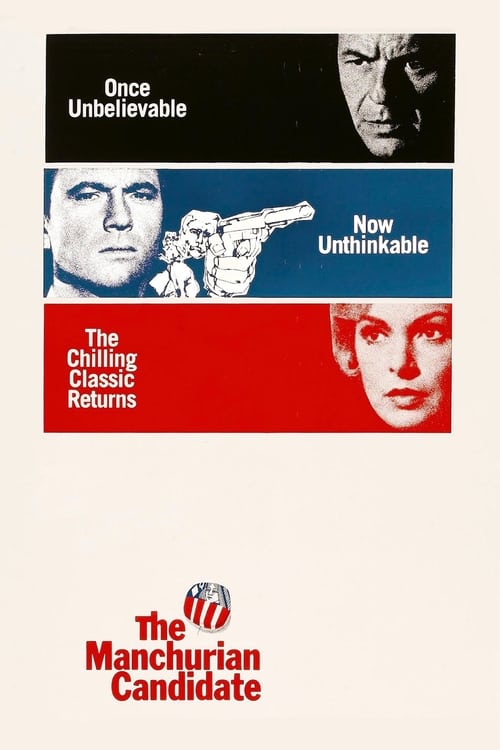
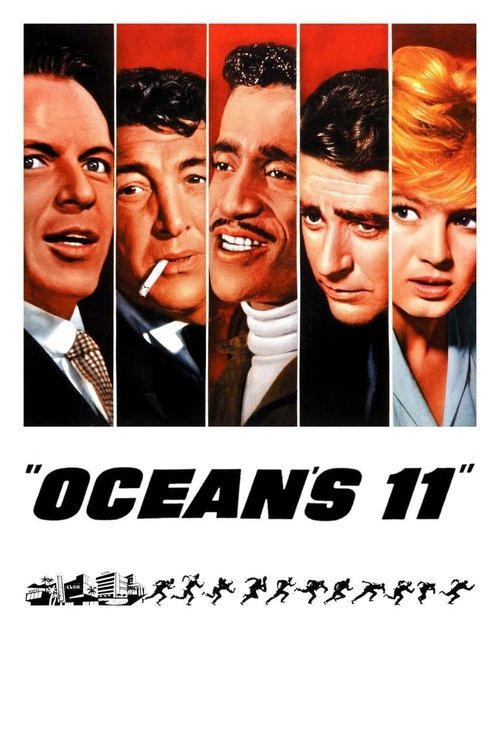
Due to an obligation Sinatra owed to 20th Century Fox for walking off the set of Henry King's Carousel (1956), he starred opposite Shirley MacLaine, Maurice Chevalier and Louis Jourdan in Can-Can (1960). Sinatra earned $200,000 and 25% of the profits for the performance. Around the same time, he starred in the Las Vegas-set Ocean's 11 (1960), the first film to feature the Rat Pack together and the start of a "new era of screen cool" for Santopietro. Sinatra personally financed the film and paid Martin and Davis fees of $150,000 and $125,000, respectively, sums considered exorbitant for the period. He had a leading role opposite Laurence Harvey in The Manchurian Candidate (1962), which Sinatra considered to be the role he was most excited about and the high point of his film career. Vincent Canby, writing for the magazine Variety, found the portrayal of Sinatra's character to be "a wide-awake pro creating a straight, quietly humorous character of some sensitivity." He appeared with the Rat Pack in the western Sergeants 3 (1962), and again in the 1964 gangster-oriented musical Robin and the 7 Hoods. For his performance in Come Blow Your Horn (1963), adapted from the Neil Simon play, Sinatra was nominated for the Golden Globe Award for Best Actor – Motion Picture Musical or Comedy.
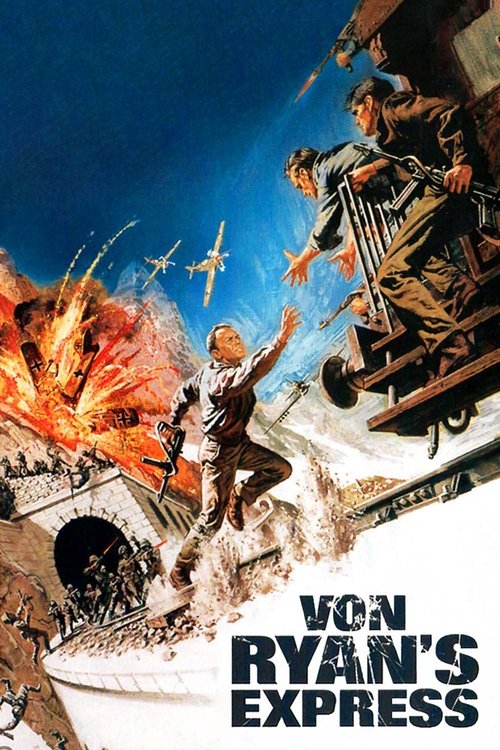
Sinatra directed only one film, the anti-war American-Japanese co-production None but the Brave (released in 1965), which he also starred in and co-produced; he then starred in Von Ryan's Express (1965), another major success. In the late 1960s, he became known for playing detectives, including Tony Rome in Tony Rome (1967) and its sequel Lady in Cement (1968). Sinatra played a similar role in The Detective (1968). As Die Hard was based on the novel sequel to The Detective, 20th Century Fox was contractually obliged to offer Sinatra the lead role of John McClane. Sinatra, who was 70 years old at the time, declined.
Sinatra starred opposite George Kennedy in the western Dirty Dingus Magee (1970), an "abysmal" affair according to Santopietro, which was panned by the critics. The following year, Sinatra received a Golden Globe Cecil B. DeMille Award and had intended to play Detective Harry Callahan in Dirty Harry (1971), but had to turn down the role due to developing Dupuytren's contracture in his hand. Sinatra's last major film role was opposite Faye Dunaway in Brian G. Hutton's The First Deadly Sin (1980). Santopietro said that as a troubled New York City homicide cop, Sinatra gave an "extraordinarily rich", heavily layered characterization, one which "made for one terrific farewell" to his film career.
Television and radio career
After beginning on the Major Bowes Amateur Hour radio show with the Hoboken Four in 1935, and later WNEW and WAAT in Jersey City, Sinatra starred in his own radio shows on NBC and CBS from the early 1940s to the mid-1950s. In 1942, he hired arranger Axel Stordahl away from Tommy Dorsey before beginning his first radio program that year, keeping Stordahl with him for all of his radio work. By the end of 1942, Sinatra was named the "Most Popular Male Vocalist on Radio" in a DownBeat poll. Early on, he frequently worked with The Andrews Sisters on radio. They would appear as guests on each other's shows, as well as on many USO shows broadcast to troops via the Armed Forces Radio Service (AFRS). Sinatra appeared as a special guest in the sisters' ABC Eight-to-the-Bar Ranch series, while the trio in turn guested on his Songs by Sinatra series on CBS. Sinatra had two stints as a regular member of the cast of Your Hit Parade; his first was from 1943 to 1945, and second was from 1946 to May 28, 1949, during which Sinatra was paired with the then-new girl singer, Doris Day. Starting in September 1949, the BBD&O advertising agency produced a radio series starring Sinatra for Lucky Strike called Light Up Time – some 176 15-minute shows that featured him and Dorothy Kirsten singing – which lasted through to May 1950.
In October 1951, the second season of The Frank Sinatra Show began on CBS Television. Ultimately, Sinatra did not find the success on television for which he had hoped. Santopietro writes that Sinatra "never appeared fully at ease on his own television series." In 1953 and 1954, Sinatra starred in the NBC radio program Rocky Fortune, portraying Rocco Fortunato (a.k.a. Rocky Fortune).
In 1957, Sinatra formed a three-year, $3 million contract with ABC to launch The Frank Sinatra Show, featuring himself and guests in 36 half-hour shows. ABC agreed to allow Sinatra's Hobart Productions to keep 60% of the residuals and bought stock in Sinatra's film production unit, Kent Productions, guaranteeing him $7 million. Though an initial critical success upon its debut on October 18, 1957, it soon attracted negative reviews from Variety and The New Republic, and The Chicago Sun-Times thought that Sinatra and frequent guest Dean Martin "performed like a pair of adult delinquents", "sharing the same cigarette and leering at girls." Sinatra later made numerous appearances on The Dean Martin Show and Martin's TV specials.
Sinatra's fourth and final Timex TV special, Welcome Home Elvis, was broadcast in March 1960, earning massive viewing figures. During the show, he performed a duet with Presley, who sang Sinatra's 1957 hit "Witchcraft" with the host performing the 1956 Presley classic "Love Me Tender". Sinatra had previously been highly critical of Elvis Presley and rock and roll in the 1950s, describing it as a "deplorable, a rancid smelling aphrodisiac" that "fosters almost totally negative and destructive reactions in young people." A CBS News special about Sinatra's 50th birthday, Frank Sinatra: A Man and His Music, was broadcast on November 16, 1965, and received an Emmy award and a Peabody Award.
Personal life
Sinatra was married to Nancy (née Barbato) from 1939 to 1951. They had three children: Nancy (born 1940), Frank Jr. (1944–2016) and Tina (born 1948).
Sinatra met Barbato in Long Branch, New Jersey, in the summer of 1934 while working as a lifeguard. He agreed to marry her after an incident at "The Rustic Cabin" that led to his arrest. Sinatra had numerous extramarital affairs, and gossip magazines published details of affairs with women including Marilyn Maxwell, Lana Turner and Joi Lansing.
Sinatra was married to Hollywood actress Ava Gardner from 1951 to 1957. It was a turbulent marriage with many well-publicized fights and altercations. The couple formally announced their separation on October 29, 1953, through MGM. Gardner filed for divorce in June 1954, at a time when she was dating matador Luis Miguel Dominguín, but the divorce was not settled until 1957. Sinatra continued to feel very strongly for her, and they remained lifelong friends.
In 1957, Sinatra moved to a home in Rancho Mirage, California, called The Compound.
Sinatra reportedly broke off engagements to Lauren Bacall in 1958 and Juliet Prowse in 1962. He was romantically linked to Marilyn Monroe, Pat Sheehan, Vikki Dougan, and Kipp Hamilton. Sinatra and Mia Farrow were married on July 19, 1966, and the couple divorced in August 1968. They remained close friends for life, and in a 2013 interview, Farrow said that Sinatra might be the father of her son Ronan Farrow (born 1987). In a 2015 CBS Sunday Morning interview, Nancy Sinatra dismissed the claim as "nonsense". She said that her father had a vasectomy years before Farrow's birth.
On July 11, 1976, Sinatra married Barbara Marx, former wife of Zeppo Marx, at Sunnylands, in Rancho Mirage, California, the estate of media magnate Walter Annenberg. They remained married until Sinatra's death in 1998.
Sinatra was close friends with Jilly Rizzo, songwriter Jimmy Van Heusen, golfer Ken Venturi, comedian Pat Henry, comedian Don Rickles, baseball manager Leo Durocher, and president John F. Kennedy (for whom he organized an inaugural ball with Peter Lawford). In his spare time, Sinatra enjoyed listening to classical music. He swam daily in the Pacific Ocean. Sinatra often played golf with Venturi at the course in Palm Springs, where he lived in the house Twin Palms he had commissioned from E. Stewart Williams in 1947 Sinatra liked painting, reading, and building model railways.
Style and personality
Sinatra was known for his immaculate sense of style. He spent lavishly on expensive custom-tailored tuxedos and stylish pin-striped suits, which made him feel wealthy and important and that he was giving his very best to the audience. Sinatra was also obsessed with cleanliness—while with the Tommy Dorsey band, he developed the nickname "Lady Macbeth" because of frequent showering and switching his outfits. Sinatra's deep blue eyes earned him the popular nickname "Ol' Blue Eyes".
For Santopietro, Sinatra was the personification of America in the 1950s: "cocky, eye on the main chance, optimistic, and full of the sense of possibility." Barbara Sinatra wrote, "A big part of Frank's thrill was the sense of danger that he exuded, an underlying, ever-present tension only those closest to him knew could be defused with humor." Cary Grant, a friend of Sinatra, stated that Sinatra was the "most honest person he'd ever met", who spoke "a simple truth, without artifice which scared people", and was often moved to tears by his performances. Jo-Caroll Dennison commented that he possessed "great inner strength" and that his energy and drive were "enormous." A workaholic, Sinatra reportedly slept only four hours a night on average. Throughout his life, Sinatra had mood swings and bouts of mild to severe depression, stating to an interviewer in the 1950s that "I have an over-acute capacity for sadness as well as elation." Barbara Sinatra stated that he would "snap at anyone for the slightest misdemeanor", while Van Heusen said that when Sinatra got drunk, it was "best to disappear."
Sinatra's mood swings often developed into violence, directed at people he felt had crossed him, particularly journalists who gave him scathing reviews, publicists, and photographers. According to Rojek, Sinatra was "capable of deeply offensive behavior that smacked of a persecution complex." He received negative press for fights with Lee Mortimer in 1947, photographer Eddie Schisser in Houston in 1950, Judy Garland's publicist Jim Byron on the Sunset Strip in 1954, and for a confrontation with Washington Post journalist Maxine Cheshire in 1973, in which Sinatra implied that she was a cheap prostitute. His feud with then-Chicago Sun Times columnist Mike Royko began when Royko wrote a column questioning why Chicago police offered free protection to Sinatra when he had his own security. Sinatra wrote an angry letter in response, calling Royko a "pimp" and threatening to "punch you in the mouth" for speculating that he wore a toupée. Arrangers such as Nelson Riddle and Anthony Fanzo found Sinatra to be a perfectionist, approaching him with uneasiness because of his often volatile temperament. Granata comments that Sinatra was so obsessed with perfection that people began wondering if he was more concerned about the music or showing off his power over others.
Alleged organized-crime links and Cal Neva Lodge
Sinatra became the stereotype of the "tough working-class Italian American", something that he embraced. Sinatra said that if it had not been for his interest in music, he would have likely ended up in a life of crime. Willie Moretti was Sinatra's godfather and the notorious underboss of the Genovese crime family, and he helped Sinatra in exchange for kickbacks and was reported to have intervened in releasing Sinatra from his contract with Tommy Dorsey. Sinatra was present at the Mafia Havana Conference in 1946, and the press learned of his being there with Lucky Luciano. He was reported to be a good friend of mobster Sam Giancana. Sinatra sponsored the membership of mobster John Roselli, to the Friars Club.
In 1951 Sinatra was under investigation for his mafia links by the US Senate's Kefauver Committee, headed by Senator Estes Kefauver. At Kefauver's request, associate counsel Joseph L. Nellis interviewed him. At 4 AM on March 1, 1951, Nellis met Sinatra in an office at the top of the Rockefeller Center. Kefauver had come into possession of eight photographs of Sinatra with well-known mafia figures, including Lucky Luciano, and Charles and Rocco Fischetti. Sinatra admitted "knowing" or "seeing", and saying "hello" or "goodbye", to Lucky Luciano, the Fischetti brothers, Al Capone's cousins, Meyer Lansky, Frank Costello, Joe Adonis, Abner Zwillman, Willie Moretti, Gerardo Catena, and Bugsy Siegel, but denied having any business dealings with any of them. Nellis learnt nothing which would have enabled him to subpoena Sinatra before the official congressional hearings.
The FBI kept records amounting to 2,403 pages on Sinatra, who was a natural target with his Mafia ties, his ardent New Deal politics, and his friendship with John F. Kennedy. The FBI kept him under surveillance for almost five decades beginning in the 1940s. The documents include accounts of Sinatra as the target of death threats and extortion schemes. The FBI documented that Sinatra was losing esteem with the Mafia as he grew closer to President Kennedy, whose younger brother Attorney General Robert F. Kennedy was leading a crackdown on organized crime. Sinatra said he was not involved: "Any report that I fraternized with goons or racketeers is a vicious lie."
In 1960, Sinatra bought a share in the Cal Neva Lodge & Casino, a casino hotel on the north shore of Lake Tahoe. He built the Celebrity Room theater, which attracted his show business friends Red Skelton, Marilyn Monroe, Victor Borge, Joe E. Lewis, Lucille Ball, Lena Horne, Juliet Prowse, the McGuire Sisters, and others. By 1962, Sinatra reportedly held a 50-percent share in the hotel. His gambling license was temporarily suspended by the Nevada Gaming Control Board in 1963 after Giancana was spotted on the premises. Due to ongoing pressure from the FBI and Nevada Gaming Commission on mobster control of casinos, Sinatra agreed to give up his share in Cal Neva and the Sands. That same year, his son Frank Jr. was kidnapped but was eventually released unharmed. Sinatra's gambling license was restored in February 1981, following support from Ronald Reagan. In May 1968 he was observed dining at the Rive Gauche Restaurant with Allen Dorfman, I. Irving Davidson and Jimmy Hoffa's wife Josephine.
Political views and activism
Jewish and racial advances
Santopietro notes that Sinatra was a "lifelong sympathizer with Jewish causes." He was awarded the Hollzer Memorial Award by the Los Angeles Jewish Community in 1949. Sinatra gave a series of concerts in Israel in 1962 and donated his entire $50,000 fee for appearing in a cameo role in Cast a Giant Shadow (1966) to the Youth Center in Jerusalem. On November 1, 1972, Sinatra raised $6.5 million in bond pledges for Israel, and was given the Medallion of Valor. The Frank Sinatra Student Center at the Hebrew University of Jerusalem was dedicated in 1978.
Sinatra was outspoken against racism, particularly toward black people and Italians, from a young age. In the early 1950s, he was among those who campaigned to combine the racially segregated musicians' unions in Los Angeles. In November 1945, Sinatra was invited by the mayor of Gary, Indiana, to try to settle a strike by white students of Froebel High School against the "Pro-Negro" policies of the new principal. His comments, while praised by liberal publications, led to accusations by some that he was a communist, which Sinatra denied.
From his youth, Sinatra displayed sympathy for black Americans and worked both publicly and privately all his life to help the struggle for equal rights. He blamed racial prejudice on the parents of children. Sinatra played a major role in the desegregation of Nevada hotels and casinos in the 1950s and 1960s. On January 27, 1961, Sinatra played a benefit show at Carnegie Hall for Martin Luther King Jr. and led his fellow Rat Pack members and Reprise label mates in boycotting hotels and casinos that refused entry to black patrons and performers. According to his son, Frank Jr., King sat weeping in the audience at one of his father's concerts in 1963 as Sinatra sang "Ol' Man River", a song from the musical Show Boat that is sung by a black American stevedore.
Support of presidential campaigns
His mother, Dolly, was a Democratic Party ward leader. After meeting President Franklin D. Roosevelt in 1944, Sinatra subsequently heavily campaigned for the Democrats in the 1944 presidential election. According to Jo Carroll Silvers, in his younger years, Sinatra had "ardent liberal" sympathies and was "so concerned about poor people that he was always quoting Henry Wallace." In the 1948 presidential election, he actively campaigned for President Harry S. Truman. In 1952 and 1956, Sinatra campaigned for Adlai Stevenson.
Of all the U.S. presidents Sinatra associated with during his career, he was closest to John F. Kennedy. Sinatra often invited Kennedy to Hollywood and Las Vegas, and the two would womanize and enjoy parties together. In January 1961, Sinatra and Peter Lawford organized the Inaugural Gala in Washington, D.C., held on the evening before President Kennedy was sworn into office. After taking office, Kennedy distanced himself from Sinatra due partly to Sinatra's ties with the Mafia. In 1962, Sinatra was snubbed by the President as, during his visit to Palm Springs, Kennedy stayed with the Republican Bing Crosby instead of Sinatra, citing FBI concerns about the latter's alleged connections to organized crime. Sinatra had spared no expense upgrading the facilities at his home in anticipation of the President's visit, fitting it with a heliport, which he smashed with a sledgehammer after the rejection. Despite the snub, when Sinatra learned of Kennedy's assassination, he reportedly sobbed in his bedroom for three days. Sinatra worked with Hubert H. Humphrey in 1968, and remained a supporter of the Democratic Party until the early 1970s.
Although still a registered Democrat, Sinatra endorsed Republican Ronald Reagan for a second term as governor of California in 1970. Sinatra officially changed allegiance in July 1972 when he supported Richard Nixon in the 1972 presidential election.
In the 1980 presidential election, Sinatra donated $4 million to Ronald Reagan's campaign. Sinatra arranged Reagan's Presidential gala, as he had done for Kennedy. In 1985, Reagan presented Sinatra with the Presidential Medal of Freedom, remarking, "His love of country, his generosity for those less fortunate ... make him one of our most remarkable and distinguished Americans." On June 18, 1984, Sinatra performed at the state dinner in the White House honoring Sri Lankan president J. R. Jayewardene at the invitation of Reagan, singing "Strangers in the Night" and "Fly Me to the Moon".
Death and funeral
During the final years of his life, Sinatra was in ill health and was frequently hospitalized for heart and breathing problems, high blood pressure, pneumonia, and bladder cancer. He made no public appearances following a heart attack in February 1997. On the evening of May 14, 1998, Sinatra died in his sleep at age 82 after suffering another heart attack at Cedars-Sinai Medical Center in Los Angeles, with his wife Barbara at his side. Barbara encouraged Sinatra to "fight" while attempts were made to stabilize him, and reported that Sinatra's final words were, "I'm losing." His daughter, Tina, later wrote that she and her siblings had not been notified of their father's final hospitalization, and it was her belief that "the omission was deliberate. Barbara would be the grieving widow alone at her husband's side." The night after Sinatra's death, the lights on the Empire State Building were turned blue, the lights at the Las Vegas Strip were dimmed, and the casinos stopped spinning for one minute. Significant increases in recording sales worldwide were reported by Billboard in the month of Sinatra's death.
Sinatra's funeral was held at the Church of the Good Shepherd in Beverly Hills, California, on May 20, 1998, with 400 mourners in attendance and thousands of fans outside. Gregory Peck, Tony Bennett, and Sinatra's son, Frank Jr., addressed the mourners.
Sinatra was buried in a blue business suit and a red and blue necktie because of his support for the Italian football club Genoa CFC; his grave, adorned with mementos from family members, was next to his parents in Desert Memorial Park in Cathedral City, California. The phrases "The Best Is Yet to Come", and "Beloved Husband & Father" were placed on Sinatra's modest grave marker. Sinatra's gravestone was changed as of 2021 to read "Sleep Warm, Poppa", due to damage to the original gravestone.
Legacy and honors
Robert Christgau referred to Sinatra as "the greatest singer of the 20th century". For Santopietro, Sinatra was the "greatest male pop singer in the history of America", who amassed "unprecedented power onscreen and off", and "seemed to exemplify the common man, an ethnic twentieth-century American male who reached the 'top of the heap', yet never forgot his roots." Santopietro argues that his career was centered around power, perfecting the ability to capture an audience. He continues to be regarded as an iconic figure of the 20th century.
Gus Levene commented that Sinatra's strength was that when it came to lyrics, telling a story musically, Sinatra displayed a "genius" ability and feeling, which with the "rare combination of voice and showmanship" made him the "original singer" which others who followed most tried to emulate. George Roberts, a trombonist in Sinatra's band, remarked that Sinatra had a "charisma, or whatever it is about him, that no one else had." Biographer Arnold Shaw considered that "If Las Vegas had not existed, Sinatra could have invented it." He quoted reporter James Bacon in saying that Sinatra was the "swinging image on which the town is built", adding that no other entertainer quite "embodied the glamour" associated with Las Vegas.
In Sinatra's native Hoboken, he was awarded the Key to the City on October 30, 1947. In 2003, the city's main post office was rededicated in his honor. A bronze plaque, placed two years before Sinatra's death, marks the site of the house where he was born. There is also a marker in front of Hoboken Historical Museum, which has artifacts from his life and conducts Sinatra walking tours. Frank Sinatra Drive runs parallel to the Hudson River Waterfront Walkway. On the waterfront is Frank Sinatra Park, where a bronze plaque was placed in 1989 upon its opening, and where a 6-foot (1.8 m) tall bronze statue of Sinatra was dedicated in 2021 on December 12, Sinatra's birthday. A residence hall at Montclair State University in New Jersey was named in his honor. Other buildings named for Sinatra include the Frank Sinatra School of the Arts in Astoria, Queens, the Frank Sinatra International Student Center at Hebrew University in Jerusalem, and the Frank Sinatra Hall at the USC School of Cinematic Arts in Los Angeles. Wynn Resorts' Encore Las Vegas resort features a restaurant dedicated to Sinatra which opened in 2008. There are several roadways named in honor of Frank Sinatra in several states of the U.S.
The United States Postal Service issued a stamp in honor of Sinatra in May 2008, commemorating the tenth anniversary of his death. In May 2008, the United States Congress designated May 13 as Frank Sinatra Day.
Tribute albums to Sinatra
A Jazz Portrait of Frank Sinatra by Oscar Peterson (1959)
Very Sinatra by Ruby Braff (1981)
Perfectly Frank by Tony Bennett (1992)
Voices in Standard by The Four Freshmen (1994)
As I Remember It by Frank Sinatra, Jr. (1996)
Blue Note Plays Sinatra various jazz musicians - (1996)
Manilow Sings Sinatra by Barry Manilow (1998)
Sinatraland by Patrick Williams and His Big Band (1998)
Blue Eyes Plays Ol' Blue Eyes by Si Zentner & Orchestra (1998)
Keely Sings Sinatra by Keely Smith (2001)
Michael Andrew Pays Tribute to Frank Sinatra by Michael Andrew (2002)
Frank by Amy Winehouse [2003]
Steve Lawrence Sings Sinatra by Steve Lawrence (2003)
Plays Sinatra His Way by Joey DeFrancesco (2004)
Allow Us to Be Frank by Westlife (2004)
Songs of Sinatra by Steve Tyrell (2005)
Blue Eyes Meets Bed-Stuy The Notorious B.I.G. & Frank Sinatra by Jon Moskowitz and Dj Cappel & Smitty (2005)
L'allieva by Mina (2005)
Film, television and stage portrayals
A television miniseries based on Sinatra's life, titled Sinatra, was aired by CBS in 1992. The series was directed by James Steven Sadwith, who won an Emmy Award for Outstanding Individual Achievement in Directing for a Miniseries or a Special and starred Philip Casnoff as Sinatra. Sinatra was written by Abby Mann and Philip Mastrosimone and produced by Sinatra's daughter, Tina.
Sinatra has subsequently been portrayed on screen by Ray Liotta (The Rat Pack, 1998), James Russo (Stealing Sinatra, 2003), Dennis Hopper (The Night We Called It a Day, 2003), and Robert Knepper (My Way, 2012), and spoofed by Joe Piscopo and Phil Hartman on Saturday Night Live. A biographical film directed by Martin Scorsese has long been planned. Alex Gibney directed a four-part biographical series on Sinatra, All or Nothing at All, for HBO in 2015. A musical tribute was aired on CBS television in December 2015 to mark Sinatra's centenary. Sinatra was also portrayed by Rico Simonini in the 2018 feature film Frank & Ava, which is based on a play by Willard Manus. Creed singer Scott Stapp also portrayed Sinatra in the 2024 feature film Reagan, a biopic of U.S. President Ronald Reagan. Martin Scorsese planned to make a film on Sinatra and his second wife Ava Gardner.
In 2021, Sinatra was portrayed by actor Frank John Hughes in the Paramount+ limited series, The Offer.
Sinatra believed that Johnny Fontane, a mob-associated singer in Mario Puzo's novel The Godfather (1969), was based on him. Puzo wrote in 1972 that when the author and singer met in Chasen's, Sinatra "started to shout abuse", threatening violence. Francis Ford Coppola, director of the film adaptation, said in the audio commentary that "Obviously Johnny Fontane was inspired by a kind of Frank Sinatra character".
In 2023, Sinatra: The Musical by Joe DiPietro premiered at the Birmingham Repertory Theatre starring Matt Doyle as Sinatra.
Selected discography
Studio albums
Collaboration albums
Sinatra–Basie: An Historic Musical First with Count Basie (1962)
America, I Hear You Singing with Bing Crosby and Fred Waring (1964)
It Might as Well Be Swing with Count Basie (1964)
12 Songs of Christmas with Bing Crosby and Fred Waring (1964)
Francis Albert Sinatra & Antonio Carlos Jobim with Antonio Carlos Jobim (1967)
Francis A. & Edward K. with Duke Ellington (1968)
The Sinatra Family Wish You a Merry Christmas with Frank Sinatra Jr., Nancy Sinatra and Tina Sinatra (1968)
Sinatra & Company with Antonio Carlos Jobim (1971)