Segments
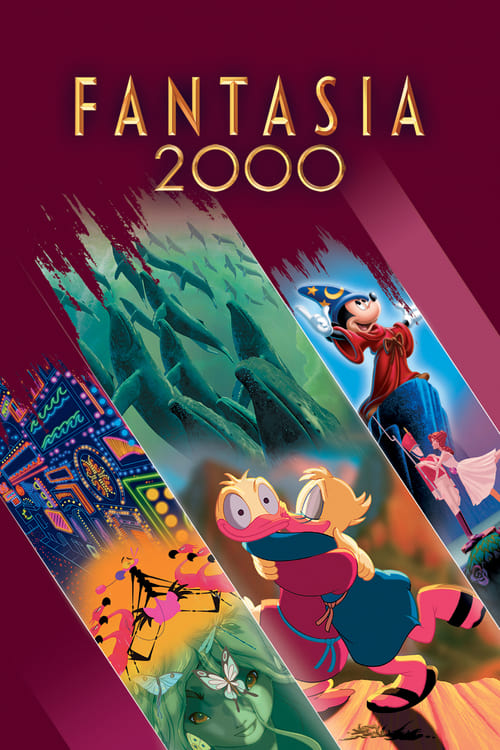
Symphony No. 5 is an abstract segment created by Pixote Hunt with story development by Kelvin Yasuda. In December 1997, after rejecting pitches from four other animators, Disney and Ernst asked Hunt for his ideas. Hunt first thought of the story on a morning walk in Pasadena, California, one depicting a battle of "good" against "evil" and how the conflict resolves itself. It took Hunt approximately two years, from start to finish, to complete the segment. Disney and Ernst decided to go with Hunt's idea; Hunt avoided producing an entirely abstract work because "you can get something abstract on every computer screen" with ease. Hunt divided the segment into 31 mini-scenes, noting down points in which he would employ vivid color when the music was bright and fluid, and then switch to darker hues when the music felt darker and denser. To gain inspiration in how the shapes would move, Hunt and his associates visited San Diego Zoo, a butterfly farm, and observed slow motion footage of bats. The segment combines hand drawn backgrounds using pastels and paint that were scanned into the Computer Animation Production System (CAPS), and computer-generated imagery (CGI) of abstract shapes and effects, which were layered on top. Hunt explained that scanning each drawing "was a one-shot deal" as the platen that pressed onto it would alter the pastel once it had been scanned. At one point during production, Hunt and Yasuda completed 68 pastel drawings in eight days. The segment was produced using Houdini animation software.
Pines of Rome was the first piece Disney suggested for the film, as well as the first to be animated; designs appeared in the studio's dailies as early as October 1993. Butoy served as director with James Fujii handling the story. The opening to the piece gave Disney the idea of "something flying". Butoy sketched the sequence on yellow Post-it notes. The story originally involved the whales flying around from the perspective of a group of penguins, but the idea was scrapped to make the baby whale a central character. The whales were also set to return to Earth but Butoy said it "never felt quite right", leading to the decision to have them break through a cloud ceiling and enter a different world by the supernova. Butoy created a "musical intensity chart" for the animators to follow which "tracked the ups and downs of the music ... as the music brightens so does the color", and vice versa. He explained that because CGI was in its infancy during development, the first third of the segment was hand drawn using pencil to get a feel of how the whales would move. When the drawings were scanned into the CAPS system, Butoy found the whales were either moving too fast or had less weight to them. The drawings were altered to make the whales slow down and "more believable". The eyes of the whales were drawn by hand, as the desired looks and glances were not fully achievable using CGI. Butoy recalled the challenge of having the water appear and move as naturally as possible; the team decided to write computer code from scratch as traditional animation would have been too time-consuming and would have produced undesired results. The code handling the pod of whales was written so the whales would move away if they were to collide and not bump into, overlap, or go through each other. The same technique was used for the stampede scene in The Lion King (1994), which was produced at the same time.
Rhapsody in Blue is the first Fantasia segment with music from an American composer. It originated in 1995 when director and animator Eric Goldberg approached Al Hirschfeld about the idea of an animated short set to Gershwin's composition in the style of Hirschfeld's illustrations. In December 1998, Goldberg pitched Rhapsody in Blue to Thomas Schumacher and received the green-light to produce it, and Hirschfeld agreed to serve as artistic consultant and allowed the animators to adapt his works. Duke is named after jazz musician Duke Ellington. The bottom of his toothpaste tube reads "NINA", an Easter egg referencing Hirschfeld's daughter Nina, whose name Hirschfeld inscribed in several of his drawings since her birth in 1945. Another easter egg references artist Emily Jiuliano, whose name is shown as "E. Jiuliano". Rachel was designed after the Goldbergs' daughter; John, or "Flying John", is based on animation historian and author John Culhane and Hirschfeld's caricature of Alexander Woollcott. Goldberg took Hirschfeld's original illustration of Gershwin and animated it to make him play part of the "rhapsody" on the piano. The most difficult part of this particular scene to animate was the turning of Gershwin's head, as the original drawing depicted one angle of his head. The illustration also featured Ira Gershwin alongside his brother George, but Ira is not shown in the scene nor anywhere else in the film. Featured in the crowd emerging from the hotel are depictions of Brooks Atkinson and Hirschfeld, along with his wife Dolly Haas.
Piano Concerto No. 2 was directed by Butoy with art director Michael Humphries. It originated in the 1930s when Walt Disney wished to adapt a collection of Hans Christian Andersen fairy tales into an animated film. The artists completed a series of preliminary designs based on the stories, including ones for "The Steadfast Tin Soldier" from 1938 by Bianca Majolie that were stored in the studio's animation research library and used for a 1991 Disney book that retold the story accompanied with the storyboard sketches. When Disney suggested using the Shostakovich piece, Butoy flipped through the book and found the story's structure fit to the music. When Humphries saw the sketches he designed the segment with works by Caravaggio and Rembrandt in mind to give the segment a "timeless" feel, while keeping the colors "as romantic as possible" during the scenes when the soldier and ballerina are first getting acquainted. Live-action footage of a ballerina was used as a guide for the toy ballerina's movements. Butoy found the Jack-in-a-box a difficult character to design and animate with its spring base and how he moved with the box. His appearance went through numerous changes, partly due to the lack of reference material available to the team.
The segment marked the first time the Disney studio created a film's main characters entirely from CGI; only backgrounds, secondary, or tertiary characters had been produced using CGI beforehand. Initially Butoy asked Pixar Animation Studios to handle the computer graphics, but CGI artist Steve Goldberg convinced him to let Disney's own team produce it. The backgrounds were completed by hand. Originally the drain sequence included friendly rats who performed comical gags, but the team found it did not fit the mood of the rest of the segment. The drains became a more scary environment, something that Butoy said was "what the music was telling us to do". Rain animation from Bambi (1942) was scanned into the CAPS system and digitally altered to fit into the segment. The ending was to feature the original ending with the soldier and ballerina melting in the fire, but the music was too upbeat to animate it and was changed. An excerpt of the segment was shown at the 1998 SIGGRAPH conference.
The Carnival of the Animals, Finale was directed and animated by Goldberg; his wife Susan was its art director. The idea originated from animator Joe Grant, one of the two story directors on Fantasia who loved the ostriches in Dance of the Hours. When development for Fantasia 2000 began, Grant suggested the idea of having one of the ostriches play with a yo-yo to the last movement of The Carnival of the Animals. The ostriches were later changed to flamingos as Disney wished to avoid reintroducing characters from the original film and thought flamingos would look more colorful on the screen. Goldberg was partly inspired by co-director Mike Gabriel, who would play with a yo-yo as he took a break from working on Pocahontas (1995); Gabriel is given a credit for "yo-yo tricks" in the end credits. The segment was produced with CGI and 6,000 watercolor paintings on heavy bond paper. Susan chose a distinct colour palette for the segment which she compared to the style of a Hawaiian shirt. The Goldbergs and their team visited the zoo in Los Angeles and San Diego to study the anatomy and movement of flamingos.
Mostly known as Britain's most loved patriotic song (thanks to its choral counterpart Land of Hope and Glory) the original march was created for royal and solemn events, but Eisner suggested his use as a stand-alone piece after he attended a graduation and thought its familiarity would be suitable for a Fantasia segment. His idea involved a selection of Disney princesses and heroes in a wedding procession carrying their future children who would then be presented in a ceremony. The animators' preliminary designs depicted a Greco-Roman setting; one of the staff members described the artwork as "an appalling abuse" of the characters. Eisner agreed to drop the story, but insisted that the music be used. After numerous ideas were scrapped due to the difficulty in writing a clear plot, animator and director Francis Glebas came up with the Noah's Ark idea that he titled Donald's Last Roundup!, later retitled as Noah's Duck, and pitched it thinking it was "laden with comic possibilities".
To close the film, Disney wanted a piece that was "emotionally equivalent" to the Night on Bald Mountain and Ave Maria segments that closed Fantasia. Disney chose The Firebird as the piece to use after "half a dozen" others were scrapped, including Symphony No. 9 by Beethoven and the "Hallelujah Chorus" from Messiah by Handel. Disney thought of the idea of the Earth's destruction and renewal after passing Mount St. Helens following its eruption in 1980. French twins Paul and Gaëtan Brizzi from Disney's Paris studio were hired to direct the segment. The Sprite is a Dryad-like creature from Greek mythology. Her form changes six times; she is introduced as a Water Sprite who plants flowers as a Flower Sprite. She becomes a Neutral Sprite where her growth trail stops and an Ash Sprite when the forest has been destroyed. The segment ends with her as a Rain-Wave Sprite, followed by the Grass Sprite. The segment originally ended with the Sprite in the form of a flowing river that rises up into the sky and transforms into a Sun Sprite, but this was abandoned. The elk's antlers were produced by CGI and placed on top of its body that was drawn traditionally. The segment was produced using Houdini animation software.