

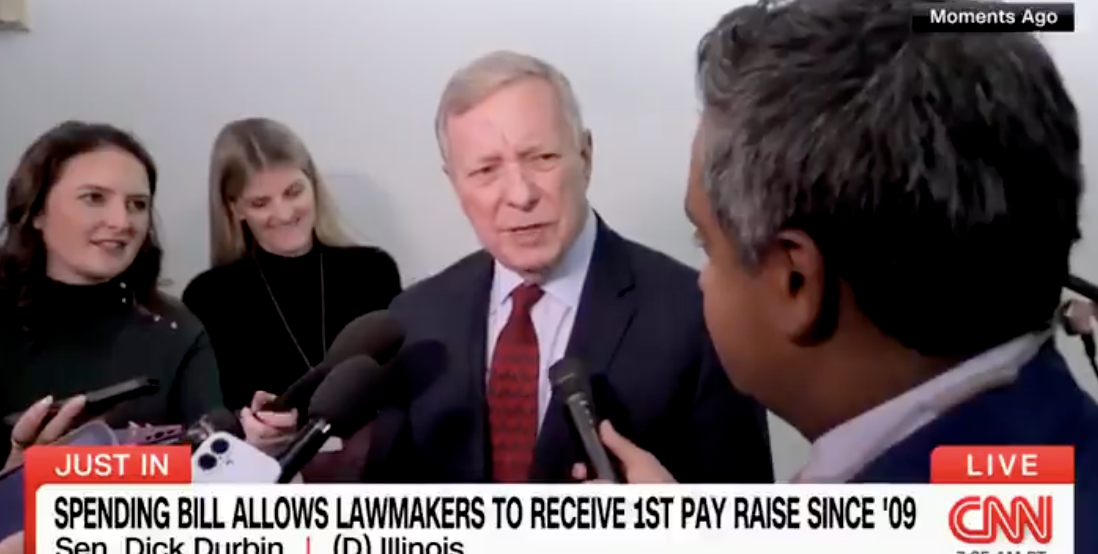
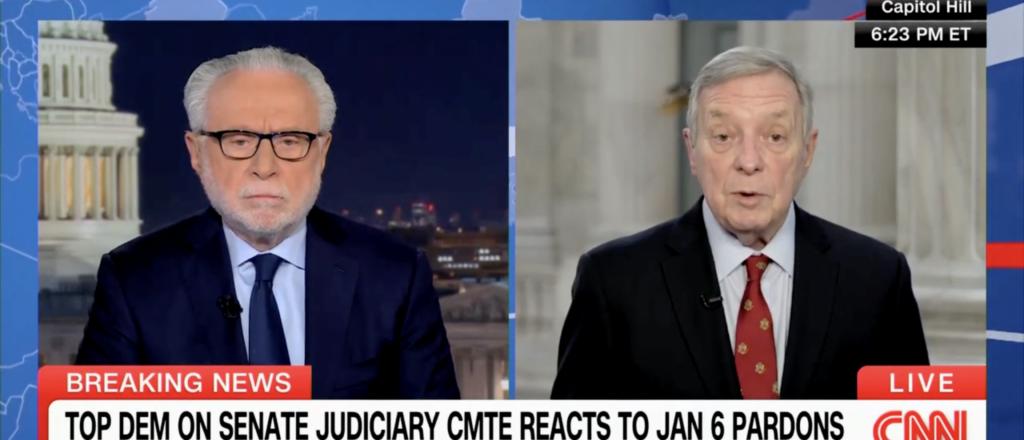
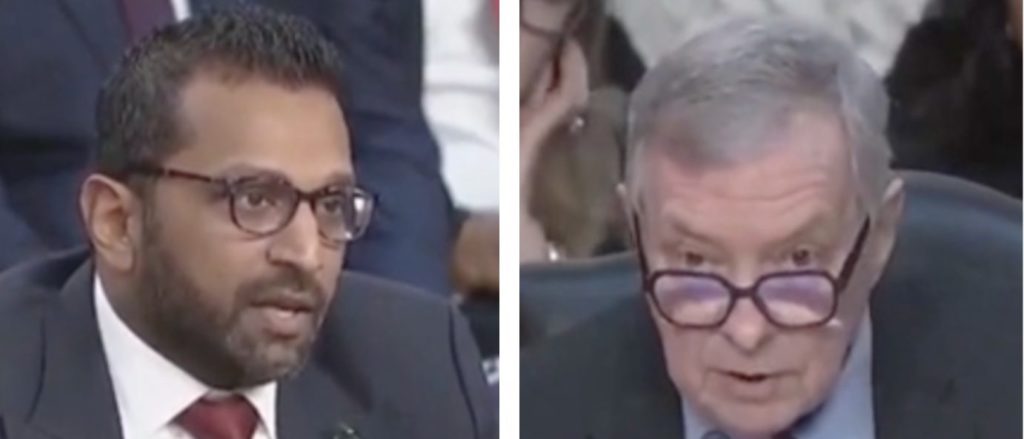
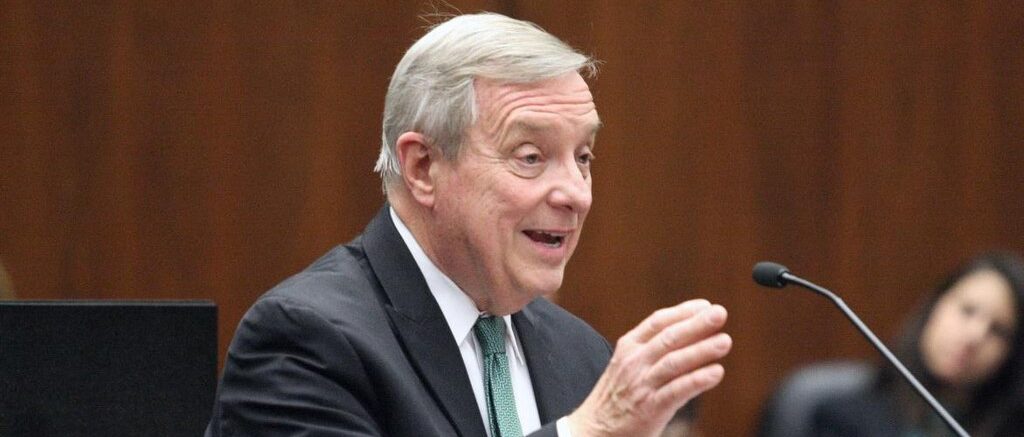
Richard Joseph Durbin (born November 21, 1944) is an American politician and attorney serving as the senior United States senator from Illinois, a seat he has held since 1997. A member of the Democratic Party, Durbin is in his fifth Senate term and has served since 2005 as the Senate Democratic Whip (the second-highest position in Democratic leadership in the Senate) and since 2025 as the Senate minority whip. He is the longest-serving Democratic whip since the position was established in 1913.
Durbin was born in East St. Louis, Illinois. After graduating from the School of Foreign Service and Georgetown University Law Center, he worked in state legal counsel throughout the 1970s. Durbin made an unsuccessful run for lieutenant governor of Illinois in 1978, and later maintained a private law practice and co-owned a pub in Springfield. Durbin was elected to the U.S. House of Representatives in 1982, representing the Springfield-based 20th congressional district.
After serving seven House terms, Durbin was elected to the U.S. Senate in 1996, and reelected in 2002, 2008, 2014, and 2020. He has served as the Senate Democratic whip since 2005—under Harry Reid until 2017, and under Chuck Schumer since 2017. During that time, he had two periods as Senate majority whip (from 2007 to 2015 and from 2021 to 2025), and three as minority whip (from 2005 to 2007, from 2015 to 2021, and since 2025). He became the oldest serving Democratic senator upon the death of Dianne Feinstein in 2023. As of 2024, Durbin is the longest-serving Senate party whip in U.S. history.
Durbin chaired the Senate Judiciary Committee from 2021 to 2025. He also led the Ketanji Brown Jackson Supreme Court nomination hearings and is the dean of Illinois's congressional delegation. On April 23, 2025, he announced that he would not seek reelection in 2026.
Contents
Early life and education
Richard Joseph Durbin was born in East St. Louis, Illinois on November 21, 1944, to an Irish-American father, William Durbin, and a Lithuanian-born mother, Anna (née Kutkin; Lithuanian: Ona Kutkaitė). He graduated from Assumption High School in East St. Louis in 1962. During his high school years he worked at a meatpacking plant. He earned a B.S. from the School of Foreign Service at Georgetown University in 1966. Durbin interned in Senator Paul Douglas's office during his senior year in college, and worked on Douglas's unsuccessful 1966 reelection campaign. Durbin adopted the nickname "Dick", which he had not previously used, after Douglas called him by that name.
Durbin earned his J.D. from Georgetown University Law Center in 1969 and was admitted to the Illinois bar later that year.
Early political career
After graduating from law school, Durbin started a law practice in Springfield. He was legal counsel to Lieutenant Governor Paul Simon from 1969 to 1972, and then legal counsel to the Illinois State Senate Judiciary Committee from 1972 to 1982. Durbin was an unsuccessful Democratic candidate for the Illinois State Senate in 1976. From 1976 to 1981 he co-owned the Crow's Mill Pub in Springfield's Toronto neighborhood, which he later called a "crash course" in running a business. He ran for lieutenant governor in 1978 as the running mate of Illinois Comptroller Michael Bakalis. They were defeated by Republican incumbents James R. Thompson and Dave O'Neal. Durbin then worked for five years as an adjunct professor of medical law at the Southern Illinois University School of Medicine while maintaining his law practice.
U.S. House of Representatives (1983–1997)
In 1982, Durbin won the Democratic nomination for the 20th congressional district, which included Decatur and most of Springfield. He scored a 1,400-vote victory, defeating 22-year incumbent Republican Paul Findley, a U.S. Navy veteran, whose district lines had been substantially redrawn to remove rural farms and add economically depressed Decatur. This replaced 35% of the voters in Findley's old district and included more Democrats as part of the decennial redistricting. Durbin's campaign emphasized unemployment and financial difficulties facing farmers, and told voters that electing him would send "a message to Washington and to President Reagan that our economic policies are not working." Durbin also benefited from donations by pro-Israel groups, especially AIPAC, that opposed Findley's advocacy on behalf of the Palestine Liberation Organization. In the years before the 1996 Senate election Durbin was reelected to the House six times, rarely facing substantial opposition and winning more than 55% of the vote in each election except 1994.
U.S. Senate (1997–present)
In 1996, Durbin defeated Pat Quinn to become the Democratic nominee to replace the retiring Senator Paul Simon, a longtime friend. He faced Republican State Representative Al Salvi in the general election. Although the election had been expected to be competitive, Durbin benefited from Bill Clinton's 18-point win in Illinois that year and defeated Salvi by 15 points. He was reelected in 2002, 2008, 2014, and 2020, each time by at least 10 points.
119th United States Congress Committee assignments
Source:
Committee on Agriculture, Nutrition, and Forestry
Committee on Appropriations
Committee on the Judiciary (Ranking Member)
Caucus memberships
Bi-Cameral High-Speed & Intercity Passenger Rail Caucus
Caucus on International Narcotics Control (co-chair)
International Conservation Caucus
Senate Diabetes Caucus
Senate Hunger Caucus (co-chair)
Senate Science, Technology, Engineering, and Math Education Caucus (co-chair)
Senate Taiwan Caucus
Sportsmen's Caucus
Congressional COPD Caucus (co-chair)
Senate Ukraine Caucus (co-chair)
Afterschool Caucuses
Congressional NextGen 9-1-1 Caucus
Congressional Coalition on Adoption
Leadership
In November 1998, Senate Minority Leader Tom Daschle appointed Durbin Assistant Democratic Whip. After the 2004 election, Durbin became the Democratic Whip in the 109th Congress. He became the first senator from Illinois to serve as a Senate Whip since Everett Dirksen in the late 1950s, and the fifth to serve in Senate leadership. Durbin served as assistant minority leader from 2005 to 2007, when the Democrats became the majority party in the Senate. He then assumed the role of assistant majority leader, or majority whip.
In addition to his caucus duties, Durbin chairs the Subcommittee on Human Rights and the Subcommittee on Financial Services and General Government.
In 2000, Democratic presidential nominee Al Gore reportedly considered asking Durbin to be his running mate for Vice President of the United States. Gore ultimately chose Connecticut Senator Joe Lieberman.
When Majority Leader Harry Reid faced a difficult reelection fight in 2010, some pundits predicted a possibly heated fight to succeed him between Durbin and Senator Chuck Schumer, who is well known for his fund-raising prowess. Reid's reelection rendered such speculation moot. Upon Reid's retirement announcement in 2015, Durbin, Reid, and Schumer were aligned in elevating Schumer to party leader and Durbin to retain the Whip position.
In 2021, Durbin became Senate Majority Whip again for the 117th Congress, as well as becoming chair of the Senate Judiciary Committee. This is the first time that the whip of either party has served as chair of this committee.
Political positions
In 2006, the National Journal rated Durbin as the most liberal U.S. senator. According to the 2019 GovTrack report card, he had the 10th-most left-leaning voting record in the Senate. The American Conservative Union gave him a 5% lifetime conservative rating in 2020.
Social issues
During his first term in Congress, Durbin supported upholding existing restrictions on abortion and imposing new limitations, including a constitutional amendment that would have nullified Roe v. Wade. Beginning in his second Senate term, he reversed his position and has since voted to maintain access to abortion, including support for Medicaid funding of it, and opposed any limitation he considers a practical or potential encroachment upon Roe. Durbin has maintained that this reversal came about due to personal reflection and his growing awareness of potentially harmful implications of his previous policy with respect to women facing dangerous pregnancies. He said, "I still oppose abortion and would try my best to convince any woman in my family to carry the baby to term. But I believe that ultimately the decision must be made by the woman, her doctor, her family, and her conscience."
In September 2020, Durbin voted to confirm judges Stephen McGlynn and David W. Dugan, who have criticized Supreme Court rulings such as Roe, to lifetime appointments to the federal judiciary in Illinois. Durbin opposed the 2022 overturning of Roe v. Wade, saying, "millions of Americans are waking up in a country where they have fewer rights than their parents and grandparents."
In July 2017, Durbin and Senators Cory Booker, Elizabeth Warren, and Kamala Harris introduced the Dignity for Incarcerated Women Act, legislation implementing a ban on the shackling of pregnant women and mandating that the Federal Bureau of Prisons form superior visitation policies for parents and provide parenting classes and health products such as tampons and pads. The bill also restricted prison employees from entering restrooms of the opposite sex except in pressing circumstances.
In December 2018, Durbin voted for the First Step Act, legislation aimed at reducing recidivism rates among federal prisoners by expanding job training and other programs in addition to expanding early-release programs and modifying sentencing laws such as mandatory minimum sentences for nonviolent drug offenders, "to more equitably punish drug offenders."
In 2007, as Senate Majority Whip, Durbin said on record, "It's time to reinstitute the Fairness Doctrine."
In 2010, Durbin cosponsored and passed from committee the Combating Online Infringement and Counterfeits Act, a bill to combat media piracy by blacklisting websites. Many who oppose the bill argue that it violates First Amendment rights and promotes censorship. The announcement of the bill was followed by a wave of protest from digital rights activists, including the Electronic Frontier Foundation, calling it censorship and saying that action could be taken against all users of sites on which only some users are uploading infringing material.
Economic issues
In 2019, Durbin and 34 other senators introduced the Child Care for Working Families Act. The bill was expected to create 770,000 new child care jobs and ensure families under 75% of the state median income would not pay for child care, with higher-earning families having to pay "their fair share for care on a sliding scale, regardless of the number of children they have." The legislation also supported universal access to high-quality preschool programs for all three- and four-year-olds. Additionally, it would have changed child care compensation and training to aid both teachers and caregivers. The bill was referred to the Senate Committee on Health, Education, Labor, and Pensions, where it did not receive a hearing or vote.
Durbin reintroduced the Fair Elections Now Act during the 112th Congress. The bill would provide public funds to candidates who do not take political donations larger than $100 from any donor.
Among Durbin's legislative causes are environmental protection, particularly the protection of the Arctic National Wildlife Refuge. The League of Conservation Voters gave him a rating of 89%. Sierra Club gave him a 90% rating.
On September 18, 2008, Durbin attended a closed meeting with congressional leaders, then-Treasury Secretary Henry Paulson and Federal Reserve Chairman Ben Bernanke, and was urged to craft legislation to help financially troubled banks. That same day (trade effective the next day), Durbin sold mutual fund shares worth $42,696 and reinvested it all with Warren Buffett.
On February 26, 2009, Durbin introduced the Protecting Consumers from Unreasonable Credit Rates Act of 2009, calling for a maximum annual interest rate cap of 36%, including all interest and fees. The bill was intended to put an end to predatory lending activities.
In an April 27, 2009, interview with WJJG talk radio host Ray Hanania, Durbin said banks were responsible for the 2008 financial crisis. He added that many of the banks responsible for the crisis "own the place", referring to the power the banking lobby wields on Capitol Hill.
In January 2005, Durbin changed his longstanding position on sugar tariffs and price supports. After several years of voting to keep sugar quotas and price supports, he now favors abolishing the program. "The sugar program depended on congressmen like me from states that grew corn", Durbin said, referring to the fact that, though they were formerly a single entity, the sugar market and the corn syrup market are now largely separate.
Foreign and military policy
In April 2017, Durbin was among eight Democratic senators to sign a letter to President Trump noting government-subsidized Chinese steel had been placed into the American market in recent years below cost and had hurt the domestic steel industry and the iron ore industry that fed it, calling on President Trump to raise the steel issue with General Secretary of the Chinese Communist Party Xi Jinping in his meeting with him.
On March 2, 2005, then-Senator Jon Corzine presented the Darfur Peace and Accountability Act (S. 495) to the Senate. Durbin was one of 40 senators to co-sponsor the bill. The bill asked all people involved in or deemed in some way responsible for the genocide in Darfur to be denied visas and entrance to the U.S.
In 2006, Durbin co-sponsored the Durbin-Leahy Amendment to the Supplemental Appropriations bill for emergency funding to instill peace in Darfur. In 2006, he also co-sponsored the Lieberman Resolution and the Clinton Amendment.
On June 7, 2007, Durbin introduced the Sudan Disclosure Enforcement Act, which was aimed "at enhancing the U.S. Government's ability to impose penalties on violators of U.S. sanctions against Sudan." The bill called for the U.N. Security Council to vote on sanctions against the Sudanese Government for the genocide in Darfur.
Durbin has voted for all Darfur-related legislation. In addition to the Darfur Peace and Accountability Act, he also supported the Civilian Protection No-Fly Zone Act, the Hybrid Force Resolution, and the Sudan Divestment Authorization Act.
In April 2013, Durbin chaired a hearing in the Senate Judiciary Subcommittee on the Constitution, Civil Rights and Human Rights about the moral, legal and constitutional issues surrounding targeted killings and the use of drones. Durbin said, "Many in the national security community are concerned that we may undermine our counterterrorism efforts if we do not carefully measure the benefits and costs of targeted killing."
In October 2017, Durbin condemned the genocide of the Rohingya Muslim minority in Myanmar and called for a stronger response to it.
2025 government shutdown
In November 2025, Durbin was one of eight Democratic senators to vote with Republicans to advance a continuing resolution that would reopen the federal government after a 41-day shutdown. He said the measure, though "not perfect", took "important steps to reduce this shutdown's hurt", citing the impact on federal workers, food-aid programs (including SNAP) and air-travel delays. In his floor speech, he said he could not support a strategy that "wages political battles at the expense of … neighbors' paychecks or food for their children". His vote was criticized by other Illinois and national Democrats who opposed ending funding without including extensions of tax credits under the Affordable Care Act, arguing the deal surrendered key leverage.
Other positions
In October 2007, Durbin opposed a bill in the Illinois General Assembly that would allow three casinos to be built, saying, "I really, really think we ought to stop and catch our breath and say, 'Is this the future of Illinois? That every time we want to do something we'll just build more casinos?'"
In August 2013, Durbin was among 23 Democratic senators to sign a letter to the Defense Department warning of some payday lenders "offering predatory loan products to service members at exorbitant triple-digit effective interest rates and loan products that do not include the additional protections envisioned by the law" and asserting that service members and their families "deserve the strongest possible protections and swift action to ensure that all forms of credit offered to members of our armed forces are safe and sound."
In March 2018, Durbin was among 10 senators to sign a letter spearheaded by Jeff Merkley lambasting a proposal by FCC Chairman Ajit Pai that would curb the scope of benefits from the Lifeline program during a period when roughly 6.5 million people in poor communities relied on Lifeline to receive access to high-speed internet, arguing that it was Pai's "obligation to the American public, as the Chairman of the Federal Communications Commission, to improve the Lifeline program and ensure that more Americans can afford access, and have means of access, to broadband and phone service." The senators also advocated insuring that "Lifeline reaches more Americans in need of access to communication services."
In April 2019, Durbin was among 34 senators to sign a letter to Trump encouraging him "to listen to members of your own Administration and reverse a decision that will damage our national security and aggravate conditions inside Central America", asserting that Trump had "consistently expressed a flawed understanding of U.S. foreign assistance" since becoming president and that he was "personally undermining efforts to promote U.S. national security and economic prosperity" by preventing the use of Fiscal Year 2018 national security funding. The senators argued that foreign assistance to Central American countries created less migration to the U.S. by helping to improve conditions in those countries.
In April 2019, Durbin was among six senators to send CFPB director Kathy Kraninger a letter expressing concern that "CFPB leadership has abandoned its supervision and enforcement activities related to federal student loan servicers" and opining that such behavior displayed "a shocking disregard for the financial well-being of our nation's public servants, including teachers, first responders, and members of the military." The senators requested that Kraninger clarify the CFPB's role in overseeing the Public Service Loan Forgiveness's student loan servicers handling since December 2017, such as examinations.
Personal life
Family and health
Durbin has been married to his wife Loretta (née Schaefer) since 1967. They have had three children: Christine, Jennifer, and Paul. After several weeks in the hospital with complications due to a congenital heart condition, Christine died on November 1, 2008, at age 40.
In June 2024, Durbin underwent a hip replacement surgery.
Conflict of interest issues
Durbin's wife was a lobbyist, and it was reported by the Chicago Tribune in 2014 that some of her "clients have received federal funding promoted by [Durbin]". In addition to announcing the award of monies to ten clients of his wife's lobbying firm, these conflicts included her lobbying firm receiving a one-year contract with a housing nonprofit group around the time Durbin went to bat for the organization; a state university receiving funds through an earmark by Durbin when his wife was its lobbyist; and Durbin arranging federal money for a public health nonprofit when his wife was seeking state support for the same group. The Durbins maintain that they try to avoid conflicts of interest.
Religion
Durbin is Catholic. In 2004, the Diocese of Springfield in Illinois barred him from receiving Communion because he voted against the Partial-Birth Abortion Ban Act. The current bishop of the diocese said Durbin stays away from his Springfield parish because "he doesn't want to make a scene". Durbin responded to the communion ban in 2004 that he is accountable to his constituents, even if it means defying Church teachings. In 2018, Bishop Thomas John Paprocki affirmed the decision to deny Durbin communion in the Springfield Diocese after Durbin's vote against the Pain-Capable Unborn Child Protection Act.
In 2017, Durbin was criticized for requesting a clarification from then Court of Appeals nominee Amy Coney Barrett during her Judiciary Committee confirmation hearing about her self-descriptive terminology "orthodox Catholic." He contended that such terminology might unfairly characterize Catholics who may not agree with the Church's positions about abortion or the death penalty. Barrett had written in an article that "litigants and the general public are entitled to impartial justice, and that may be something that a judge who is heedful of ecclesiastical pronouncements cannot dispense". Barrett also opined that judges are not bound by precedent conflicting with the Constitution. She wrote that judges could recuse themselves from hearing matters if their faith conflicted with issues to be decided in cases they might otherwise hear. Senator Dianne Feinstein said, "Senators must inquire about these issues when considering lifetime appointments because ensuring impartiality and fidelity to precedent are critical for the rule of law". The issue prompted questions regarding the application of Article VI, Section 3 of the Constitution, which mandates: "No religious test shall ever be required as a qualification to any office or public trust under the United States."
In 2025, the Archdiocese of Chicago announced it would honor Durbin with a lifetime achievement award for his advocacy of immigrant communities. After outcry from conservative Catholics, Durbin refused the award in view of the political climate.