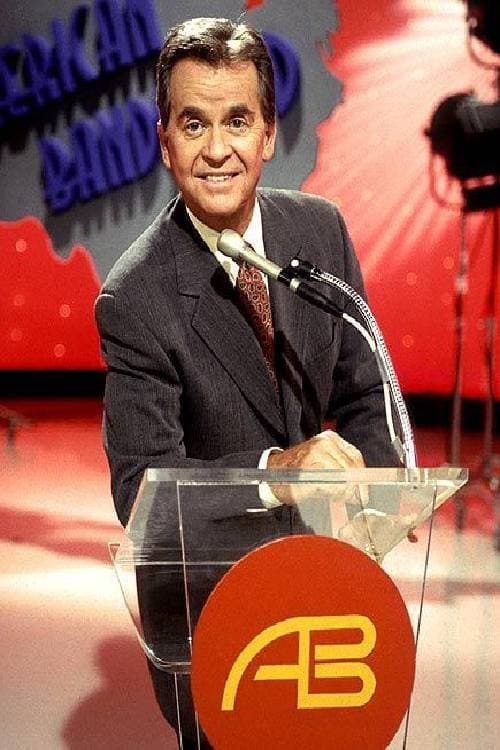
American Bandstand
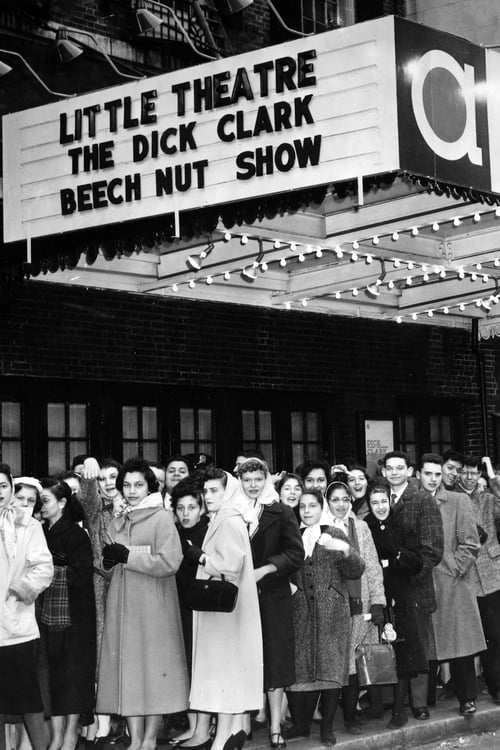
In 1952, Clark moved to Drexel Hill, Pennsylvania, a section of Upper Darby just outside of Philadelphia, where he took a job as a disc jockey at radio station WFIL, adopting the Dick Clark handle. WFIL had an affiliated television station (now WPVI) with the same call sign, which began broadcasting a show called Bob Horn's Bandstand in 1952. Clark was responsible for a similar program on the company's radio station and was a regular substitute host when Horn went on vacation. In 1956, Horn was arrested for drunk driving and was subsequently dismissed. On July 9, 1956, Clark became the show's permanent host.
Bandstand was picked up by the ABC television network, renamed American Bandstand, and debuted nationally on August 5, 1957. The show took off, due to Clark's natural rapport with the live teenage audience and dancing participants as well as the "clean-cut, non-threatening image" he projected to television audiences. As a result, many parents were introduced to rock and roll music. According to Hollywood producer Michael Uslan, "he was able to use his unparalleled communication skills to present rock 'n roll in a way that was palatable to parents." James Sullivan of Rolling Stone stated that "Without Clark, rock & roll in its infancy would have struggled mightily to escape the common perception that it was just a passing fancy."
In 1958, The Dick Clark Show was added to ABC's Saturday night lineup. By the end of year, viewership exceeded 20 million, and featured artists were "virtually guaranteed" large sales boosts after appearing. In a surprise television tribute to Clark in 1959 on This Is Your Life, host Ralph Edwards called him "America's youngest starmaker", and estimated the show had an audience of 50 million.
Clark moved the show from Philadelphia to Los Angeles in 1964. The move was related to the popularity of new "surf" groups based in southern California, including The Beach Boys and Jan and Dean. After moving to Los Angeles, the show became more diverse and featured more minorities. The show was notable for promoting desegregation in popular music and entertainment by prominently featuring black musicians and dancers. Prior to this point, the show had largely excluded black teenagers.
The show ran daily Monday through Friday until 1963, then weekly on Saturdays until 1988. Bandstand was briefly revived in 1989, with David Hirsch taking over hosting duties. By the time of its cancellation, the show had become the longest-running variety show in TV history.
In the 1960s, the show's emphasis changed from merely playing records to including live performers. During this period, many of the leading rock bands and artists of the 1960s had their first exposure to nationwide audiences. A few of the many artists introduced were The Supremes, Ike and Tina Turner, Smokey Robinson and the Miracles, The Beach Boys, Stevie Wonder, Prince, Simon and Garfunkel, Jerry Lee Lewis, Buddy Holly, Bobby Fuller, Johnny Cash, Sam Cooke, Fats Domino and Chubby Checker.
During an interview with Clark by Henry Schipper of Rolling Stone magazine in 1990, it was noted that "over two-thirds of the people who've been initiated into the Rock and Roll Hall of Fame had their television debuts on American Bandstand, and the rest of them probably debuted on other shows [they] produced." During the show's lifetime, it featured over 10,000 live performances, many by artists who were unable to appear anywhere else on TV, as the variety shows during much of this period were "antirock". Schipper points out that Clark's performers were shocking to general audiences:
The music establishment, and the adults in general, really hated rock and roll. Politicians, ministers, older songwriters and musicians foamed at the mouth. Frank Sinatra reportedly called Elvis Presley a "rancid-smelling aphrodisiac".
Clark was therefore considered to have a negative influence on youth and was well aware of that impression held by most adults:
I was roundly criticized for being in and around rock and roll music at its inception. It was the devil's music, it would make your teeth fall out and your hair turn blue, whatever the hell. You get through that.
In 2002, many of the bands he introduced appeared at the 50th anniversary special to celebrate American Bandstand. Clark noted during the special that American Bandstand was listed in the Guinness Book of Records as "the longest-running variety show in TV history." In 2010, American Bandstand and Clark himself were honored at the Daytime Emmy Awards. Hank Ballard, who wrote "The Twist", described Clark's popularity during the early years of American Bandstand:
The man was big. He was the biggest thing in America at that time. He was bigger than the president!
As a result of Clark's work on Bandstand, journalist Ann Oldenburg states "he deserves credit for doing something bigger than just putting on a show." Los Angeles Times writer Geoff Boucher goes further, stating that "with the exception of Elvis Presley, Clark was considered by many to be the person most responsible for the bonfire spread of rock 'n roll across the country in the late 1950s", making Clark a "household name". He became a "primary force in legitimizing rock 'n' roll", adds Uslan. Clark, however, simplified his contribution:
I played records, the kids danced, and America watched.
Shortly after becoming its host, Clark also ended the show's all-white policy by featuring black artists such as Chuck Berry. In time, blacks and whites performed on the same stage, and studio seating was desegregated. Beginning in 1959 and continuing into the mid-1960s, Clark produced and hosted the Caravan of Stars, a series of concert tours built upon the success of American Bandstand, which by 1959 had a national audience of 20 million. However, Clark was unable to host Elvis Presley, the Beatles or the Rolling Stones on either of his programs.
The reason for Clark's impact on popular culture has been partially explained by Paul Anka, a singer who appeared on the show early in his career: "This was a time when there was no youth culture—he created it. And the impact of the show on people was enormous." In 1990, a couple of years after the show had been off the air, Clark considered his personal contribution to the music he helped introduce:
My talent is bringing out the best in other talent, organizing people to showcase them and being able to survive the ordeal. I hope someday that somebody will say that in the beginning stages of the birth of the music of the fifties, though I didn't contribute in terms of creativity, I helped keep it alive.