




Denver ( DEN-vər) is the capital and most populous city of the U.S. state of Colorado. Officially a consolidated city and county, it is located in the South Platte River valley on the western edge of the High Plains, and is just east of the Front Range of the Rocky Mountains (Rockies). Denver is the 19th-most populous city in the United States and the fifth-most populous state capital, with a population of 715,522 at the 2020 census. The ten-county Denver metropolitan area, with 3.1 million residents, is the 19th-largest metropolitan area in the country and functions as the economic and cultural center of the broader Front Range Urban Corridor.
Denver's downtown district lies about 12 miles (19 kilometers) east of the foothills of the Rocky Mountains. Named after James W. Denver, the governor of the Kansas Territory at the time, Denver was founded at the confluence of Cherry Creek and the South Platte River in 1858 during the Gold Rush era. Nicknamed the "Mile High City" because its official elevation is exactly one mile (5280 feet or 1609.344 meters) above sea level, Denver grew beyond its prospecting origins to become the principal commercial and transportation hub for a broad region spanning the Great Plains and Rocky Mountain West. The 105th meridian west of Greenwich, the longitudinal reference for the Mountain Time Zone, passes directly through Denver Union Station.
As the most populous metropolitan area in a 560-mile (900 km) radius, Denver is a major cultural hub with a variety of museums and cultural institutions, including the Denver Performing Arts Complex, the Denver Art Museum and the Denver Museum of Nature and Science. Denver has professional sports teams in five leagues and hosts the headquarters of eight Fortune 500 firms.
Contents
History
The greater Denver area was inhabited by several Indigenous peoples such as Apaches, Utes, Cheyennes, Comanches, and Arapahoes. By the terms of the 1851 Treaty of Fort Laramie between the United States and various tribes including the Cheyenne and Arapaho, the United States unilaterally defined and recognized Cheyenne and Arapaho territory as ranging from the North Platte River in present-day Wyoming and Nebraska southward to the Arkansas River in present-day Colorado and Kansas. This definition specifically encompasses the land of modern Metropolitan Denver. But the discovery in November 1858 of gold in the Rocky Mountains in Colorado (then part of the western Kansas Territory) brought on a gold rush and a consequent flood of white immigration across Cheyenne and Arapaho lands. Colorado territorial officials pressured federal authorities to redefine and reduce the extent of Indian treaty lands.
In the summer of 1858, during the Pike's Peak Gold Rush, a group of gold prospectors from Lawrence, Kansas, established Montana City as a mining town on the banks of the South Platte River in what was then western Kansas Territory, on traditional lands of Cheyenne and Arapaho. This was the first historical settlement in what later became the city of Denver. But the site faded quickly, and by the summer of 1859 it was abandoned in favor of Auraria (named after the gold-mining town of Auraria, Georgia) and St. Charles City.
On November 22, 1858, General William Larimer and Captain Jonathan Cox, both land speculators from eastern Kansas Territory, placed cottonwood logs to stake a claim on the bluff overlooking the confluence of the South Platte River and Cherry Creek, across the creek from the existing mining settlement of Auraria, and on the site of the existing townsite of St. Charles. Larimer named the townsite Denver City to curry favor with Kansas Territorial Governor James W. Denver. Larimer hoped the town's name would help it be selected as the county seat of Arapahoe County, but unbeknownst to him, Governor Denver had already resigned from office. The location was accessible to existing trails and was across the South Platte River from the site of seasonal encampments of the Cheyenne and Arapaho. The site of these first towns is now occupied by Confluence Park near downtown Denver. Edward W. Wynkoop came to Colorado in 1859 and became one of the city's founders. Wynkoop Street in Denver is named after him.
Larimer, along with associates in the St. Charles City Land Company, sold parcels in the town to merchants and miners, with the intention of creating a major city that would cater to new immigrants. Denver City was a frontier town, with an economy based on servicing local miners with gambling, saloons, livestock, and goods trading. In the early years, land parcels were often traded for grubstakes or gambled away by miners in Auraria. In May 1859, Denver City residents donated 53 lots to the Leavenworth & Pike's Peak Express in order to secure the region's first overland wagon route. Offering daily service for "passengers, mail, freight, and gold", the Express reached Denver on a trail that trimmed westward travel time from twelve days to six. The Denver City, Kansas Territory, post office opened on February 11, 1860
Geography
Denver is in the center of the Front Range Urban Corridor, between the Rocky Mountains to the west and the High Plains to the east. Its topography consists of plains in the city center with hilly areas to the north, west, and south. The city's downtown district is about 12 mi (19 km) east of the foothills of the Rockies. It is the only state capital in the United States that is a consolidated city-county. At the 2020 United States census, the City and County of Denver had an area of 99,025 acres (400.739 km2), including 1,057 acres (4.276 km2) of water. The City and County of Denver is surrounded by three other counties: Adams County to the north and east, Arapahoe County to the south and east, and Jefferson County to the west.
Denver's nickname is the "Mile-High City", as its official elevation is one mile (5,280 ft; 1,609 m) above sea level, defined by the elevation of the spot of a benchmark on the steps of the State Capitol building. The elevation of the entire city ranges from 5,130 to 5,690 feet (1,560 to 1,730 m).
Neighborhoods
The City and County of Denver has 78 official neighborhoods used for planning and administration. The system of neighborhood boundaries and names dates to 1970 when city planners divided the city into 73 groups of one to four census tracts, called "statistical neighborhoods", most of which are unchanged since then.
Unlike some other cities, such as Chicago, Denver does not have official larger area designations. Colloquially, names such as Northside and Westside are still in use, but not well-known. Community planners have recently been using a set of 19 larger areas, all of which are groups of statistical neighborhoods, as part of the Area Planning process.
Denver also has a number of colloquial neighborhood names and boundaries reflecting how people in an area, or others such as community groups and real estate developers, have defined areas. Well-known non-administrative neighborhoods include the historic and trendy LoDo (short for "Lower Downtown"), part of the city's Union Station neighborhood; Uptown, straddling North Capitol Hill and City Park West; Curtis Park and RiNo ("River North"), both part of the Five Points neighborhood; Alamo Placita, the northern part of the Speer neighborhood; Park Hill, a partially successful example of intentional racial integration (South Park Hill is less than 1% Black); and Golden Triangle, in the Civic Center.
One of Denver's newer neighborhoods was built on the site of Stapleton International Airport, named after former Denver mayor Benjamin F. Stapleton, a member of the Ku Klux Klan. In 2020, the neighborhood's community association voted to change the name from Stapleton to Central Park (see more in Politics section below). The Central Park neighborhood itself has 12 "neighborhoods" within its boundaries.
Climate
Denver features a cool semi-arid climate (Köppen climate classification: BSk, Trewartha: BSao) with generally low humidity and around 3,100 hours of sunshine per year, although humid microclimates can be found nearby depending on exact location. These humid microclimates have the temperature of a hot-summer humid continental climate (Koppen: Dfa) or a humid subtropical climate (Koppen: Cfa) when using the 27 °F (−3 °C) isotherm. It has four distinct seasons and receives most of its precipitation from April through August. Due to its inland location on the High Plains, at the foot of the Rocky Mountains, the region can be subject to sudden changes in weather.
July is the warmest month, with an average high temperature of 89.9 °F (32.2 °C). Summers range from warm to hot with occasional, sometimes severe, afternoon thunderstorms and high temperatures reaching 90 °F (32 °C) on 38 days annually, and occasionally 100 °F (38 °C). December, the coldest month of the year, has an average daily high temperature of 44 °F (6.7 °C). Winters consist of periods of snow and very low temperatures alternating with periods of milder weather due to the warming effect of Chinook winds. In winter, daytime highs occasionally exceed 60 °F (16 °C), but they also often fail to reach 32 °F (0 °C) during periods of cold weather. Occasionally, daytime highs can even fail to rise above 0 °F (−18 °C) due to arctic air masses. On the coldest nights of the year, lows can fall to −10 °F (−23 °C) or below, with the city experiencing a low of −24 °F (−31 °C) on December 22, 2022, with a wind chill of −40 °F (−40 °C). Snowfall is common throughout the late fall, winter and early spring, averaging 53.5 inches (136 cm) for 1981–2010; but in the 2021 winter season, Denver began the month of December without any snowfall for the first time in history. The average window for measurable (≥0.1 in or 0.25 cm) snow is October 17 through April 27; however, measurable snowfall has occurred as early as September 4 and as late as June 3. Extremes in temperature range from −29 °F (−34 °C) on January 9, 1875, up to 105 °F (41 °C) as recently as June 28, 2018. Due to the city's high elevation and aridity, diurnal temperature variation is large throughout the year.
Tornadoes are rare west of the I-25 corridor; one notable exception was an F3 tornado that struck 4.4 miles (7.1 km) south of downtown on June 15, 1988. On the other hand, the suburbs east of Denver and the city's east-northeastern extension (Denver International Airport) can see a few tornadoes, often weak landspout tornadoes, each spring and summer, especially during June, with the enhancement of the Denver Convergence Vorticity Zone (DCVZ). The DCVZ, also known as the Denver Cyclone, is a variable vortex of storm-forming air flow usually found north and east of downtown, and which often includes the airport. Heavy weather from the DCVZ can disrupt airport operations. In a study looking at hail events in areas with a population of at least 50,000, Denver was found to be ranked 10th most prone to hail storms in the continental United States. In fact, Denver has had three of the top 10 costliest hailstorms in U.S. history, on July 11, 1990; July 20, 2009; and May 8, 2017.
Demographics
As of the 2020 census, the population of the City and County of Denver was 715,522, making it the 19th most populous U.S. city. The Denver–Aurora–Lakewood, CO Metropolitan Statistical Area had an estimated 2013 population of 2,697,476 and ranked as the 21st most populous U.S. metropolitan statistical area, and the larger Denver–Aurora–Boulder Combined Statistical Area had an estimated 2013 population of 3,277,309 and ranked as the 18th most populous U.S. metropolitan area. Denver is the most populous city within a radius centered in the city and of 550-mile (890 km) magnitude. Denverites is a term used for residents of Denver.
According to the 2020 census, the City and County of Denver contained 715,522 people and 301,501 households. The population density was 3,922.6 inhabitants per square mile (1,514.5 inhabitants/km2) including the airport. There were 338,341 housing units at an average density of 1,751 units per square mile (676 units/km2). However, the average density throughout most Denver neighborhoods tends to be higher. Without the 80249 zip code (47.3 sq mi, 8,407 residents) near the airport, the average density increases to around 5,470 per square mile.
2020 census
According to the 2020 United States census, the racial composition of Denver was as follows:
White: 60.6% (Non-Hispanic Whites: 54.3%)
Hispanic or Latino (of any race): 27.9%; Mexican Americans made up 20.3% of the city's population.
Black or African American: 8.9%
Asian: 3.9% (0.82% Vietnamese, 0.60% Chinese, 0.51% Indian, 0.33% Korean, 0.31% Filipino, 0.21% Japanese, 0.13% Burmese, 0.12% Nepalese, 0.11% Afghan, 0.09% Cambodian)
Native American: 1.5%
Native Hawaiian and Other Pacific Islander: 0.2%
Two or more races: 13.5%
Approximately 70.3% of the population (over five years old) spoke only English at home. An additional 23.5% of the population spoke Spanish at home. In terms of ancestry, 31.8% were Hispanic or Latino, 14.6% of the population were of German ancestry, 9.7% were of Irish ancestry, 8.9% were of English ancestry, and 4.0% were of Italian ancestry.
There were 250,906 households, of which 23.2% had children under the age of 18 living with them, 34.7% were married couples living together, 10.8% had a female householder with no husband present, and 50.1% were non-families. 39.3% of all households were made up of individuals, and 9.4% had someone living alone who was 65 years of age or older. The average household size was 2.27, and the average family size was 3.14.
Age distribution was 22.0% under the age of 18, 10.7% from 18 to 24, 36.1% from 25 to 44, 20.0% from 45 to 64, and 11.3% who were 65 years of age or older. The median age was 33 years. Overall there were 102.1 males for every 100 females. Due to a skewed sex ratio wherein single men outnumber single women, some protologists had nicknamed the city as Menver.
Languages
As of 2010, 72.28% (386,815) of Denver residents aged five and older spoke only English at home, while 21.42% (114,635) spoke Spanish, 0.85% (4,550) Vietnamese, 0.57% (3,073) African languages, 0.53% (2,845) Russian, 0.50% (2,681) Chinese, 0.47% (2,527) French, and 0.46% (2,465) German. In total, 27.72% (148,335) of Denver's population aged five and older spoke a language other than English.
Longevity
According to a report in the Journal of the American Medical Association in 2014, residents of Denver had a life expectancy of 80.02 years.
Religion
According to the Pew Research Center 53% of adults in the Denver Metro area identified as Christians in 2023-24. The most common denomination were Catholics (17%), followed by Mainline Protestants (15%) and Evangelical Protestants (10%). A total of 39% were not religiously affiliated. The mother church of the Catholic Archdiocese of Denver is the Cathedral Basilica of the Immaculate Conception in Denver. It is the seat of the Archbishop of Denver.
Economy
The Denver MSA had a gross metropolitan product of $311.9 billion in 2023, making it the 18th largest metro economy in the United States. Additionally, the 12-County Denver–Aurora, CO Combined Statistical Area had a GDP of $377.7 billion in 2023 while the broader Front Range had a GDP of $474.6 billion. Denver's economy is based partially on its geographic position and its connection to some of the country's major transportation systems. Because Denver is the largest city within 500 miles (800 km), it has become a natural location for storage and distribution of goods and services to the Mountain States, Southwest states, as well as all western states. Another benefit for distribution is that Denver is nearly equidistant from large cities of the Midwest, such as Chicago and St. Louis and some large cities of the West Coast, such as Los Angeles and San Francisco.
Over the years, the city has been home to other large corporations in the central United States, making Denver a key trade point for the country. Several well-known companies originated in or have relocated to Denver. William Ainsworth opened the Denver Instrument Company in 1895 to make analytical balances for gold assayers. Its factory is now in Arvada. Aimco is headquartered in Denver. Samsonite began in Denver in 1910 as Shwayder Trunk Manufacturing Company, but Samsonite closed its NE Denver factory in 2001, and moved its headquarters to Massachusetts after a change of ownership in 2006. Qwest Corporation, founded in Denver in 1911 as Mountain States Telephone & Telegraph Company, is now a part of Lumen Technologies (previously CenturyLink).
On October 31, 1937, Continental Airlines, now United Airlines, moved its headquarters to Stapleton Airport in Denver, Colorado (before United Airlines later moved to its current home in Chicago). Robert F. Six arranged to have the headquarters moved to Denver from El Paso, Texas because Six believed that the airline should have its headquarters in a large city with a potential base of customers. Continental later moved to Houston from Denver, but merged with United Airlines in 2013. Throughout that time, the company held a large employee base in the Denver area, which is home to the United Airlines Flight Training Center in the Central Park neighborhood. MediaNews Group purchased the Denver Post in 1987; the company is based in Denver. The Gates Corporation, the world's largest producer of automotive belts and hoses, was established in S. Denver in 1919. Russell Stover Candies made its first chocolate candy in Denver in 1923, but moved to Kansas City in 1969. The original Frontier Airlines began operations at Denver's old Stapleton International Airport in 1950; Frontier was reincarnated at DIA in 1994.
Top employers
As of the city's 2023 Comprehensive Annual Financial Report, Denver's top employers are:
Culture
Apollo Hall opened soon after the city's founding in 1859 and staged many plays for eager settlers. In the 1880s Horace Tabor built Denver's first opera house. After the start of the 20th century, city leaders embarked on a city beautification program that created many of the city's parks, parkways, museums, and the Municipal Auditorium, which was home to the 1908 Democratic National Convention and is now known as the Ellie Caulkins Opera House. Denver and the metropolitan areas around it continued to support culture.
In July 1982, Denver hosted the World Theatre Festival at the Denver Center for Performing Arts, which comprised a program of 114 performances of 18 plays, by theatre companies from 13 countries, across 25 days.
In 1988, voters in the Denver Metropolitan Area approved the Scientific and Cultural Facilities Tax (commonly known as SCFD), a 0.1% (1 cent per $10) sales tax that contributes money to various cultural and scientific facilities and organizations throughout the Metro area. The tax was renewed by voters in 1994 and 2004 and allowed the SCFD to operate until 2018. Ballot issue 4B in 2016 won approval 62.8 percent to 37.2 percent, by Denver metro area voters, to extend the SCFD sales tax until 2030.
Denver is home to a wide array of museums. Many are nationally recognized, including a new wing for the Denver Art Museum by architect Daniel Libeskind, the nation's second-largest Performing Arts Center after Lincoln Center in New York City, and bustling neighborhoods such as LoDo, filled with art galleries, restaurants, bars and clubs. Its neighborhoods also continue their influx of diverse people and businesses while the city's cultural institutions grow and prosper. The city acquired the estate of abstract expressionist painter Clyfford Still in 2004 and built a museum to exhibit his works near the Denver Art Museum. The Denver Museum of Nature and Science holds an aquamarine specimen valued at over $1 million, as well as specimens of the state mineral, rhodochrosite. Every September the Denver Mart, at 451 E. 58th Avenue, hosts a gem and mineral show. The state history museum, History Colorado Center, opened in April 2012. It features hands-on and interactive exhibits, artifacts and programs about Colorado history. It was named in 2013 by True West Magazine as one of the top-ten "must see" history museums in the country. History Colorado's Byers-Evans House Museum and the Molly Brown House are nearby.
Sports
Denver is home to a variety of sports teams and is one of 12 U.S. cities with teams from four major league sports (the Denver metro area is the smallest metropolitan area in the country to have a team in all four major sports leagues). Including Major League Soccer, it is also one of 10 U.S. cities to have five major sports teams.
The Denver Broncos of the National Football League have drawn crowds of over 70,000 since their origins in the early 1960s, and continue to draw fans today to their current home Empower Field at Mile High. The Broncos have sold out every home game (except for strike-replacement games) since 1970. The Broncos have advanced to eight Super Bowls and won back-to-back titles in 1997 and 1998, and won again in 2015. The team plans to build a new stadium in the Burnham Yard south of the Metropolitan State University of Denver campus by 2031. The Colorado Rockies were created as an expansion franchise in 1993 and have played at Coors Field since it opened in 1995. The Rockies advanced to the playoffs that year but were eliminated in the first round. In 2007, they advanced to the playoffs as a wild-card entrant and made it to the World Series for the first time but lost to the Boston Red Sox.
Denver has been home to two National Hockey League teams. The Colorado Rockies played from 1976 to 1982, but later moved to the New York metropolitan area to become the New Jersey Devils. The Colorado Avalanche joined in 1995, after relocating from Quebec City. While in Denver, they have won three Stanley Cups in 1996, 2001, and 2022. The Denver Nuggets joined the American Basketball Association in 1967 and the National Basketball Association in 1976. The Nuggets won their first NBA championship in 2023. The Avalanche and Nuggets have both played at Ball Arena (formerly known as Pepsi Center) since 1999. The Major League Soccer team Colorado Rapids play in Dick's Sporting Goods Park, an 18,000-seat soccer-specific stadium opened for the 2007 MLS season in the Denver suburb of Commerce City. The Rapids won the MLS Cup in 2010.
Denver has several other professional teams. In 2006, Denver established a Major League Lacrosse team, the Denver Outlaws. They play in Empower Field at Mile High. In 2006, the Denver Outlaws won the league championship in 2014, 2016, and 2018, but folded in 2020 during the MLL–PLL merger. The Colorado Mammoth of the National Lacrosse League play at Ball Arena and won championships in 2006 and 2022.
Parks and recreation
As of 2006, Denver had over 200 parks, from small pocket parks all over the city to the giant 314-acre (1.27 km2) City Park. Denver also has 29 recreation centers providing places and programming for resident's recreation and relaxation.
Many of Denver's parks were acquired from state lands in the late 19th and early 20th centuries. This coincided with the City Beautiful movement, and Denver mayor Robert Speer (1904–12 and 1916–18) set out to expand and beautify the city's parks. Reinhard Schuetze was the city's first landscape architect, and he brought his German-educated landscaping genius to Washington Park, Cheesman Park, and City Park among others. Speer used Schuetze as well as other landscape architects such as Frederick Law Olmsted Jr. and Saco Rienk DeBoer to design not only parks such as Civic Center Park, but many city parkways and tree-lawns. Cheesman Park neighbor the Denver Botanic Gardens displays the beauty and versatility of micro-climates within the semi-arid Denver Basin. All of these parks were fed with South Platte River water diverted through the city ditch.
In addition to the parks within Denver, the city acquired land for mountain parks starting in the 1910s. Over the years, Denver has acquired, built and maintained approximately 14,000 acres (57 km2) of mountain parks, including Red Rocks Park, which is known for its scenery and musical history revolving around the unique Red Rocks Amphitheatre. Denver also owns the mountain on which the Winter Park Resort ski area operates in Grand County, 67 miles (110 km) west of Denver. City parks are important places for Denverites and visitors, inciting controversy with every change. Denver continues to grow its park system with the development of many new parks along the Platte River through the city, and with Central Park and Bluff Lake Nature Center in the Central Park neighborhood redevelopment. All of these parks are important gathering places for residents and allow what was once a dry plain to be lush, active, and green. Denver is also home to a large network of public community gardens, most of which are managed by Denver Urban Gardens, a non-profit organization.
Since 1974, Denver and the surrounding jurisdictions have rehabilitated the urban South Platte River and its tributaries for recreational use by hikers and cyclists. The main stem of the South Platte River Greenway runs along the South Platte 35 miles (56 km) into Adams County in the north. The Greenway project is recognized as one of the best urban reclamation projects in the U.S., winning, for example, the Silver Medal Rudy Bruner Award for Urban Excellence in 2001.
Government
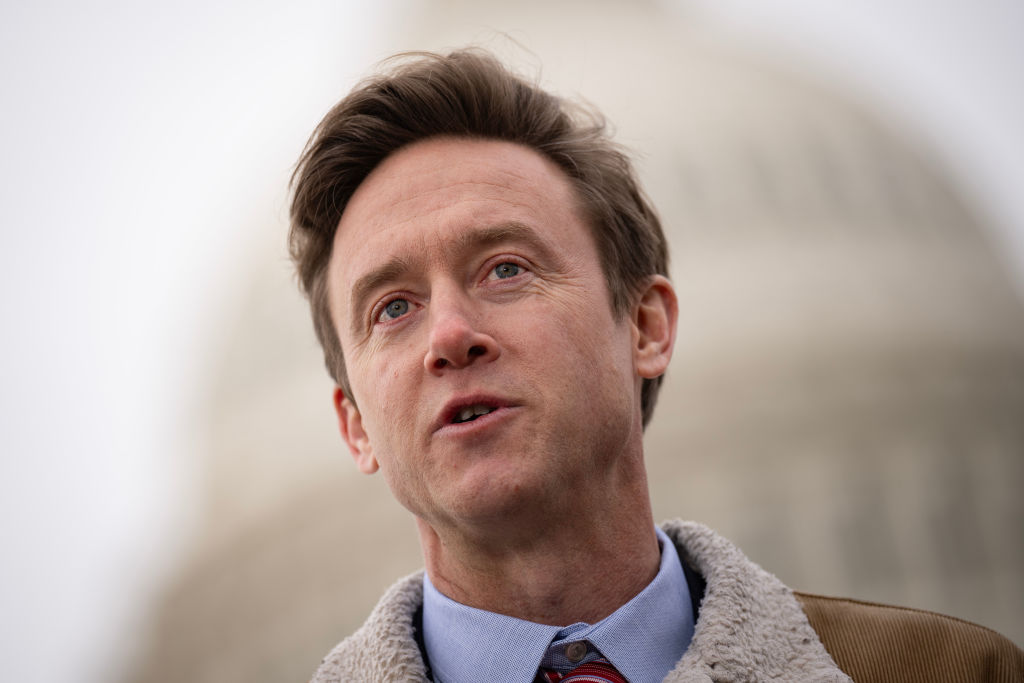
Denver is a consolidated city-county with a mayor elected on a nonpartisan ballot, a 13-member city council, and an auditor. The Denver City Council is elected from 11 districts with two at-large council members and is responsible for passing and changing all laws, resolutions, and ordinances, usually after a public hearing. The city council can also call for misconduct investigations of Denver's departmental officials. All elected officials have four-year terms, with a maximum of three terms. The current mayor is Mike Johnston.
Denver has a strong mayor/weak city council government. The mayor can approve or veto any ordinances or resolutions approved by the council, makes sure all contracts with the city are kept and performed, signs all bonds and contracts, is responsible for the city budget, and can appoint people to various city departments, organizations, and commissions. The council can override the mayor's veto with a nine votes. The city budget must be approved and can be changed by a simple majority vote of the council. The auditor checks all expenditures and may refuse to allow specific ones, usually for financial reasons.
The Denver Department of Safety oversees three branches: the Denver Police Department, Denver Fire Department, and Denver Sheriff Department. The Denver County Court is an integrated Colorado County Court and Municipal Court and is managed by Denver instead of the state.
Politics
While Denver elections are nonpartisan, Democrats have long dominated the city's politics; most citywide officials are known to be registered with the Democratic Party. The mayor's office has been occupied by a Democrat since the 1963 municipal election. All the city's seats in the state legislature are held by Democrats.
In statewide elections, the city also tends to favor Democrats, though Republicans were occasionally competitive until the turn of the millennium. The last Republican to win Denver in a gubernatorial election was John A. Love in 1970 by a narrow majority. Bill Owens in 2002 remains the last Republican governor to receive at least 40% of Denver's vote. The last Republican Senator to carry Denver was William L. Armstrong during his 1984 landslide. The last statewide Republican officeholder to carry Denver was Secretary of State Victoria Buckley in 1994 by 1.2% margin; she was, at the time, the highest ranking African-American Republican woman in the United States.
In federal elections, Denver is a Democratic stronghold. It has supported a Democrat for president in every election since 1984. Despite then-president Ronald Reagan's landslide that year both nationally and in Colorado, Democrat Walter Mondale won Denver by a margin of 2.32%, and since then the party has increased its margin in almost every election. At the federal level, Denver is the heart of Colorado's 1st congressional district, which includes all of Denver and parts of Arapahoe County. It is the most Democratic district in the Mountain West and has been in Democratic hands for all but two terms since 1933. It is currently represented by Democrat Diana DeGette. A portion of southeast Denver, roughly half of the Indian Creek neighborhood and a small part of the Virginia Village neighborhood, is in Colorado's 6th congressional district, represented by Democrat Jason Crow.
Benjamin F. Stapleton was the mayor of Denver for two periods, from 1923 to 1931 and from 1935 to 1947. He was responsible for many civic improvements, notably during his second term, when he had access to funds and manpower from the New Deal. During this time, the park system was considerably expanded and the Civic Center completed. His signature project was the construction of Denver Municipal Airport, which began in 1929 amid heavy criticism. It was later renamed Stapleton International Airport in his honor. Today, the airport has been replaced by a neighborhood initially named Stapleton. In 2020, during the George Floyd protests, because of Stapleton's demonstrated racism and prominent membership in the Ku Klux Klan, neighborhood residents changed the name to Central Park.
Taxes
The City and County of Denver levies an occupational privilege tax (OPT or head tax) on employers and employees.
If any employee performs work in the city limits and is paid over $500 for that work in a single month, the employee and employer are both liable for the OPT regardless of where the main business office is located or headquartered.
The employer is liable for $4 per employee per month and the employee is liable for $5.75 per month.
It is the employer's responsibility to withhold, remit, and file the OPT returns. If an employer does not comply, the employer can be held liable for both portions of the OPT as well as penalties and interest.
Education
Denver Public Schools (DPS) is the public school system in all of Denver. It educates approximately 92,000 students in 92 elementary schools, 44 K-8 schools, 34 middle schools, 18 high schools, and 19 charter schools. The first school of what is now DPS was a log cabin that opened in 1859, which later became East High School. East High School, along with the other three directional high schools (West, North, and South), made up the first four high schools in Denver. The district boundaries are coextensive with the city limits. The Cherry Creek School District serves some areas with Denver postal addresses that are outside the city limits.
Denver's many colleges and universities range in age and study programs. Three major public schools constitute the Auraria Campus: the University of Colorado Denver, Metropolitan State University of Denver, and Community College of Denver. The private University of Denver was the first institution of higher learning in the city and was founded in 1864. Other prominent Denver higher education institutions include Johnson & Wales University, Catholic (Jesuit) Regis University, and the city has Roman Catholic and Jewish institutions, as well as a health sciences school. In addition to those schools within the city, there are a number of schools throughout the surrounding metro area.
Media
The Denver metropolitan area is served by a variety of media outlets in print, radio, television, and the Internet.
Television stations
Denver is the 16th-largest market in the country for television, according to the 2009–2010 rankings from Nielsen Media Research.
KWGN-TV, channel 2, a CW O&O station owned by Nexstar Media Group, who also owns Fox affiliate KDVR 31. KWGN is run by KDVR management and is Colorado's first TV station, on the air since July 1952.
KCDO-TV, channel 3, an independent station owned by the E. W. Scripps Company, who also own KMGH-TV as part of a duopoly.
KCNC-TV, channel 4, a CBS O&O station.
KRMA-TV, channel 6, the flagship of Rocky Mountain PBS, a state network of five public TV stations throughout Colorado.
KMGH-TV, channel 7, an ABC affiliate owned by the E. W. Scripps Company, previously owned by the McGraw-Hill company for 40 years prior to 2012. The station is part of a duopoly with KCDO-TV.
KUSA-TV, channel 9, an NBC affiliate owned by Tegna, who also owns KTVD 20, a MyNetworkTV affiliate.
KBDI-TV, channel 12, a secondary PBS member station.
KCEC, 14, a Univision affiliate.
KDEN-TV, channel 25, a Telemundo O&O station.
KPJR-TV, channel 38, a TBN O&O station.
KTFD-TV, channel 50, a UniMás affiliate.
KETD, channel 53, an Estrella TV O&O station.
Radio stations
Denver is also served by over 40 AM and FM radio stations, covering a wide variety of formats and styles. Denver–Boulder radio is the No. 19 market in the United States, according to the Spring 2011 Arbitron ranking (up from No. 20 in Fall 2009). For a list of Denver radio stations, see List of radio stations in Colorado.
After continued rivalry between Denver's two main newspapers, The Denver Post and the Rocky Mountain News, the papers merged operations in 2001 under a joint operating agreement that formed the Denver Newspaper Agency. This arrangement lasted until February 2009 when the E. W. Scripps Company, the owner of the Rocky Mountain News, closed the paper. There are also several alternative or localized newspapers published in Denver, including the Westword, Law Week Colorado, Out Front Colorado, and the Intermountain Jewish News. Denver is home to multiple regional magazines such as 5280, which takes its name from the city's mile-high elevation (5,280 feet or 1,609 meters). The Colorado Times News is a Korean-language publication based in Denver.
Transportation
City streets
Most of Denver has a straightforward street grid oriented to the four cardinal directions. Blocks are usually identified in hundreds from the median streets, identified as "00", which are Broadway (the east–west median, running north–south) and Ellsworth Avenue (the north–south median, running east–west). Colfax Avenue, a major east–west artery through Denver, is 15 blocks (1500) north of the median. Avenues north of Ellsworth are numbered (with the exception of Colfax Avenue and several others, such as Martin Luther King, Jr. Blvd and Montview Blvd.), while avenues south of Ellsworth are named.
There is also an older downtown grid system that was designed to be parallel to the confluence of the South Platte River and Cherry Creek. Most of the streets downtown and in LoDo run northeast–southwest and northwest–southeast. This system has an unplanned benefit for snow removal; if the streets were in a normal N–S/E–W grid, only the N–S streets would receive sunlight. With the grid oriented to the diagonal directions, the NW–SE streets receive sunlight to melt snow in the morning and the NE–SW streets receive it in the afternoon. This idea was from Henry Brown the founder of the Brown Palace Hotel. There is now a plaque across the street from the Brown Palace Hotel that honors this idea. The NW–SE streets are numbered, while the NE–SW streets are named. The named streets start at the intersection of Colfax Avenue and Broadway with the block-long Cheyenne Place. The numbered streets start underneath the Colfax and I-25 viaducts. There are 27 named and 44 numbered streets on this grid. There are also a few vestiges of the old grid system in the normal grid, such as Park Avenue, Morrison Road, and Speer Boulevard. Larimer Street, named after William Larimer Jr., the founder of Denver, which is in the heart of LoDo, is the oldest street in Denver.
All roads in the downtown grid system are streets (e.g., 16th Street, Stout Street), except for the five NE–SW roads nearest the intersection of Colfax Avenue and Broadway: Cheyenne Place, Cleveland Place, Court Place, Tremont Place and Glenarm Place. Roads outside that system that travel east–west are designated "avenues" and those that travel north–south are designated "streets" (e.g., Colfax Avenue, Lincoln Street). Boulevards are higher capacity streets and travel any direction (more commonly north and south). Smaller roads are sometimes referred to as places, drives (though not all drives are smaller capacity roads; some are major thoroughfares), or courts. Most streets outside the area between Broadway and Colorado Boulevard are organized alphabetically from the city's center.
Cycling and micromobility
Some Denver streets have bicycle lanes, leaving a patchwork of disjointed routes throughout the city. There are over 850 miles (1,370 km) of paved, off-road, bike paths in Denver parks and along bodies of water, like Cherry Creek and the South Platte. This allows for a significant portion of Denver's population to be bicycle commuters and has led to Denver being known as a bicycle-friendly city. Some residents strongly oppose bike lanes, which has caused some plans to be watered down or nixed.
The League of American Bicyclists rated Colorado as the sixth most bicycle-friendly state in the nation for 2024. This is due in large part to Front Range cities like Boulder, Fort Collins and Denver placing an emphasis on legislation, programs and infrastructure developments that promote cycling as a mode of transportation. Walk Score has rated Denver as the fourth most bicycle-friendly large city in the United States. According to data from the 2011 American Community Survey, Denver ranks 6th among US cities with populations over 400,000 in terms of the percentage of workers who commute by bicycle at 2.2% of commuters.
B-Cycle – Denver's citywide bicycle sharing program – was the largest in the United States at the time of its launch in 2010, boasting 400 bicycles. B-Cycle ridership peaked in 2014, then steadily declined. The program announced it would cease operations at the end of January 2020. The city announced plans to seek one or more new contractors to run a bike-share program starting mid-2020.
In 2018, e-scooter services began to place scooters in Denver. Hundreds of unsanctioned LimeBike and Bird electric scooters appeared on Denver streets in May, causing an uproar. In June, the city ordered the companies to remove them and acted quickly to create an official program, including a requirement that scooters be left at RTD stops and out of the public right-of-way. Lime and Bird scooters then reappeared in late July, with limited compliance. Uber's Jump e-bikes arrived in late August, followed by Lyft's nationwide electric scooter launch in early September. Lyft says that it will, each night, take the scooters to the warehouse for safety checks, maintenance and charging. Additionally, Spin and Razor each were permitted to add 350 scooters.
Walkability
2017 rankings by Walk Score placed Denver twenty-sixth among 108 U.S. cities with a population of 200,000 or greater. City leaders have acknowledged the concerns of walkability advocates that Denver has serious gaps in its sidewalk network. The 2019 "Denver Moves: Pedestrians" plan outlines a need for approximate $1.3 billion in sidewalk funding, plus $400 million for trails. In 2022, Denver voters passed Initiative 307, dubbed "Denver Deserves Sidewalks", to complete sidewalk construction and repair by shifting responsibility for sidewalk maintenance from property owners to the city and imposing a new fee on property owners based on the length of a property's sidewalk frontage, although the measure may be revised in the course of implementation.
Modal characteristics
In 2015, 9.6 percent of Denver households lacked a car, and in 2016, this was virtually unchanged (9.4 percent). The national average was 8.7 percent in 2016. Denver averaged 1.62 cars per household in 2016, compared to a national average of 1.8.
The average amount of time people spend commuting on public transit in Denver and Boulder, Colorado—for example, to and from work, on a weekday—is 77 minutes; 31% of public transit riders ride for more than two hours every day. The average amount of time people wait at a stop or station for public transit is 14 minutes, while 25% of riders wait for over 20 minutes, on average, every day. The average distance people usually ride in a single trip with public transit is 6.96 miles (11.20 km), while 31% travel over 7.46 miles (12.01 km) in a single direction.
Freeways and highways
Denver lies at the junction of two major interstate freeways: I-25, which runs north–south from New Mexico to Wyoming; and I-70, which runs from Utah in the west to the Baltimore area in the east. The problematic intersection of the two interstates is referred to locally as "the mousetrap" because, when viewed from the air, the interchange (and subsequent vehicles) resemble mice in a large trap. The southern 19 miles (31 km) of I-25 through Denver underwent a major expansion, named T-REX (Transportation Expansion Project), that was completed in 2006 and comprised new lanes, reconstructed interchanges, and a parallel light rail line. Several minor routes also cross through portions of Denver: I-76 runs to the north of the city and connects the region to I-80 in Nebraska; I-225 serves as an eastern bypass of Denver through Aurora; and I-270 connects I-25 to I-76 and I-70.
The city is traversed by other highways that use city streets or short freeway sections. These include US 6, also known as the 6th Avenue Freeway; US 36, which connects Denver to Boulder; and US 287 on Federal Boulevard. Colfax Avenue is a major east–west street that crosses Denver and Aurora for 27 miles (43 km) and is part of US 40. The region has an outer beltway, State Highway 470, that was originally planned to be built under the Interstate Highway System. It was canceled due to public opposition and partially built beginning in the 1980s as a toll road that serves as the southern and eastern bypass of Denver.
Mass transportation
Mass transportation throughout the Denver metropolitan area is managed and coordinated by the Regional Transportation District (RTD). RTD operates more than 100 bus routes serving over 9,700 bus stops in 38 municipal jurisdictions in eight counties around the Denver and Boulder metropolitan areas. Additionally, RTD operates ten rail lines, the A, B, D, E, G, H, L, N, R, and W, with a total of 113 miles (182 km) of track, serving 77 stations, 35 of which are located within the City of Denver proper. The D, E, H, L, R, and W Lines are light rail while the A, B, G, and N Lines are commuter rail.
FasTracks is a commuter rail, light rail, and bus expansion project approved by voters in 2004, which will serve neighboring suburbs and communities. The W Line opened in April 2013 serving Golden/Federal Center. The commuter rail A Line from Denver Union Station to Denver International Airport opened in April 2016 with ridership exceeding RTD's early expectations. The light rail R Line through Aurora opened in February 2017. It was followed by two more commuter rail lines: the G Line to the suburb of Arvada on April 26, 2019; and the N Line to Commerce City and Thornton on September 21, 2020.
An express bus service, known as the Flatiron Flyer, serves to connect Boulder and Denver. The service, billed as bus rapid transit, has been accused of project creep for failing to meet the majority of BRT requirements, including level boarding and all-door entry. A commuter rail connection to Boulder and its suburb of Longmont, also part of the FasTracks ballot initiative and an extension of the B Line, is planned to be finished by RTD, but no construction funds have yet been identified prior to 2040. A new bus rapid transit system, LYNX, is scheduled to begin operation in 2028 on Colfax Avenue. It will feature bus lanes, dedicated stations, and service at a daytime frequency of every four minutes on weekdays and seven minutes on weekends.
The Colorado Department of Transportation runs Bustang, a bus system that offers weekday and weekend service connecting Denver with many locations across the state, including Grand Junction, Colorado Springs, Fort Collins, and Gunnison. Greyhound Lines, the intercity bus operator, has a major hub in Denver, with routes to New York City, Portland, Reno, Las Vegas, and their headquarters, Dallas. Subsidiary Autobuses Americanos provides service to El Paso. Allied bus operators Express Arrow, and Burlington Trailways provide service to Billings, Omaha, Indianapolis, and Alamosa.
Intercity trains
Amtrak, the national passenger rail system, provides service to Denver, operating its California Zephyr daily in both directions between Chicago and Emeryville, California, across the bay from San Francisco. Amtrak Thruway service operated by private bus companies links the Denver station with Rocky Mountain points. In 2017 the Colorado legislature reinvigorated studies of passenger rail service along the Front Range, potentially connecting Denver to Fort Collins and Pueblo, or further to Amtrak connections in Cheyenne, Wyoming and Trinidad. Front Range Passenger Rail is a current proposal (as of 2023) to link the cities from Pueblo in the south, north to Fort Collins and possibly to Cheyenne, Wyoming.
At Albuquerque, New Mexico, Denver Thruway connections are made daily with the Amtrak Southwest Chief. Additionally, the Ski Train operated on the former Denver & Rio Grande Western Railroad, which took passengers between Denver and the Winter Park Ski Resort, but it is no longer in service. The Ski Train made its final run to Winter Park on March 29, 2009. The service was revived on a trial basis in 2016 with a great amount of local fanfare. Further development of a mountain corridor rail option, though publicly popular, has been met with resistance from politicians, namely the director of Colorado Department of Transportation. The Ski Train did return to service under Amtrak with the name "Winter Park Express" in 2017 and greatly expanded service for the 2024-2025 ski season, doubling capacity and increasing service to run Thursday-Monday during the winter ski seasons. The Colorado Department of Transportation plans to eventually expand service to Steamboat Springs and Craig as part of the Mountain Rail project.
Denver's early years as a major train hub of the west are still very visible today. Trains stop in Denver at historic Union Station, where travelers can access RTD's 16th Street Free MallRide or use light rail to tour the city. Union Station will also serve as the main juncture for rail travel in the metro area, at the completion of FasTracks. The city also plans to invest billions to bringing frequent public transit within one-fourth of a mile of most of its residents.
Airports
Denver International Airport (IATA: DEN, ICAO: KDEN), commonly known as DIA, serves as the primary airport for the Front Range Urban Corridor surrounding Denver. DIA is 18.6 miles (30 km) east-northeast of the Colorado State Capitol and opened in 1995. DIA is the 3rd busiest airport in the world with 58.8 million passengers in 2021; it had the 5th highest number of passengers in the U.S., 61 million, in the pre-pandemic year 2019. It is the largest airport by land area in the United States. DIA serves as a major hub for United Airlines, is the headquarters and primary hub for Frontier Airlines, and is a major focus city and the fastest-growing market for Southwest Airlines.
Three general aviation airports serve the Denver area. Rocky Mountain Metropolitan Airport (KBJC) is 13.7 miles (22 km) north-northwest, Centennial Airport (KAPA) is 13.7 miles (22 km) south-southeast, and Colorado Air and Space Port (KCFO), formerly Front Range Airport, is 23.7 miles (38 km) east of the state capitol. Centennial Airport also offers limited commercial airline service, on two cargo airlines.
In the past, Denver has been home to several other airports that are no longer operational. Stapleton International Airport was closed in 1995 when it was replaced by DIA. Lowry Air Force Base was a military flight training facility that ceased flight operations in 1966, with the base finally closing in 1994. Both Stapleton and Lowry have since been redeveloped into primarily residential neighborhoods. Buckley Space Force Base is the only military facility in the Denver area.
Twin towns – sister cities
Denver's relationship with Brest, France, began in 1948, making it the second-oldest sister city in the United States. In 1947, Amanda Knecht, a teacher at East High School, visited World War II–ravaged Brest. When she returned, she shared her experiences in the city with her students, and her class raised $32,000 to help rebuild the children's wing of Brest's hospital. The gift led to the development of the sister city program with Brest. There were serious efforts in the early 2000s, in both Denver and Sochi, Russian Federation, to establish sister-city ties, but the negotiations did not come to fruition.
Since then, Denver has established relationships with additional sister cities: