1967–1977: Early career and feature debut
Back in the United States, Lynch returned to Virginia. Because his parents had moved to Walnut Creek, California, he stayed with his friend Toby Keeler for a while. He decided to move to Philadelphia and enroll at the Pennsylvania Academy of the Fine Arts, after advice from Fisk, who was already enrolled there. He preferred this college to his previous school in Boston, saying, "In Philadelphia there were great and serious painters, and everybody was inspiring one another and it was a beautiful time there." He recalled that Philadelphia had "a great mood—factories, smoke, railroads, diners, the strangest characters and the darkest night. I saw vivid images—plastic curtains held together with Band-Aids, rags stuffed in broken windows." He was influenced by the Irish painter Francis Bacon. In Philadelphia, Lynch began a relationship with a fellow student, Peggy Reavey, whom he married in 1967. The next year, their daughter Jennifer was born. Peggy later said Lynch "definitely was a reluctant father, but a very loving one. Hey, I was pregnant when we got married. We were both reluctant." As a family, they moved to Philadelphia's Fairmount neighborhood, where they bought a 12-room house for the relatively low price of $3,500 (equivalent to $33,800 in 2025) due to the area's high crime and poverty rates. Lynch later said:
We lived cheap, but the city was full of fear. A kid was shot to death down the street ... We were robbed twice, had windows shot out and a car stolen. The house was first broken into only three days after we moved in ... The feeling was so close to extreme danger, and the fear was so intense. There was violence and hate and filth. But the biggest influence in my whole life was that city.
Meanwhile, to help support his family, Lynch took a job printing engravings. At the Pennsylvania Academy, Lynch made his first short film, Six Men Getting Sick (Six Times) (1967). He had first come up with the idea when he developed a wish to see his paintings move, and he began discussing creating animation with an artist named Bruce Samuelson. When this project never came about, Lynch decided to work on a film alone and purchased the cheapest 16mm camera he could find. Taking one of the academy's abandoned upper rooms as a workspace, he spent $150, which at the time he felt was a lot of money, to produce Six Men Getting Sick. Calling the film "57 seconds of growth and fire, and three seconds of vomit", Lynch played it on a loop at the academy's annual end-of-year exhibit, where it shared joint-first prize with a painting by Noel Mahaffey. This led to a commission from one of his fellow students, the wealthy H. Barton Wasserman, who offered him $1,000 (equivalent to $9,300 in 2025) to create a film installation in his home. Spending $478 of that on the second-hand Bolex camera "of [his] dreams", Lynch produced a new animated short but, upon getting the film developed, realized that the result was a blurred, frameless print. He later said, "So I called up [Wasserman] and said, 'Bart, the film is a disaster. The camera was broken and what I've done hasn't turned out.' And he said, 'Don't worry, David, take the rest of the money and make something else for me. Just give me a print.' End of story."
With his leftover money, Lynch decided to experiment with a mix of animation and live action, producing the four-minute short The Alphabet (1968). The film starred Lynch's wife Peggy as a character known as The Girl, who chants the alphabet to a series of images of horses before dying at the end by hemorrhaging blood all over her bed sheets. Adding a sound effect, Lynch used a broken Uher tape recorder to record the sound of Jennifer crying, creating a distorted sound that Lynch found particularly effective. Later describing what had inspired him, Lynch said, "Peggy's niece was having a bad dream one night and was saying the alphabet in her sleep in a tormented way. So that's sort of what started 'The Alphabet' going. The rest of it was just subconscious."
Learning about the newly founded American Film Institute, which gave grants to filmmakers who could support their application with a prior work and a script for a new project, Lynch decided to submit a copy of The Alphabet along with a script he had written for a new short film, The Grandmother, that would be almost entirely live action. The institute agreed to help finance the work, initially offering him $5,000 out of his requested budget of $7,200, but later granting him the additional $2,200. Starring people he knew from both work and college and filmed in his own house, The Grandmother featured a neglected boy who "grows" a grandmother from a seed to care for him. The film critics Michelle Le Blanc and Colin Odell wrote, "this film is a true oddity but contains many of the themes and ideas that would filter into his later work, and shows a remarkable grasp of the medium".
Lynch left the Pennsylvania Academy of the Fine Arts after three semesters and in 1970 moved with his wife and daughter to Los Angeles, where he began studying filmmaking at the AFI Conservatory, a place he later called "completely chaotic and disorganized, which was great ... you quickly learned that if you were going to get something done, you would have to do it yourself. They wanted to let people do their thing." He began writing a script for a proposed work, Gardenback, that had "unfolded from this painting I'd done". In this venture he was supported by a number of figures at the Conservatory, who encouraged him to lengthen the script and add more dialogue, which he reluctantly agreed to do. All the interference on his Gardenback project made him fed up with the Conservatory and led him to quit after returning to start his second year and being put in first-year classes. AFI dean Frank Daniel asked Lynch to reconsider, believing that he was one of the school's best students. Lynch agreed on the condition that he could create a project that would not be interfered with. Feeling that Gardenback was "wrecked", he set out on a new film, Eraserhead.
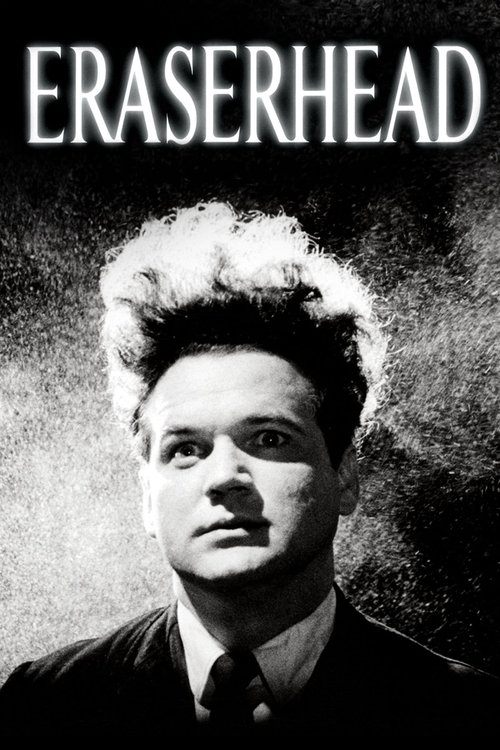
Eraserhead was planned to be about 42 minutes long (it ended up being 89 minutes), its script was only 21 pages, and Lynch was able to create the film without interference. He recalled its origin: "My original image was of a man's head bouncing on the ground, being picked up by a boy and taken to a pencil factory. I don't know where it came from." Filming began on May 29, 1972, at night in some abandoned stables, allowing the production team (which was largely Lynch and some of his friends, including Sissy Spacek, Jack Fisk, cinematographer Frederick Elmes, and sound designer Alan Splet) to set up a camera room, green room, editing room, sets, as well as a food room and a bathroom. The AFI gave Lynch a $10,000 grant, but it was not enough to complete the film, and under pressure from studios after the success of the relatively cheap feature film Easy Rider, it was unable to give him more. Lynch was then supported by a loan from his father and money that he earned from a paper route that he took up, delivering The Wall Street Journal. Not long into Eraserhead's production, Lynch and Peggy amicably separated and divorced, and he began living full-time on set. In 1977, Lynch married Jack Fisk's sister Mary Fisk. In 1973, Lynch's sister suggested he try Transcendental Meditation. It proved a revelation, and Lynch said he had never "missed a session since: twenty minutes, twice a day."
Due to financial problems, the filming of Eraserhead was haphazard, regularly stopping and starting again. During one such break in 1974, Lynch made The Amputee, a one-shot film about two minutes long. He proposed that he make The Amputee to present to AFI to test two different types of film stock.
Eraserhead was finally finished in 1976. Lynch said that not a single reviewer of the film understood it as he intended. Filmed in black and white, Eraserhead tells the story of Henry (Jack Nance), a quiet young man, living in a dystopian industrial wasteland, whose girlfriend gives birth to a deformed baby whom she leaves in his care. It was heavily influenced by the fearful mood of Philadelphia, and Lynch has called it "my Philadelphia Story". Lynch tried to get it entered into the Cannes Film Festival, but while some reviewers liked it, others felt it was awful, and it was not selected for screening. Reviewers from the New York Film Festival also rejected it, but it screened at the Los Angeles Film Festival, where Ben Barenholtz, the distributor of the Elgin Theater, heard about it. Barenholtz was very supportive of the movie, helping to distribute it around the United States in 1977. Eraserhead subsequently became popular on the midnight movie underground circuit, and was later called one of the most important midnight movies of the 1970s, along with Night of the Living Dead, El Topo, Pink Flamingos, The Rocky Horror Picture Show, and The Harder They Come. Stanley Kubrick said it was one of his all-time favorite films.