Early career and Harry Potter (2001–2011)
Radcliffe first expressed a desire to act at age five. After one of his mother's casting agent friends secured him an audition, he made his acting debut at age ten in BBC One's two-part adaptation of the Charles Dickens novel David Copperfield (1999), portraying the title character as a young boy. He made his film debut in The Tailor of Panama (2001), an American film based on John le Carré's 1996 spy novel, which was a moderate commercial success.
In 2000, producer David Heyman met Radcliffe while he was at the theatre with his father, a well-known literary agent whom Heyman was friends with. He asked him to audition for the role of Harry Potter for the film adaptation of Harry Potter and the Philosopher's Stone, the best-selling book by British author J. K. Rowling. Rowling had been searching for an unknown British actor to personify the character, and the film's director Chris Columbus recalled thinking, "This is what I want. This is Harry Potter" after he saw a video of the young actor in David Copperfield. Eight months later, following several auditions, Radcliffe was selected to play the part. Rowling endorsed the selection, saying: "I don't think Chris Columbus could have found a better Harry." Radcliffe's parents originally turned down the offer, as they had been told that it would involve six films shot in Los Angeles. Warner Bros. instead offered Radcliffe a two-film contract with shooting in the UK; Radcliffe was unsure at the time if he would act in more than two Harry Potter films.
The release of Harry Potter and the Philosopher's Stone took place in 2001. Radcliffe received a seven-figure salary for the lead role, but asserted that the fee was "not that important" to him; his parents chose to invest the money for him. The film was highly popular and was met with positive reviews, and critics took notice of Radcliffe: "Radcliffe is the embodiment of every reader's imagination. It is wonderful to see a young hero who is so scholarly looking and filled with curiosity and who connects with very real emotions, from solemn intelligence and the delight of discovery to deep family longing," wrote Bob Graham of the San Francisco Chronicle.
A year later, Radcliffe starred in Harry Potter and the Chamber of Secrets, the second installment of the series. Reviewers were positive about the lead actors' performances but had polarising opinions on the film overall. Harry Potter and the Prisoner of Azkaban (2004) was the third film in the series. Radcliffe's performance was criticised by The New York Times film critic A. O. Scott, who felt that co-star Emma Watson had to carry him with her performance. Harry Potter and the Goblet of Fire (2005) was the second-highest grossing Harry Potter film at that point, and Radcliffe singled out the humour as a reason for the film's creative success.
The future of the Harry Potter franchise was put into question when Radcliffe, Watson, and co-star Rupert Grint hesitated to sign on to continue their roles. Around this time, Radcliffe, Watson and Grint were offered the opportunity to star in a remake The Wizard of Oz, which they all turned down with Radcliffe saying: "I was like a karate kicking cowardly lion and I remember I was like 14 or 15 and I was like, ‘I don’t know a lot about the world, but this is a bad idea and it should not be made." By March 2007, Radcliffe decided to sign on for the final Harry Potter films; his signing put an end to weeks of press "speculation that he would be denied the role due to his involvement in Equus", in which he had performed nude onstage. Radcliffe reprised the role of Harry for the fifth time in Harry Potter and the Order of the Phoenix (2007). Radcliffe stated that director David Yates and co-star Imelda Staunton made Order of the Phoenix the "most fun" film to work on in the series. His performance earned him several award nominations, and he received the 2008 National Movie Award for "Best Male Performance". Radcliffe, Grint, and Watson left imprints of their hands, feet, and wands in front of Grauman's Chinese Theatre in Hollywood. Harry Potter and the Half-Blood Prince, the series' sixth instalment, was released in July 2009. Radcliffe received nominations for Best Male Performance and Global Superstar at the 2010 MTV Movie Awards.
For financial and scripting reasons, the last Harry Potter book (Harry Potter and the Deathly Hallows) was divided into two films that were shot back-to-back. This decision drew criticism from the series' fans, but Radcliffe defended the split, stating that it would have been impossible to properly adapt the final novel into a single film. The two-film finale, Harry Potter and the Deathly Hallows – Part 1 and Part 2, was released in November 2010 and July 2011, respectively. While Deathly Hallows – Part 1 grossed $960 million, Deathly Hallows – Part 2 grossed more than $1.3 billion worldwide; as of May 2019, it was the 11th-highest-grossing film of all time. Deathly Hallows – Part 2 was critically acclaimed, as was Radcliffe's performance; Ann Hornaday of The Washington Post asked, "Who could have predicted that Radcliffe, Grint and Watson would turn out to be good actors"? Critic Rex Reed remarked, "Frankly, I'm sorry to see [Radcliffe] go"; Roger Ebert gave the film a highly positive review, but felt that Radcliffe, Grint and Watson were "upstaged by the supporting [actors]".
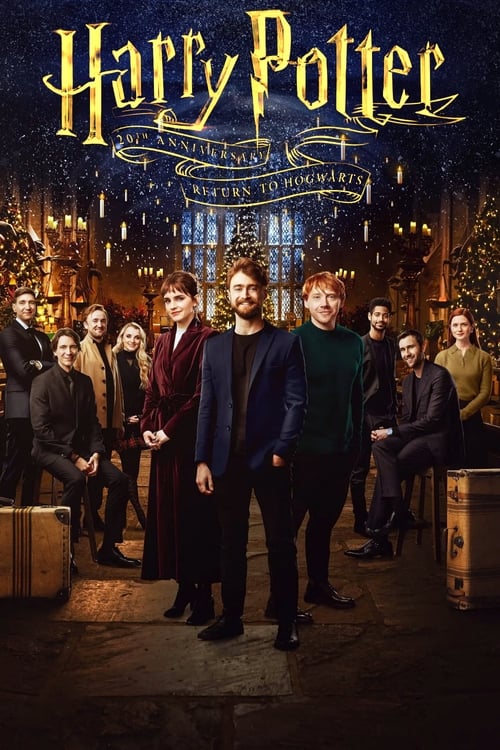
Radcliffe acknowledged that some people would never be able to separate him from the Harry Potter character; however, he has said he is "proud to be associated with this film series forever". Despite positive feelings about the films, he has no interest in doing more Harry Potter films. After Rowling hinted about writing an eighth book, Radcliffe was asked if he would do another Harry Potter film, to which he replied, "[It is] very doubtful. I think 10 years is a long time to spend with one character". Despite devoting so much time to the series, Radcliffe has asserted that he did not miss out on a childhood like other child actors, remarking, "I've been given a much better perspective on life by doing Potter."