Production
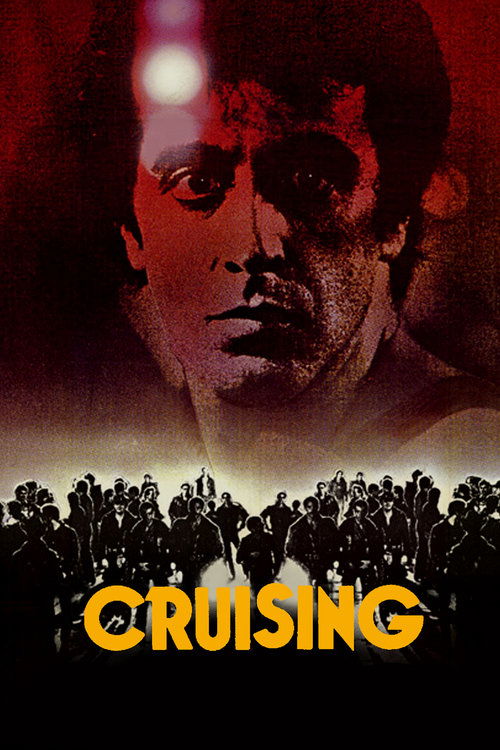
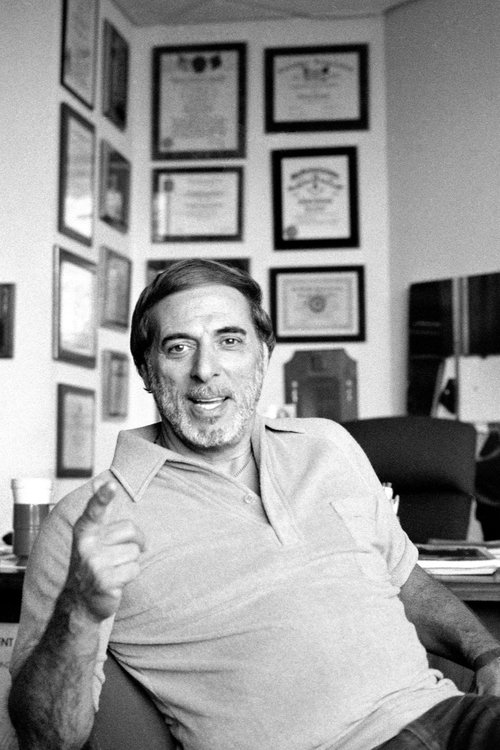
Philip D'Antoni, who had produced Friedkin's 1971 film The French Connection, approached Friedkin with the idea of directing a film based on The New York Times reporter Gerald Walker's 1970 novel Cruising, about a serial killer targeting New York City's gay community. Friedkin was not particularly interested in the project. D'Antoni tried to attach Steven Spielberg, but they were not able to interest a studio.
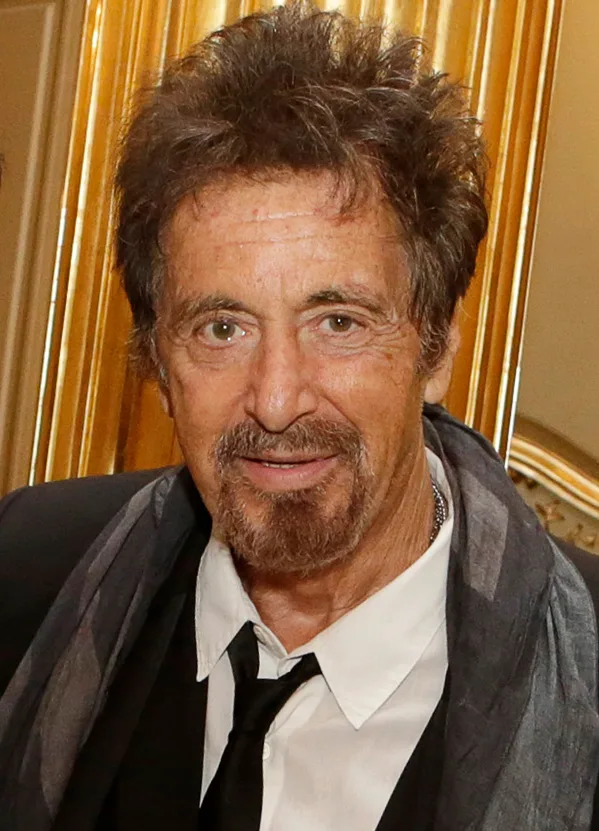
A few years later, Jerry Weintraub brought the idea back to Friedkin, who was still not interested. However, Friedkin changed his mind following a series of unsolved killings in gay leather bars in the 1970s and the articles written about the murders by Village Voice journalist Arthur Bell. Friedkin also knew a police officer named Randy Jurgensen, who had gone into the same sort of deep cover that Pacino's Steve Burns did to investigate an earlier series of gay murders; Paul Bateson, a radiology technician who had appeared in Friedkin's 1973 film The Exorcist, was implicated (but never charged) in six of the leather bar murders, while being prosecuted for another murder. All of these factors gave Friedkin the angle he wanted to pursue in making the film. Jurgensen and Bateson served as film consultants, as did Sonny Grosso, who earlier had consulted with Friedkin on The French Connection. Jurgensen and Grosso appear in bit parts in the film.
In his research, Friedkin worked with members of the Mafia, who at the time owned many of the city's gay bars. Al Pacino was not Friedkin's first choice for the lead; Richard Gere had expressed a strong interest in the part, and Friedkin had opened negotiations with Gere's agent. Gere was Friedkin's choice because he believed that Gere would bring an androgynous quality to the role that Pacino could not.
The film was intended to depict gay cruising as it existed at the Mineshaft, which does appear in the novel. However, that bar is not named in the movie because it would not allow filming. Scenes from the movie were instead filmed at the Hellfire Club, which was decorated to resemble the Mineshaft. Regulars from the Mineshaft also appeared as extras, and scenes were shot in streets and other locations near the Mineshaft. Additionally, Pacino visited the Mineshaft while researching his role.
The Motion Picture Association of America (MPAA) originally gave Cruising an X rating. Friedkin claims that he presented the film to the MPAA board "50 times" at a cost of $50,000 and deleted 40 minutes of footage from the original cut before he secured an R rating. The deleted footage, according to Friedkin, consisted entirely of footage from the clubs, depicting "[a]bsolutely graphic sexuality ... that material showed the most graphic homosexuality with Pacino watching, and with the intimation that he may have been participating".
In some discussions, Friedkin claims that deleting the 40 minutes had no effect on the story nor the characterizations. In others, he states that the footage created "mysterious twists and turns (which [the film] no longer takes)", suggested more clearly that Pacino's character may have become a killer, and simultaneously made the film both more and less ambiguous. When Friedkin sought to restore the missing footage for the film's DVD release, he discovered that United Artists no longer possessed it. He believes that UA destroyed it. Some obscured sexual activity remains visible in the film as released, and Friedkin intercut a few frames of gay pornography into the first scene, in which a murder is depicted.
This movie represents the only film soundtrack work by the punk rock band the Germs. They recorded six songs for the film, of which one, "Lion's Share", appeared. The cut "Shakedown, Breakdown" was written and recorded specially for the film by cult band Rough Trade. Soundtrack director Jack Nitzsche had initially attempted to include two songs—"Endless Night" and "Devil's Sidewalk"—by Graham Parker and the Rumour in the film, but legal issues prevented their inclusion. The songs appeared on Parker's 1980 album The Up Escalator.
Friedkin asked gay author John Rechy, some of whose works are set in the same milieu as the film, to screen Cruising before its release. Rechy had written an essay defending Friedkin's right to make the film, but not defending the overall film. At Rechy's suggestion, Friedkin deleted a scene showing the Gay Liberation slogan "We Are Everywhere" as graffiti on a wall before the first body part is pulled from the river, and added a disclaimer:
This film is not intended as an indictment of the homosexual world. It is set in one small segment of that world, which is not meant to be representative of the whole.
Friedkin later claimed that it was the MPAA and United Artists that required the disclaimer, calling it "part of the dark bargain that was made to get the film released at all" and "a sop to organized gay rights groups". Friedkin claimed that no one involved in making the film thought that it would be considered as representative of the entire gay community, but gay film historian Vito Russo disputes that, citing the disclaimer as "an admission of guilt. What director would make such a statement if he truly believed that his film would not be taken to be representative of the whole?"
Friedkin has said that he was disappointed with Pacino's lack of professionalism during the shoot, claiming that he was often late and did not contribute any ideas to the character or to the film. On the other hand, Pacino has said that Friedkin did not let him know how to interpret the end of the film, saying, "Am I the killer at the end of the picture or have I gone gay? To this day I don't know because Friedkin never told me how to play my final scene." In his autobiography, Friedkin says that a single shot can change the whole plot of a movie when talking about Cruising, implying that the ambiguous ending might not have been planned from the start. However, some elements in the movie do suggest that Burns might be the killer, such as a scene early in the film in which he’s shown wearing the killer's cap, and the fact that Richards does not attack first, and that Burns stabs him. Furthermore, the killer is said to sing a nursery rhyme before he kills, and Burns is the only person who sings one in the movie.