Rebelde Way
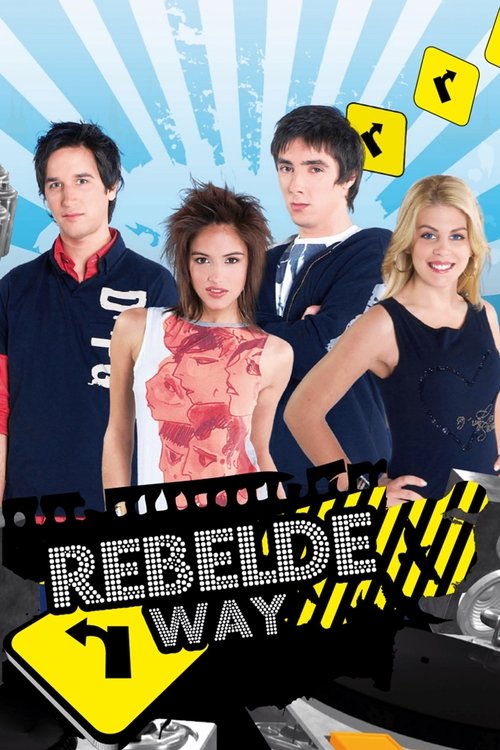
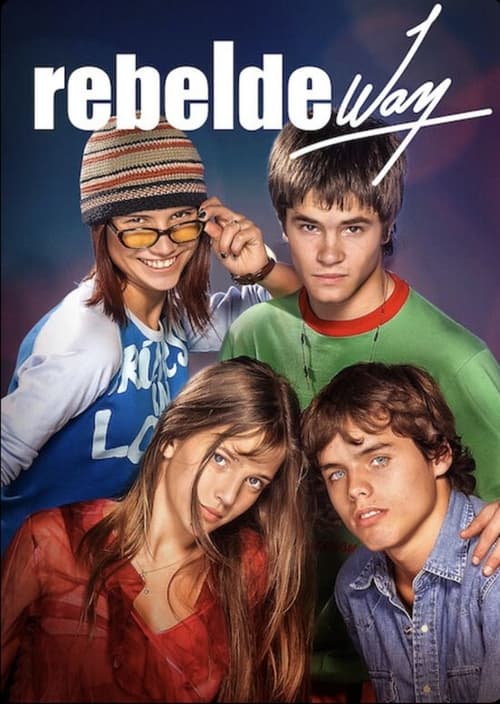
After disagreements between Morena and Vilarruel, Telefe's chairman, she started developing a new show about a group of rich teenagers living in an elite boarding school. The project became Rebelde Way. Felipe Colombo, Camila Bordonaba, Luisana Lopilato and Benjamin Rojas, who were highly popular during Chiquititas' last three seasons, were chosen as the four leads (Rebelde means literally rebel but it also means stubborn, different, daring, revolted, problematic).
Until the late 1990s, producing companies—now very common in the country—uncommon and most shows were property of the channel. Morena had no plans to open her own production company but, after parting ways with Telefe and with a huge team following her, it was the only legal way to do it. Cris Morena Group was born. However, the company was formed by creative staff and was not able to cope with the business and legal aspects by itself so she needed a partner to finance it. Initially, the show was to be co-produced alongside RGB Entertainment, Morena's ex-husband's company with whom she has a very amicable relationship. However, the association did not work out since she was looking for someone who could dedicate themselves entirely and RGB was busy managing girl group Bandana and Mambrú, which were directed at the same target group.
After offers from Canal 13 and Canal 9, the show almost was not produced since the channels, still suffering from the Argentina's economic crisis, could not finance it and she needed an associate who could finance the project. The production resumed when Argentine-Israeli producer Yair Dori decided to invest heavily on the show after Chiquititas became popular among children in Israel. The production began before the show had a confirmed channel to be aired on. It was decided the show would premiere on Canal 9, which had success with teen-oriented show Popstars the year before, and it would be aired every weekday at 8 p.m. Soon after its debut, the show became the channel's highest-rated show. It spawned a band, Erreway, formed by the four protagonists, several licensed products (such as stationery items, a clothing line, a monthly magazine, cosmetics and sunglasses) and a triple platinum album.
After the reception of the show's first series, Morena decided to produce a second season and the group started touring Argentina and selling out arenas around the country and in other South American countries such as Uruguay, Bolivia, Paraguay and Peru. In 2003, Argentina still had not recovered from the crisis and Canal 9 was having some big financial troubles and could not finance the show anymore. Because of that, the show changed from Canal 9 to America 2 in the middle of the second season alongside another CMG production, Rincón de Luz. The transition meant the show sets had to be rebuilt in a new studio and that the show would be off-air for one month. It was the first time in Argentine television history a show changed channel in the middle of the season.
Although Rebelde Way and Erreway were popular, they were initially outshone by girl group Bandana and boy band Mambrú, winners of the first and second season of reality show Popstars. Both bands were managed by Cris's ex-husband and his company, RGB Entertainment. For the first time in seven years, Morena did not have the opportunity to use Teatro Gran Rex during winter vacations since the venue was occupied by Bandana. In the year-end best-selling ranking, Erreway's Señales ranked as the third-best-seller of the year, following Bandana and Mambrú. However, Morena and Gustavo had an extremely amicable relationship: Morena directed Bandana's first series of Gran Rex concerts and Gustavo helped organize Erreway's first live show which would happen for free at Abasto shopping mall, repeating the successful Bandana's Abasto live debut in 2001. Besides, Mambrú and Bandana songs were owned by Mardi Grass Publishing, which is the music publishing company owned by Morena and Gustavo in association. Rebelde Way's first-season finale also featured a highly promoted cameo by Bandana.
Following the tradition, critics from Argentina's main newspapers were not exactly supportive of the program. Clarin criticized the four main characters. According to the paper, "they look and act like they're 12 years old. They're not in Chiquititas anymore. They have biceps and new "older" looks. And yet they still act like they're in elementary school". In another review, it noted "the show sometimes look like soft porn and sometimes like a parody due to its absurd setting and the painful over-acting", although it admitted the show was undoubtedly successful, concluding that "four months after its debut, the show already spawned a double platinum album, a music video that airs nonstop on music cable channels, a monthly magazine, cosmetics, a sunglasses and clothing line, stationery items and very good sales for the international market". In a review of the live concert at Teatro Gran Rex, Clarin described the cast wardrobe as "mini-skirts, leather, knee-high socks, rhinestones. What Cris Morena would love to still be able to pull off".
The newspaper La Nación was less critical and even gave the show a positive nod. They rated the show as "Good" and, although it criticized the characters for being excessively stereotyped, it concludes the stereotypes are made acceptable because the telenovela distances itself from any realistic tone. It also commented that "you could find everything in the show. From very good young actors, such as Camila Bordonaba to terrible ones, such as Coco Maggio. There are some extremely well-done sequences while others look cheap". It concluded that the biggest attractions for teenagers were the glamorous setting and the fun music and that the dialogues were fun and reflected the way teenager really talked.
However, it was not only critics that were not too fond of the show. Church organization and even the Argentine Camara de Anunciantes (Chamber of Advertisers), a self-regulated group formed by huge ad executives in the country, protested the show. In 2002, Morena was interviewed for the TV show Horizontal/Vertical to promote Rebelde Way. Carlos Polimenni, a journalist and panelist on the program, attacked her, arguing her TV shows were "crap" and "too commercial". Morena, visibly upset, replied: "You're such an idiot. You pretend to be a serious journalist while being a panelist in a gossip show". In 2003, Morena fired back at critics, saying: "Critics are increasingly distant of the general public opinion. They are so out of touch with reality they remind me of politics. And politics are not exactly doing well at their jobs right now, are they?". She continued: "Some people say my programs are too commercial. What's wrong with that? The ideal recipe in television is to do a show that's well done and successful. It does not makes any sense to do a show or a musical or an art exhibition for a minimal audience. What I want to do is to get to biggest number of people I can in the best way possible".
While Rebelde Way and the spawned band Erreway were popular in Argentina, they achieved even more in Israel, where the show benefited from the hype surrounding Chiquititas. Rebelde Way soon became the most-watched show among children and teenagers in the country, the group was contracted by several companies, from McDonald's to Swatch, to promote their products and their concerts in Tel Aviv were attended by over 100,000 people. Hysteria was so big that they were headlines of the country's biggest and most important newspaper on the day of their arrival in the country. A phenomenon so big was never before seen in Israel and even though several kids and teenage-oriented shows of the same vein were aired later in the country, most of them coming from Argentina, never a show came close to the mass hysteria Rebelde Way caused among Israeli youth. Argentina is still instantaneously connected with this show by Israeli natives and both the Mexican and the Brazilian versions were also aired.
Yair Dori wanted to extend Rebelde Way for a third season but, due to Cris' refusal, was unable to. Yair tried to recreate the success with El Refugio de los Sueños, which had most of Rebelde's cast, but the show was a failure in Argentina and Israel. After Rebelde Way, Morena's partnership with Yair Dori did not go for too long. From Floricienta on, RGB Entertainment became her business associate.
In 2004, Erreway, the band, did their last projects together: the movie Erreway: Cuatro Caminos, which was released in theaters, the album Memoria and their goodbye tour. Three years after the end of the band and four years after the TV show, Rebelde Way started airing in Spain and soon became a success. With the defunct band appearing in several magazine covers and moving thousands of merchandising and albums, they decided to reunite for a Spanish arena tour. The tour caused mass polemic when it was announced Luisana would not be touring with them and had left the band. This announcement was made when tickets were already on sale and her image and name appeared on the promotional material. Even with the Luisana controversy, the tour was successful, with all shows selling out, and the three remaining members reunited to do a new album especially for the Spanish market where a new tour was also planned. While the album, titled Vuelvo, was recorded, legal problems with Pol-ka, which produced Son de Fierro (with Felipe and Camila on the cast), caused the new studio album and the tour to be canceled. The new material recorded by the band was used in Atr@pados, a soap made for cellphones and the Internet which starred Benjamin Rojas and Felipe Colombo, the male half of Erreway. Atrap@dos was shot in 2009 but the project was never officially released, airing as shorts on Yups.TV in 2012.
A number of copycat shows with the same format and with a big chunk of the original secondary cast were aired on Argentinian television, many of them co-produced by Yair Dori, who was still trying to recreate Rebelde Way's momentum (especially in the Israeli market). Those shows included El Refugio de los Sueños (aired in Canal 13 against Chiquititas in 2006), Frecuencia '04 (aired on Telefe in 2004 against Floricienta), Paraiso Rock (aired in Canal 9 in 2005) and Romeo y Julieta (aired in Canal 9 in 2007). Those were all commercial failures in both Argentina and Israel and were canceled. Morena had no relation to those productions.