Critical response
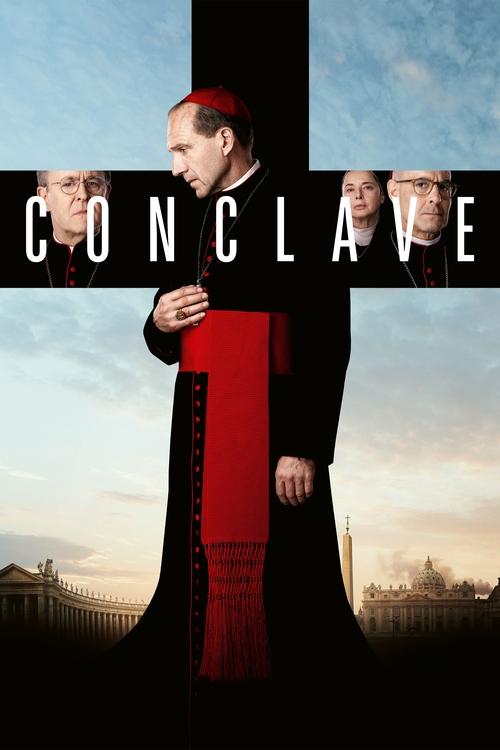
On the review aggregator website Rotten Tomatoes, 93% of 318 critics' reviews are positive, with an average rating of 8.1/10. The website's consensus reads: "Carrying off papal pulp with immaculate execution and career-highlight work from Ralph Fiennes, Conclave is a godsend for audiences who crave intelligent entertainment." Metacritic, which uses a weighted average, assigned the film a score of 79 out of 100, based on 54 critics, indicating "generally favorable" reviews. Audiences polled by CinemaScore gave the film an average grade of "B+" on an A+ to F scale, while those surveyed by PostTrak gave it an 84% overall positive score, with 62% saying they would "definitely recommend" it.
The film's cinematography and ensemble cast were widely praised; however, some criticism was met for the plot, with Katie Walsh of the Los Angeles Times calling it "a pretty thin and silly mystery ... that seems like it's deeper than it actually is". IndieWire's David Ehrlich agreed that the film was "very silly but wonderfully staged ... even if the film might be a bit too convinced of its own dramatic import". The Chicago Tribune's Michael Phillips praised the film's "delicious portraits in pursuit, deceit and evasion".
Mark Kermode praised the film for what he saw as a thoughtful and respectful portrayal of the papal election process. He highlighted the strong performances, particularly by Fiennes, and said that the film created suspense and intrigue without resorting to sensationalism. He also noted the nuanced exploration of the Catholic Church's future and its internal politics, which he found compelling and well-executed. Richard Lawson of Vanity Fair said that the film rightly portrayed "both the seriousness of [the conclave] process and the campy ridiculousness of it", and thought that the film "touch[es] fingers with prestige greatness while keeping its feet firmly planted in the realm of rollicking entertainment".
Lawson called the final twist "reckless" and insufficiently thought through, while Variety's Peter Debruge called it "one of the most satisfying twists in years, a Hail Mary that both surprises and restores one's faith (maybe not everyone's, but certainly that of the disillusioned)". Manohla Dargis of The New York Times noted that the film's stance towards the Catholic Church mirrors Hollywood's own stance towards its film industry: "lightly cynical, self-flattering and finally myth-stoking". Writing in The Guardian, Benjamin Lee opined that the film was "a glossily transferred airport novel first and a deeper drama about the world of religion second", awarding it four stars out of five. The Observer's Wendy Ide praised Fiennes' performance as "one of the performances of the year", concluding "Conclave is a blast" and giving it five stars out of five. Neil Young, reviewing the film for the BFI, praised the "outstanding" ensemble cast but was less positive on the score, feeling it was unrestrained, "doing much of the creative heavy-lifting" and turning the film into a "rather clangorous affair."
Filmmaker Alexander Payne named it one of his favorite films of 2024, saying: "You just can't believe how riveting it is – funny and suspenseful and so well-cast and well-acted. Berger has the miraculous quality of making something you never forget is a movie, but at the same time, it's as though you're actually there." Other filmmakers, including Oliver Stone, Kelly Fremon Craig, Adam Elliot, Coralie Fargeat, Tim Fehlbaum, Hannah Fidell, William Goldenberg, Reinaldo Marcus Green, Savanah Leaf, Laurel Parmet, Paul Schrader and Denis Villeneuve, also lauded the film, particularly the performances of the cast. In July 2025, it was one of the films voted for the "Readers' Choice" edition of The New York Times' list of "The 100 Best Movies of the 21st Century", finishing at number 194.
Otosirieze Obi-Young, writing for Nigerian magazine Open Country Mag, argued that the portrayal of Adeyemi is problematic for playing into racist stereotypes of black men being sexually aggressive, and that "Sexual abuse ... has become, in the last few decades, the defining moral damage of Western Catholicism, yet the ahistorical vision of Conclave pins that responsibility not on a cardinal from any of those Western countries but on its sole black African papabile."


.jpg?width=400)