Late Night (1993–2009)
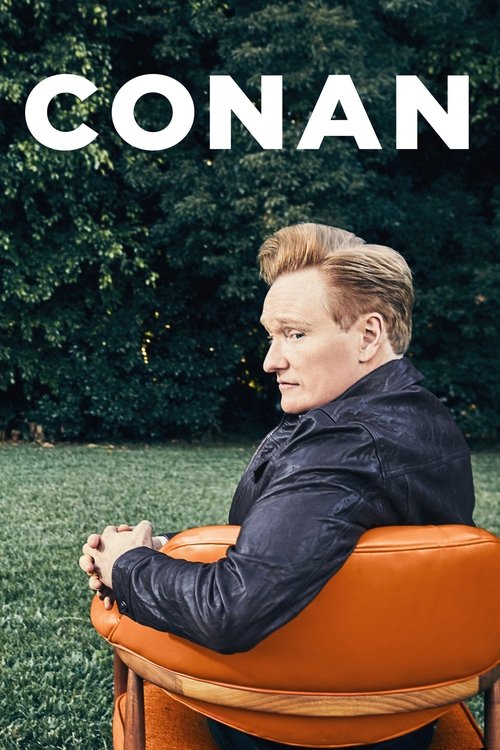
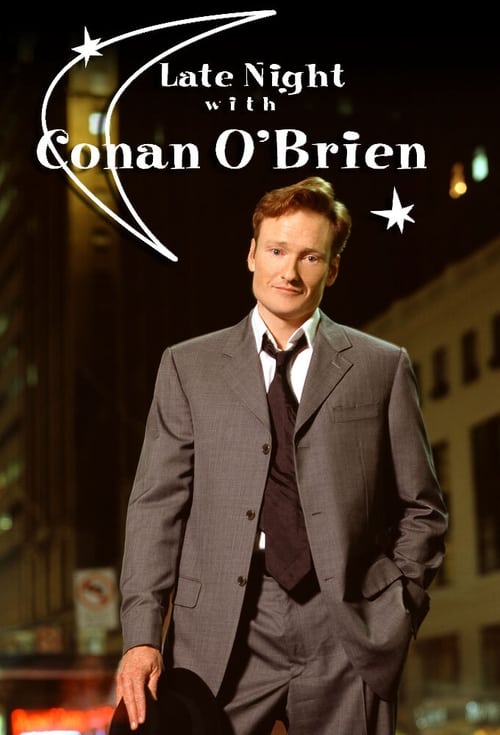
Late Night with Conan O'Brien, originating from Studio 6A at 30 Rockefeller Plaza in New York City, premiered on September 13, 1993, to unfavorable reviews from contemporary critics. This reception was not completely unsurprising: there was significant public apprehension due to O'Brien being virtually unknown to the public, and O'Brien himself wrote a self-deprecating The New York Times piece titled "O'Brien Flops!" on the day of the show's premiere. Critics attacked O'Brien: Tom Shales of The Washington Post suggested that "the host resume his previous identity, Conan O'Blivion." Generally, critics viewed O'Brien as nervous and fidgety on-camera, and that he was "too smart, too East Coast, too sophisticated, too young and even too tall to be successful." The show was constantly at risk for cancellation; at one low point in 1994, NBC threatened to put him on a week-to-week contract. Executives were anxious to replace him with Greg Kinnear, who followed O'Brien with Later at 1:30 am. Interns filled empty seats in the audience while affiliates began to inquire about replacement hosts. In one installment after a short stretch of reruns, sidekick Andy Richter described his vacation activities as follows: "I sat back and reminded myself what it's like to be unemployed." The in-joke alluded to the rumors floating in the trades that NBC was near canceling the program.
Late Night under O'Brien slowly but steadily acquired commercial and critical success. Sketches grew in popularity ("If They Mated", "Desk Drive", "In the Year 2000"). A reliable staple involved a TV screen, lowered behind O'Brien's desk and displaying a still photo of a news figure. The lips and voice of these characters (Clutch Cargo) – frequently a party-crazed "hillbilly" interpretation of Bill Clinton – were supplied by writing partner Robert Smigel. A turning point was David Letterman's February 1994 appearance. "It was a morale boost," said O'Brien. "I'm thinking, If the guy who created the 12:30 thing comes on and says we're smart and funny, let's go." The show went through a wobble in January 1995 when Robert Smigel, feeling burned out, quit as head writer. An increase in quality over time, perceived by some observers, was sometimes credited to a growth in O'Brien's comedic performance. Within a year, a comedic formula began to arise: the show would combine the lewd and wacky with more elegant, narrative-driven remotes. One famous remote was when O'Brien visited a historic, Civil War-era baseball league. That piece was one of O'Brien's personal favorites, later remarking, "When I leave this earth, at the funeral, just show this, because this pretty much says who I'm all about."
O'Brien's audience, largely young and male (a coveted demographic), grew steadily and the show began to best competitors in the ratings, and continued to do so for 15 seasons. In the early days of the Internet, fans launched unofficial websites, compiling precise summaries of each episode. Even Tom Shales was a convert: he called the show "one of the most amazing transformations in television history." Beginning in 1996, O'Brien and the Late Night writing team were nominated annually for the Emmy Award for Best Writing in a Comedy or Variety Series, winning the award for the first and only time in 2007. In 1997, 2000, 2002, 2003, and 2004, he and the Late Night writing staff won the Writers Guild Award for Best Writing in a Comedy/Variety Series. In 2001, he formed his own television production company, Conaco, which subsequently shared in the production credits for Late Night. That same year, he returned to Saturday Night Live, hosting the show during its 26th season.
As of October 2005, Late Night with Conan O'Brien had for eleven years consistently attracted an audience averaging about 2.5 million viewers. In 2006, O'Brien exploited his perceived resemblance to Tarja Halonen, entering her second term as president of Finland. Capitalizing on the resemblance and on the 2006 Finnish presidential election, O'Brien and Late Night aired mock political ads both in support of Halonen and against her main opponent Sauli Niinistö, which influenced popular perception of the race, which Halonen eventually won. O'Brien traveled to Finland shortly after the election. "We took the show to Helsinki for five days," O'Brien recalled, "where we were embraced like a national treasure." As part of the five-day trip, which was released as a one-hour special episode of Late Night, O'Brien met with Halonen at the Finnish Presidential Palace.
During the writers' strike in 2008, O'Brien staged a mock feud with Comedy Central's Jon Stewart (of The Daily Show) and Stephen Colbert (of The Colbert Report) over a dispute about which of the three were responsible for giving a "bump" to Mike Huckabee's campaign to become the Republican presidential nominee. This feud crossed over all three shows during the 2007–08 Writers Guild of America strike.
On February 20, 2009, NBC aired the last episode of Late Night with Conan O'Brien. The show consisted of a compilation of previous Late Night clips and included a surprise appearance by former sidekick Andy Richter. Will Ferrell, John Mayer, and the White Stripes also appeared. O'Brien ended the episode by destroying the set with an axe, handing out the pieces of the set to the audience, and thanking a list of people who helped him. Among those thanked were Lorne Michaels, David Letterman, Jay Leno, and O'Brien's wife and children.
In 2019, clips from O'Brien's time on Late Night began to be posted on his TBS website and on the Team Coco YouTube channel.