Mainstream success (1984–1989)
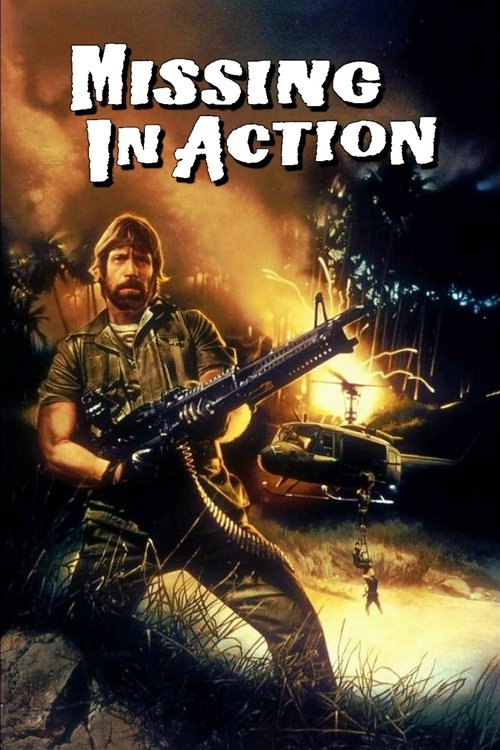
In 1984, Norris starred in Joseph Zito's Missing in Action, the first of a series of POW rescue fantasies where he played Colonel James Braddock. It was produced by Menahem Golan and Yoram Globus and released under their Cannon Films banner, with which he had signed a multiple movie deal. Norris later dedicated these films to his younger brother Wieland, who was a private in the 101st Airborne Division, and had been killed in June 1970 in Vietnam while on patrol in the defense of Firebase Ripcord. The film was a huge success, and Norris became Cannon's most prominent star of the 1980s.
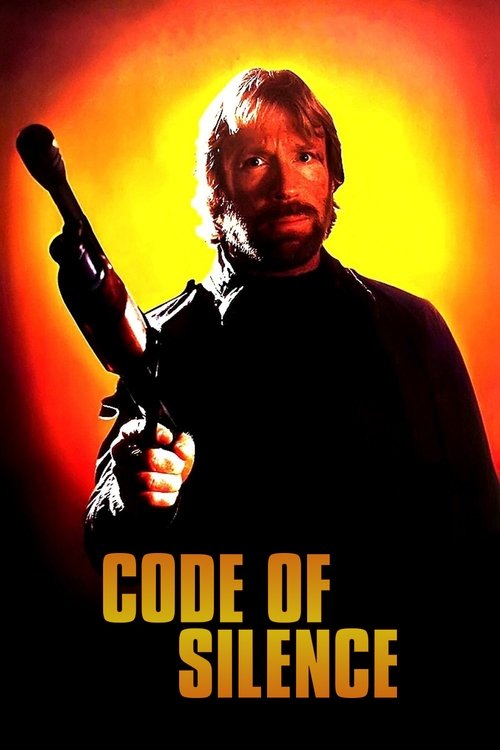
In October 1984, principal photography of Andrew Davis's Code of Silence started. The film's complexity and dramatic depth marked a departure for Norris. The film is about a cop who is ostracized for refusing to support a corrupt cop who killed an innocent bystander, while protecting the daughter of a mob boss. Davis described Norris as "easy to work with and very supportive". Released by Orion Pictures on May 3, 1985, it received generally positive reviews, with critics praising its slick direction, strong performances, and engaging action. It was regarded as a standout in Norris' career, with many considering it his best film.
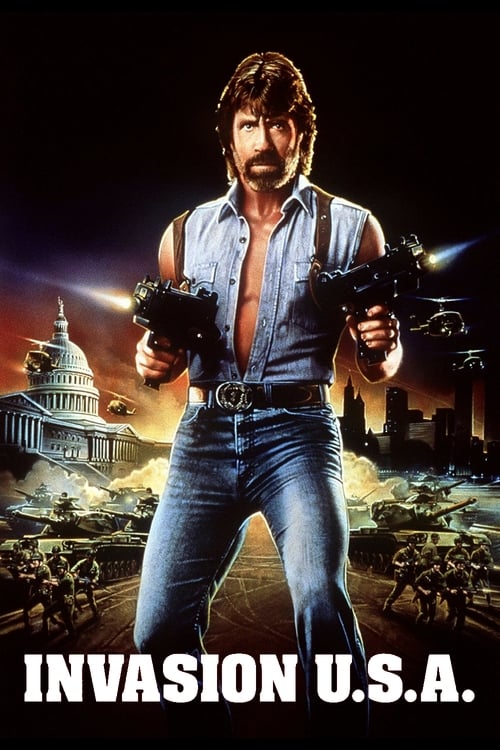
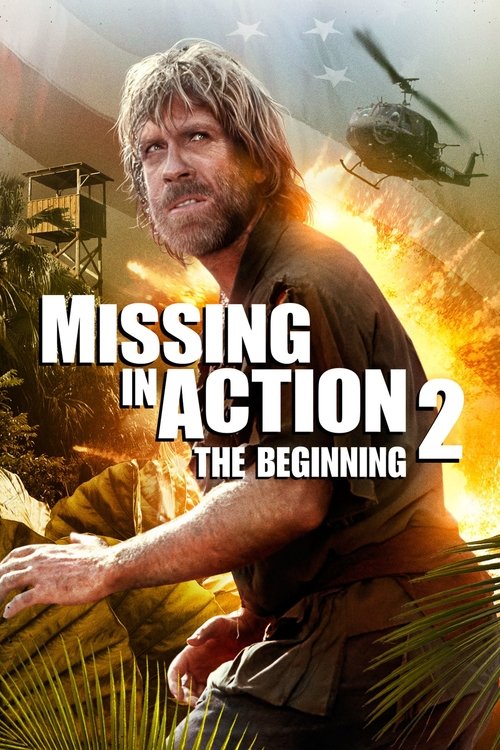
Vincent Canby of The New York Times said that "it could well prove to be his breakout picture". Of its critical success, Norris said, "I really appreciate the acclaim, I've worked hard these last nine years to get critics to look at me in a different light. They're usually more concerned with things like Passage to India, and they've hit me hard all these years, especially in the beginning. I'm really excited, to say the least." The film debuted at number 1 with an opening weekend gross of $5.5 million and ultimately earned a total of $20.3 million at the US box office. Missing in Action 2: The Beginning premiered on March 1, 1985. It is a prequel to the first installment, about Braddock being held in a North Vietnamese POW camp. Invasion U.S.A. premiered on September 27, with Zito directing.
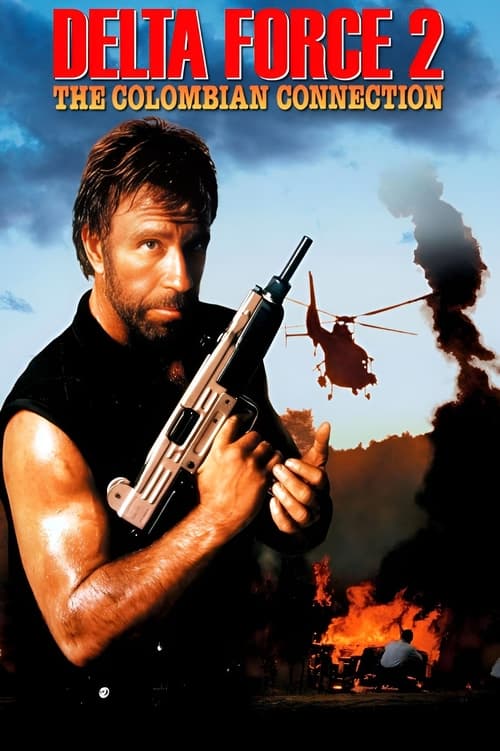
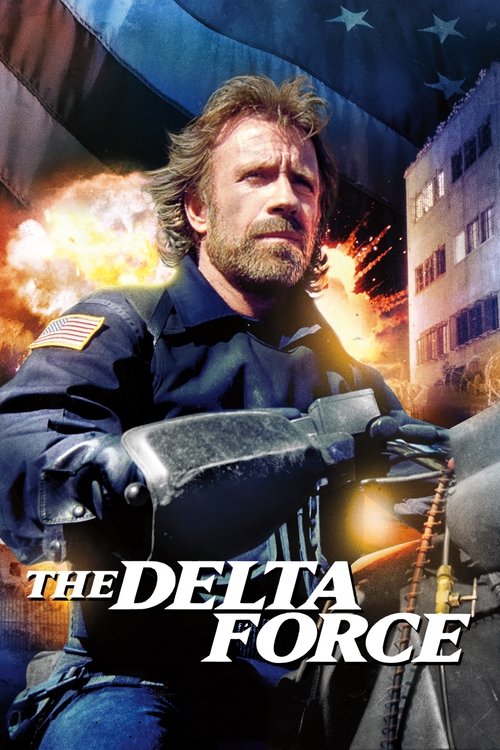
On February 14, 1986, Menahem Golan's The Delta Force premiered. Norris co-starred with Lee Marvin, who play leaders of an elite squad of special forces troops who face a group of terrorists. The Delta Force was a box office success. In October, Ruby-Spears's cartoon Karate Kommandos first aired. The animated show lasted five episodes. In it, Norris voices a cartoon version of himself who leads a United States government team of operatives known as the Karate Kommandos. Marvel made a comic book adaptation.
On November 21, J. Lee Thompson's action-adventure comedy Firewalker premiered, where Norris co-led with Louis Gossett Jr.; they play two seasoned treasure hunters whose adventures rarely result in any notable success. Norris explained that the project came about when he wanted to show a lighter side of himself. Gossett appreciated Norris's efforts and said, "I have great respect for what actors call stretch. Chuck had to open up first to allow this atmosphere. It has to do with his desire to stretch. Someone else could have been quite insecure. He chose to open up. He's studying hard and he's serious." The reviews were mostly negative, while some thought it was a fine for a light action film. Kevin Thomas of the Los Angeles Times said the cast "really get into the light-hearted spirit of the occasion". The film made $11,834,302 at the box-office.
In 1987, the New York Times Best Seller book The Secret of Inner Strength: My Story was published, which Norris co-wrote with Joe Hyams. It's a biography mixed with his self-improvement philosophy. When the publisher Little, Brown initially approached him, Norris turned them down saying "I am only in my mid-40s and I have got a lot to live yet." However the editor's son was a fan of Norris and insisted that she pursued Norris and explained to him "we are interested in where you came from, out of poverty in Oklahoma and on welfare, then being a non-athlete in school to becoming a karate champion, then being shy and jumping into acting. We are interested, along with the public, in how you were able to accomplish this. The philosophies and formulas you have used." This changed Norris's mind. Norris explained that "a lot of people face the same things I faced, they don't know what to do in life or where to go. They hit one obstacle and they immediately give up. So maybe my book can be a guide to help people." On the process Norris said "writing that book was a different animal. It was scary because you are opening yourself up for everyone to look inside." He also added that "the book was kind of therapeutic for me. Thirty-five years ago, a man who drank was a drunkard. Now I realize my dad had a disease." After writer Joe Hyams submitted his manuscript, Norris explained "it was not in my own voice. So I rewrote the book. It took me two years." Kirkus Reviews found the book simplistic, but earnest, and concluded that "Norris' sincerity and fascinating life odyssey add up to a likable and modest account from a likable and modest star."
On January 2, 1988, Braddock: Missing in Action III premiered; Norris returned to the title role and his brother Aaron Norris made his directorial debut. On the development of the film, Norris said "When Cannon asked me about doing a trilogy of 'MIA,' I replied, 'What else can I do?' I really wasn't interested in doing a third one. Then my brother, Aaron, said, 'Have you been reading about the Amerasian children?' He started telling me that in Vietnam there are 15,000 Amerasian children who are trapped there, considered outcasts, living a strictly non- existent life. So I started reading up on the subject and got emotionally involved. James Bruner and I began writing this story about an officer in the Vietnam War whose wife was presumed killed when their home was blown up during the fall of Saigon. The officer is wounded and shipped out. Twelve years later, he learns that his wife is still alive and he has a old son. The rest of the movie concerns his efforts to them out of the get country." Norris thought that it was the best film he ever made prior to its release. Norris said he was "frustrated", with the job Cannon Films did with marketing the film: "I was ready to break my contract because it was the best of the series. We had a big meeting, and I told them that if they didn't do a better job marketing my films in the U.S., I was going to take them to court because my career is on the line". In the United States, the movie made $2,210,401 in the opening weekend, and grossed $6,193,901. The film was met with mostly negative reviews, criticized for its formulaic action, some noted faint attempts at emotional storytelling, but overall, it was seen as predictable and heavy-handed.
On August 28, Norris starred as a cop investigating a serial killer, in Hero and the Terror directed by William Tannen. This was a departure from his usual roles. He said, "I liked seeing not just the man in the arena or the fighting machine you see in many of my films, but to see the man outside the arena -- the guy who also has relationships." He added, "what makes this a different film is the vulnerability of the character I play. There are moments of humor, romance and compassion, and there are moments of terror, anguish and anxiety." In the United States, the movie made $1,840,487 on the opening weekend, and grossed $5,301,200. The reviews for the film were mostly negative, they felt that script damaged a slick production where Norris did a good job acting and expanding his range. Michael Mills of the Fort Worth Star-Telegram said that he found Norris's performance "engaging" and added that it "proves him capable of stretching beyond his customary loner stance to function convincingly as a romantic lead."