1939–1952: controversies and fading popularity
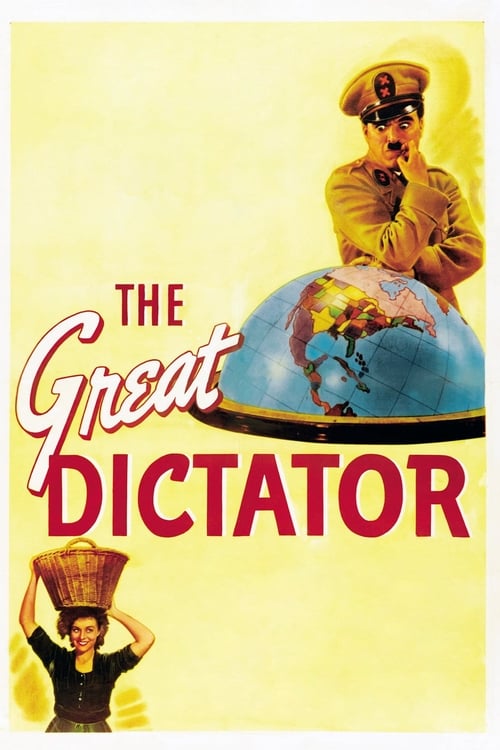
The 1940s saw Chaplin face a series of controversies, both in his work and in his personal life, which changed his fortunes and severely affected his popularity in the United States. The first of these was his growing boldness in expressing his political beliefs. Deeply disturbed by the surge of militaristic nationalism in 1930s world politics, Chaplin found that he could not keep these issues out of his work. Parallels between himself and Adolf Hitler had been widely noted: the pair were born four days apart, both had risen from poverty to world prominence, and Hitler wore the same moustache style as Chaplin. It was this physical resemblance that supplied the plot for Chaplin's next film, The Great Dictator, which directly satirised Hitler and attacked fascism.
Chaplin spent two years developing the script and began filming in September 1939, six days after Britain declared war on Germany. He had submitted to using spoken dialogue, partly out of acceptance that he had no other choice, but also because he recognised it as a better method for delivering a political message. Making a comedy about Hitler was seen as highly controversial, but Chaplin's financial independence allowed him to take the risk. "I was determined to go ahead", he later wrote, "for Hitler must be laughed at." Chaplin replaced the Tramp (while wearing similar attire) with "A Jewish Barber", a reference to the Nazi Party's belief that he was Jewish. In a dual performance, he also played the dictator "Adenoid Hynkel", a parody of Hitler.
The Great Dictator spent a year in production and was released in October 1940. The film generated a vast amount of publicity, with a critic for The New York Times calling it "the most eagerly awaited picture of the year", and it was one of the biggest money-makers of the era. The ending was unpopular, however, and generated controversy. Chaplin concluded the film with a five-minute speech in which he abandoned his barber character, looked directly into the camera, and pleaded against war and fascism. Charles J. Maland has identified this overt preaching as triggering a decline in Chaplin's popularity, and writes: "Henceforth, no movie fan would ever be able to separate the dimension of politics from [his] star image". Nevertheless, both Winston Churchill and Franklin D. Roosevelt liked the film, which they saw at private screenings before its release. Roosevelt subsequently invited Chaplin to read the film's final speech over the radio during his January 1941 inauguration, with the speech becoming a "hit" of the celebration. Chaplin was often invited to other patriotic functions to read the speech to audiences during the years of the war. The Great Dictator received five Academy Award nominations, including Best Picture, Best Original Screenplay and Best Actor.
In the mid-1940s, Chaplin was involved in a series of trials that occupied most of his time and significantly affected his public image. The troubles stemmed from his affair with an aspiring actress named Joan Barry, with whom he was involved intermittently between June 1941 and the autumn of 1942. Barry, who displayed obsessive behaviour and was twice arrested after they separated, reappeared the following year and announced that she was pregnant with Chaplin's child. As Chaplin denied the claim, Barry filed a paternity suit against him.
The director of the Federal Bureau of Investigation (FBI), J. Edgar Hoover, who had long been suspicious of Chaplin's political leanings, used the opportunity to generate negative publicity about him. As part of a smear campaign to damage Chaplin's image, the FBI named him in four indictments related to the Barry case. Most serious of these was an alleged violation of the Mann Act, which prohibits the transportation of women across state boundaries for sexual purposes. Historian Otto Friedrich called this an "absurd prosecution" of an "ancient statute", yet if Chaplin was found guilty, he faced 23 years in prison. Three charges lacked sufficient evidence to proceed to court, but the Mann Act trial began on 21 March 1944. Chaplin was acquitted two weeks later, on 4 April. The case was frequently headline news, with Newsweek calling it the "biggest public relations scandal since the Fatty Arbuckle murder trial in 1921".
Barry's child, Carol Ann, was born in October 1943, and the paternity suit went to court in December 1944. After two arduous trials, in which the prosecuting lawyer accused him of "moral turpitude", Chaplin was declared to be the father. Evidence from blood tests that indicated otherwise were not admissible, and the judge ordered Chaplin to pay child support until Carol Ann turned 21. Media coverage of the suit was influenced by the FBI, which fed information to gossip columnist Hedda Hopper, and Chaplin was portrayed in an overwhelmingly critical light.
The controversy surrounding Chaplin increased when – two weeks after the paternity suit was filed – it was announced that he had married his newest protégée, 18-year-old Oona O'Neill, the daughter of American playwright Eugene O'Neill. Chaplin, then 54, had been introduced to her by a film agent seven months earlier. In his autobiography, Chaplin described meeting O'Neill as "the happiest event of my life", and claimed to have found "perfect love". Chaplin's son, Charles III, reported that Oona "worshipped" his father. The couple remained married until Chaplin's death, and had eight children over 18 years: Geraldine Leigh (b. July 1944), Michael John (b. March 1946), Josephine Hannah (b. March 1949), Victoria Agnes (b. May 1951), Eugene Anthony (b. August 1953), Jane Cecil (b. May 1957), Annette Emily (b. December 1959), and Christopher James (b. July 1962).
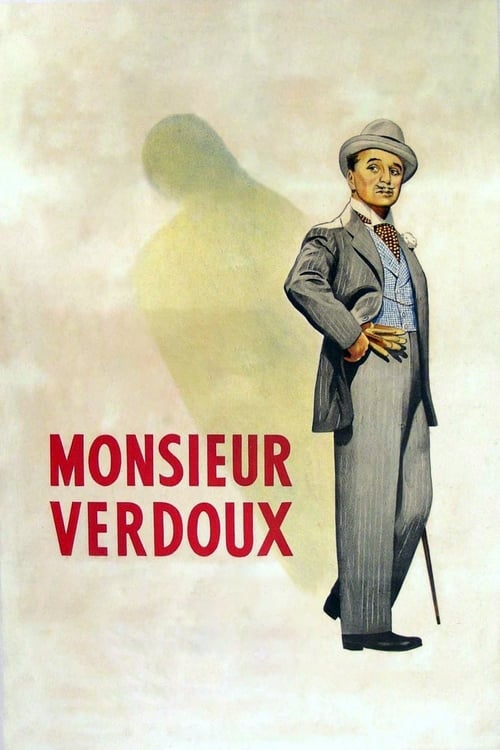
Chaplin claimed that the Barry trials had "crippled [his] creativeness", and it was some time before he began working again. In April 1946, he finally began filming a project that had been in development since 1942. Monsieur Verdoux is a black comedy, the story of a French bank clerk, Verdoux (Chaplin), who loses his job and begins marrying and murdering wealthy widows to support his family. Chaplin's inspiration for the project came from Orson Welles, who wanted him to star in a film about the French serial killer Henri Désiré Landru. Chaplin decided that the concept would "make a wonderful comedy", and paid Welles $5,000 for the idea.
Chaplin again vocalised his political views in Monsieur Verdoux, criticising capitalism and arguing that the world encourages mass killing through wars and weapons of mass destruction. Because of this, the film met with controversy when it was released in April 1947; Chaplin was booed at the premiere, and there were calls for a boycott. Monsieur Verdoux was the first Chaplin release that failed both critically and commercially in the United States. It was more successful abroad, and Chaplin's screenplay was nominated at the Academy Awards. He was proud of the film, writing in his autobiography, "Monsieur Verdoux is the cleverest and most brilliant film I have yet made."
The negative reaction to Monsieur Verdoux was largely the result of changes in Chaplin's public image. Along with the damage of the Joan Barry scandal, he was publicly accused of being a communist. His political activity had heightened during World War II, when he campaigned for the opening of a Second Front to help the Soviet Union and supported various Soviet–American friendship groups. He was also friendly with several suspected communists, and attended functions given by Soviet diplomats in Los Angeles. In the political climate of 1940s America, such activities meant Chaplin was considered, as Larcher writes, "dangerously progressive and amoral". The FBI wanted him out of the country, and launched an official investigation in early 1947.
Chaplin denied being a communist, instead calling himself a "peacemonger", but felt the government's effort to suppress the ideology was an unacceptable infringement of civil liberties. Unwilling to be quiet about the issue, he openly protested against the trials of Communist Party members and the activities of the House Un-American Activities Committee. Chaplin received a subpoena to appear before HUAC but was not called to testify. As his activities were widely reported in the press, and Cold War fears grew, questions were raised over his failure to take American citizenship. Calls were made for him to be deported; in one extreme and widely published example, Representative John E. Rankin, who helped establish HUAC, told Congress in June 1947: "[Chaplin's] very life in Hollywood is detrimental to the moral fabric of America. [If he is deported] ... his loathsome pictures can be kept from before the eyes of the American youth. He should be deported and gotten rid of at once."
In 2003, declassified British archives belonging to the British Foreign Office revealed that author and social critic George Orwell secretly accused Chaplin of being a secret communist and a friend of the USSR in the 1949 Orwell's list document. Chaplin's name was one of 35 that Orwell gave to the Information Research Department (IRD), a secret British Cold War propaganda department which collaborated closely with the CIA. Chaplin was not the only actor in America whom Orwell accused of being a secret communist.
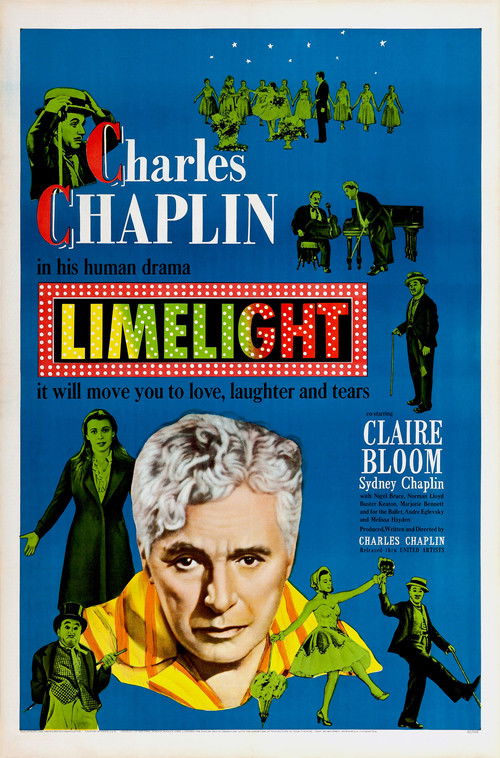
Although Chaplin remained politically active in the years following the failure of Monsieur Verdoux, his next film, about a forgotten music hall comedian and a young ballerina in Edwardian London, was devoid of political themes. Limelight was heavily autobiographical, alluding not only to Chaplin's childhood and the lives of his parents, but also to his loss of popularity in the United States. The cast included various members of his family, including his five oldest children and his half-brother, Wheeler Dryden.
Filming began in November 1951, by which time Chaplin had spent three years working on the story. He aimed for a more serious tone than any of his previous films, regularly using the word "melancholy" when explaining his plans to his co-star Claire Bloom. Limelight featured a cameo appearance from Buster Keaton, whom Chaplin cast as his stage partner in a pantomime scene. This marked the only time the comedians teamed up in a feature film.
Chaplin decided to hold the world premiere of Limelight in London, since it was the setting of the film. As he left Los Angeles, he expressed a premonition that he would not be returning. At New York, he boarded the RMS Queen Elizabeth with his family on 18 September 1952. The next day, United States Attorney General James P. McGranery revoked Chaplin's re-entry permit and stated that he would have to submit to an interview concerning his political views and moral behaviour to re-enter the US. Although McGranery told the press that he had "a pretty good case against Chaplin", Maland has concluded, on the basis of the FBI files that were released in the 1980s, that the US government had no real evidence to prevent Chaplin's re-entry. It is likely that he would have gained entry if he had applied for it. However, when Chaplin received a cablegram informing him of the news, he privately decided to cut his ties with the United States:
Whether I re-entered that unhappy country or not was of little consequence to me. I would like to have told them that the sooner I was rid of that hate-beleaguered atmosphere the better, that I was fed up of America's insults and moral pomposity ...
Because all of his property remained in America, Chaplin refrained from saying anything negative about the incident to the press. The scandal attracted vast attention, but Chaplin and his film were warmly received in Europe. In America, the hostility towards him continued, and, although it received some positive reviews, Limelight was subjected to a wide-scale boycott. Reflecting on this, Maland writes that Chaplin's fall, from an "unprecedented" level of popularity, "may be the most dramatic in the history of stardom in America".