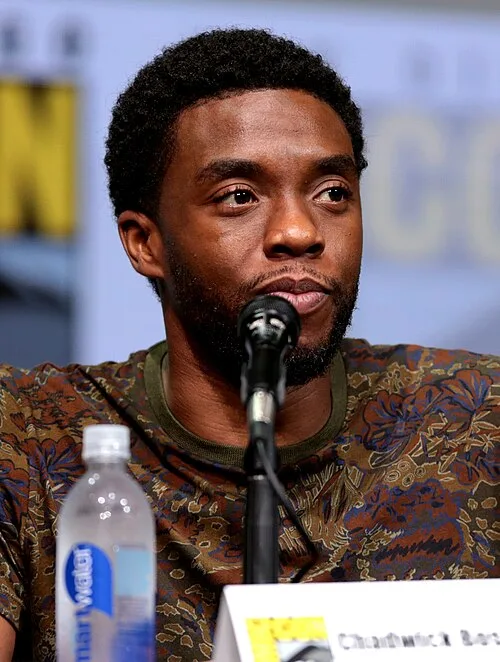


Chadwick Aaron Boseman (; November 29, 1976 – August 28, 2020) was an American actor and playwright. Through his two-decade career, he appeared in a number of projects spanning both blockbuster and independent films, and received various accolades, including an Actor Award, a Golden Globe Award, and a Primetime Emmy Award, in addition to nominations for an Academy Award and a BAFTA Award.
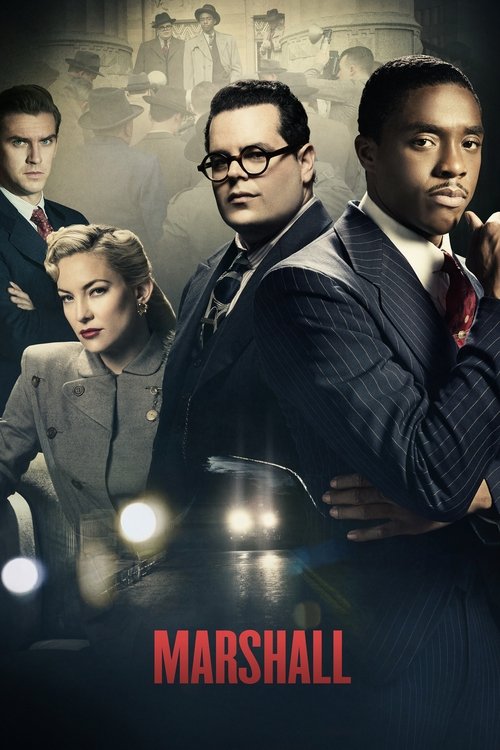
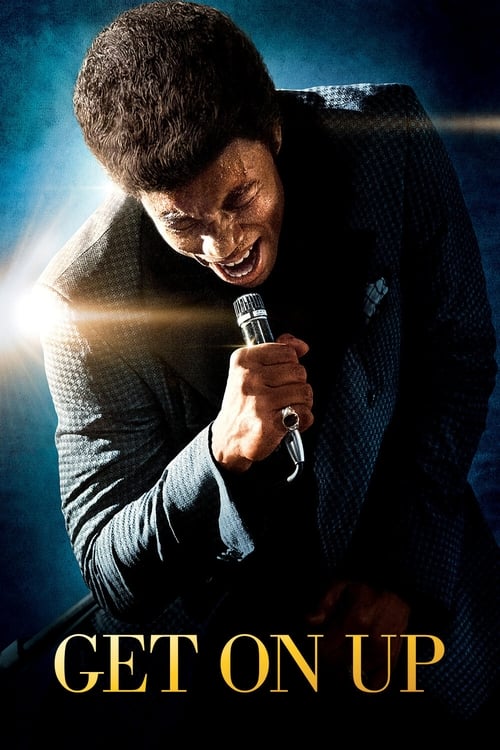
Born in South Carolina, Boseman studied directing at Howard University and began his career in theatre. Boseman won a Drama League Directing Fellowship and an acting AUDELCO, along with receiving a Jeff Award nomination for his 2005 play Deep Azure. Transitioning to the screen, his first major role was as a series regular on the NBC drama Persons Unknown (2010) and he landed his breakthrough role as baseball player Jackie Robinson in 42 (2013). He continued to portray historical figures, starring as singer James Brown in Get on Up (2014) and as Thurgood Marshall in Marshall (2017).
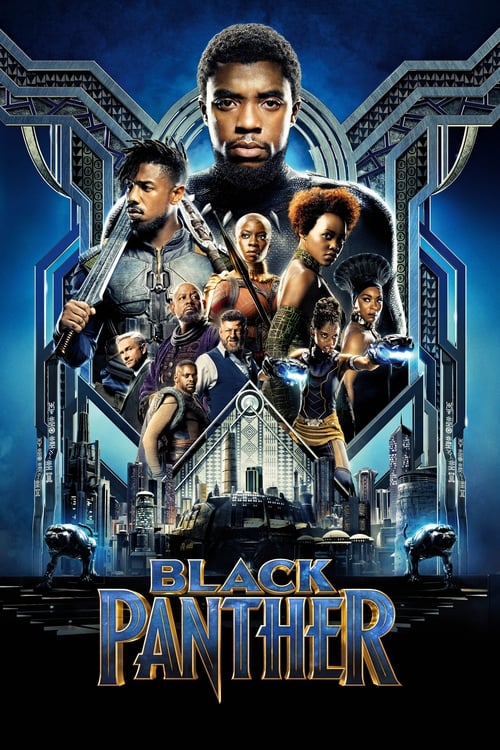
Boseman achieved international fame for playing the Marvel Comics superhero T'Challa (Black Panther) in the Marvel Cinematic Universe (MCU) from 2016 to 2019. He appeared in four MCU films, including Black Panther (2018). As the first Black actor to headline an MCU film, he was also named in the 2018 Time 100. Boseman's final performance as the character in the Disney+ anthology series What If...? (2021) earned him a posthumous Primetime Emmy Award for Outstanding Character Voice-Over Performance.
In 2016, Boseman was diagnosed with colon cancer. He kept his condition private, continuing to act until his death from the illness in 2020. For his final film role, the drama Ma Rainey's Black Bottom (2020), he received the Golden Globe and Screen Actors Guild awards for Best Actor, along with a posthumous nomination for an Oscar in the same category.
Contents
Life and career
Early years and education
Chadwick Aaron Boseman was born on November 29, 1976, in Anderson, South Carolina, where he grew up. His mother, Carolyn, was a nurse. His father, Leroy worked at a textile factory and managed an upholstery business. In his youth, Boseman practiced martial arts, and continued this training as an adult. As a child, he wanted to become an architect. According to Boseman, DNA testing indicated that some of his ancestors were Jola people from Guinea-Bissau, Krio people and Limba people from Sierra Leone, and Yoruba people from Nigeria.
Boseman graduated from T. L. Hanna High School in 1995, where he played on the basketball team. In his junior year, he wrote his first play, Crossroads, and staged it at the school after a classmate was shot and killed. He competed in Speech and Debate in the National Speech and Debate Association at T. L. Hanna. He placed eighth in Original Oratory at the 1995 National Tournament. He was recruited to play basketball at college but chose the arts instead, attending college at Howard University in Washington, D.C., and graduating in 2000 with a Bachelor of Fine Arts in directing. While at Howard, he worked in an African American–oriented bookstore near the university, which friend Vanessa German said was important and inspirational to him; he drew on his experience there for his play Hieroglyphic Graffiti.
His teachers at Howard included Al Freeman Jr. and Phylicia Rashad, who became a mentor. Rashad helped raise funds, notably from her friend and prominent actor Denzel Washington, so that Boseman and other classmates could attend the Oxford Summer Program of the British American Drama Academy at Balliol College, Oxford, in England, to which they had been accepted. Boseman wanted to write and direct, and initially began studying acting to learn how to relate to actors. He attended the program in 1998, and he developed an appreciation for the playwriting of William Shakespeare; additionally, he studied the works of various dramatists, including Samuel Beckett and Harold Pinter. He also traveled to Africa for the first time while at college, working in Ghana with his professor Mike Malone "to preserve and celebrate rituals with performances on a proscenium stage"; he said it was "one of the most significant learning experiences of [his] life". After he returned to the U.S., he took additional course work in film studies, graduating from New York City's Digital Film Academy.
2000–2007: Theater, Deep Azure, and early television
Boseman lived in Brooklyn, New York City, at the start of his career. In 2000, he was named a Drama League Directing Fellow. He directed productions including George C. Wolfe's The Colored Museum (Wolfe would later direct Boseman in his final role) and a staging of Amiri Baraka's Dutchman. He worked as the drama instructor in the Schomburg Junior Scholars Program, housed at the Schomburg Center for Research in Black Culture in Harlem between 2002 and 2009.
He rose to prominence as a playwright and stage actor in 2002, performing in multiple productions and winning an AUDELCO award in 2002 for his part in Ron Milner's Urban Transitions. As a member of the National Shakespeare Company of New York, he played Romeo in Romeo and Juliet and Malcolm in Macbeth. He directed and wrote plays as part of the Hip-hop theater movement; his works included Rhyme Deferred (co-written with Howard classmate Kamilah Forbes), in which he also performed, and Hieroglyphic Graffiti. Rhyme Deferred was commissioned for a national tour, as well as featuring in The Fire This Time anthology of works, while Hieroglyphic Graffiti was produced at a variety of locations, including the National Black Theatre Festival in 2001. Combining modern African-American culture and Egyptian deities, it is set in Washington, D.C., and was picked up by the New York Hip-Hop Theatre Festival and Tennessee State University's summer stock theatre program in 2002. It was also the Kuntu Repertory Theatre's 2002–03 season launch production. At the 2002 Hip-Hop Theatre Festival, Boseman also gave a one-man show called "Red Clay and Carved Concrete".
In 2003, Boseman was cast in his first television role, an episode of Third Watch, and began playing Reggie Montgomery in the daytime soap opera All My Children. He was fired from All My Children after voicing concerns to producers about racist stereotypes in the script; the role was subsequently re-cast, with Boseman's future Black Panther co-star Michael B. Jordan taking the part. Boseman had wanted to work around the stereotypes of the character, feeling that being in a soap opera would give him more room for improvisation as the writers often do not initially plan a full story; his (then-future) agent said that when Boseman was given the second script and learned that his character's parents were a drug addict and an absent father, Boseman confronted the creators. He reflected on the experience in his 2018 commencement address to Howard University, saying that it "seemed to be wrapped up in assumptions about us as black folks [and he] would have to make something out of nothing." His other early television work included episodes of the series Law & Order, Cold Case, CSI: NY, and ER.
2008–2015: Breakthrough with 42 and Get on Up
In 2008, Boseman moved to Los Angeles to pursue his film and acting career. He was cast in a recurring role on the television series Lincoln Heights as Nathaniel Ray Taylor, an army veteran with PTSD who was later revealed to be the son of the main character before re-enlisting. He also appeared in his first feature film in 2008, The Express: The Ernie Davis Story, as running back Floyd Little. He landed his first regular role in the 2010 television series Persons Unknown as the Marine Graham McNair. The show received mediocre reviews that felt the characters were all archetypes with little development. In July 2013, Boseman's second short film as director, Heaven, premiered at the HollyShorts Film Festival.
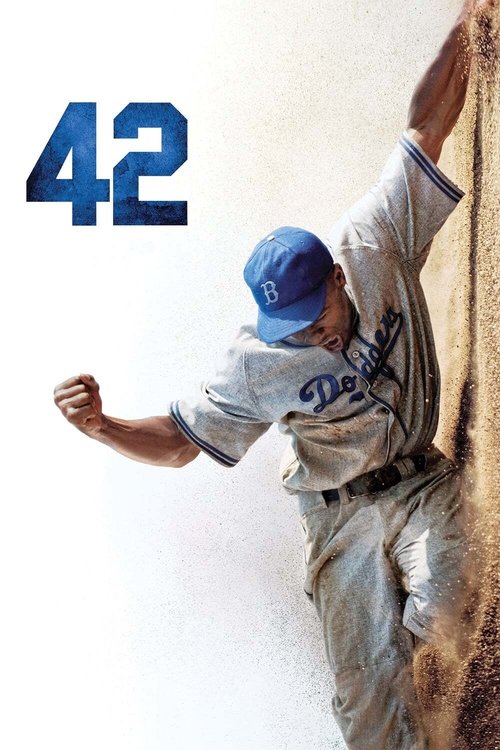
Boseman's breakthrough role came in 2013 with the film 42, in which he portrayed the lead role of baseball legend Jackie Robinson. Boseman had been directing an off-Broadway play in the East Village when he auditioned for the role, and was considering giving up acting to pursue directing full-time. About twenty-five other actors had been seriously considered for the role, but director Brian Helgeland liked Boseman's bravery in choosing to read the most difficult scene, in which Robinson goes down a stadium tunnel and breaks a bat in anger, and cast him after he had auditioned twice. Part of the audition process involved playing baseball; Boseman had been involved with Little League as a child but was primarily a basketball player growing up, saying that in this part the casting directors likely noticed his athleticism rather than specifically baseball skills. Robinson's widow, Rachel Robinson, commented that Boseman's performance was like seeing her husband again. To replicate Robinson's mannerisms, Boseman trained for five months with professional baseball coaches who "would tape [his] practices every few weeks, and they would basically split-screen [his technique] with [Robinson's]" to allow him to compare. After having portrayed football player Little in The Express, Boseman was encouraged by stunt coordinator Allan Graf to approach running bases in the same way, as Robinson had also been a college football player. Upon taking the role, Boseman first spoke with Rachel Robinson, which he said was of great help in discovering the character. The same year, Boseman also starred in the independent film The Kill Hole, which was released in theaters a few weeks before 42.
Critics, even those who viewed the film negatively, felt that Boseman's being a relatively unknown actor was a benefit when playing an icon and an athlete; Mick LaSalle of San Francisco Chronicle wrote that "as [...] played by Chadwick Boseman, Robinson is a hero we can recognize", and Mary Pols for Time said that "Boseman is not a hugely close physical match to Robinson, except for perhaps in the power he conveys, but he's a great choice to play the ball player". The Guardian's Mike McCahill noted that "Boseman hits his key scenes out of the park", but felt the film would not interest people who are not baseball fans, with Dana Stevens of Slate suggesting that the film made black history "squeaky-clean" and did both Robinson and Boseman's performance as him a disservice.
2016–2019: Marvel Cinematic Universe, Marshall and 21 Bridges
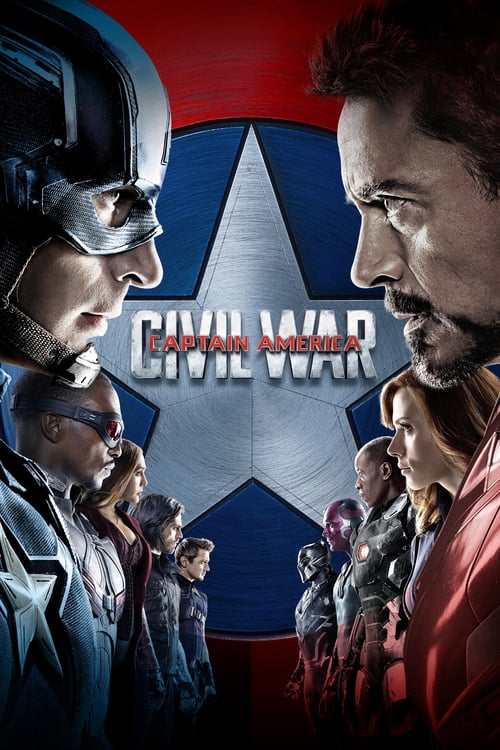
In 2016, Boseman began portraying the Marvel Comics character T'Challa / Black Panther in the Marvel Cinematic Universe. Captain America: Civil War was his first film in a five-picture deal with Marvel Entertainment. He did not audition for the role, instead having a "discussion about what [Marvel] wanted to do and how [he] saw it and what [he] wanted to do." While working on Civil War, Boseman learned some Xhosa from John Kani, who played his father, and insisted on using the language for the character. Boseman also developed a Wakandan accent himself, and used it during the entire production "whether he was on camera or not". When asked by journalist Ryan Gilbey if he felt pressure not to "screw up" the beloved comics character, Boseman responded by saying: "It's more positive than that. It's more like: 'Seize it. Enjoy it.'" He told the Associated Press, though, that he more identified with the Black Panther's nemesis, Killmonger, knowing that his roots to his African past had been severed. Producer Kevin Feige explained that the Black Panther was included in Civil War "because [they] needed a third party. [It] needed fresh eyes [of a character] who wasn't embedded with the Avengers and who has a very different point of view than either Tony or Steve." Boseman's performance in Civil War was highly praised, though critics acknowledged the character's inclusion was largely to set up his upcoming headlining movie.
Boseman returned as the Black Panther in Black Panther (2018), directed by Ryan Coogler, which focused on the character and his home country of Wakanda in Africa. The film opened to great anticipation, becoming one of the highest-grossing films. The role earned Boseman a spot on the 2018 Time 100 as one of the world's most influential people, with Sean Combs writing his entry. It is seen as a landmark in being the first mega-budget movie to have a predominantly black cast and director, as well as the first superhero film to be nominated for an Academy Award for Best Picture. The film received universal acclaim and Boseman was praised; Matthew Norman for the Evening Standard said that he "brings a measure of sub-Shakespearean gravitas to T'Challa's struggle to bear the weight of his crown"; Richard Lawson and Sight & Sound's Kelli Weston also noted the strength of gravitas Boseman gave to the performance. Weston added that he, "despite having the more thankless role [out of T'Challa and Killmonger], carries the film with a quiet dignity one might rightfully expect of a man raised to be king." Todd McCarthy and The Village Voice's Kristen Yoonsoo Kim saw that while Boseman played his serious character well, the cast was full of charismatic scene stealers. Peter Travers gave much praise to Boseman as the lead, and said that he "digs so deep into T'Challa that you can feel his nerve endings"; LaSalle wrote that "Boseman commands every moment of this film, radiating probity and purpose, and it's only later on that you realize that, with another actor, this wouldn't have been a sure thing."
2020: Da 5 Bloods and Ma Rainey's Black Bottom
In 2019, Boseman was announced as part of the cast for the Netflix films Da 5 Bloods, directed by Spike Lee, and Ma Rainey's Black Bottom, directed by George C. Wolfe. He took these "bucket-list roles" for opportunities to work with Lee and with Ma Rainey producer Denzel Washington, as well as the opportunity to perform in an August Wilson play, telling Entertainment Weekly that he wanted to make these non-superhero films because "if you don't do the films that you plan to do, I think you wouldn't feel fulfilled as an artist." He was also cast in a film telling the story of Yasuke, the only non-Asian samurai and the first black man in Japan, which he was set to co-produce; Boseman said: "[the story is] not just an action movie, [it is] a cultural event, an exchange, and I am excited to be part of it." Time included Boseman on their list of the 10 Best Movie Performances of 2020, for both Da 5 Bloods and Ma Rainey; for Ma Rainey, Boseman received posthumous nominations in the Best Actor category at the Academy Awards, Actor Awards, British Academy Film Awards, and Golden Globe Awards , becoming the eighth person (and seventh man) to receive a posthumous Academy Award acting nomination.
Da 5 Bloods was released on June 12, 2020. Lee, in choosing Boseman for the divine-like character of Stormin' Norman, said: "This character is heroic; he's a superhero. Who do we cast? We cast Jackie Robinson, James Brown, Thurgood Marshall, and we cast T'Challa." Reception of his character was mostly positive; for the Associated Press, Jocelyn Noveck wrote that Boseman played Norman "with movie-star charisma and classic war-movie grit", and Empire's Kambole Campbell said his performance had "regal charisma", while Chuck Bowen of Slant said that he "has a hauntingly gaunt presence, but he's already played too many saints." The A.V. Club's Ashley Ray-Harris felt the lack of digital de-aging for the other characters was unsuccessful in its aims and that "Lee's script doesn't give Boseman much to do outside of this confused, Christ-like characterization and never exposes Norman's own naïveté." Conversely, Peter Bradshaw of The Guardian saw it as a reflection that "[he] has grown not old as those that are left grew old", and a way to show how Norman has been romanticized in his comrades' memories; Odie Henderson of RogerEbert.com had a similar view and said that Boseman was "a perfect casting move", with the actor already carrying such a mythical status in black culture that he does not need to do much to be a believable mythical black icon as Norman.
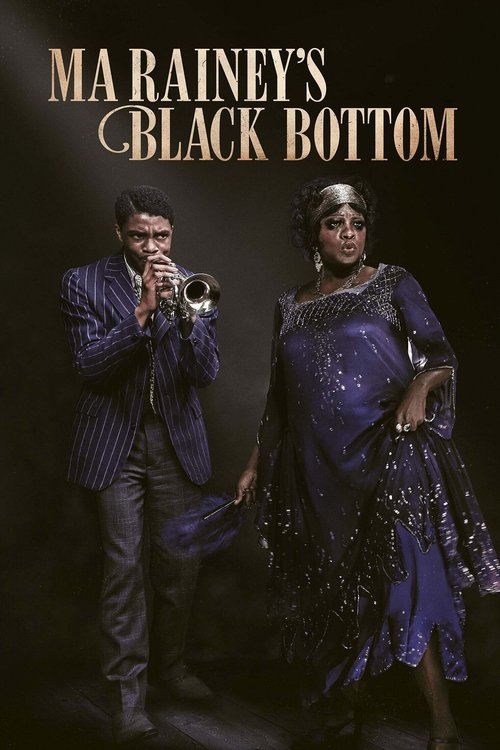
The film Ma Rainey's Black Bottom, in which Boseman co-stars as trumpeter Levee, was released after the actor's death in 2020. Director Wolfe said that Boseman was excited by the role for the challenge it posed, saying that "it's a monster role and it's a thrilling role, it's a difficult role. All of those things are exhilarating for an actor. And [Boseman] rose to the occasion and more than delivered." The film is based on the August Wilson play of the same name; Boseman was a fan of Wilson and wrote about him and his inspiration on Boseman's own work in a 2013 essay for the Los Angeles Times. According to Chris Jones, Boseman's Levee is "an astonishing, revelatory performance and formidably distinct from the numerous interpretations seen on the stage"; A. O. Scott of The New York Times similarly opined that "it will be hard, from now on, to imagine [...] a Levee to compare with Boseman." Angelica Jade Bastién for Vulture wrote at length on Boseman's performance, saying that "many of the important turns in the film hinge on Boseman's presence at the center. [...] In the first of his lachrymose monologues, Boseman is called to embody [anger and] gives the scene his all." Charlotte O'Sullivan of the Evening Standard said Boseman was brave to take on a "more curdled" role than the heroic leaders he is best known for, and that "as skilful as he was talented, [he] hits the right notes, all the time." Clarisse Loughrey wrote that it was the actor's finest performance, that "when [he] rages against an unjust God [...] it strikes like thunder" and is "delivered with such grace that there's a sense he had another hundred performances like it still in him."
Personal life
Family
Boseman began dating singer Taylor Simone Ledward in 2015. The two reportedly engaged by October 2019, and married six days before his death.
Boseman was raised a Christian and was baptized. He was part of a church choir and youth group and his former pastor said that he still kept his faith.
Philanthropy
Outside of performing, Boseman supported various charities. He worked with cancer charities including St. Jude Children's Research Hospital, continuing to support those battling the disease up until his own death from it; in a message to a producer days before he died, Boseman inquired about sending gifts to childhood cancer patients. He donated $10,000 to the Boys and Girls Club of Harlem to provide free tickets for children who wanted to see Black Panther; he did this to support and promote the Black Panther Challenge started by a New Yorker to raise money for similar children across the country. In response, Disney donated $1 million to the Boys & Girls Clubs to advance its STEM programs. Boseman advocated for children's charities, with the Jackie Robinson Foundation noting after his death that he helped with their youth outreach. When Disney planned to donate $400 million to charitable causes, Boseman encouraged the move. In April 2020, he donated $4.2 million in personal protective equipment to hospitals fighting the COVID-19 pandemic in black communities, starting his own Operation 42 challenge to encourage others to donate PPE.
Advocacy
In politics, Boseman supported the When We All Vote campaign, and his last tweet before his death was congratulating Kamala Harris on her selection as Joe Biden's vice-presidential nominee. Prior to the 2018 midterm elections, Boseman urged Twitter followers to visit VoteRiders online or call the organization's helpline to ensure eligible voters had the ID needed to cast a ballot.
Illness and death
Boseman was diagnosed with stage III colon cancer in 2016. It progressed to stage IV before 2020. He never spoke publicly about his cancer diagnosis, and according to The Hollywood Reporter, "Only a handful of non-family members knew that Boseman was sick... with varying degrees of knowledge about the severity of [his] condition." During treatment, involving multiple surgeries and chemotherapy, he continued to work and completed production for several films, including Marshall, Da 5 Bloods, Ma Rainey's Black Bottom, and others.
Boseman died at his Los Angeles home as a result of complications related to colon cancer on August 28, 2020, with his wife and family by his side. He was 43 years old. He died intestate, and his estate was governed by California law with the representation of Ledward, his widow.
A public memorial service was held on September 4, 2020, in Anderson, South Carolina. Speakers included Boseman's childhood pastor as well as Deanna Brown-Thomas, daughter of James Brown, whom Boseman portrayed in Get on Up. The city announced plans for the creation of a permanent art memorial at the service. Despite reports that Boseman was buried at Welfare Baptist Church cemetery in nearby Belton, South Carolina, the funeral home handling the services and the church pastor both denied this.
Response
Many fellow actors and other celebrities paid tribute to Boseman on social media following the announcement of his death, including a number of his Marvel Cinematic Universe co-stars. Marvel Studios president and CCO Kevin Feige called Boseman's death, "absolutely devastating", writing: "Each time he stepped on set, he radiated charisma and joy, and each time he appeared on screen, he created something truly indelible [...] Now he takes his place [as] an icon for the ages." Co-stars from Boseman's other films also paid tribute to him. His alma mater, Howard University, tweeted in reaction that "his incredible talent will forever be immortalized through his characters and through his own personal journey from student to superhero".
On August 29, 2020, the day after Boseman died, the tweet in which his family announced his death on his Twitter account became the most-liked tweet in history, with over six million likes in under 24 hours, and accumulating over seven million by August 31, far displacing the previous record holder. His death was likened to other unexpected deaths of other celebrities in 2020, particularly Kobe Bryant and Naya Rivera. The Associated Press and Clarín noted Rivera and Boseman as Hollywood's most impactful 2020 deaths.
Major League Baseball and the Los Angeles Dodgers, the franchise for which Jackie Robinson played when the team was at its former home of Brooklyn, New York, issued statements honoring Boseman, in light of his acclaimed portrayal of the player. Several publications noted Boseman died on the observance of Jackie Robinson Day, seven years after his having portrayed Robinson. Prior to the fifth game between the Los Angeles Lakers and the Portland Trail Blazers in the NBA playoffs, Boseman was honored with a moment of silence, alongside Cliff Robinson and Lute Olson. When Lewis Hamilton claimed pole position in qualifying at the 2020 Belgian Grand Prix, he dedicated his lap to Boseman, as well as his race win the following day.
Tributes
On August 28, 2020, a Change.org petition was started, seeking to replace a Confederate monument in his hometown of Anderson with a statue of Boseman; it collected more than 50,000 signatures in less than a week, surpassing its original goal of 15,000 signatures. Henry McMaster, the Governor of South Carolina, ordered the Statehouse flags be lowered to half-staff on August 30 in honor of Boseman, who was born and raised in the state. ABC (which, like Marvel Entertainment, is owned by Disney) aired a commercial-free version of Black Panther, followed by a special about Boseman's life and work titled Chadwick Boseman – A Tribute for a King on the same day. Also aired on August 30 was the 2020 MTV Video Music Awards; the ceremony was dedicated to Boseman. On September 24, 2020, Disney unveiled a mural titled King Chad, by artist Nikkolas Smith dedicated to Boseman at Downtown Disney in Anaheim, California. In February 2021, another mural dedicated to Boseman was painted at Trilith Studios in Fayetteville, Georgia, by artist Brandon Sadler. Following his Best Actor win at the Academy Awards in April 2021, Anthony Hopkins said, "I want to pay tribute to Chadwick Boseman, who was taken from us far too early [...]."
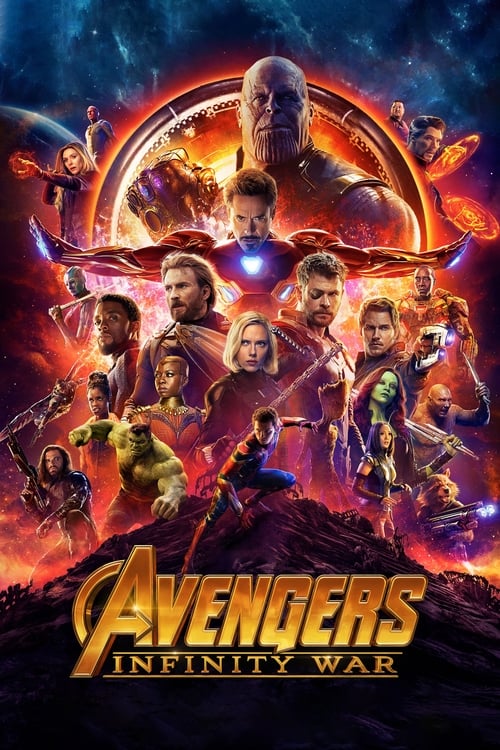
Boseman is also memorialized in the 2020 video game Marvel's Spider-Man: Miles Morales. The game includes an after-credits message dedicating it in memory of Boseman, as well as a street called Boseman Way on 42nd Street; the number 42 bears significance in the Miles Morales mythos as well as referring to Boseman's portrayal of Jackie Robinson. A Wakandan flag also appears. Amazon also made Black Panther comic titles available for free on its ComiXology platform in the wake of Boseman's death. On November 29, 2020, Marvel changed the studio's logo animation in the opening of Black Panther on Disney+ to include images of Boseman from the film, as well as his appearances in Captain America: Civil War, Avengers: Infinity War, and Avengers: Endgame, to honor what would have been Boseman's 44th birthday.
In a 2020 tribute, Ryan Coogler, the director of Black Panther and its 2022 sequel, offered condolences to Boseman's family and said that he had spent the last year "preparing, imagining and writing words for him to say [in the sequel] that we weren't destined to see". Coogler and Marvel Studios executives were unaware of Boseman's illness until his death. By the time of Boseman's death, Coogler was in the middle of writing the script and had already turned in a draft. Also paying tribute, Feige confirmed that the role of T'Challa would not be recast. Producer Nate Moore said that Boseman "was such an integral part of that character for us, both as the character and as a person, that we could not conceive of a version with having someone else on set".
Reputation and legacy
According to film critic Owen Gleiberman of Variety, "Boseman was a virtuoso actor who had the rare ability to create a character from the outside in and the inside out [and he] knew how to fuse with a role, etching it in three dimensions [...] That's what made him an artist, and a movie star, too. Yet in Black Panther, he also became that rare thing, a culture hero". Similarly, reviewer Richard Brody in The New Yorker finds the originality of Boseman's formidable acting technique in his ability to empathize with the interior lives of his characters and render them on screen as fully and completely belonging to the character. He was uniquely able to capture and portray the dignity of his characters, according to The New York Times critic Wesley Morris. Well known for taking biopic roles, Hanna Flint for the BBC said he became the frequent choice because of his dedication to embodying character. Peter Bradshaw wrote of the actor's "beauty, his grace, his style, his presence [...] These made up Chadwick Boseman's persona [and he became] the lost prince of American cinema[,] glorious and inspirational".
Culture writer Steve Rose of The Guardian said that Boseman's career was revolutionary, and that due to his careful planning and selection of roles, he "leaves behind a gamechanging legacy". Rose further wrote:
Chadwick Boseman began his career playing African American icons and pioneers; he ends it as one himself. His [...] achievements, as an actor and as a cultural force, will surely prove to be as heroic as those of the characters he portrayed. At the very least, he leaves the film-making landscape looking very different to how it was when he entered it.
As the Black Panther, Boseman led a predominantly black cast in a major blockbuster for the first time; Variety said that "the significance of Chadwick Boseman [...] to the African American and Black community is immeasurable." Further expressing the weight of Boseman's legacy, Robert Daniels wrote for Vulture that "his performance [as T'Challa] wouldn't just be a demonstration of craft [...] It'd become a piece of history. He'd face a slew of pressures, because a Black epic, even a period piece, is forever expected to be important, representative of the past, present, and future." He told BBC Culture that "through his acting, [Boseman] wrote, rewrote, and reclaimed black history". Boseman's Ma Rainey co-star Viola Davis told Rose that "he is going to be remembered as a hero", both as the Black Panther and for the authentic man he was, and that "his legacy, his body of work, his integrity, is going to influence on generations upon generations to come." BBC Culture called him "a film icon who changed Hollywood"; "a symbol of black excellence and of cinematic excellence"; and "a virtuoso and heroic figure, not just because of his iconic turn as Marvel's Black Panther but for how he raised the bar for racial equality and representation on screen."
Filmography
Awards and honors
Boseman gave the commencement address at Howard University on May 12, 2018.