.jpg?width=400)
.jpg?width=400)


.jpg?width=400)










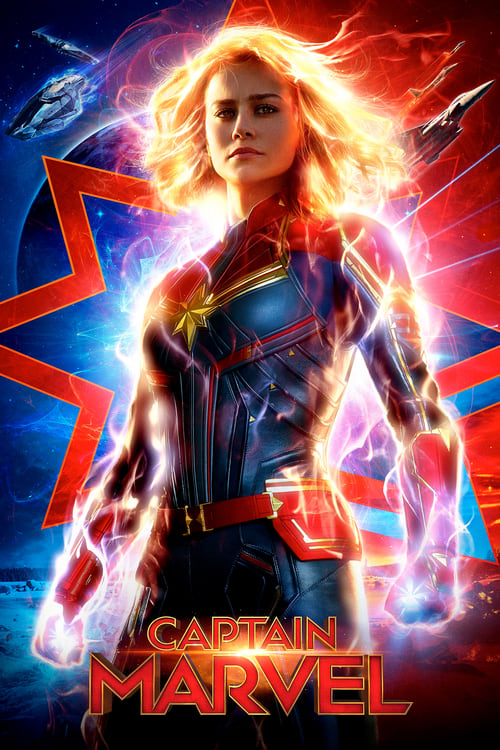
Captain Marvel is a 2019 American superhero film based on Marvel Comics featuring the character Carol Danvers / Captain Marvel. Produced by Marvel Studios and distributed by Walt Disney Studios Motion Pictures, it is the 21st film in the Marvel Cinematic Universe (MCU). The film was directed by Anna Boden and Ryan Fleck from a screenplay they co-wrote with Geneva Robertson-Dworet. It stars Brie Larson as Carol Danvers, alongside Samuel L. Jackson, Ben Mendelsohn, Djimon Hounsou, Lee Pace, Lashana Lynch, Gemma Chan, Annette Bening, Clark Gregg, and Jude Law. Set in 1995, the story follows Danvers as she becomes Captain Marvel after Earth is caught in a galactic conflict.
Development began by May 2013. The film was officially announced in October 2014 as Marvel Studios' first female-led project. Nicole Perlman and Meg LeFauve were hired to write it the following April after submitting separate takes on the character, and borrowed elements from Roy Thomas's 1971 "Kree–Skrull War" comic book storyline. Larson was announced as Danvers at the 2016 San Diego Comic-Con, with Boden and Fleck hired to direct in April 2017. Robertson-Dworet was soon hired to re-write the script, and the rest of the cast were added by the start of filming. Location shooting began in January 2018, with principal photography starting that March in California and concluding in Louisiana in July 2018. Several actors reprise their roles from previous MCU films, including Jackson and Gregg. They were both digitally de-aged in post-production to reflect the film's 1990s setting.
Captain Marvel premiered in London on February 27, 2019, and was theatrically released in the United States on March 8 as part of Phase Three of the MCU. The film grossed over $1.1 billion worldwide, making it the first female-led superhero film to pass the billion-dollar mark. It became the fifth-highest-grossing film of 2019 and was the 23rd-highest-grossing film of all time during its theatrical run. The film received generally positive reviews from critics, with praise for the performances—particularly Larson's. Audience responses were also positive, although the audience reception section on Rotten Tomatoes was subject to review bombing. A sequel, The Marvels, was released on November 10, 2023.
Contents
Plot
In 1995, on the Kree Empire's capital planet of Hala, Starforce member Vers suffers from amnesia and recurring nightmares involving an older woman. Yon-Rogg, her mentor and commander, trains Vers to control her abilities, while the Supreme Intelligence, the artificial intelligence that rules the Kree, urges her to keep her emotions in check.
During a mission to rescue an undercover operative infiltrating a group of Skrulls, alien shapeshifters with whom the Kree are at war, Vers is captured by Skrull commander Talos. A probe of Vers's memories leads them to Earth. Vers escapes and crash-lands in Los Angeles. Her presence attracts S.H.I.E.L.D. agents Nick Fury and Phil Coulson, whose investigation is interrupted by a Skrull attack. Vers recovers a crystal containing her extracted memories in the ensuing chase while Fury kills a Skrull impersonating Coulson.
Talos, disguised as Fury's boss Keller, orders Fury to work with Vers and keep tabs on her. Using her extracted memories, Vers and Fury go to the Project Pegasus installation at a former U.S. Air Force base. They discover that Vers is a human pilot who was presumed to have died in 1989 while testing an experimental light-speed engine designed by Dr. Wendy Lawson, whom Vers recognizes as the woman from her nightmares. Fury informs S.H.I.E.L.D. of their location and a team arrives. When he realizes that Keller is Talos, Fury helps Vers escape in a prototype jet with Lawson's stowaway cat, Goose.
They fly to Louisiana to meet former pilot Maria Rambeau, the last person to see Vers and Lawson alive. Rambeau and her daughter Monica reveal that Vers is Carol Danvers, who was once like family to them. Talos, arriving unarmed, says the Skrulls are refugees searching for a new home to escape the Kree's unjust war and Lawson was Mar-Vell, a renegade Kree scientist helping them. Talos plays a recovered blackbox recording from Lawson's jet, prompting Danvers to remember the crash: Yon-Rogg killed Mar-Vell to prevent her from destroying the engine before the Kree could recover it. Danvers destroyed the engine herself and absorbed its energy, gaining powers but losing her memory.
Danvers, Talos, Fury, and Rambeau locate Lawson's cloaked laboratory orbiting Earth, where Lawson hid several Skrulls, including Talos's family, and the Tesseract, the power source of Lawson's engine. Danvers is captured by Starforce and interfaces with the Supreme Intelligence. Danvers removes a Kree implant that has been suppressing her powers, allowing her to reach her full potential. In the subsequent battle, Fury retrieves Goose, who is revealed to be an alien Flerken. Goose swallows the Tesseract and scratches Fury, blinding his left eye. Danvers destroys a Kree bomber, forcing Kree officer Ronan the Accuser and his squadron to retreat.
Cast
Brie Larson as Carol Danvers / Vers / Captain Marvel: An ex-U.S. Air Force fighter pilot and member of an elite Kree military unit called Starforce. She was imbued with superhuman strength, energy projection, and flight after exposure to Tesseract energy. Larson described Danvers as a "believer in truth and justice" and a "bridge between Earth and space", who must balance her unemotional Kree side with her "flawed" human half. Larson also called Danvers aggressive, quick-tempered, and invasive—attributes that help her in a fight but prove to be character flaws. Marvel Studios president Kevin Feige said Larson was cast because of her ability to balance the character's vast powers with her humanity. Due to concern that Larson (aged 26 when she was cast) was too young to portray an accomplished airman, screenwriter Nicole Perlman consulted with the Air Force, who said it was possible for someone to excel between the ages of 28 and 34. Larson trained for nine months for the role, learning judo, boxing, and wrestling. She also visited Nellis Air Force Base and met with active duty airmen, including Brigadier General Jeannie Leavitt and Thunderbirds pilot Major Stephen Del Bagno, in preparation for the role. Carol Danvers is portrayed as a thirteen-year-old by Mckenna Grace, and as a six-year-old by London Fuller.
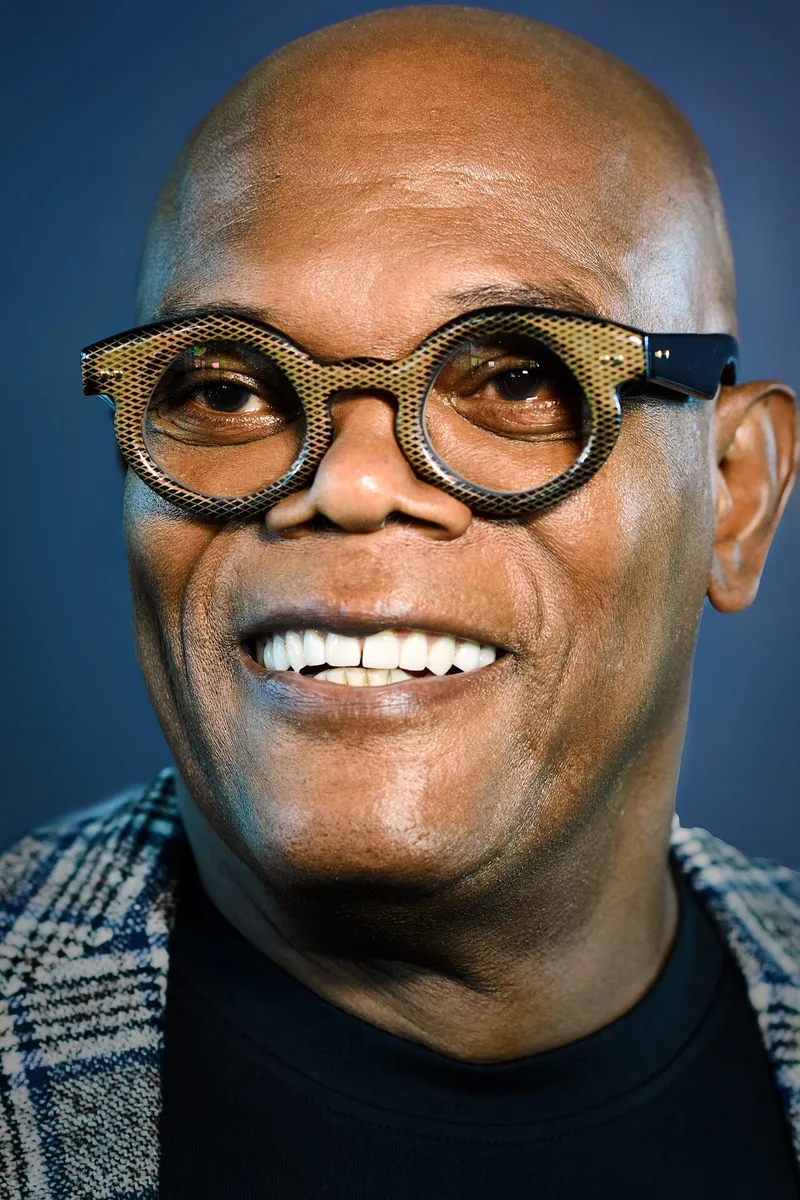
Samuel L. Jackson as Nick Fury: The future director of S.H.I.E.L.D., who at this time is a low-level bureaucrat. Fury appears without his signature eye patch as the film is set before he loses his eye. Feige explained that Danvers is the first superhero that Fury has come across, which sets him on a path to his role working with heroes in later-set MCU films. Jackson described Fury at this point as a desk jockey, who has not yet become cynical towards bureaucracy and who learns in the film that there are superpowered beings who could help S.H.I.E.L.D. Jackson added that trusting Danvers plays a key role in his development, as they become "compatriots" throughout the film. Jackson was digitally de-aged by 25 years, the first time Marvel had done this for an entire film.
Ben Mendelsohn as Talos and Keller: Talos is the shape-shifting leader of the Skrulls who goes undercover at S.H.I.E.L.D. as Fury's boss, Keller. Mendelsohn described Keller as "buttoned up" compared to Talos's "more laid-back" Skrull persona. Mendelsohn uses an American accent inspired by former United States Secretary of Defense Donald Rumsfeld for Keller, and his native Australian accent for Talos; the latter was chosen, after a "lengthy discussion", due to what Mendelsohn called "earthy correctness". The makeup and prosthetics necessary to portray Talos took "a couple of hours" to apply. Executive producer Johnathan Schwartz added that "it's sort of fun to show off both the Skrull's powers and Ben's range as an actor" with the character. Talos also takes on a surfer-girl form, portrayed by Emily Ozrey and Abigaille Ozrey, and a Kree soldier disguise played by Duane Henry. An early version of the script had the character dying in the film.
Production
Development
By May 2013, Marvel Studios' writing room had produced a script for a film featuring Ms. Marvel, an alias used by the character Carol Danvers before she took the mantle Captain Marvel. Later that year, executive producer Louis D'Esposito said the studio was interested in a female-driven superhero film and had plenty of "strong female characters" from which to choose, suggesting Captain Marvel, Black Widow, Pepper Potts, or Peggy Carter as possible candidates. Kevin Feige, President of Marvel Studios, said that if Marvel was to make a female-led film, he would prefer it to be a new character to the Marvel Cinematic Universe (MCU) like Captain Marvel, for whom an origin story could be told. In August 2014, Feige stated that development had begun on a Captain Marvel film, and said members of the public asked about the project more often than Iron Man 4 or Avengers: Infinity War (2018).
In October 2014, Feige announced that Captain Marvel would be the studio's first female-led film, and would focus on Carol Danvers. It was given a release date of July 6, 2018, as part of their Phase Three slate of films. Feige said the film had been in development almost as long as Guardians of the Galaxy (2014) and Doctor Strange (2016), and one of its biggest challenges would be balancing the title character's "earthbound" adventures with her cosmic powers. He said a writer and director for the film would be announced soon, and female filmmakers were being considered for the project, but he could not promise that filmmakers from a certain demographic would be hired for the film.
In February 2015, Marvel pushed the release date back to November 2, 2018, to accommodate Spider-Man: Homecoming (2017). In early April, Feige revealed that Captain Marvel had been included in an early draft of the Avengers: Age of Ultron (2015) screenplay, but Marvel chose to remove this appearance because they did not want to introduce the character before they were able to explore her backstory and personality first. He also said that Marvel would announce writers for the film within a few weeks, and by mid-April, Guardians of the Galaxy co-screenwriter Nicole Perlman and Inside Out (2015) co-screenwriter Meg LeFauve were announced to be writing the screenplay. The duo were put together as a writing team after impressing Feige with separate takes on the character, and began work on the film within a month. Jessica Gao, who would later become the head writer for the Marvel Studios television series She-Hulk: Attorney at Law (2022), also pitched for the film, as did A. C. Bradley, who became the head writer of the Marvel Studios animated series What If...? (2021–2024). LeFauve found the character being a female superhero to be both "wonderful" and a challenge, believing that the character's power-level could lead to the "Superman curse" of being perceived to be invulnerable. Additionally, LeFauve and Perlman found that writing a "story about a human and not get[ting] too overwhelmed by the worry of representing all women" worked best when approaching the story. An article about young girls who would quit learning to code after they encountered trouble made LeFauve and Perlman consider questions about females being taught they cannot make mistakes or embrace their own power. This helped the duo realize that "part of embracing your power is failure" and seeing it "more as feedback instead of your character".
Pre-production
Marvel hired Anna Boden and Ryan Fleck to direct Captain Marvel in April 2017, after the duo impressed the studio over numerous meetings with their vision for the character and because of their experience working in both television and film. Feige said that he and Marvel were particularly impressed with Boden and Fleck's ability to create a diverse range of character-driven stories in all of their works. Feige felt the film had to focus on the complexity and relatability of Carol Danvers's character without being bogged down by the villains and the special effects, and thought that Boden and Fleck could provide this character focus. Filming was scheduled to begin in January 2018, at Pinewood Atlanta Studios in Fayette County, Georgia, but Feige said he did not expect it to begin until February.
By July 2017, Samuel L. Jackson was set to appear in the film, reprising his role as Nick Fury. Larson, who had worked with Jackson on Kong: Skull Island (2017), pushed for Fury's presence in the film. At the 2017 San Diego Comic-Con, Feige revealed that the film would take place in the 1990s and that the Skrulls would be the film's villains, allowing elements from the "Kree–Skrull War" (1971) comic book storyline to be used. By setting the film in the 1990s, Feige noted that Danvers would "be the singular hero" while still giving her a definitive placing in the MCU timeline. Executive producer Jonathan Schwartz said setting the film in the 1990s was an idea from early in the development process, and gave the character a special place and significance within the MCU. It also allowed the film to make connections to plot details from past MCU films that are set later in the timeline. Regarding the elements from the "Kree–Skrull War" used for the film, Schwartz said some paranoia elements would be featured but would not be related to the Anti-Superhero Act as in the comics. He added that the Kree-Skrull conflict would mostly be a "backdrop and mythological underpinning" for the film. In response to the Comic-Con announcements, Graeme McMillan of The Hollywood Reporter compared the film to Captain America: The First Avenger (2011) and the DC Extended Universe (DCEU) film Wonder Woman (2017), as they were also set decades before the present day. By setting the film in the 1990s, McMillan felt it would create the question "what happened to Captain Marvel to take her off the playing field ahead of the Marvel movies that we've seen to date?"
Also in July, the California Film Commission awarded a $20.7 million tax credit to the production, going towards the first $100 million spent on qualified in-state expenditures, making California the main filming location for Captain Marvel. D'Esposito was excited about this since Marvel Studios' headquarters and post-production facilities are also in the state, allowing them to streamline the production process for this film and others. Awarding of the tax credit was dependent on filming beginning within 180 days. Marvel planned to spend $118.6 million filming in the state, for a net of $97.8 million after the tax credit was applied. Schwartz said one of the reasons Los Angeles was chosen for filming was because "not a lot of big movies shoot in LA anymore, so it weirdly feels like fresh territory for a movie like this".
Filming
Location shooting occurred at the end of January 2018. Set photos taken at that time showed Larson in a green-and-black uniform instead of the character's familiar red-and-blue suit. Feige responded by saying that Marvel accepts the risk of set photos being leaked as a consequence of location shooting, and felt that "most people are savvy enough to know they're looking at a behind-the-scenes photo, completely out of context". He added that a large number of scenes in the film would be shot on location.
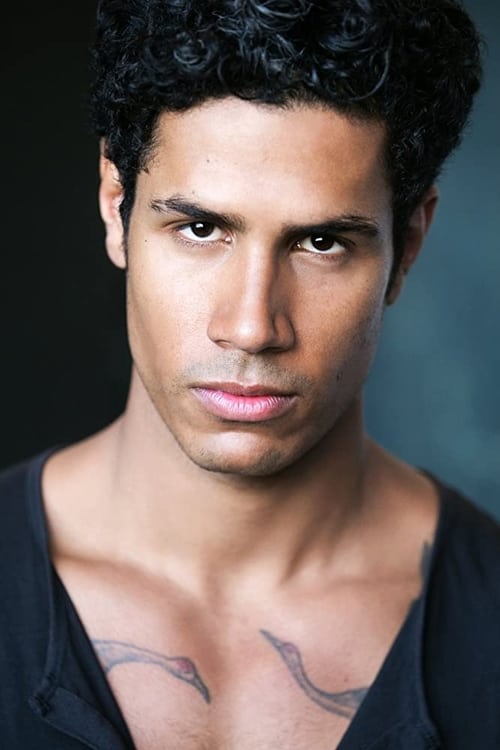
A month later, Gemma Chan joined the cast as Minn-Erva. In mid-March, Wise withdrew from the film because of a scheduling conflict with her television series She's Gotta Have It (2017–2019). Lashana Lynch entered into negotiations to replace Wise the next day, and was confirmed for the role by the end of the month. At that time, Marvel revealed that Djimon Hounsou, Lee Pace, and Clark Gregg were set to reprise their respective roles of Korath, Ronan the Accuser, and Phil Coulson from earlier MCU films; as those characters were all killed in their previous appearances, Richard Newby of The Hollywood Reporter described the film as a unique opportunity to "strengthen the presence of [the characters] who may not have lived up to their potential". Marvel also announced that Algenis Perez Soto, Rune Temte, and Mckenna Grace had been cast, and revealed that Boden, Fleck, and the writing team of Liz Flahive and Carly Mensch had all contributed to the film's screenplay in addition to LeFauve, Perlman, and Robertson-Dworet. Bek Smith, who previously was a member of Marvel's screenwriter program, performed uncredited rewrites during production.
Principal photography began on March 19 in Los Angeles, at Sony Studios under the working title Open World. Schwartz stated that Open World was chosen because it likened the film to an open world video game that could go in many directions, which is how the production felt about Captain Marvel's story at the time. A 1986 carnival scene was filmed later that week at the Jim Hall Racing Club in Oxnard, California. Filming of Captain Marvel in Los Angeles, along with other big-budget films that took advantage of California's improved tax credit program, helped raise on-location feature film production in the area by 11.7% in the first quarter of 2018, compared with the same period in 2017, the first such double-figure increase since the fourth quarter of 2015. Filming at Shaver Lake outside Fresno, California, was set to take place in April but was pushed back to mid-May. In late April, Feige stated that almost half of filming was completed. The following month, Annette Bening joined the cast in an undisclosed role. Additional location shooting in and around the Los Angeles area included Simi Valley, Edwards Air Force Base, and Lucerne Valley. In late June, production moved to Baton Rouge, Louisiana and New Orleans for two weeks. A realistic cat puppet was used on set since Larson is allergic to cats. Scenes featuring the interior of the Quadjet were filmed on the set used to depict the interior of Quinjets on the MCU television series Agents of S.H.I.E.L.D. (2013–2020) Filming concluded on July 6.
Post-production
Additional photography was confirmed to have begun via set photos in late November 2018. With the release of the theatrical poster in early December, Marvel revealed that the writing team of Joe Shrapnel and Anna Waterhouse had worked on the film's story, while Jac Schaeffer had contributed to the screenplay. Schaeffer had previously been hired by Marvel to write Black Widow (2021). Bening's and Law's roles were officially confirmed in February 2019 as the Supreme Intelligence and Yon-Rogg, respectively.
The film was edited by Elliot Graham and Debbie Berman, marking Berman's third time co-editing an MCU film after Spider-Man: Homecoming and Black Panther. Captain Marvel was edited using Avid Media Composer software in the Avid DNxHD codec on Apple computers. Berman first became involved with the film when she was working on Homecoming and Boden and Fleck were hired, and was hired herself for Captain Marvel the first week she was working on Black Panther. In addition to Graham and Berman, the editing team was made up of first assistants Jessica Baclesse and Kimberly Boritz, second assistants Basuki Juwono and Christos Voutsinas, and assistant editor Joe Galdo, among others. Berman spoke fondly of this large team, feeling that they gave her the opportunity to focus on the film's story rather than the technical aspects of editing.
Visual effects for the film were created by Animal Logic, Cantina Creative, Digital Domain, Framestore, Industrial Light & Magic (ILM), Lola VFX, Luma Pictures, Rise, Rising Sun Pictures, Scanline VFX, Trixter, and Elastic, with Lola VFX working on the de-aging of Jackson and Gregg. Lola looked at several of Jackson's films, including Pulp Fiction (1994), Die Hard with a Vengeance (1995), Jurassic Park (1993), Loaded Weapon 1 (1993), and One Eight Seven (1997), as a reference for his de-aging. However, some of these films were disqualified due to circumstances surrounding the character Jackson was playing: Pulp Fiction because of the character's wig and facial hair, and Jurassic Park because the character was made to appear older in that film. Lola VFX supervisor Trent Claus said the final look was based partly on Die Hard and Loaded Weapon 1, but mostly on One Eight Seven, which he described as the "hero movie". Jackson was de-aged approximately 25 years from the age of 70 at the time of filming, to 45 for the 1995 setting. To do this, both Jackson and Gregg had tracking dots applied to their faces during filming for which the VFX team could anchor the "hand-crafted" facial features that were composited primarily in Autodesk Flame. Lola's team included 40 primary compositors with another 15–20 junior compositors, and created approximately 500 different VFX shots, of which 385 made it in the final cut of film. It was the first time Lola de-aged an actor without using a body double, as it would take too long to re-film all of Fury's scenes with the double.
Music
Pinar Toprak signed on to compose the film's score in June 2018, making her the first woman to score an MCU film. Toprak began by creating the title character's theme, before developing themes for the Kree and the Skrulls, whom she tried to connect in order to "find the universe" for the film's scenes in space and Earth. Toprak wanted Captain Marvel's theme to be recognizable from its first two notes. In addition to Toprak's score, the film's soundtrack includes Alan Silvestri's theme from The Avengers (2012); Michael Giacchino's Marvel Studios Fanfare, which is played over the Marvel Studios logo and referenced during Stan Lee's cameo appearance; and songs from the 1990s.
In April 2019, Mark Salcido of the website Screen Geek alleged that Marvel and the film's directors had been unhappy with Toprak's work on the film even after she had responded to "ample" notes, and had replaced her as composer for the film with Giacchino. Giacchino responded to this report by confirming he was involved in the film, revealing that he had been asked to give feedback on Toprak's work while he was working with Marvel on the score for Spider-Man: Far From Home (2019). He thought Toprak had written a "beautiful theme and an inspiring score" for the film and had helped her work on "a few cues" which he said was him supporting her as a fellow member of the Marvel "family". Giacchino made it clear that he "did not write the score to Captain Marvel ... bottom line is [Toprak] is a fabulous composer and certainly doesn't need me".
Marketing
In 2017, concept art from the film was shown at San Diego Comic-Con, and a first look at Larson as Danvers was revealed at CineEurope. Larson debuted the first trailer for the film that September at the National Air and Space Museum on Good Morning America. Petrana Radulovic of Polygon felt the trailer showed "large-scale action and intergalactic mayhem that reaches for Infinity War's heights", while Ben Kuchera, also of Polygon, approved of opening the trailer with Blockbuster Video since its logo is identifiable to the audience. Kuchera also compared the "sun-drenched" Air Force pilot sequences to Top Gun. Devan Coogan of Entertainment Weekly called the trailer "a powerful introduction to the MCU's first solo female hero". Graeme McMillian of The Hollywood Reporter felt the prominent narration by Nick Fury "grounds the trailer in something—someone—familiar for the Marvel faithful", but said the changes to the character's origin story were "a risky proposition" to long-time fans of the character. Richard Newby, also of The Hollywood Reporter, noted that the character's unfamiliarity to audiences was not presented as a joke in the trailer as with Marvel's Guardians of the Galaxy and Ant-Man (2015), and commended Davis for its more grounded look than previous MCU films. The trailer did receive some criticism, including that the plot presented was unclear, confusion as to why Danvers punches an elderly woman, and objections to Danvers not smiling much. The trailer was viewed 109 million times in its first 24 hours, becoming the 11th most viewed trailer in that time period.
The second trailer debuted on December 3, 2018, during halftime of the Monday Night Football game between the Washington Redskins and the Philadelphia Eagles. McMillian felt the trailer too overtly responded to online criticisms of the first, including clarification that "the elderly lady Carol punches was a Skrull", more shots of her smiling, and "additional emphasis on both explaining the plot and establishing Carol Danvers as a character". McMillian compared the contents and structure of the two Captain Marvel trailers to those for Thor (2011) and Captain America: The First Avenger. Newby felt the second trailer "offers increased action and a more in-depth look at the mythology surrounding" Captain Marvel, but criticized it for not helping to introduce the film's supporting characters. He compared the trailer to a superhero version of John Carpenter's Starman (1984), explaining, "Explosions, space battles, and superpowers may bring in the crowds, but it's moments [of] humanity and introspection that will allow Captain Marvel to leave her mark and encourage audiences to care about the mystery surrounding who she is." On December 8, Larson participated in a panel at CCXP in Brazil, where she shared footage and an extended trailer from the film and presented an exclusive poster for the event. By January 3, 2019, BoxOffice revealed their "Trailer Impact" metric service indicated approximately 66–70% of people surveyed who viewed the Captain Marvel trailer in the past two weeks expressed interest in seeing the film. In the two weeks it was measured by "Trailer Impact", it was number two for both, behind Avengers: Endgame, and had some of the highest percentage of respondents express interest in seeing the film ever for the service. "Trailer Impact" usually includes films 10 weeks out from release, but BoxOffice decided to add Captain Marvel to the survey 12 weeks out.
Release
Theatrical
Captain Marvel premiered in London on February 27, 2019, and in Hollywood, Los Angeles, on March 4. The Hollywood premiere included a flyover by the United States Air Force Thunderbirds in honor of Thunderbirds pilot Major Stephen Del Bagno, who consulted with Larson on the film before dying in a training accident in April 2018. The film was released in the United States on March 8, coinciding with International Women's Day. It was also released in IMAX and 3D formats. It was originally scheduled for release on July 6, 2018, but in February 2015 it was moved to November 2, 2018, to make room for Spider-Man: Homecoming (2017), and in October 2015 it was pushed to its final March 2019 date for Ant-Man and the Wasp (2018). The film's release in Pakistan was delayed for four weeks. At the time, Disney's South Asia division, which is headquartered in India, had not given Pakistan the rights to distribute it. Commentators online speculated that this was due to ongoing Indo-Pakistani tensions, but Disney South Asia head Nadeem Mandviwalla called this statement "baseless". Captain Marvel is part of Phase Three of the MCU.
Home media
Captain Marvel was the first Walt Disney Studios Motion Pictures-distributed film not to stream on Netflix, after Disney let their licensing deal with Netflix expire. It became the first theatrical Disney release to stream exclusively on Disney+, which launched on November 12, 2019. The film was released on digital download by Walt Disney Studios Home Entertainment on May 28, 2019, and on Ultra HD Blu-ray, Blu-ray, and DVD on June 11. The digital and Blu-ray releases include behind-the-scenes featurettes, deleted scenes, and gag reels. Captain Marvel has made over $64.2 million from video sales in the U.S. The IMAX Enhanced version of the film was made available on Disney+ beginning on November 12, 2021.
Reception
Box office
Captain Marvel grossed $426.8 million in the United States and Canada, and $701.6 million in other territories, for a worldwide total of $1.128 billion. It had a worldwide opening of $456.7 million, the sixth-biggest of all time, and the biggest opening for a female-led film. Deadline Hollywood estimated that the film had a total production and advertising cost of $300 million. It is the fifth-highest-grossing film of 2019. On April 2, 2019, the film crossed the $1 billion mark worldwide, becoming the first female-led superhero movie to do so, as well as the seventh Marvel title, the 19th Disney film, and 38th film overall. Deadline Hollywood calculated the film's net profit as $414 million, accounting for production budgets, marketing, talent participations, and other costs; box office grosses and home media revenues placed it fifth on their list of 2019's "Most Valuable Blockbusters".
The film's first 24 hours of advance ticket sales, which began on January 7, 2019, ranked third on Fandango for an MCU film, behind Avengers: Infinity War and Black Panther, and second on Atom Tickets, behind Infinity War. According to Fandango, Captain Marvel had the third-largest advanced ticket sales of any MCU film, behind Infinity War and Black Panther, and surpassed Wonder Woman and Aquaman (2018) during the same time period. The film made $61.4 million on its first day, including $20.7 million from Thursday night previews, which was the fifth-highest total for a Marvel film and second-highest for a March release, behind Batman v Superman: Dawn of Justice (2016). It made $153.4 million over its opening weekend, making this the third-best March opening, after Batman v Superman: Dawn of Justice and Beauty and the Beast (2017), as well as seventh-highest of the MCU. Captain Marvel would hold the record for having the highest opening weekend for a female-directed film until it was surpassed by Barbie four years later in 2023. The film remained in first place during its second weekend, with $69.3 million, the second-highest sophomore weekend in March, behind Beauty and the Beast. The film grossed $35.2 million in its third weekend, dropping to second, behind Us. In the following weeks it dropped to third, fifth, sixth, and fourth, before rising to second again in its eighth weekend with the release of Avengers: Endgame. Captain Marvel finished its box office run as the sixth highest-grossing film of 2019 in this region.
On its first day of international release, the film made $5.9 million in South Korea and $1.7 million in France, as well as $2.51 million from Thursday night previews in China, the fourth-best for an MCU film in the country. Through its first two days of release in foreign territories the film made $44 million, including $9.1 million in South Korea, $3 million in Brazil, $2.9 million in France and $2.5 million in Australia. It also grossed $34 million on its first day in China, the third-best superhero opening day ever in the country. The film went on to have a foreign opening weekend of $302.4 million, the fifth-best of all time. Its largest markets were China ($89.3 million), South Korea ($24.1 million), the UK ($16.8 million), Brazil ($13.4 million, the second-best opening of any film in the country's history) and Mexico ($12.8 million, fifth-best ever). Through its first 12 days of release, the film's highest-grossing foreign countries were China ($135.7 million), South Korea ($37.5 million), the United Kingdom ($32.9 million), Brazil ($26.1 million) and Mexico ($25.7 million). By April 2, the film's largest foreign markets were China ($152.3 million), South Korea ($43.7 million), the UK ($43.3 million), Brazil ($34.5 million) and Mexico ($31.8 million).
Critical response
The review aggregator Rotten Tomatoes reported an approval rating of 79%, with an average score of 6.8/10, based on 545 reviews. The website's critical consensus reads, "Packed with action, humor, and visual thrills, Captain Marvel introduces the MCU's latest hero with an origin story that makes effective use of the franchise's signature formula." Metacritic, which uses a weighted average, assigned the film a score of 64 out of 100 based on 56 critics, indicating "generally favorable" reviews. According to The New York Times, the film's overall reception was "fairly positive", but it was not as well-received as other films in the MCU. The Hindustan Times, collating multiple reviews of the film, noted praise for Brie Larson's performance but also criticism for the film's "convoluted plot and lack of originality".
Kenneth Turan, writing for the Los Angeles Times, lauded Larson's performance and the direction of Boden and Fleck, saying, "Marvel has come to recognize, as this film proves, that even effects-heavy behemoths can benefit from a directing touch that is human, not programmatic, that understands character and nuance and can create scenes with an emotional heft we might not expect." A.O. Scott of The New York Times said the film was "not too long, not too self-important, and benefits from the craft and talent of a cast that includes Annette Bening, Jude Law, and Ben Mendelsohn". Writing for Variety, Owen Gleiberman also praised the film's direction. He said that Boden and Fleck had not been able to retain their signature style of "low-key American neorealis[m]", but was still positive about how they were able to create a film with "enough tricks and moods and sleight-of-hand layers to keep us honestly absorbed" within the house style of the MCU. Richard Roeper of the Chicago Sun-Times gave the film 3.5 out of 4 stars, and said it was a "real treat" to follow the origin stories of both Carol Danvers and Nick Fury. Rolling Stone's Peter Travers gave it four stars and praised Larson's performance for bringing "layers of feeling to a role that a lesser actress might have let slide by on pyrotechnics. You see how she lays the foundation for a character who defies male objectification and becomes akin to what Joni Mitchell called 'a woman of heart and mind.'" Anthony Lane of The New Yorker stated, "Superhero cinema has lectured us, ad infinitum, on the responsibility that is conferred by extraordinary gifts. Praise be to Larson, for reminding us that they can be bringers of fun."
Todd McCarthy of The Hollywood Reporter described the film as "mundane, marked by unimaginative plotting, cut-rate villains, a bland visual style and a lack of elan in every department". David Ehrlich at IndieWire gave the film a 'C−' grade and called it "neither a blast from the past, nor an inspiring glimpse into the future ... it's just another Marvel movie. And not a particularly good one". Ehrlich praised Mendelsohn, saying he gave the best performance in the film. Joe Morgenstern of The Wall Street Journal said Danvers "is a candidate for genuine heroism" but found a "fundamental dissonance between the depth of her plight and the shallow disorganization of the script". The A.V. Club's Ignatiy Vishnevetsky was disappointed by the film, finding it to be "everything you might expect a sci-fi superhero movie to be, if you hadn't seen one in a long time". Richard Brody of The New Yorker compared the film to a political commercial that "packs a worthy message [but] hardly counts as an aesthetic experience. The message of the film is conveyed less through the story than through its casting."
Audience response
In late December 2018, the film was named as the most anticipated 2019 film by IMDb, the most anticipated new standalone comic book film and the second-most anticipated blockbuster of 2019 according to Fandango, and the second-most anticipated superhero and overall film by Atom Tickets.
Ahead of the film's release, Captain Marvel's "Want to See" score—an audience anticipation poll on Rotten Tomatoes—had fallen to 28%. Reports described the decline as an effort to review bomb the film's page with negative comments attacking the film and Larson for their perceived feminism. Rotten Tomatoes changed the "Want to See" feature shortly after, showing only the number of people indicating interest in the film instead of a percentage. The announcement said this was part of a larger redesign of the site, and that the "Want to See" feature would be restored once the film was released. By 8:00 a.m. on opening day in the United States, the film held a 33% audience score on Rotten Tomatoes from more than 58,000 reviews, which was more audience reviews than Avengers: Infinity War had during its entire theatrical run. Analysts attributed the low score and sheer number of reviews to online trolling. Rotten Tomatoes later said a bug was responsible for the high count of reviews, and by 1:00 p.m. the number of counted ratings was down to 7,000 with an audience score of 35%.
Audiences of the film polled by CinemaScore gave it an average grade of "A" on a scale of A+ to F, while PostTrak reported that 73% of filmgoers gave it a "definite recommend". 58% said it met their expectations, while 35% said it exceeded them. Unlike Wonder Woman, which was watched by more women than men, Captain Marvel's initial audience was 61% male, according to PostTrak. Discussing these statistics, Deadline Hollywood's Anthony D'Alessandro praised CinemaScore and PostTrak for taking scientific polls that actually identified how the audience was feeling about the film, and criticized the Rotten Tomatoes audience score as an "ancient 1990s means of collecting opinions online" that is influenced by "ugly Internet troll noise".
Accolades
The film was recognized with The ReFrame Stamp for hiring people of underrepresented gender identities, and of color.
Sequel
The Marvels was released on November 10, 2023, with Nia DaCosta directing and Megan McDonnell writing the script. Larson reprises her role, and is joined by Iman Vellani as Kamala Khan / Ms. Marvel and Teyonah Parris as a grown-up Monica Rambeau, both reprising their roles from Disney+ series. Zawe Ashton appears as the villain.