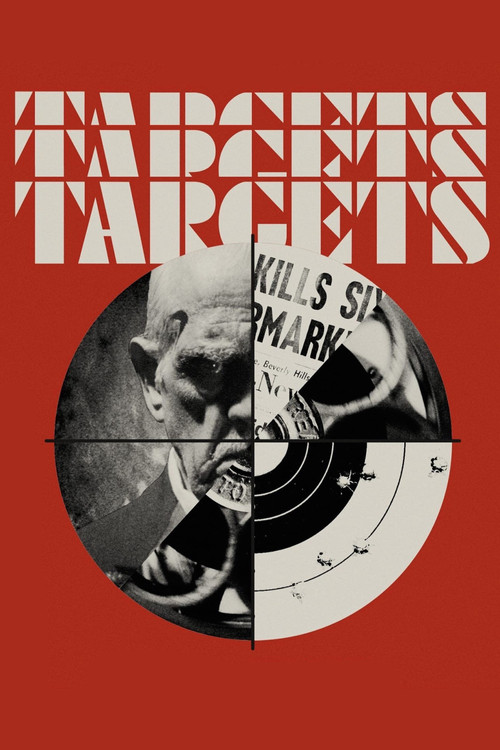
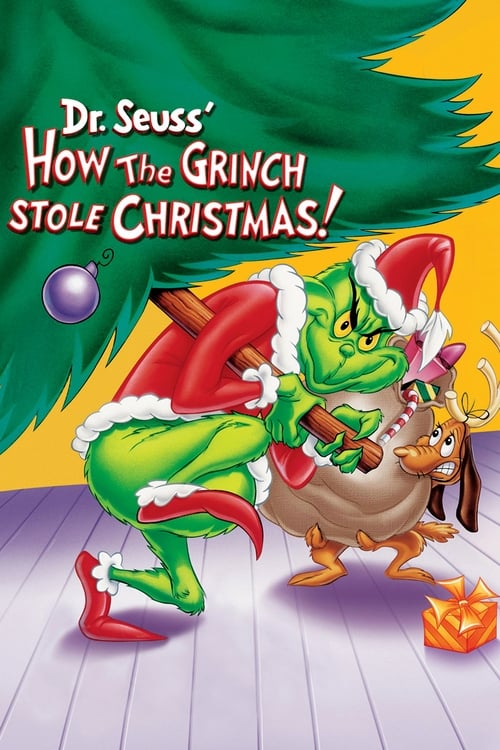
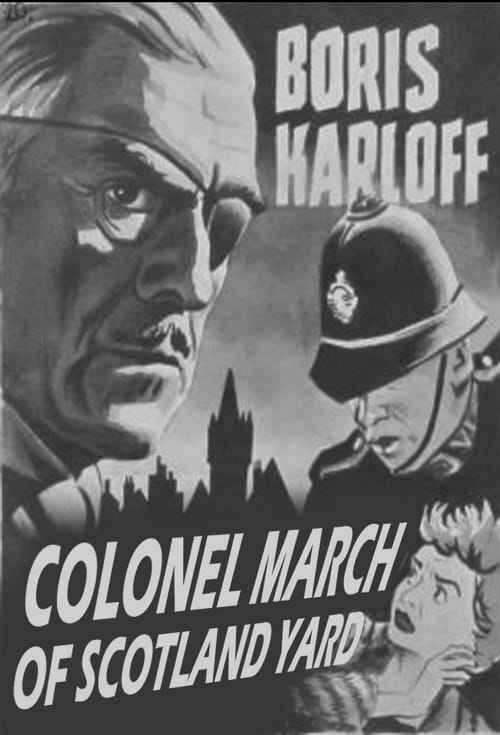
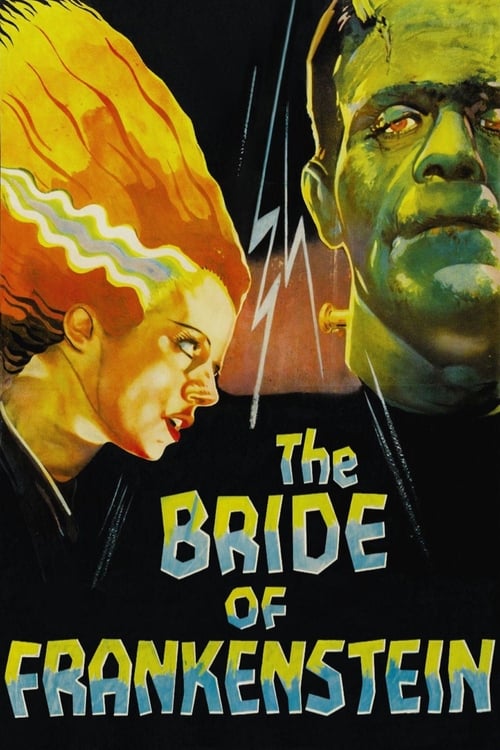
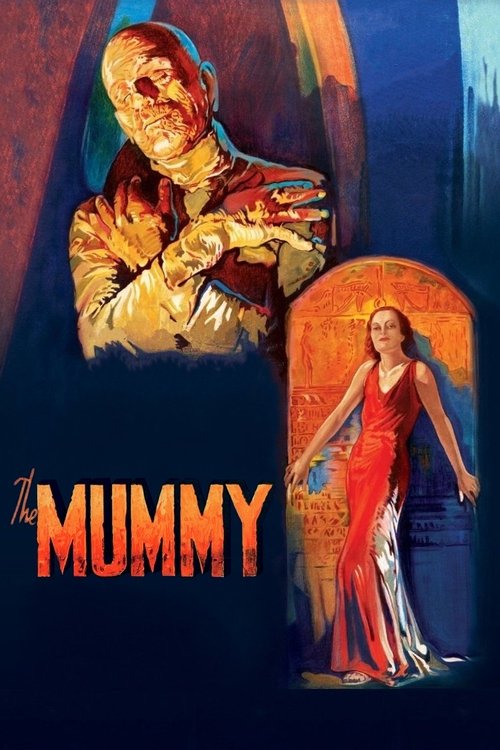
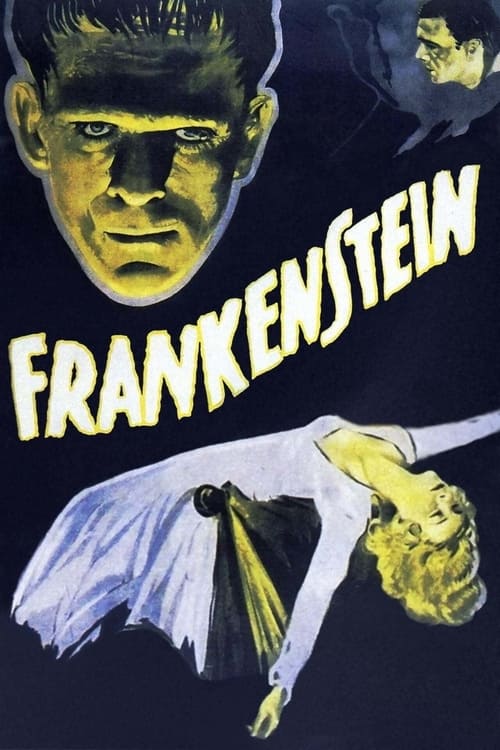
William Henry Pratt (23 November 1887 – 2 February 1969), known professionally as Boris Karloff (), was an English actor. His portrayal of Frankenstein's monster in the horror film Frankenstein (1931), his 82nd film, established him as a horror icon, and he reprised the role for the sequels Bride of Frankenstein (1935) and Son of Frankenstein (1939). He also appeared as Imhotep in The Mummy (1932), and voiced the Grinch in, as well as narrating, the animated television special of Dr. Seuss' How the Grinch Stole Christmas! (1966), which won him a Grammy Award.
Aside from his numerous film roles (174 films), Karloff acted in many live stage plays and appeared on dozens of radio and television programs as well. For his contribution to film and television, Karloff was awarded two stars on the Hollywood Walk of Fame on 8 February 1960.
Contents
Early life
William Henry Pratt was born on 23 November 1887, at 36 Forest Hill Road, East Dulwich, London. His parents were Edward John Pratt of the Indian Civil Service (where he worked for the salt revenue service), and his wife Eliza Sara Millard. Both his parents died when Karloff was young, and he was primarily raised by a half-sister and his elder siblings. His brother Sir John Thomas Pratt was a British consul-general in China, while two other brothers, Frederick Greville Pratt and Edward Millard Pratt, followed their father into the Indian Civil Service. Their father, Edward John Pratt, was an Anglo-Indian, with a British father and an Indian mother, and Karloff was more than a quarter Indian, as his mother also had some Indian ancestry; Karloff had a complexion darker than that of most of his peers. His mother's maternal aunt was Anna Leonowens, whose tales about life in the royal court of Siam (now Thailand) were the basis of the novel Anna and the King of Siam. Pratt was bow-legged, had a lisp, and stuttered as a young boy. He learned how to manage his stutter, but not his lisp, which was noticeable throughout his career in the film industry.
Pratt spent his childhood years in Enfield, in the County of Middlesex. He was the youngest of nine children, and following his mother's death was brought up by his elder siblings. After first attending Enfield Grammar School in London, he received a private education at Uppingham School and Merchant Taylors' School, which was then occupying the London Charterhouse. Following this, he attended King's College London, where his studies were aimed at a career with the British Government's Consular Service. However, in 1909, he left university without graduating and drifted, departing England on a ship for Canada. There, he worked as a farm labourer and truck driver and did various odd jobs in Saskatchewan and British Columbia until he happened upon stage acting in Prince Albert, Saskatchewan, which eventually led to a later film career.
Professional career
Adoption of stage name
Pratt began appearing in theatrical performances in Canada in 1911. He was present in Regina, Saskatchewan, in June 1912, the day the Regina Cyclone destroyed much of the city. The theatre group he was with gave a benefit performance that night at the Regina Theatre to assist in relief efforts. The next week, appearing in Saskatoon, they donated half of the receipts from their performances to Regina relief.
During this period, he chose Boris Karloff as his stage name. Karloff always said he chose the first name "Boris" simply because it sounded foreign and exotic, and that "Karloff" was a family name. Karloff's daughter, Sara, publicly denied any knowledge of Slavic forebears, "Karloff" or otherwise. It has been speculated by film historians that he took the stage name from a mad scientist character named "Boris Karlov" in the novel The Drums of Jeopardy by Harold MacGrath, but the novel was not published until 1920, at least eight years after Karloff had been using the name on stage and in films. (Warner Oland played "Boris Karlov" in a film version in 1931.) Another possible influence was thought to be a character in the Edgar Rice Burroughs fantasy novel The Rider, which features a "Prince Boris of Karlova", but, because the novel was not published until 1915, the influence may be backward, that Burroughs saw Karloff in a play and adapted the name for the character.
One reason for the name change was to prevent embarrassment to the Pratt family. Whether or not his brothers, all dignified members of the Indian Civil Service or His Majesty's Diplomatic Service, actually considered young William the "black sheep of the family" for having become an actor, Karloff worried they felt that way. He did not reunite with his brothers until he returned to Britain to make The Ghoul (1933), worried that they would disapprove of his new, macabre claim to world fame. Instead, his brothers jostled for position around him and happily posed for publicity photographs upon their reunion with him. After the photo was taken, the brothers immediately started asking about getting copies of their own. The story of the photo became one of Karloff's favorites.
Canadian and American stage work
Karloff joined the Jeanne Russell Company in 1911 and performed in towns including Kamloops (British Columbia) and Prince Albert (Saskatchewan). After the devastating tornado in Regina on 30 June 1912, Karloff, who was in the midst of an engagement at the Regina Theatre, and other performers helped with clean-up efforts. He later took a job as a railway baggage handler and joined the Harry St. Clair Company that performed in Minot, North Dakota, for a year in an opera house above a hardware store.
While he was trying to establish his acting career, Karloff had to perform years of manual labour in Canada and the United States to make ends meet. Among this work, he spent one year laying track, digging ditches, shoveling coal, clearing land, and working with surveying parties for the B.C. Electric Railway Company, at the rate of $2.50 per day. From this gruelling work with the BCER and other employers, Karloff was left with back problems for the rest of his life. Because of his health, he did not serve in World War I.
During this period, Karloff worked in various theatrical stock companies across the U.S. to hone his acting skills. Some acting companies mentioned were the Harry St. Clair Players and the Billie Bennett Touring Company. By early 1918, he was working with the Maud Amber Players in Vallejo, California, but because of the Spanish flu outbreak in the San Francisco area and the fear of infection, the troupe was disbanded. He was able to find work with the Haggerty Repertory for a while (according to the 1973 obituary of Joseph Paul Haggerty, he and Boris Karloff remained lifelong friends).
Early Hollywood career
Once Karloff arrived in Hollywood, he appeared in small roles in dozens of silent films, but the work was sporadic and he often had to take up manual labour such as digging ditches or delivering construction plaster to make ends meet. (According to Karloff, his first film was a Frank Borzage picture at Universal for which he received $5 as an extra; the title of this film has never been traced.)
His first certain screen role was in a film serial, The Lightning Raider (1919) with Pearl White. He was in another serial that same year, The Masked Rider (1919), the earliest of his film appearances that has survived. Karloff could also be seen in His Majesty, the American (1919) with Douglas Fairbanks, The Prince and Betty (1919), The Deadlier Sex (1920) with Blanche Sweet, and The Courage of Marge O'Doone (1920). He played an Indian in The Last of the Mohicans (1920) with Wallace Beery and he would often be cast as an Arab or Indian in his early films.
Karloff's first major role came in a film serial, The Hope Diamond Mystery (1920). He was Indian in Without Benefit of Clergy (1921) and an Arab in Cheated Hearts (1921) and villainous biracial hired hand in The Cave Girl (1921). He was a maharajah in The Man from Downing Street (1922), a Nabob in The Infidel (1922) and had roles in The Altar Stairs (1922), Omar the Tentmaker (1922) (as an Imam), The Woman Conquers (1922), The Gentleman from America (1923), The Prisoner (1923) and the serial Riders of the Plains (1923).
Karloff did a Western, The Hellion (1923), and a drama, Dynamite Dan (1924). He could be seen in Parisian Nights (1925), Forbidden Cargo (1925), The Prairie Wife (1925) and the serial Perils of the Wild (1925). Karloff went back to bit part status in Never the Twain Shall Meet (1925), directed by Maurice Tourneur, but he had a good support part in Lady Robinhood (1925) starring Evelyn Brent in the titular role.
Karloff went on to be in The Greater Glory (1926), Her Honor, the Governor (1926), The Bells (1926) (as a mesmerist), The Nickel-Hopper (1926) with Mabel Normand, The Golden Web (1926), The Eagle of the Sea (1926), Flames (1926), Old Ironsides (1926) with Wallace Beery and Esther Ralston, Flaming Fury (1926), Valencia (1926), The Man in the Saddle (1926) with Hoot Gibson, Tarzan and the Golden Lion (1927) (as an African), Let It Rain (1927), The Meddlin' Stranger (1927), The Princess from Hoboken (1927), The Phantom Buster (1927) with Buddy Roosevelt, and Soft Cushions (1927).
Stardom
Karloff acted in eighty-one films before being discovered by James Whale and cast in Frankenstein (1931). Karloff's role as Frankenstein's monster was physically demanding – it necessitated a bulky costume with four-inch platform boots – but the costume and extensive makeup produced an iconic image. The costume was a job in itself for Karloff with the shoes weighing 11 pounds (5.0 kg) each, which further aggravated his back problems. Universal Studios quickly copyrighted the makeup design for the Frankenstein monster that Jack P. Pierce had created.
It took a while for Karloff's stardom to be established with the public – he had small roles in Behind the Mask (1932), Business and Pleasure (1932) and The Miracle Man (1932). As receipts for Frankenstein and Scarface flooded in, Universal gave Karloff third billing in Night World (1932), with Lew Ayres, Mae Clarke and George Raft.
Karloff was reunited with Whale at Universal for The Old Dark House (1932), a horror film based on the novel Benighted by J. B. Priestley, in which he finally enjoyed top billing above Melvyn Douglas, Charles Laughton, Raymond Massey and Gloria Stuart; he was billed simply as "KARLOFF", a custom that Universal continued for several years. He was loaned to MGM to play the titular role in The Mask of Fu Manchu (also 1932), for which he had top billing.
Back at Universal, he was cast as Imhotep who is revived to life in The Mummy (1932), an original story inspired by the unsealing of Tutankhamun's tomb, conceived to continue the success of the Dracula and Frankenstein adaptations. The Mummy was as successful at the box-office as his other two films and Karloff was now established as a star of horror films. Like Frankenstein, The Mummy would spawn a line of sequels, although Karloff would not reprise the iconic 1932 role.
Karloff returned to England to star in The Ghoul (1933), then made a non-horror film for John Ford, The Lost Patrol (1934), for which his performance was highly acclaimed.
Karloff was third billed in the Twentieth Century Pictures historical film The House of Rothschild (1934) with George Arliss, which was highly popular.
Professional expansion and further success
An enthusiastic performer, he returned to the Broadway stage in the original production of Arsenic and Old Lace in 1941, in which he played a homicidal gangster enraged to be frequently mistaken for Karloff. Frank Capra cast Raymond Massey in the 1944 film, which was shot in 1941, while Karloff was still appearing in the role on Broadway. The play's producers allowed the film to be made conditionally: it was not to be released until the production closed. (Karloff reprised his role on television in the anthology series The Best of Broadway (1955), and with Tony Randall and Tom Bosley in a 1962 production on the Hallmark Hall of Fame. He also starred in a radio adaptation produced by Screen Guild Theatre in 1946.)
In 1944, he underwent a spinal operation to relieve a chronic arthritic condition.
Karloff returned to film roles in The Climax (1944), an unsuccessful attempt to repeat the success of Phantom of the Opera (1943). More liked was House of Frankenstein (1944), marking Karloff's "retirement" from playing the Monster, where instead, he comes full circle to play the villainous Dr. Niemann, a mad scientist fixated on life-experiments much like Henry Frankenstein, and pass the torch to actor Glenn Strange, who would play the Monster in subsequent films.
Karloff made three films for producer Val Lewton at RKO: The Body Snatcher (1945), his last teaming with Lugosi, Isle of the Dead (1945) and Bedlam (1946).
In a 1946 interview with Louis Berg of the Los Angeles Times, Karloff discussed his arrangement with RKO, working with Lewton and his reasons for leaving Universal. Karloff left Universal because he thought the Frankenstein franchise had run its course; the entries in the series after Son of Frankenstein were B-pictures. Berg wrote that the last installment in which Karloff appeared—House of Frankenstein—was what he called a " 'monster clambake,' with everything thrown in—Frankenstein, Dracula, a hunchback and a 'man-beast' that howled in the night. It was too much. Karloff thought it was ridiculous and said so." Berg explained that the actor had "great love and respect for" Lewton, who was "the man who rescued him from the living dead and restored, so to speak, his soul."
Spoken word recordings and horror anthologies
He recorded the title role of Shakespeare's Cymbeline for the Shakespeare Recording Society (Caedmon Audio 1962). He also recorded the narration for Sergei Prokofiev's Peter and the Wolf with the Vienna State Opera Orchestra under Mario Rossi.
Records he made for the children's market included Three Little Pigs and Other Fairy Stories, Tales of the Frightened (volume 1 and 2), Rudyard Kipling's Just So Stories and, with Cyril Ritchard and Celeste Holm, Mother Goose Nursery Rhymes, and Lewis Carroll's The Hunting of the Snark.
Karloff was credited for editing several horror anthologies, commencing with Tales of Terror (Cleveland and NY: World Publishing Co, 1943) (compiled with the help of Edmond Speare). This wartime-published anthology went through at least five printings to September 1945. It has been reprinted recently (Orange NJ: Idea Men, 2007). Karloff's name was also attached to And the Darkness Falls (Cleveland and NY: World Publishing Co, 1946); and The Boris Karloff Horror Anthology (London: Souvenir Press, 1965; simultaneous publication in Canada - Toronto: The Ryerson Press; US pbk reprint NY: Avon Books, 1965 retitled as Boris Karloff's Favourite Horror Stories; UK pbk reprints London: Corgi, 1969 and London: Everest, 1975, both under the original title), though it is less clear whether Karloff himself actually edited these.
Tales of the Frightened (Belmont Books, 1963), though based on the recordings by Karloff of the same title, and featuring his image on the book cover, contained stories written by Michael Avallone; the second volume, More Tales of the Frightened, contained stories authored by Robert Lory. Both Avallone and Lory worked closely with Canadian editor and book packager Lyle Kenyon Engel, who also ghost-edited a horror story anthology for horror film star Basil Rathbone.
Final roles and work
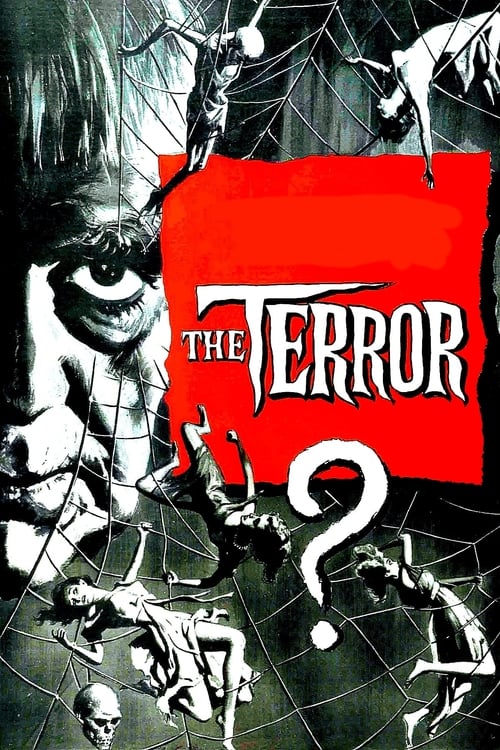
Karloff went to Italy to appear in Black Sabbath (1963) directed by Mario Bava. He made The Raven (1963) for Roger Corman and American International Pictures (AIP). When The Raven had successfully wrapped shooting with time left in Karloff's contract, Corman conscribed a new story with the same sets to feature Karloff in The Terror (1963), with Jack Nicholson in the leading role and Karloff playing a baron who murdered his wife. He made a cameo in AIP's Bikini Beach (1964) and had a bigger role in that studio's The Comedy of Terrors (1964), directed by Jacques Tourneur, and travelled to England to make Die, Monster, Die! (1965) co-starring Nick Adams. British actress Suzan Farmer, who played his daughter in the film, later recalled Karloff was aloof during production "and wasn't the charming personality people perceived him to be", probably because he was in such intense pain in the 1960s.
In 1966, Karloff also appeared with Robert Vaughn and Stefanie Powers in the spy series The Girl from U.N.C.L.E., in the episode "The Mother Muffin Affair", Karloff performing in drag as the titular character. That same year, he also played an Indian Maharajah on the installment of the adventure series The Wild Wild West titled "The Night of the Golden Cobra". Karloff's last film for AIP was The Ghost in the Invisible Bikini (1966).
In 1967, he played an eccentric Spanish professor who believes himself to be Don Quixote in a whimsical episode of I Spy titled "Mainly on the Plains", which he filmed in Spain. Cauldron of Blood, shot in Spain around the same time, and co-starring Viveca Lindfors, was only released in 1970 after Karloff's death.
In the mid-1960s, he enjoyed a late-career surge in the United States when he narrated the made-for-television animated film of Dr. Seuss' How the Grinch Stole Christmas, and also provided the voice of the Grinch, although the song "You're a Mean One, Mr. Grinch" was sung by the American voice actor Thurl Ravenscroft. The film was first broadcast on CBS-TV in 1966. Karloff later received a Grammy Award for "Best Recording For Children" after the recording was commercially released. Because Ravenscroft (who never met Karloff in the course of their work on the show) was uncredited for his contribution to How the Grinch Stole Christmas!, his performance of the song was at times misattributed to Karloff.
He appeared in Mad Monster Party? (1967) and went to England to star in the second feature film of the British director Michael Reeves, The Sorcerers (1967).
Later life and death
Upon returning to Britain to live in 1959, Karloff's address was 43 Cadogan Square, London. In 1966, he bought 25 Campden House (at 29 Sheffield Terrace), Kensington W8, and Roundabout Cottage in the Hampshire village of Bramshott. A longtime heavy smoker, he had emphysema, which left him with only half of one lung still functioning.
He contracted bronchitis in late 1968 and was hospitalised at University College Hospital. He died of pneumonia at King Edward VII Hospital, Midhurst, in Sussex, on 2 February 1969, at the age of 81.
His body was cremated following a requested modest service at Guildford Crematorium, Godalming, Surrey, where he is commemorated by a plaque in the Garden of Remembrance. A memorial service was held at St Paul's, Covent Garden ("the Actors' Church"), London, where there is also a plaque.
Personal life
Karloff married six times. His wives included stage actress Grace Harding (married from 1910 to 1913), actress Olive de Wilton (from 1916 to 1919), musician Montana Laurena Williams (from 1920 to 1922) and actress Helen Vivian Soule (from 1924 to 1928).
His fifth marriage to Dorothy Stine lasted from 1930 until 1946. This union resulted in Karloff's only child, daughter Sara Karloff, born on November 23, 1938 (Karloff's own 51st birthday).
His sixth and final marriage, to Evelyn Hope Helmore, was in April 1946, immediately after his fifth divorce. They had been happily married for 23 years at the time of his death.
In 1958, Karloff's niece Diana Bromley was charged with murdering her 10-year-old and 13-year-old sons in Haslemere, England, but was found insane and unfit to plead. She was the daughter of Karloff's brother Sir John Thomas Pratt.
Karloff considered guacamole to be a favorite dish and Mexican cuisine in general to be one of his favorite varieties of gastronomy.
Beginning in 1940, Karloff dressed as Father Christmas every Christmas to hand out presents to physically disabled children in a Baltimore hospital.
He never legally changed his name to "Boris Karloff". He signed official documents "William H. Pratt, a.k.a. Boris Karloff".
He was a charter member of the Screen Actors Guild, and he was especially outspoken due to the long hours he spent in makeup while playing Frankenstein's Monster and the Mummy. He was an early member of the Hollywood Cricket Club.
Legacy
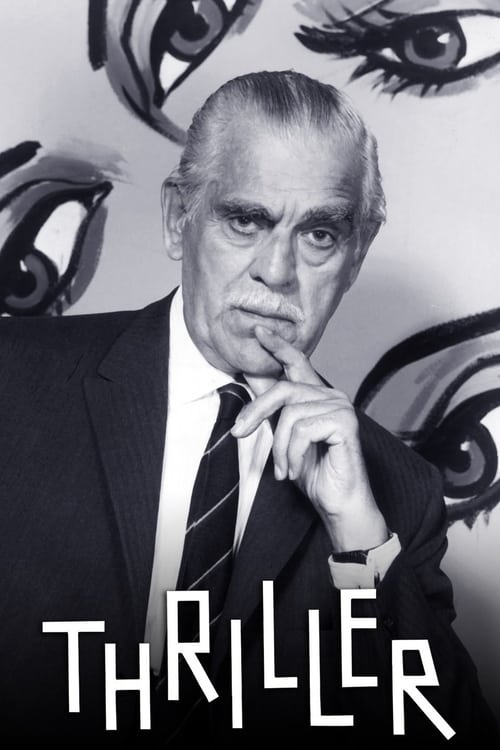
During the run of Thriller, Karloff lent his name and likeness to a comic book for Gold Key Comics based upon the series. After Thriller was cancelled, the comic was retitled Boris Karloff's Tales of Mystery. Comics historian Anthony Taylor stated in 2025 that Gold Key "paid Boris Karloff a whopping (for the time) [US]$700.00 a month (or .05¢ per issue of gross sales, whichever was larger) to use his name and likeness for Boris Karloff Tales of Mystery. An illustrated likeness of Karloff continued to introduce each issue of this publication for more than a decade after his death (he was not involved however in writing or drawing the stories); the comic book lasted until February 1980. (A Gold Key comic book series based upon The Twilight Zone that ran concurrently with Karloff's did the same thing with host Rod Serling's likeness after his death.) In 2009, Dark Horse Comics began publishing reprints of Boris Karloff's Tales of Mystery in a hardcover edition.
For his contribution to film and television, Karloff was awarded two stars on the Hollywood Walk of Fame, at 1737 Vine Street for motion pictures, and 6664 Hollywood Boulevard for television. He was featured by the U.S. Postal Service as Frankenstein's Monster and the Mummy in its series "Classic Monster Movie Stamps" issued in September 1997. In 1998, an English Heritage blue plaque was unveiled in his hometown in London. The British film magazine Empire in 2016 ranked Karloff's portrayal as Frankenstein's monster the sixth-greatest horror movie character of all time.
In The Simpsons episode "Lisa vs. Malibu Stacy", Karloff was depicted having personal correspondence with Abraham Simpson.
A street called Karloff Way, near Rochester, England, is named in his honour.
Radio appearances (1932–1968)
Appearances on Lights Out!
Karloff acted in 7 episodes of the Lights Out! NBC anthology radio series from 1938 to 1947:
"The Dream" (March 23, 1938)
"Valse Triste" (March 30, 1938)
"Cat Wife" by Arch Oboler (April 6, 1938)
"Three Matches" (April 13, 1938)
"Night on the Mountain" April 20, 1938)
"Death Robbery" (July 16, 1947)
"The Ring" (July 30, 1947)
Appearances on Inner Sanctum
Karloff acted in 22 episodes of the Inner Sanctum ABC anthology radio series from 1941 to 1952:
"The Man of Steel" (Mar. 16, 1941)
"The Man Who Hated Death" (Mar. 23, 1941)
"Death in the Zoo" (Apr. 6, 1941)
"Fog" (Apr. 20, 1941)
"Imperfect Crime" (May 11, 1941)
"Fall of the House of Usher" (June 1, 1941)
"Green-Eyed Bat" (June 22, 1941)
"The Man who Painted Death" (June 29, 1941)
"Death is a Murderer" (July 13, 1941)
"The Tell-Tale Heart" (Aug. 3, 1941)
"Terror on Bailey street" (Oct. 26, 1941)
"Fall of the House of Usher" (Apr. 5, 1942) may be a rerun
"Blackstone" (Apr. 19, 1942)
"Study for Murder" (May 3, 1942)
"The Cone" (May 24, 1942)
"Death Wears my Face" (May 31, 1942)
"Strange Bequest" (June 7, 1942)
"The Grey Wolf" (June 21, 1942)
"Corridor of Doom" (Oct. 23, 1945)
Appearances on Creeps By Night
Karloff acted in ten episodes on this 1944 radio anthology series
"The Voice of Death" (Feb. 15, 1944)
"The Man With the Devil's Hands" (Feb. 22, 1944)
Unknown title (Mar. 7, 1944)
"Dark Destiny" (Mar. 14, 1944)
Unknown title (Mar. 21, 1944)
"The String of Pearls" (Mar. 28, 1944)
Unknown title (April 18, 1944)
Unknown title (April 25, 1944)
"The Final Reckoning" (May 2, 1944)
"The Hunt" (May 9, 1944)
Appearances on Starring Boris Karloff
Karloff acted in 13 episodes of the "Starring Boris Karloff" anthology TV/ radio series in 1949: this show was broadcast as both a TV show and a radio show simultaneously
"Five Golden Guineas" (Sept. 21, 1949)
"The Mask" (Sept. 28, 1949)
"Mungahara" (Oct. 5, 1949)
"Mad Illusion" (Oct. 12, 1949)
"Perchance To Dream" (Oct. 19, 1949)
"The Devil Takes a Bride" (Oct. 26, 1949)
"The Moving Finger" (Nov. 2, 1949)
"The Twisted Path" (Nov. 9, 1949)
"False Face" (Nov. 16, 1949)
"Cranky Bill" (Nov. 23, 1949)
"Three O'Clock" (Nov. 30, 1949)
"The Shop at Sly Corner" (Dec. 7, 1949)
"The Night Reveals" (Dec. 14, 1949)