Analysis
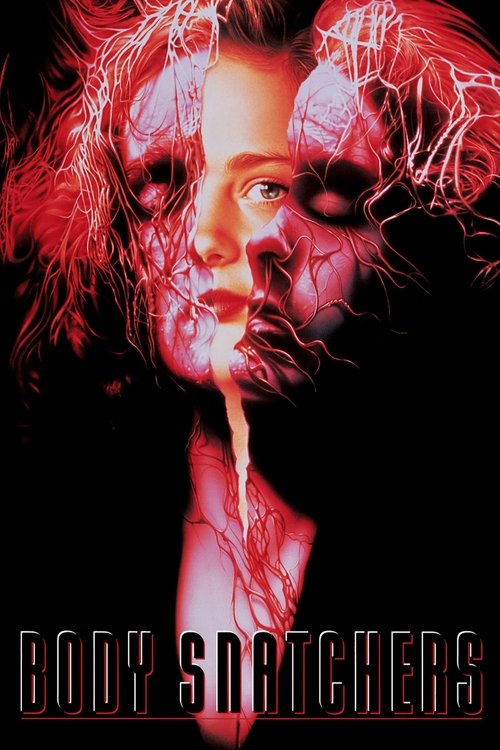
The largest difference in this version of the story is that it takes place on an Army base in Alabama, unlike a small California town in the original novel and the first adaptation filmed in 1956, or in San Francisco like in the 1978 remake. While the first two films portrayed the tightly organized, conformist "pod society" invading a free civil society, Ferrara's film, according to Chicago Sun-Times film critic Roger Ebert, made a connection between "the Army's code of rigid conformity, and the behavior of the pod people, who seem like a logical extension of the same code".
Body Snatchers is the film which departs the farthest from the original novel, compared to the 1956 and 1978 versions. While Steve Malone, like the doctors Bennell in the earlier films, also has a medical/scientific profession, the main character in this film is his daughter Marti. The character of Becky/Elizabeth (Bennell's love interest and his companion during his escape attempt from the invaders) is dropped completely, as are Bennell's acquaintances and later antagonists Dr. Kaufman/Kibner and the Belicecs. Re-invented, however, are two elements which had been dropped from the 1978 version: A young boy (named Jimmy Grimaldi in the 1956 version, here Marti's half brother Andy) claims that his mother is not his "real" mother. Also, the film features a voice-over narration by the main character. Two ideas invented by the 1978 version are picked up here again: The mortal remains of the "original" human beings are picked up by garbage trucks, and the duplicates utter an otherworldly scream when they discover a genuine human, thereby calling assistance from other pod people.
The German scholar Christian Knöppler wrote that the 1993 version kept the same basic outline as the previous versions, but altered the story by making a rebellious teenage girl the protagonist while making the male doctor/scientist character who served as the protagonist in the previous versions a secondary character. The replacement of a male protagonist with a female one reflected a trend towards female protagonists in horror films in the 1980s-1990s, often known as the 'final girl' archetype. In many ways, the film tells an especially vicious coming-of-age narrative as Marti's family is destroyed and at the end all she has left is her boyfriend Tim. Knöppler noted that Marti's family was highly dysfunctional to begin with, and her killing the pod versions of her family members reflected a tendency towards rejecting her own family that was already present even before she encountered the "pod people". Knöppler noted that despite the strong female protagonist that there is "a noticeable undercurrent of monstrous femininity and sexuality" in the film as it is Carol and the other housewives at the Army base are replaced first and it is Carol who acts as the primary antagonist. The way that the pod version of Carol almost replaces Steve while trying to seduce him suggests a fear of women. Meg Tilly's performance as Carol evokes many of the stereotypes associated with malevolent femininity. Another example of a female antagonist is the short-lived pod version of Marti who appears nude before Tim, and notably he hesitates for a moment before killing her to save the real Marti, a scene that Knöppler sees as an expression of "male sexual insecurity" that reflects both a fear of and a desire for female bodies. Knöppler also noted that the 1993 version actually showed the replacement progress with a scene where a pod forces its tendrils into Marti's body as she struggles against them, a scene that powerfully evokes rape.
Knöppler argued that the film seemed to be a critique of modern American life as the pod people succeed in taking over the Army base because of the military culture of conformity and succeed in replacing families because families are conformist, suggesting it was internal weakness already present that allowed their triumph and the pod invasion only intensifies preexisting trends. Notably, the only characters who are not replaced are Tim and Marti, both of whom are non-conformists and rebels against conformist institutions, namely the military in the case of Tim and the family in the case of Marti. Knöppler noted that it is very telling that when Tim pretends to be a pod person, the only metaphor he can think of to describe the pod community is "one big happy family". Unlike other versions of The Invasion of the Body Snatchers, the Malone family is portrayed as dysfunctional and fractured at the start of the film, which was very far from the idealized nuclear families presented in the 1956 version. Likewise, the only other family presented in the film, the Platt family, are just as dysfunctional with General Platt a stern martinet, Mrs. Platt an alcoholic and Jen a rebellious teenager who is openly contemptuous of her parents. Knöppler noted that one can trace the perceived decline of the American family over the three versions of The Invasion of the Body Snatchers. In the 1956 version, more or less happy nuclear families were presented as the norm; early on in the 1978 version the character of Dr. Kibner declares that "the nuclear family is shot to hell"; and in the 1993 version broken and dysfunctional families were presented as the norm. The fact that Carol is replaced first literalizes the resentment felt by Marti towards her step-mother who has already "invaded" her family. Some critics see the character of Steve as the "beleaguered male" archetype popular in 1990s films trying to hold together his family which is fractured first by Marti's rebellion and then by Carol being replaced. However, the fact that Marti is the likeable protagonist while Steve notably fails in protecting his family undercuts this reading
Knöppler also noted that the first film was set in an idealized small town in California while the second film was set in San Francisco, both of which were fairly general representations of American life while the third film chosen to focus on a subculture by moving the story to an U.S. Army base in the South. He argued that by this change in settling the film moved from a critique of American life in general to a critique of a subculture. The Army base is a closed community with a fixed hierarchy and a highly conformist culture, and the film seems to suggest that "...the military mentality makes it impossible to distinguish those who are professional soldiers from those who are pods". One critic sums up the film's attitude as: "It is perhaps an oversimplification to say Body Snatchers treats America's armed forces with the complete and total contempt they deserve, but to a large degree it is true". The only exceptions are Major Collins, the base's doctor, and Tim, a slightly non-conformist helicopter pilot. Tim has killed people during the Gulf War of 1991, but he is portrayed as a sensitive type who is not entirely comfortable with what he has done. Throughout the film, the soldiers at the base appear both conformist and generally threatening, and their faces are usually obscured by dim lighting, limiting their individuality. Likewise, in the scene where the pod version of General Platt confronts Dr. Collins, the former promotes a version of the world without individuality as the best way to end conflict while the pod people say in chorus: "it's the race that's important, not the individual". The emphasis on the collective and "the race" subtly evokes fascism. The way that Collins shouts back "the individual is always important" before he shoots himself elevates the question of collectivism vs. individualism to an existential level.
Unlike the previous versions, intellectuals are portrayed more favorably with the scientist Steve and Dr. Collins sounding the alarm while the main spokesman for the pod people is General Platt. Knöppler suggests that both the film's intellectuals prove to be ineffectual reflects the film's general distrust of experts. In the 1978 version, Leonard Nimoy, an actor associated with "benevolent rationality" characters was cast as the main spokesman for the pod people while in the 1993 version, R. Lee Ermey, an actor associated with playing "abusive military authority" characters played the analogous role. In the first and second films, the main spokesmen for the pod people were men who previously been psychiatrists, suggesting a fear of psychiatry with its power to mold minds. Knöppler argued that the relatively more favorable picture of intellectuals was due to the fact in the previous versions it was the "pure rationality" of the pod people associated with science and intellectualism that was their main characteristic while in the 1993 version it was their conformity and collectivism that was their main characteristic. However, despite the film's anti-militarism, the conclusion of the film where Tim and Marti wage all-out war against the pod people which Marti justifies in her narration as being "only human" suggests a military response is the only rational one to the invasion of the pod people and appears to be imply that war is a natural part of the human condition.