Bob Dylan (legally Robert Dylan; born Robert Allen Zimmerman, May 24, 1941) is an American singer-songwriter. Described as one of the greatest songwriters of all time, Dylan has been a major figure in popular culture over his 69-year career. Dylan added increasingly sophisticated lyrical techniques to the folk music of the early 1960s, infusing it "with the intellectualism of classic literature and poetry". His lyrics incorporated political, social, and philosophical influences, defying pop music conventions and appealing to the burgeoning counterculture.
Born and raised in Minnesota, Dylan moved to New York City in 1961 to pursue a music career. His eponymous debut, containing traditional folk and blues material, was followed by his breakthrough album, The Freewheelin' Bob Dylan (1963), which included "A Hard Rain's a-Gonna Fall". His "Blowin' in the Wind" (1963) and "The Times They Are a-Changin' (1964) became anthems for the civil rights and antiwar movements. Dylan sparked controversy when he used electrically amplified rock instrumentation on Bringing It All Back Home, Highway 61 Revisited (both 1965), and Blonde on Blonde (1966). His six-minute single "Like a Rolling Stone" (1965) expanded commercial and creative boundaries in popular music.
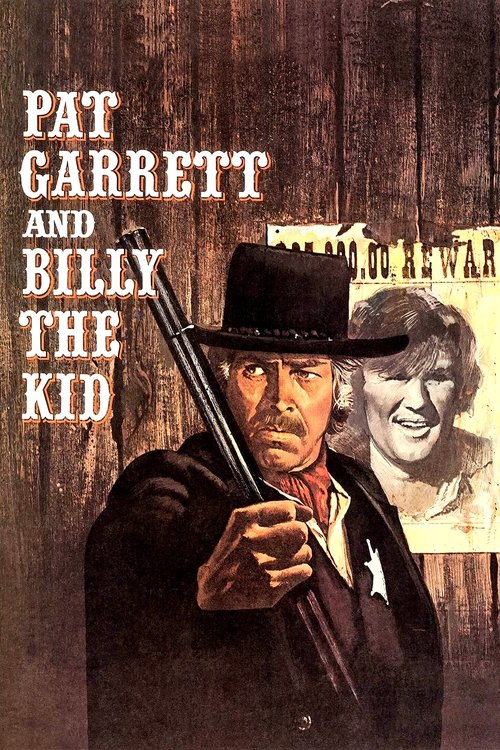
After a motorcycle crash in 1966, Dylan ceased touring for seven years. During this period, he recorded a large body of songs with the Band, released as The Basement Tapes (1975). Dylan explored country music and rural themes on John Wesley Harding (1967), Nashville Skyline (1969), and New Morning (1970). He acted in Pat Garrett and Billy the Kid (1973) and provided its soundtrack, which included "Knockin' on Heaven's Door". He contined the Western themes on Blood on the Tracks (1975), featuring "Tangled Up in Blue". In the late 1970s, he converted to Christianity and recorded gospel music. Time Out of Mind (1997) won the Grammy Award for Album of the Year. Dylan has toured since the late 1980s on the Never Ending Tour. He has published ten books of paintings and drawings and a memoir, Chronicles: Volume One (2004). His career has been chronicled in films, including the documentary No Direction Home (2005) and the biopic A Complete Unknown (2024).
With an estimated 125 million records sold worldwide, Dylan is one of the best-selling musicians of all time. His accolades include an Academy Award and ten Grammy Awards. He was honored with Kennedy Center Honors in 1997 and the Presidential Medal of Freedom in 2012. Dylan has been inducted into the Rock and Roll Hall of Fame and the Songwriters Hall of Fame. He was awarded a 2008 Pulitzer Prize special citation and the 2016 Nobel Prize in Literature "for having created new poetic expressions within the great American song tradition".
Contents
Early life and education
Bob Dylan was born Robert Allen Zimmerman (his Hebrew name being Shabtai Zisl ben Avraham; שבתאי-זיסל בן אברהם) on May 24, 1941, at St. Mary's Hospital, in Duluth, Minnesota. Dylan's paternal grandparents, Anna Kirghiz and Zigman Zimmerman, emigrated from Odessa in the Russian Empire (now Ukraine) to the United States after the 1905 pogroms against Jews. His maternal grandparents, Florence and Ben Stone, were Lithuanian Jews who had arrived in the US in 1902. Dylan wrote that his paternal grandmother's family was originally from the Kağızman District of Kars Province, northeastern Turkey.
Dylan's father Abram Zimmerman and his mother Beatrice "Beatty" Stone were part of a small, close-knit Jewish community. They lived in Duluth until Dylan was six, when his father contracted polio and the family returned to his mother's hometown of Hibbing, where they lived for the rest of Dylan's childhood, and his father and paternal uncles ran a furniture and appliance store.
As a teenager, Dylan heard rock and roll on radio stations broadcasting from Shreveport and Little Rock. Dylan formed several bands while at Hibbing High School: the Golden Chords performed covers of Little Richard and Elvis Presley. Their performance of Danny & the Juniors's "Rock and Roll Is Here to Stay" at their high school talent show was so loud that the principal cut the microphone. On January 31, 1959, Dylan saw Buddy Holly play at the Duluth Armory, four days before Holly's fatal plane crash. Dylan was electrified: "Buddy wrote songs – songs that had beautiful melodies and imaginative verses. And he sang great – sang in more than a few voices. He was the archetype. Everything I wasn't and wanted to be."
In 1959, Dylan's high school yearbook carried the caption "Robert Zimmerman: to join 'Little Richard'". That year, as Elston Gunnn, he performed twice with Bobby Vee, playing piano and clapping. In September, Dylan enrolled at the University of Minnesota. and began to perform at the Ten O'Clock Scholar, a coffeehouse near campus, becoming part of the Dinkytown folk music circuit. His focus on rock and roll gave way to American folk music, as he explained in 1985:
The thing about rock'n'roll is that for me anyway it wasn't enough.... There were great catch-phrases and driving pulse rhythms ... but the songs weren't serious or didn't reflect life in a realistic way. I knew that when I got into folk music, it was more of a serious type of thing. The songs are filled with more despair, more sadness, more triumph, more faith in the supernatural, much deeper feelings.
Career
1960–1962: Move to New York and stardom
Dylan dropped out of college in May 1960 at the end of his first year. In January 1961, he traveled to New York City to perform and to visit his hero Woody Guthrie at Greystone Park Psychiatric Hospital in New Jersey. Guthrie had been a revelation: "The songs themselves had the infinite sweep of humanity in them. ... I said to myself I was going to be Guthrie's greatest disciple." His songwriting was also shaped by Robert Johnson's blues and the "architectural forms" of Hank Williams's country songs.
From February 1961, Dylan played at Greenwich Village clubs, befriending and borrowing material from folk singers, including Dave Van Ronk, Fred Neil, Odetta, the New Lost City Ramblers and the Clancy Brothers. In September, Robert Shelton boosted Dylan's career with an enthusiastic review of his performance at Gerde's Folk City. That month, Dylan played harmonica on Carolyn Hester's third album, bringing him to the attention of producer John Hammond, who signed Dylan to Columbia Records. Dylan's debut album, Bob Dylan, (1962), consisted of traditional folk, blues and gospel material with just two original compositions, "Talkin' New York" and "Song to Woody". The album sold 5,000 copies in its first year, just breaking even.
On August 9, 1962, Dylan legally changed his name to Robert Dylan in the St. Louis County Court, Hibbing. His father, Abraham Zimmerman, was the witness. That month, Dylan signed a management contract with Albert Grossman. Grossman remained Dylan's manager until 1970, and was known for his sometimes confrontational personality and protective loyalty. Dylan said, "He was kind of like a Colonel Tom Parker figure ... you could smell him coming." Tension between Grossman and John Hammond led to Hammond's suggesting that Dylan work with the jazz producer Tom Wilson, who produced several tracks for Dylan's second album and went on to produce Dylan's next three albums.
Dylan made his first visit to England from December 1962 to January 1963. He was invited to perform in Philip Saville's production of Madhouse on Castle Street on BBC Television. While in London, Dylan performed at several folk clubs, including the Troubadour, Les Cousins, and Bunjies. He also learned material from UK performers, including Martin Carthy.
The Freewheelin' Bob Dylan (1963) established him as a significant singer-songwriter. It featured many protest songs, inspired by Guthrie and Pete Seeger's passion for contemporary songs. "Oxford Town" was an oblique account of James Meredith's ordeal as the first Black student at the University of Mississippi. The album's first song, "Blowin' in the Wind", partly derived its melody from the traditional slave song "No More Auction Block", while its lyrics wondered whether war and injustice would ever end. The song was widely recorded, becoming a hit for Peter, Paul, and Mary. With its apocalyptic premonitions, "A Hard Rain's a-Gonna Fall" gained resonance with the Cuban Missile Crisis which commenced a month after the song's first performance. Richard Corliss called it a "Chartres of apocalyptic imagery. Upon hearing it, Allen Ginsberg "wept. 'Cause it seemed that the torch had been passed to another generation."
1963–1965: Protest music and Another Side
In May 1963, Dylan's political profile rose when he walked out of The Ed Sullivan Show. During rehearsals, Dylan had been told by CBS television's head of program practices that "Talkin' John Birch Paranoid Blues" was potentially libelous to the John Birch Society. Rather than comply with censorship, Dylan refused to appear. Dylan and Baez were prominent in the civil rights movement, singing together at the March on Washington on August 28, 1963. Dylan performed "Only a Pawn in Their Game" and "When the Ship Comes In".
The Times They Are a-Changin' (1964) reflected a politicized Dylan. The songs often took on curent events, with "Only a Pawn in Their Game" addressing the murder of civil rights worker Medgar Evers, and "The Lonesome Death of Hattie Carroll" the death of Black hotel barmaid Hattie Carroll at the hands of young White socialite William Zantzinger. "Ballad of Hollis Brown" and "North Country Blues" addressed despair engendered by the breakdown of farming and mining communities. The final track was Dylan's angry response to a hostile profile published in Newsweek. Per Clinton Heylin, the profile wrote about "the way the Bar Mitzvah boy from Hibbing, Minnesota, had reinvented himself as the prince of protest", emphasising his birth name, his attendance at the University of Minnesota, and his close relationship with his parents from whom he claimed to be estranged. "Restless Farewell" ends with his vow to "make my stand/ And remain as I am/ And bid farewell and not give a damn".
By the end of 1963, Dylan felt manipulated and artistically constrained by the folk and protest movements. Accepting the "Tom Paine Award" from the Emergency Civil Liberties Committee three weeks after the assassination of John F. Kennedy, an intoxicated Dylan questioned the role of the committee, characterized the members as old and balding, and claimed to see something of himself and of every man in Kennedy's assassin, Lee Harvey Oswald.
Johnny Cash defended Dylan in a letter to Broadside in March 1964, ending with the injunction: "Don’t bad-mouth him 'till you hear him, let him start by continuing / He’s almost brand new, SHUT UP! … AND LET HIM SING!" Dylan recallered "the letter meant the world to me." Cash and Dylan met for the first time at the Newport Folk Festival in July 1964 and became friends.
Another Side of Bob Dylan (1964) had a lighter mood. The humorous Dylan reemerged on "I Shall Be Free No. 10" and "Motorpsycho Nightmare". "Spanish Harlem Incident" and "To Ramona" are passionate love songs, while "Black Crow Blues" and "I Don't Believe You (She Acts Like We Never Have Met)" suggest the rock and roll soon to dominate Dylan's music. "It Ain't Me Babe", on the surface a song about spurned love, has been described as a rejection of the role of political spokesman thrust upon him. His new direction was signaled by two lengthy songs: the impressionistic "Chimes of Freedom", which sets social commentary against a metaphorical landscape in a style characterized by Ginsberg as "chains of flashing images," and "My Back Pages", which attacks the simplistic seriousness of his own topical songs and seems to predict the backlash he was about to encounter from his former champions.
1965–1969: Going electric and motorcycle accident
Bringing It All Back Home (1965) featured his first recordings with electric instruments, under producer Tom Wilson's guidance. The first single, "Subterranean Homesick Blues", owed much to Chuck Berry's "Too Much Monkey Business", its free-association lyrics described as harking back to the energy of beat poetry and as a forerunner of rap and hip-hop. The album's second side contained four long songs on which Dylan accompanied himself on acoustic guitar and harmonica. "Mr. Tambourine Man" became one of his best-known songs when the Byrds recorded an electric version that reached number one in the US and UK. The album's final songs, "It's All Over Now, Baby Blue" and "It's Alright, Ma (I'm Only Bleeding)", are among Dylan's most important compositions.
In May 1965, Dylan played an eight-concert tour in England, immortalized in D. A. Pennebaker's documentary Dont Look Back (1967). The movie opens with an early music video for "Subterranean Homesick Blues" in which Dylan, instead of lipsynching the lyrics, dropped cue cards containing key words to the ground. Pennebaker said the sequence was Dylan's idea; it has been imitated in music videos and advertisements.
On July 25, 1965, headlining the Newport Folk Festival, Dylan performed his first electric set since high school with a pickup group featuring Mike Bloomfield on guitar and Al Kooper on organ. Dylan had appeared at Newport in 1963 and 1964, but in 1965 he was met with cheering and booing and left the stage after three songs. One version has it that the boos were from folk fans whom Dylan had alienated by appearing, unexpectedly, with an electric guitar. Murray Lerner, who filmed the performance, said: "I absolutely think that they were booing Dylan going electric." Others claim audience members were upset by poor sound and a short set.
Dylan's performance provoked a hostile response from the folk music establishment. In the September issue of Sing Out!, Ewan MacColl wrote: "Our traditional songs and ballads are the creations of extraordinarily talented artists working inside disciplines formulated over time.... 'But what of Bobby Dylan?' scream the outraged teenagers.... Only a completely non-critical audience, nourished on the watery pap of pop music, could have fallen for such tenth-rate drivel". On July 29, four days after Newport, Dylan was back in the studio in New York, recording "Positively 4th Street". The lyrics contained images of vengeance and paranoia, and have been interpreted as Dylan's put-down of former friends from the folk community he had known in clubs along West 4th Street.
1970–1979: Return to touring and Christian music
Greil Marcus, upon hearing Self Portrait, (1970), asked "What is this shit?" It was a double LP including few original songs and was poorly received. The poet Archibald MacLeish asked Dylan to write songs for a musical based on "The Devil and Daniel Webster". Creative differences led to Dylan's departure, but much of the material made its way onto New Morning (1970). It included "Day of the Locusts", an account of receiving an honorary degree from Princeton on June 9, 1970. Olivia Newton-John covered "If Not For You" on her debut album.
Tarantula, a book of freeform prose-poems, was written by Dylan in a creative burst in 1964–65. Dylan shelved his book for several years, apparently uncertain of its status, until he suddenly informed Macmillan at the end of 1970 that the time had come to publish it. The book attracted negative reviews but later critics have suggested its affinities with Finnegans Wake and A Season in Hell.
Between March 16 and 19, 1971, Dylan recorded with Leon Russell at Blue Rock, a small studio in Greenwich Village. The sessions resulted in "Watching the River Flow" and a new recording of "When I Paint My Masterpiece". On November 4, 1971, Dylan recorded "George Jackson", which he released a week later. For many, the single was a surprising return to protest material, mourning the killing of Black Panther George Jackson in San Quentin State Prison. Dylan's surprise appearance at George Harrison's Concert for Bangladesh on August 1, 1971, attracted attention.
Dylan joined Sam Peckinpah's film Pat Garrett and Billy the Kid (1973), providing the soundtrack and playing "Alias", a member of Billy's gang. Despite the film's failure at the box office, "Knockin' on Heaven's Door" became one of Dylan's most covered songs.
Dylan began 1973 by signing with a new label, David Geffen's Asylum Records, when his contract with Columbia Records expired. Planet Waves (1974) was recorded with the Band as his backing group as they rehearsed for a major tour. It included two versions of "Forever Young", which became one of his most popular songs. As one critic described it, the song projected "something hymnal and heartfelt that spoke of the father in Dylan", and Dylan said "I wrote it thinking about one of my boys and not wanting to be too sentimental". Columbia Records simultaneously released Dylan, a collection of studio outtakes, widely interpreted as a churlish response to Dylan's signing with a rival record label.
1980–1989: Career fluctuations
Saved (1980) was described by Michael Gray as "the nearest thing to a follow-up album Dylan has ever made, Slow Train Coming II and inferior". His third Christian album, Shot of Love (1981) featured his first secular compositions in more than two years. The lyrics of "Every Grain of Sand" recall William Blake's "Auguries of Innocence". Elvis Costello wrote that "Shot of Love may not be your favorite Bob Dylan record, but it might contain his best song: 'Every Grain of Sand'."
Gray criticized Dylan's 1980s albums for carelessness in the studio and for failing to release his best songs. Infidels (1983) employed Knopfler again as lead guitarist and also as producer; the sessions resulted in several songs that Dylan left off the album. Best regarded of these were "Blind Willie McTell", which was both a tribute to the eponymous blues musician and an evocation of African American history, "Foot of Pride" and "Lord Protect My Child". These three songs were later released on The Bootleg Series Volumes 1–3 (Rare & Unreleased) 1961–1991.
Between July 1984 and March 1985, Dylan recorded Empire Burlesque. Arthur Baker, who had remixed hits for Cyndi Lauper, was asked to engineer and mix the album. Baker said he felt he was hired to make Dylan's album sound "a little bit more contemporary". In 1985 Dylan sang on USA for Africa's famine relief single "We Are the World". He also joined Artists United Against Apartheid, providing vocals for their single "Sun City". On July 13, 1985, he appeared at the Live Aid concert at JFK Stadium, Philadelphia. Backed by Keith Richards and Ronnie Wood, he performed a ragged version of "Ballad of Hollis Brown", a tale of rural poverty, and then said to the worldwide audience: "I hope that some of the money ... maybe they can just take a little bit of it, maybe ... one or two million, maybe ... and use it to pay the mortgages on some of the farms and, the farmers here, owe to the banks". His remarks were widely criticized as inappropriate, but inspired Willie Nelson to organize a concert, Farm Aid, to benefit debt-ridden American farmers.
In October 1985, Dylan released Biograph, a box set featuring 53 tracks, 18 of them previously unreleased. Stephen Thomas Erlewine wrote: "Historically, Biograph is significant not for what it did for Dylan's career, but for establishing the box set, complete with hits and rarities, as a viable part of rock history." Biograph also contained liner notes by Cameron Crowe in which Dylan discussed the origins of some of his songs.
1990–1999: Return to folk music and resurgence
Under the Red Sky (1990) was an about-face from the serious Oh Mercy. It included several apparently simple songs, including "Under the Red Sky" and "Wiggle Wiggle". The album was dedicated to "Gabby Goo Goo", a nickname for the daughter of Dylan and Carolyn Dennis, Desiree Gabrielle Dennis-Dylan, who was four. Musicians on the album included George Harrison, Slash, David Crosby, Bruce Hornsby, Stevie Ray Vaughan and Elton John. The record received negative reviews and sold poorly. In 1990 and 1991 Dylan was described by his biographers as drinking heavily, impairing his performances on stage. In an interview with Rolling Stone, Dylan dismissed allegations that drinking was interfering with his music: "That's completely inaccurate. I can drink or not drink. I don't know why people would associate drinking with anything I do, really".
Defilement and remorse were themes Dylan addressed when he received a Grammy Lifetime Achievement Award from Jack Nicholson in February 1991. The event coincided with the start of the Gulf War and Dylan played "Masters of War"; Rolling Stone called his performance "almost unintelligible". He made a short speech: "My daddy once said to me, he said, 'Son, it is possible for you to become so defiled in this world that your own mother and father will abandon you. If that happens, God will believe in your ability to mend your own ways'". This was a paraphrase of 19th-century Orthodox Rabbi Samson Raphael Hirsch's commentary on Psalm 27. On October 16, 1992, the thirtieth anniversary of Dylan's debut album was celebrated with a concert at Madison Square Garden, christened "Bobfest" by Neil Young and featuring John Mellencamp, Stevie Wonder, Lou Reed, Eddie Vedder, Dylan and others. It was recorded as the live album The 30th Anniversary Concert Celebration.
Dylan returned to his roots with two albums covering traditional folk and blues songs: Good as I Been to You (1992) and World Gone Wrong (1993), backed solely by an acoustic guitar. Many critics and fans noted the quiet beauty of the song "Lone Pilgrim", written by a 19th-century teacher. In August 1994, he played at Woodstock '94; Rolling Stone called his performance "triumphant". In November, Dylan recorded two live shows for MTV Unplugged. He said his wish to perform traditional songs was overruled by Sony executives who insisted on hits. The resulting album, MTV Unplugged, included "John Brown", an unreleased 1962 song about how enthusiasm for war ends in disillusionment.
2000–2009: Oscar win, memoir, and Modern Times
In 2001, Dylan won an Academy Award for Best Original Song for "Things Have Changed", written for the film Wonder Boys. "Love and Theft" was released on September 11, 2001. Recorded with his touring band, Dylan produced the album under the alias Jack Frost. Critics noted that Dylan was widening his musical palette to include rockabilly, Western swing, jazz and lounge music. It won the Grammy Award for Best Contemporary Folk Album. The Wall Street Journal pointed out similarities between the album's lyrics and Junichi Saga's Confessions of a Yakuza. Saga was not familiar with Dylan's work, but said he was flattered. Upon hearing the album, Saga said of Dylan: "His lines flow from one image to the next and don't always make sense. But they have a great atmosphere."
In 2003, Dylan revisited the evangelical songs from his Christian period and participated in the project Gotta Serve Somebody: The Gospel Songs of Bob Dylan. That year, Dylan released Masked & Anonymous, which he co-wrote with director Larry Charles under the alias Sergei Petrov. Dylan starred as Jack Fate, alongside a cast that included Jeff Bridges, Penélope Cruz and John Goodman. The film polarized critics; A. O. Scott called it an "incoherent mess"; a few treated it as a serious work of art.
In 2004, Dylan published the first part of his memoir, Chronicles: Volume One. Confounding expectations, Dylan devoted three chapters to his first year in New York City in 1961–1962, virtually ignoring the mid-1960s when his fame was at its height, while devoting chapters to New Morning (1970) and Oh Mercy (1989). The book reached number two on The New York Times' Hardcover Non-Fiction bestseller list in December 2004 and was nominated for a National Book Award.
Critics noted that Chronicles contained many examples of pastiche and borrowing; sources included Time and the novels of Jack London.
Clinton Heylin queried the veracity of Chronicles, noting "Not a single checkable story held water; not one anecdote couldn't be shot full of holes by any half-decent researcher."
Martin Scorsese's Dylan documentary No Direction Home was broadcast on September 26–27, 2005, on BBC Two in the UK and on American Masters on PBS in the US. It covers the period from Dylan's arrival in New York in 1961 to his motorcycle crash in 1966, featuring interviews with Joan Baez, Allen Ginsberg, Pete Seeger, Suze Rotolo, Liam Clancy, Mavis Staples and Dylan himself. The film earned a Peabody Award and a Columbia-duPont Award. The accompanying soundtrack featured unreleased songs from Dylan's early years.
2010–2019: Tempest and continued recordings
On Dylan's 70th birthday in 2011, the universities of Mainz, Vienna, and Bristol invited literary critics and historians to give papers on Dylan's work. Other events, including tribute bands, discussions and singalongs, took place. The Guardian wrote: "From Moscow to Madrid, Norway to Northampton and Malaysia to his home state of Minnesota, self-confessed 'Bobcats' will gather today to celebrate the 70th birthday of a giant of popular music."
Tempest, was released on September 11, 2012. The album features a tribute to Lennon, "Roll On John", and the title track is a 14-minute song about the sinking of the Titanic. Will Hermes wrote: "Lyrically, Dylan is at the top of his game, joking around, dropping wordplay and allegories that evade pat readings and quoting other folks' words like a freestyle rapper on fire".
The Bootleg Series Vol. 10: Another Self Portrait (1969–1971), was released in August 2013. The album contained 35 previously unreleased tracks, including alternative takes and demos from Dylan's 1969–71 recording sessions during the making of Self Portrait and New Morning. The box set included a live recording of Dylan's performance with the Band at the Isle of Wight Festival in 1969. Thom Jurek wrote, "For fans, this is more than a curiosity, it's an indispensable addition to the catalog." Columbia Records released a boxset containing all 35 studio albums, six albums of live recordings and a collection of non-album material (Sidetracks) as Bob Dylan: Complete Album Collection: Vol. One, in November. To publicize the box set, a video of "Like a Rolling Stone" was released on Dylan's website. The interactive video allowed viewers to switch between 16 simulated TV channels, all featuring characters lip-synching the lyrics.
Dylan appeared in an ad for the Chrysler 200 which aired during the 2014 Super Bowl. In it, he says that "Detroit made cars and cars made America... So let Germany brew your beer, let Switzerland make your watch, let Asia assemble your phone. We will build your car." Dylan's ad was criticized for its protectionist implications, and people wondered whether he had "sold out". The Lyrics: Since 1962 was published by Simon & Schuster in the fall of 2014. The book was edited by Christopher Ricks, Julie Nemrow and Lisa Nemrow and offered variant versions of Dylan's songs, sourced from out-takes and live performances. A limited edition of 50 books, signed by Dylan, was priced at $5,000. "It's the biggest, most expensive book we've ever published, as far as I know", said Jonathan Karp, Simon & Schuster's president and publisher. A comprehensive edition of the Basement Tapes was released as The Bootleg Series Vol. 11: The Basement Tapes Complete in November 2014. The album included 138 tracks which Dylan and the Band had recorded at their homes in Woodstock, New York in 1967. The Basement Tapes Complete won the Grammy Award for Best Historical Album.
2020–present: Rough and Rowdy Ways
On March 26, 2020, coinciding with the Covid-19 pandemic, Dylan released "Murder Most Foul", a seventeen-minute song revolving around the Kennedy assassination, on his YouTube channel. Billboard reported on April 8 that "Murder Most Foul" had topped the Rock Digital Song Sales Chart, the first time that Dylan had scored a number one song on a pop chart under his own name. Three weeks later, Dylan released another, "I Contain Multitudes". The title is from Walt Whitman's "Song of Myself". On May 7, Dylan released a third single, "False Prophet", accompanied by the news that the three songs would all appear on a forthcoming double album.
Rough and Rowdy Ways, Dylan's first album of original material since 2012, was released on June 19 to favorable reviews. Alexis Petridis wrote: "the die-hards can spend months unravelling the knottier lyrics, but you don't need a PhD in Dylanology to appreciate its singular quality and power." Rob Sheffield wrote: "While the world keeps trying to celebrate him as an institution, pin him down, cast him in the Nobel Prize canon, embalm his past, this drifter always keeps on making his next escape. On Rough and Rowdy Ways, Dylan is exploring terrain nobody else has reached before—yet he just keeps pushing on into the future". In its first week of release, Rough and Rowdy Ways reached number one on the UK album chart, making Dylan "the oldest artist to score a No. 1 of new, original material".
In December 2020, Dylan sold his catalog to Universal Music Publishing Group, including both the income he receives as a songwriter and his control of their copyright. Universal, a division of the French media conglomerate Vivendi, will collect all future income from the songs. The New York Times estimated the price at more than $300 million", although other reports suggested the figure was closer to $400 million.
Dylan's 80th birthday was commemorated by a virtual conference, Dylan@80, organized by the University of Tulsa Institute for Bob Dylan Studies. Several new biographies and studies of Dylan were published.
Dylan suspended his Never Ending Tour due to the COVID-19 pandemic; in July 2021, livestream platform Veeps presented a 50-minute performance by Dylan, Shadow Kingdom: The Early Songs of Bob Dylan. Filmed in black and white with a film noir look, Dylan performed 13 songs in a club setting with an audience. The performance was favorably reviewed, and one critic suggested the backing band resembled the style of the musical Girl from the North Country. The soundtrack was released in June 2023. In September, Dylan released Springtime in New York: The Bootleg Series Vol. 16 (1980–1985), issued in 2 LP, 2 CD and 5 CD formats. It comprises rehearsals, live recordings, out-takes and alternative takes from Shot of Love, Infidels and Empire Burlesque. Neil McCormick wrote: "These bootleg sessions remind us that Dylan's worst period is still more interesting than most artists' purple patches".
Never Ending Tour
The Never Ending Tour commenced on June 7, 1988. Dylan has played roughly 100 dates a year since, a heavier schedule than most performers who started in the 1960s. By April 2019, Dylan and his band had played more than 3,000 shows, anchored by long-time bassist Tony Garnier.
To the chagrin of some, Dylan's performances are unpredictable as he often alters his arrangements and changes his vocal approach. These variable performances have divided critics. Richard Williams and Andy Gill argued that Dylan has found a successful way to present his rich legacy of material. Others have criticized his live performances for changing "the greatest lyrics ever written so that they are effectively unrecognisable", and giving so little to the audience that "it is difficult to understand what he is doing on stage at all".
In April, Dylan announced a Summer 2026 tour beginning in Troutdale, Oregon on June 4, and ending in Nashville, Tennessee on August 1. In July, Dylan announced a European tour, starting in Oslo on October 17, 2026, and finishing in London on December 8.
Alex Ross summarised Dylan's touring career: "his shows cause his songs to mutate, so that no definitive or ideal version exists. Dylan's legacy will be the sum of thousands of performances, over many decades ... Every night, whether he's in good or bad form, he says, in effect, 'Think again.'"
Personal life
Dylan's primary residence is reportedly in Point Dume, on the coast of Malibu, California. He formerly owned an estate in the Scottish Highlands and a townhouse in Harlem, New York City.
Romantic relationships
Echo Helstrom was Dylan's high school girlfriend. The couple listened together to rhythm-and-blues on the radio, and her family exposed him to singers such as Jimmie Rodgers on 78 RPM records, and a range of folk music magazines, sheet music, and manuscripts. Helstrom is believed by some to be the inspiration for Dylan's song "Girl from the North Country", though this is disputed.
Dylan's first serious relationship was with artist Suze Rotolo, a daughter of Communist Party USA radicals. According to Dylan, "She was the most erotic thing I'd ever seen ... The air was suddenly filled with banana leaves. We started talking and my head started to spin".
Rotolo was photographed arm-in-arm with Dylan on the cover of his album The Freewheelin' Bob Dylan. Critics have connected Rotolo to some of Dylan's early love songs, including "Don't Think Twice It's All Right". The relationship ended in 1964. In 2008, Rotolo published a memoir about her life in Greenwich Village and relationship with Dylan in the 1960s, A Freewheelin' Time.
When Joan Baez met Dylan in April 1961, she had already released her first album and was acclaimed as the "Queen of Folk". On hearing Dylan perform "With God on Our Side", Baez later said, "I never thought anything so powerful could come out of that little toad". In July 1963, Baez invited Dylan to join her on stage at the Newport Folk Festival, setting the scene for similar duets over the next two years. By the time of Dylan's 1965 tour of the UK, their romantic relationship had begun to fizzle out, as captured in D. A. Pennebaker's documentary Dont Look Back. Baez later toured with Dylan as a performer on his Rolling Thunder Revue in 1975–76. Baez also starred as "The Woman In White" in the film Renaldo and Clara (1978), directed by Dylan. Dylan and Baez toured together again in 1984 with Carlos Santana.
Baez recalled her relationship with Dylan in Martin Scorsese's No Direction Home (2005). She wrote about Dylan in two autobiographies—admiringly in Daybreak (1968), less so in And A Voice to Sing With (1987). Her song "Diamonds & Rust" has been described as "an acute portrait" of Dylan.
Dylan married Sara Lownds, who had worked as a model and secretary at Drew Associates, on November 22, 1965. They had four children: Jesse Byron (born January 6, 1966), Anna Lea (born July 11, 1967), Samuel Isaac Abram (born July 30, 1968), and Jakob Luke (born December 9, 1969). Dylan also adopted Sara's daughter from a prior marriage, Maria Lownds (later Dylan, born October 21, 1961). Sara Dylan played the role of Clara in Dylan's film Renaldo and Clara (1978). Bob and Sara Dylan were divorced on June 29, 1977.
Religious beliefs
Growing up in Hibbing, Minnesota, Dylan and his family were part of the area's small, close-knit Jewish community, and Dylan had his bar mitzvah in May 1954. Around the time of his 30th birthday, in 1971, Dylan visited Israel, and also met Rabbi Meir Kahane, founder of the New York-based Jewish Defense League.
In the late 1970s, Dylan converted to Christianity. In November 1978, guided by his friend Mary Alice Artes, Dylan made contact with the Vineyard Christian Fellowship. He claimed to have experienced a new birth and to have become an evangelical Christian. From January to March 1979, Dylan attended Vineyard's Bible study classes in Reseda, California.
By 1984, Dylan was distancing himself from the "born again" label. He told Kurt Loder of Rolling Stone: "I've never said I'm 'born again'. That's just a media term. I don't think I've been an agnostic. I've always thought there's a superior power, that this is not the real world and that there's a world to come." In 1997, he told David Gates of Newsweek:
Here's the thing with me and the religious thing. This is the flat-out truth: I find the religiosity and philosophy in the music. I don't find it anywhere else. Songs like "Let Me Rest on a Peaceful Mountain" or "I Saw the Light"—that's my religion. I don't adhere to rabbis, preachers, evangelists, all of that. I've learned more from the songs than I've learned from any of this kind of entity. The songs are my lexicon. I believe the songs.
Dylan has supported the Chabad Lubavitch movement, and has privately participated in Jewish religious events, including his sons' bar mitzvahs and services at Hadar Hatorah, a Chabad Lubavitch yeshiva. In 1989 and 1991, he appeared on the Chabad telethon.
Dylan has continued to perform songs from his gospel albums in concert, occasionally covering traditional religious songs. He has made passing references to his religious faith, such as in a 2004 interview with 60 Minutes, when he told Ed Bradley, "the only person you have to think twice about lying to is either yourself or to God". He explained his constant touring schedule as part of a bargain he made a long time ago with the "chief commander—in this earth and in the world we can't see".
Accolades and honors
Dylan was inducted into the Rock and Roll Hall of Fame in 1988, his first year of eligibility. He has also been inducted into the Nashville Songwriters Hall of Fame and Songwriters Hall of Fame. In 1997, US President Bill Clinton presented Dylan with a Kennedy Center Honor in the East Room of the White House, saying: "He probably had more impact on people of my generation than any other creative artist. His voice and lyrics haven't always been easy on the ear, but throughout his career Bob Dylan has never aimed to please. He's disturbed the peace and discomforted the powerful". In 2008, the Pulitzer Prize jury awarded him a special citation for "his profound impact on popular music and American culture, marked by lyrical compositions of extraordinary poetic power".
Dylan received the Presidential Medal of Freedom in May 2012. Barack Obama, presenting Dylan with the award, said "There is not a bigger giant in the history of American music." Obama praised Dylan's voice for its "unique gravelly power that redefined not just what music sounded like but the message it carried and how it made people feel". In November 2013, Dylan was awarded France's highest honor, the Légion d'Honneur, despite the misgiving of the grand chancellor of the Légion, who had declared him unworthy. In February 2015, Dylan accepted the MusiCares Person of the Year award from the National Academy of Recording Arts and Sciences, in recognition of his philanthropic and artistic contributions.
Nobel Prize in Literature
In 1996, Gordon Ball of the Virginia Military Institute nominated Dylan for the Nobel Prize in Literature, initiating a campaign that lasted for 20 years. On October 13, 2016, the Nobel committee announced that it would award Dylan the prize "for having created new poetic expressions within the great American song tradition". Horace Engdahl, a member of the Nobel Committee, described Dylan as "a singer worthy of a place beside the Greek bards, beside Ovid, beside the Romantic visionaries, beside the kings and queens of the blues, beside the forgotten masters of brilliant standards". The New York Times reported: "Mr. Dylan, 75, is the first musician to win the award, and his selection was perhaps the most radical choice in a history stretching back to 1901." Dylan remained silent for days after receiving the award, and then told Edna Gundersen that it was "amazing, incredible. Whoever dreams about something like that?" Dylan's Nobel lecture was delivered on June 4, 2017.
Legacy
Dylan has been called one of the most influential cultural figures of the 20th century. He was included in the Time 100: The Most Important People of the Century, where he was called "master poet, caustic social critic and intrepid, guiding spirit of the counterculture generation". Paul Simon said: "[Dylan's] early songs were very rich ... with strong melodies. 'Blowin' in the Wind' has a really strong melody. He so enlarged himself through the folk background that he incorporated it for a while. He defined the genre for a while."
For many critics, Dylan's greatest achievement was the synthesis exemplified by his mid-1960s trilogy, Bringing It All Back Home, Highway 61 Revisited and Blonde on Blonde. In Mike Marqusee's words:
Between late 1964 and the middle of 1966, Dylan created a body of work that remains unique. Drawing on folk, blues, country, R&B, rock'n'roll, gospel, British beat, symbolist, modernist and Beat poetry, surrealism and Dada, advertising jargon and social commentary, Fellini and Mad magazine, he forged a coherent and original artistic voice and vision. The beauty of these albums retains the power to shock and console.
In 1972, Michael Gray initiated serious critical scrutiny when he published Song & Dance Man: The Art of Bob Dylan, situating Dylan's work in the context of the English literary tradition of Donne, Browning and T. S. Eliot. That year, Craig McGregor published Bob Dylan: A Retrospective, an anthology containing critical essays about Dylan by Robert Shelton, Nat Hentoff, Ellen Willis and other contemporary cultural critics. In 1998, Stanford University sponsored the first international academic conference on Dylan held in the United States. In 2004, Richard F. Thomas, Classics professor at Harvard University, created the freshman seminar "Dylan", which aimed "to put the artist in context of not just popular culture of the last half-century, but the tradition of classical poets like Virgil and Homer." Thomas wrote Why Bob Dylan Matters (2017), exploring Dylan's connections with Greek and Latin literature. Literary critic Christopher Ricks published Dylan's Visions of Sin (2004), an appreciation of Dylan's work. After Dylan's Nobel win, Ricks reflected: "I'd not have written a book about Dylan, to stand alongside my books on Milton and Keats, Tennyson and T.S. Eliot, if I didn't think Dylan a genius of and with language."
The critical consensus on Dylan was articulated by Encyclopædia Britannica: "Hailed as the Shakespeare of his generation, Dylan ... set the standard for lyric writing." Former British poet laureate Andrew Motion said Dylan's lyrics should be studied in schools. Edna Gundersen noted that lines like "When you got nothing, you got nothing to lose"; "a hard rain's a-gonna fall"; "to live outside the law you must be honest" had entered the vernacular, and "you don't need a weather man to know which way the wind blows" and "the times they are a-changin'" appear in Bartlett's Familiar Quotations. The Rolling Stone Encyclopedia of Rock & Roll writes that "his lyrics—the first in rock to be seriously regarded as literature—became so well known that politicians from Jimmy Carter to Václav Havel have cited them as an influence".
Archives and recognition
The sale of Dylan's archive of about 6,000 notebooks, drafts of lyrics, recordings, and correspondence to the George Kaiser Family Foundation and the University of Tulsa was announced in March 2016. The sale price was "an estimated $15 million to $20 million". To house the archive, the Bob Dylan Center in Tulsa, Oklahoma opened on May 10, 2022.
In 2005, 7th Avenue East in Hibbing, Minnesota, where Dylan lived from ages 6 to 18, received the honorary name Bob Dylan Drive. In 2006, the 1.8 miles (2.9 km) Bob Dylan Way cultural path was inaugurated in Duluth, Minnesota; it links "cultural and historically significant areas of downtown for the tourists".
In 2015, a 160-foot-wide Dylan mural by Brazilian street artist Eduardo Kobra was unveiled in downtown Minneapolis.
In December 2013, the Fender Stratocaster which Dylan had played at the 1965 Newport Folk Festival fetched $965,000, the second highest price paid for a guitar. In June 2014, Dylan's hand-written lyrics of "Like a Rolling Stone" fetched $2 million at auction, a record for a popular music manuscript.
Visual arts
Dylan's career has included forays into the visual arts, dating back to the 1960s. Dylan has created both painted and sculptural art.
Written works
Dylan has published Tarantula (1971), a work of prose poetry; Chronicles: Volume One (2004), the first part of his memoirs; several books of the lyrics of his songs, and ten books of his art. Dylan's third full-length book, The Philosophy of Modern Song (2022), contains 66 essays on songs by other artists. Dylan has also been the subject of numerous biographies and critical studies.
Filmography
Dylan has appeared as an actor in five movies (Pat Garrett and Billy the Kid, Renaldo and Clara, Hearts of Fire, Masked and Anonymous, and Catchfire (cameo), as well as himself in many documentaries.