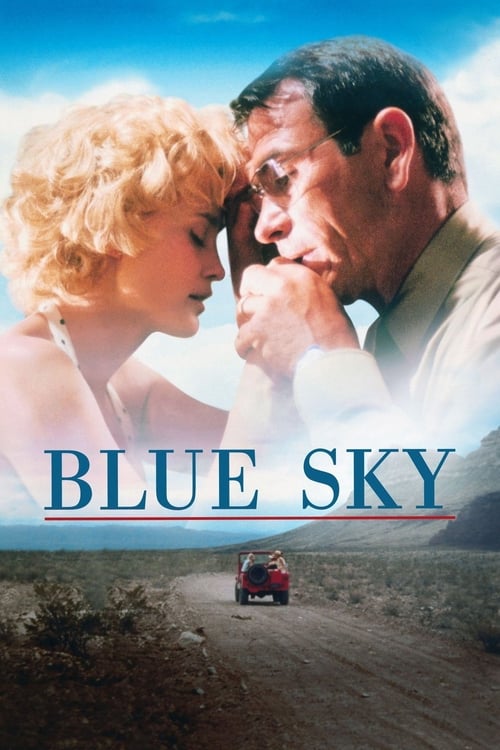
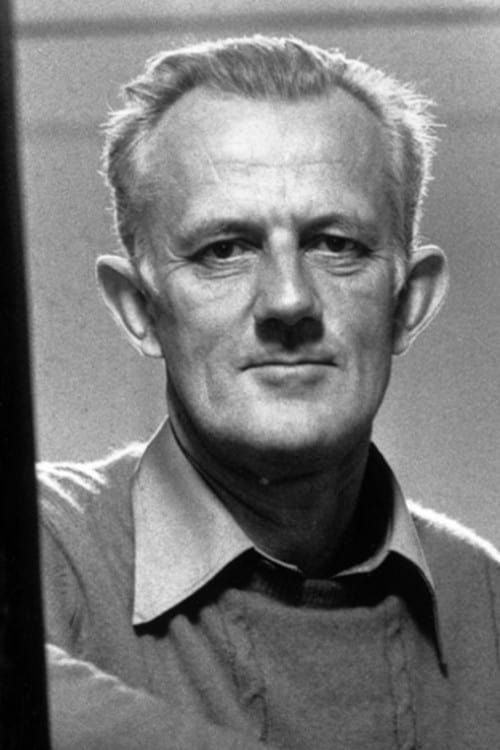
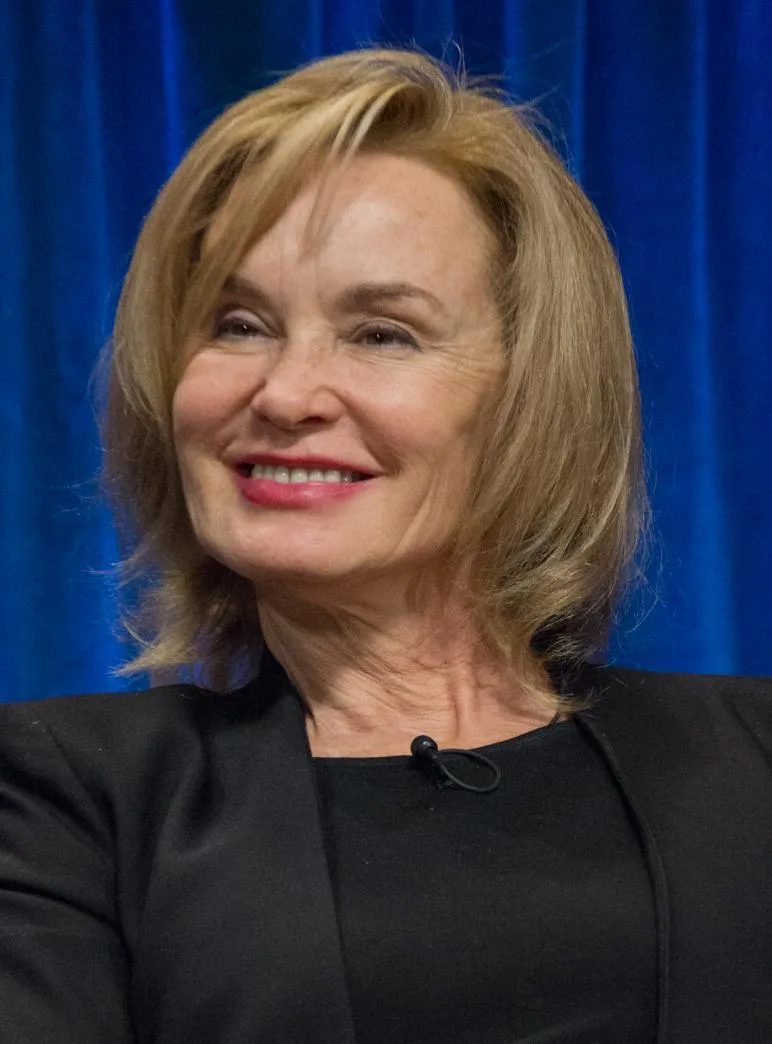

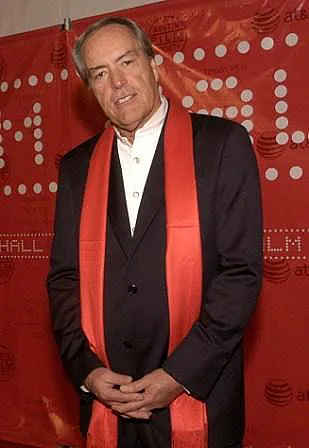
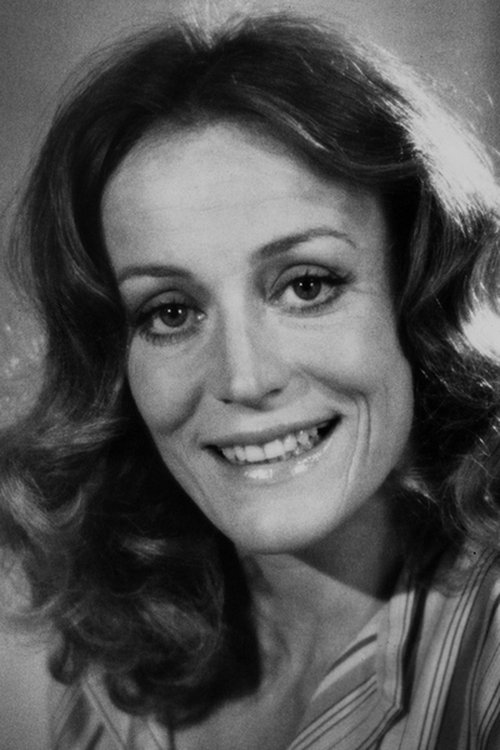
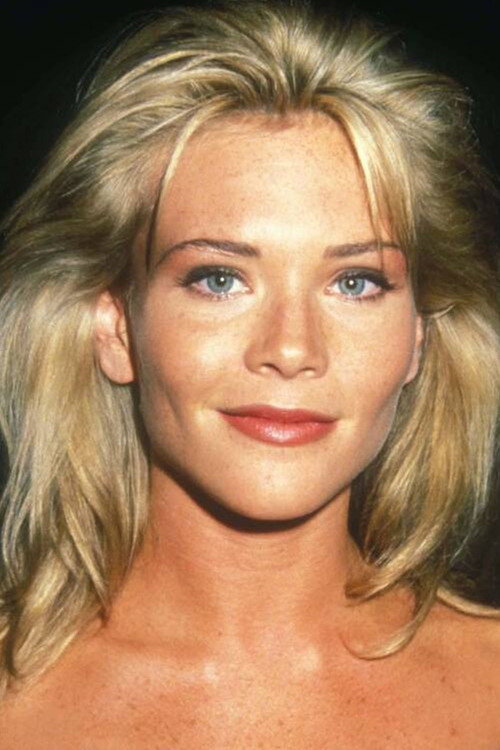


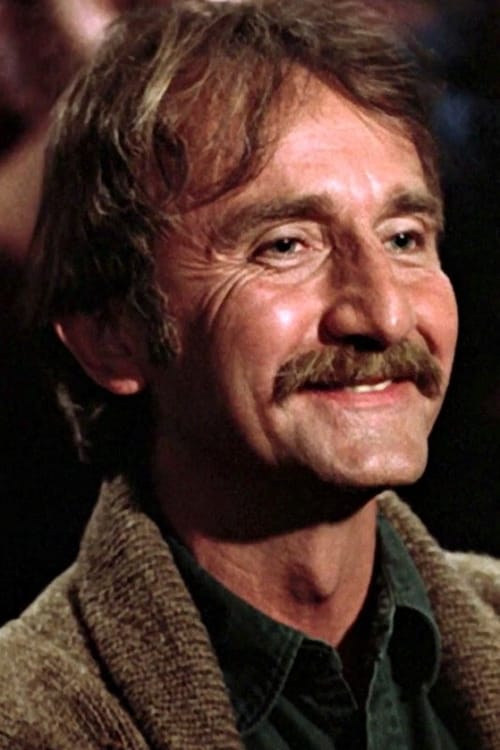
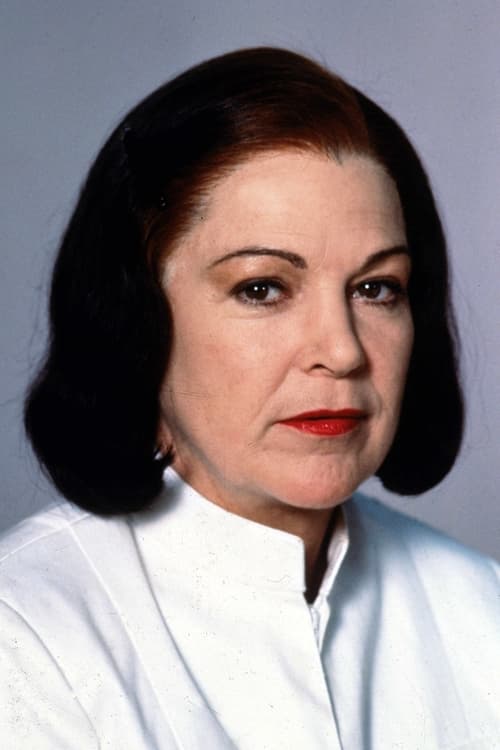



Blue Sky is a 1994 American comedy-drama film directed by Tony Richardson and written by Rama Laurie Stagner, Arlene Sarner, and Jerry Leichtling. The film stars Jessica Lange and Tommy Lee Jones, with supporting performances from Powers Boothe, Carrie Snodgress, Amy Locane, Chris O'Donnell, and Mitchell Ryan. Set in the 1960s, the story follows a U.S. Army engineer who becomes entangled in a military nuclear cover-up while navigating challenges posed by his wife's volatile behavior.
Rama Laurie Stagner created her screenplay by adapting an unpublished manuscript of her father. He had written about the tensions of his job and family life after resigning from the military in 1964. She also drew from her own memories as the eldest of two daughters.
Blue Sky was Richardson's final film before his death in 1991. Its release was delayed until September 1994 because of the bankruptcy of the distributor Orion. Though a box office disappointment, the film received generally positive reviews.
Lange's performance was highly praised. She won the Academy Award for Best Actress, as well as a Golden Globe Award, becoming the fifth actress to win Oscars for both Best Supporting Actress and Best Actress. The film's score was composed by Jack Nitzsche.
Contents
Plot
In 1962, Major Hank Marshall and his wife Carly face marital difficulties due to the pressures of Hank's military career and Carly's mental health issues. Hank is a nuclear engineer who favors underground nuclear testing, an initiative code-named "Blue Sky", rather than above-ground, open-air detonations. Carly is highly volatile, sometimes supercharged with anger or exuberance. Their two daughters: Alex, a teenager, and her younger sister Becky, have gone through many cycles with their mother.
Hannk is reassigned from Hawaii to a poorly maintained base in rural Alabama. Carly reacts to the assigned house in fury, attacking leftover furnishings and screaming at Hank. Then she embarks on shopping sprees to fix it up. Her erratic behavior particularly unsettles the eldest daughter Alex.
The day after their arrival, Hank meets with base commander Colonel Vince Johnson. He dismisses Hank's support for underground testing despite the strong scientific evidence presented.
Meanwhile, Vince's wife Vera extends an invitation to Carly and Hank for a social event hosted by the base officers' wives. At the party, Carly becomes intoxicated and dances provocatively with Vince when Hank won't dance. Both Vera and Hank (and other attendees) disapprove of the unseemly display.
Alex and Glenn, son of Vince and Vera, meet at a base get-together and gradually begin to spend secret time together. Glenn takes her to a building in a closed-off area of the base. She opens a box, finds a grenade, and mistakenly pulls the pin. Glenn throws it outside, where it detonates and sets a fire, drawing alarms and troops.
Both sets of parents forbid the relationship. Vince has another reason to get Hank out of the way. Carly is invited by the officers' wives to participate in a dance recital and dedicates herself to rehearsing.
Hank is sent to the Nevada Test Site to oversee the initial underground test under Lieutenant Colonel Robert Jennings. Hank is wary, having seen Vince's designs on Carly and realizes that she depends on him for stability.
Production
Blue Sky was filmed from May 30 to August 28, 1990. However, due to the bankruptcy of Orion Pictures, the film's release was delayed until 1994.
It also marks the final film of director Tony Richardson, who died on November 14, 1991, prior to the film's release.
Reception
Critical response
Blue Sky received generally positive reviews from critics, with Lange's performance receiving critical acclaim. The film holds an 80% approval rating on Rotten Tomatoes, based on 25 reviews, with an average rating of 6.4/10.
The New Yorker praised Lange, describing her role as "a stunning performance—perhaps the best of [her] remarkable career," while Entertainment Weekly described her performance as "a fierce, brave, sexually-charged performance, one of the most convincing portrayals I've seen of someone whose behavior flirts with craziness without quite crossing into it." The Los Angeles Times also lauded her work, calling it "striking" and noting that "Lange's acting in Blue Sky leaves you awestruck. It's a great performance — probably her best." Variety highlighted Lange's "full-blown star turn" as Carly Marshall, observing that "Brigitte Bardot and Marilyn Monroe are about the only other actresses one can imagine pulling off such a role as well as Lange has... [She] has the showy role, with almost unlimited opportunities to emote and strut her stuff, which she does magnificently and with total abandon." The Washington Post described her portrayal as "a plush, platinum star turn," noting, "She is what Carly imagines she might have become if only she hadn't been a military wife: mostly Monroe with a soupçon of Bardot." The New York Times echoed these sentiments, stating, "It is a lavish role for Ms. Lange, and she brings to it fierce emotions and tact. [It] echoes [her] dazzling role in Frances (1982)," while the New York Daily News observed, "Lange smolders, storms, rages and whimpers through Blue Sky, acting with every muscle in her body."
Year-end lists
4th – Peter Rainer, Los Angeles Times
Honorable mention – David Elliott, The San Diego Union-Tribune