
.jpg?width=400)

.jpg?width=400)

.jpg?width=400)



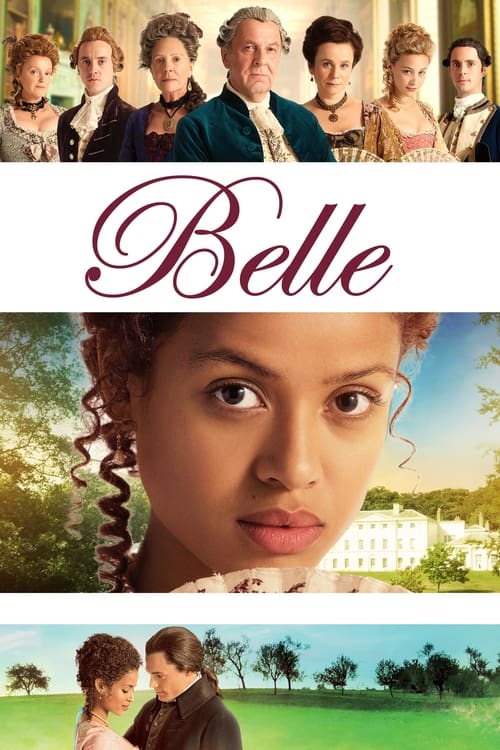
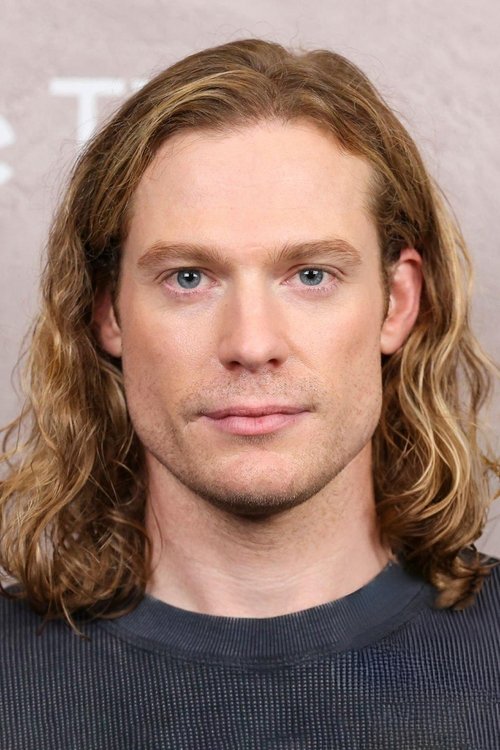
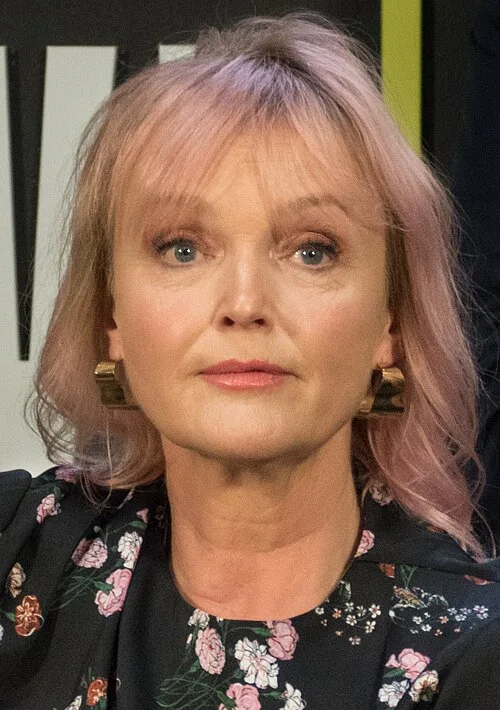
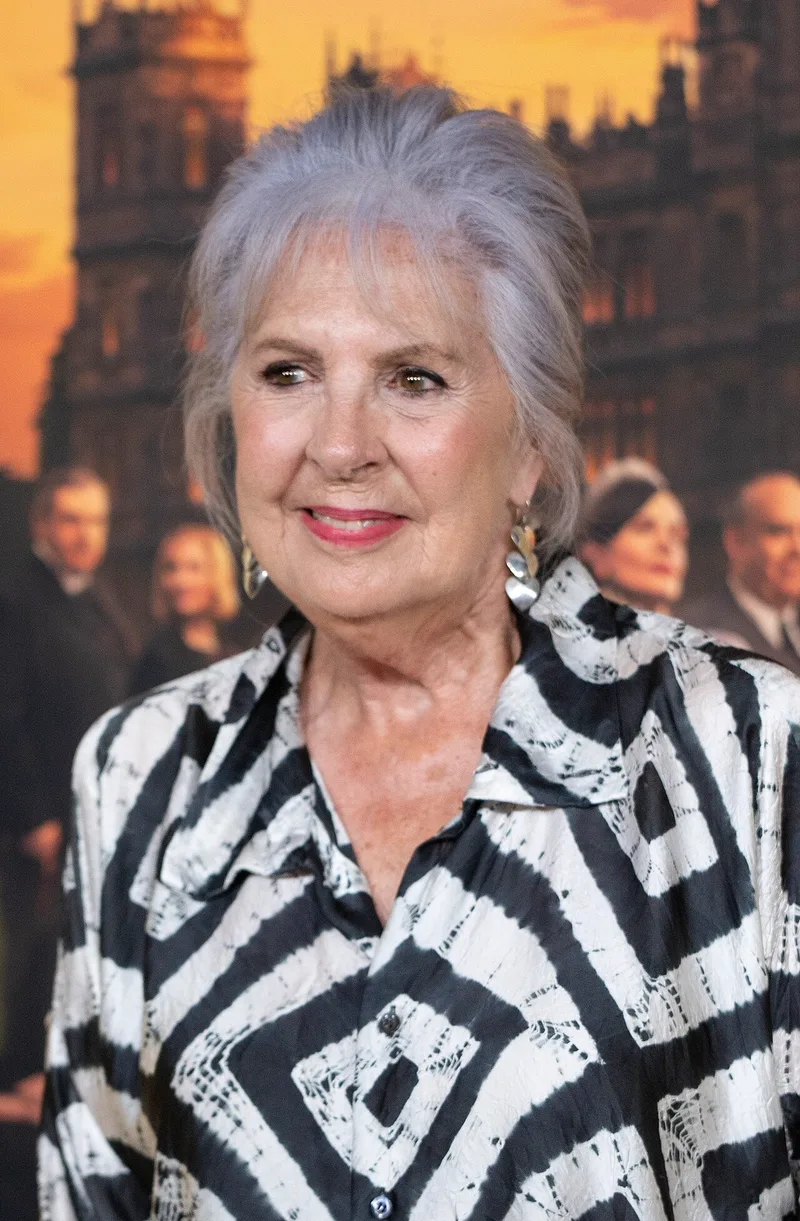
Belle is a 2013 British period drama film directed by Amma Asante, written by Misan Sagay and produced by Damian Jones. It stars Gugu Mbatha-Raw, Tom Wilkinson, Miranda Richardson, Penelope Wilton, Sam Reid, Matthew Goode, Emily Watson, Sarah Gadon, Tom Felton, and James Norton.
The film is loosely inspired by the 1779 painting of Dido Elizabeth Belle beside her cousin Lady Elizabeth Murray at Kenwood House, which was commissioned by their great-uncle, William Murray, 1st Earl of Mansfield, then Lord Chief Justice of England. Very little is known about the life of Dido Belle, who was born in the West Indies and was the illegitimate mixed-race daughter of Mansfield's nephew, Sir John Lindsay. She is found living in poverty by her father and entrusted to the care of Mansfield and his wife. The fictionalised story centres on Dido's relationship with an aspiring lawyer; it is set at a time of legal significance, as a court case is heard on what became known as the Zong massacre, when slaves were thrown overboard from a slave ship and the owner filed with his insurance company for the losses. Lord Mansfield ruled on this case in England's Court of King's Bench in 1786, in a decision seen to contribute to the Slave Trade Act 1807.
Contents
Plot
Dido Elizabeth Belle Lindsay is born in 1761, the illegitimate daughter of
Royal Navy officer Captain Sir John Lindsay, and enslaved African woman Maria Belle in the West Indies. After Dido's mother dies in 1769, Lindsay takes Dido to England and entrusts her to his uncle William Murray, Earl of Mansfield, the Lord Chief Justice, and his wife Elizabeth, who live at the estate Kenwood House in Hampstead, near London.
They raise Dido as a free gentlewoman with their other great-niece Lady Elizabeth Murray, whose widowed father had remarried a woman who pressured him to disown her. When the cousins reach adulthood, the Mansfields commission a portrait of them, but Dido fears she will be portrayed as a subordinate, similar to other portraits which depict aristocrats with black servants.
Dido's father dies, leaving her a vast income of £2,000 a year, making her an heiress. Lady Elizabeth, by contrast, will have no income from her father, as his son with his new wife has been named sole heir. Arrangements are made for Elizabeth to have her coming-out to society, but Lord and Lady Mansfield believe no gentleman will agree to marry Dido because of her mixed race.
Fearing lower-ranking men will only marry Dido for her wealth, and that a marriage to a lower-status man will reduce her rank and shame the family, Lord Mansfield decides she will travel to London with her cousin but will not be "out" to society. He asks her to take her spinster great-aunt Mary's place as the keeper of the house, with the implication that she will not marry.
Lord Mansfield agrees to take the local vicar's son, John Davinier, into a law pupillage. In 1783, Mansfield hears the case of Gregson v. Gilbert, about an insurance claim for slaves killed when thrown overboard by the captain of a slave-ship. Dido helps her uncle with his correspondence.
After John tells Dido about the case, she begins sneaking correspondence to him which he believes will advance abolitionism. Lord Mansfield and John disagree about the case; John is told to leave, not to see Dido again, and his pupillage is at an end.
Painting
The 1778 painting, once thought to be by Johann Zoffany, is now attributed to David Martin. The painting hung in Kenwood House until 1922 and now hangs at Scone Palace in Perthshire, Scotland. It was one of the first European portraits to portray a black subject on an equal eye-line with a white aristocrat, though distinctions are implied by the poses, as Elizabeth's "formality and bookishness are contrasted with the wild and exotically turbanned 'natural' figure of Belle."
The painting is replicated in the film with the faces of the actresses portraying the characters replacing those in the original. Dido's finger-to-cheek gesture is absent in the fictionalised version, as is her feathered turban. The original picture is shown on screen at the end of the film.
Production
Filming began on 24 September 2012. The film was shot on location in the Isle of Man, Oxford and London. It is the first major British motion picture to be shot in true-4K, using Sony's F65 CineAlta digital production camera. The film was produced by DJ Films, Isle of Man Film, and Pinewood Pictures with support from the BFI.
Production designer Simon Bowles created the 18th-century Bristol Docks on the Isle of Man and created a set for Kenwood House, based on a number of stately homes in the London area.
Original music for the film was composed by Rachel Portman.
Historical accuracy
Sagay chose to set the major events, Belle's and Elizabeth's love affairs and the Zong case, in the same year the painting was made – when Belle was about 18. In reality, Belle married at 32, long after Lady Elizabeth was married and no longer in touch with Belle.
Sir John Lindsay died on 4 June 1788, when Lady Elizabeth has been married years before and no longer lived in Kenwood. Dido was 27 years old at the time of her father's death.
John Davinier was in real life a French manservant, not an English apprentice lawyer. John Daviniere was 7 years younger than Dido. In the film, Dido was married to Davinier when she was 18, therefore John would only be 11 years old at the time.
James Walvin, professor emeritus at the University of York, said of Belle: "Much of the historical evidence is there – though festooned in the film with imaginary relishes and fictional tricks. Partly accurate, the whole thing reminded me of the classic Morecambe and Wise sketch with André Previn (Eric bashing away on the piano): all the right notes – but not necessarily in the right order." Reviewing the film for History Extra, the official website of BBC History Magazine, Walvin noted that while the second half of the film centres on Dido Elizabeth Belle's involvement in the Zong case, in reality she was "nowhere to be found in the Zong affair". In the film "Tom Wilkinson's Mansfield finds his cold legal commercial heart softened, and edged towards abolition by the eyelash-fluttering efforts of his stunning great niece" and his "adjudication becomes, not a point of law, but the first bold assertion towards the end of slavery". Walvin points out that "he merely stated that there should be another hearing of the Zong case – this time with evidence not known at the earlier hearing". Walvin awarded the film one star for enjoyment and two for historical accuracy.
Dido Elizabeth Belle was never given her father's last name of Lindsay; instead she took her mother's last name Belle. She was baptised in London aged 6 by Maria but John Lindsay was absent from the baptism. In the movie it was said that Dido's mother was dead so no one could take care of Dido, and Sir John Lindsay took Dido to be taken care of by his maternal Uncle. In real life, Dido's mother Maria Belle was alive, Maria was a 14 year old when Dido was conceived and 15 when she gave birth to Dido, Maria was later given property by Sir John Lindsay in Pensacola, Florida and purchased her freedom in 1774. Sir John Lindsay fathered a total of five illegitimate children from 5 different women. Dido Belle in June 1761, John Edward Lindsay on 9 February 1762, Ann in November 1766, Elizabeth in December 1766, and John Lindsay in November 1767.
Historical references
The film is a work of historical fiction, inspired by a painting and the evidence that Dido was brought up at Kenwood House. The relative lack of details about Dido Elizabeth Belle allowed screenwriter Misan Sagay considerable artistic licence in framing the young woman's story, within the broader historical context of the slave economy and the abolition movement.
The only other direct historical reference made about Belle, other than the painting and American loyalist Thomas Hutchinson's personal diary, appear in Elements of Moral Science, a 1790 work by the Scottish professor of moral philosophy James Beattie, who met Belle and in the book states she recited poetry with "a degree of elegance" equal to any English child of her age, arguing against the then prevailing theory that "negroes are naturally and utterly incapable of distinct articulation".
William Murray, 1st Earl of Mansfield, who was Lord Chief Justice of England from 1756 to 1788, presided over two important cases, Somerset v Stewart in 1772 and the Zong insurance claims case in 1783, which helped lay the groundwork for Britain's Slave Trade Act 1807. In the film his concluding line at the end of the Zong case – "the state of slavery (is) so odious that nothing can be suffered to support it" – was historically actually quoted by him in the Somerset v Stewart case eleven years before. As in the film, he was the great-uncle of Dido Elizabeth Belle and Lady Elizabeth Murray.
At the suggestion of the producers, HarperCollins published a companion book, Belle – The Slave Daughter and the Lord Chief Justice (2014), by biographer Paula Byrne, recounting the lives of the film's principal characters.
Authorship
Some press coverage ahead of filming cited Asante as the sole writer of Belle as well as director. Press releases that followed Fox Searchlight's acquisition of the film gave the final credit determined by the Writers Guild of America as "Written by Misan Sagay". Sagay claimed she began writing her script in 2004, after seeing the painting of Dido Belle at Scone Palace. The project was initially developed by HBO. It then received funding from the British Film Institute in 2009, but Sagay left the project the following year due to serious ill-health. When Asante was hired, Sagay believed that Asante would edit her script. Instead she learned that a script without her name on was being used.
The subsequent arbitration process undertaken by the Writers Guild of America (WGA) determined that Sagay provided the bulk of content used in the script, so Sagay was awarded sole writing credit. Cast members Penelope Wilton and Tom Wilkinson expressed "incredulity" at the accreditation decision. Wilkinson said he "only saw and worked from a script written by Amma". Information obtained by Entertainment Weekly showed Asante wrote 18 script drafts, before she directed the film. Producers planned to submit Asante and Sagay as co-writers, but Sagay wanted a solo credit. Producer Damian Jones then asked the WGA to give Sagay a "story by" credit, with Asante getting a "screenplay by" credit, but this was rejected. Asante appealed the WGA's decision, but lost.
Release
In July 2013, it was announced that Fox Searchlight Pictures had acquired distribution rights for the film in the UK and USA. Belle premiered at the 2013 Toronto International Film Festival on 8 September 2013. The film was released on 2 May 2014 in the United States, 9 May in Canada and 13 June 2014 in the United Kingdom.
Home media
The film was released on Blu-ray on August 26, 2014 and on DVD on January 6, 2015.
Reception
The film received positive reviews from critics. Review aggregation website Rotten Tomatoes gives the film a score of 84% based on reviews from 150 critics, with an average rating of 6.99/10. The site's consensus states: "It boasts all the surface beauty that fans of period pictures have come to expect, but Belle also benefits from its stirring performances and subtle social consciousness." Critic Mark Kermode named it his fourth-favourite film of 2014.


