

_(Spall_cropped).jpg?width=400)
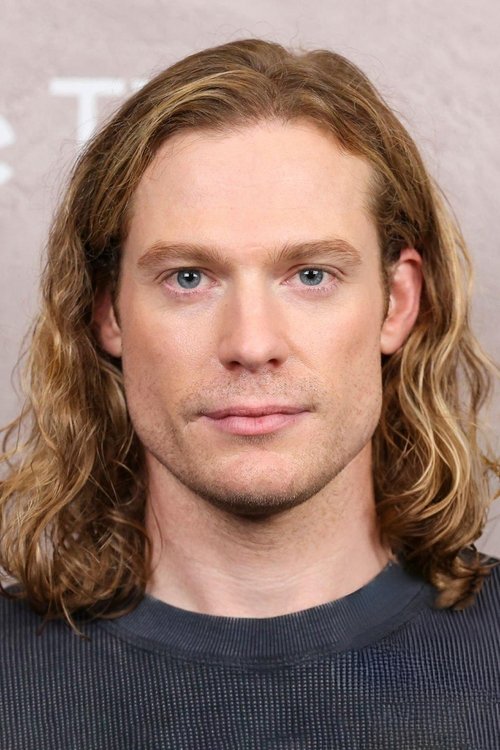
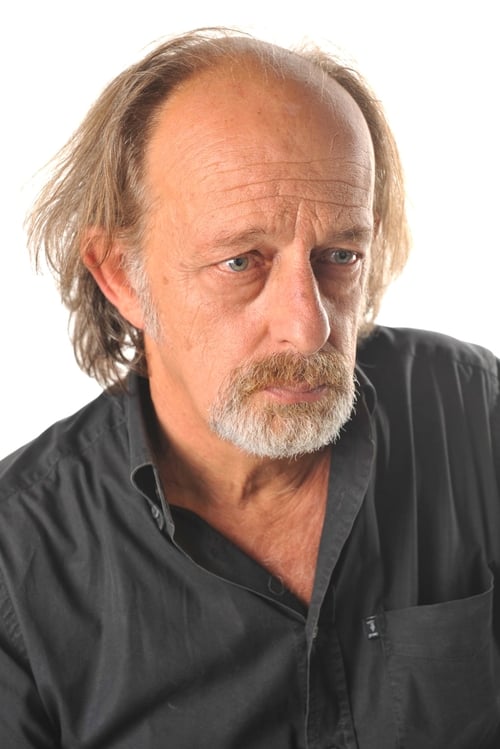
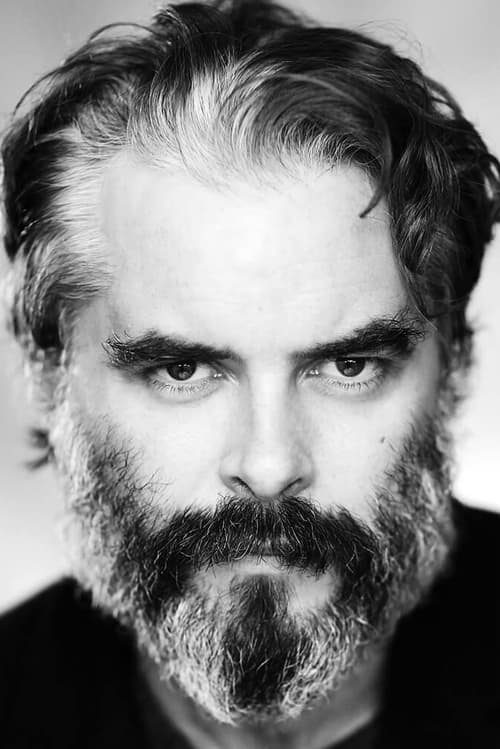
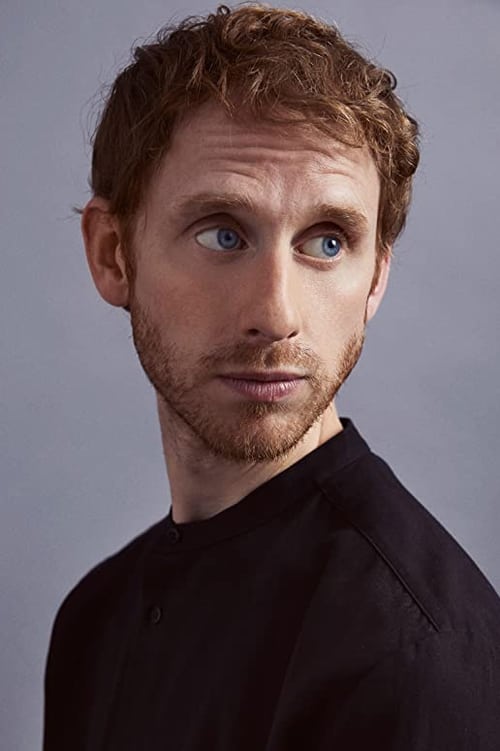


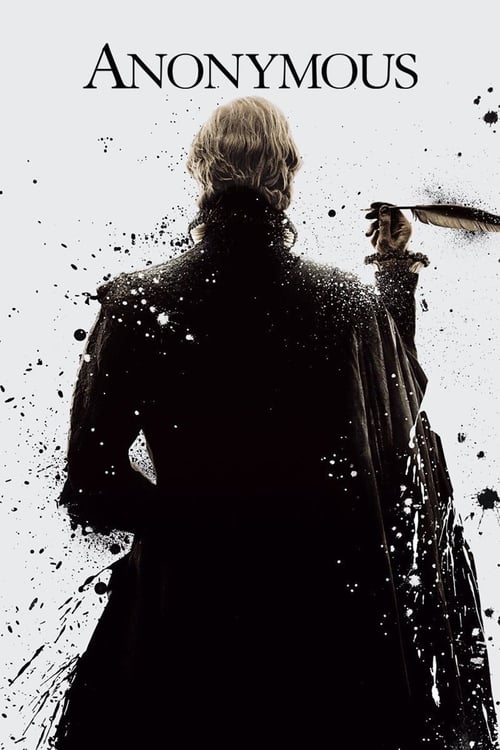
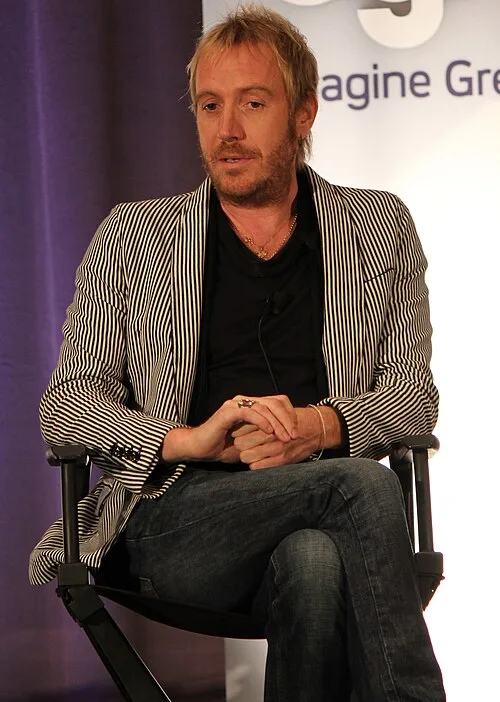
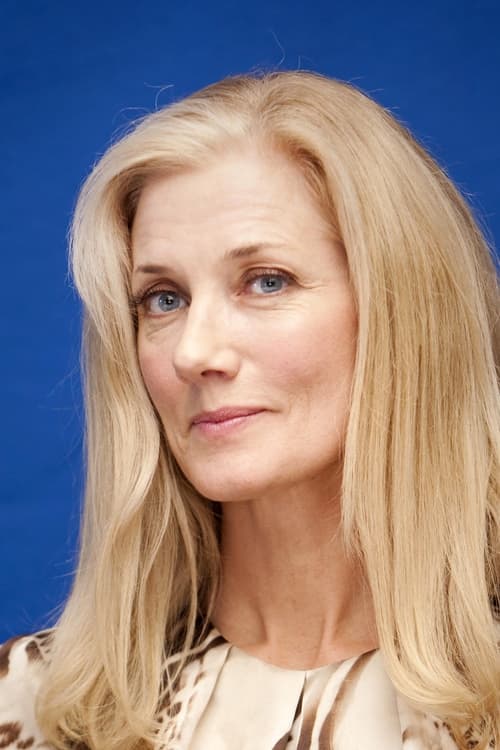
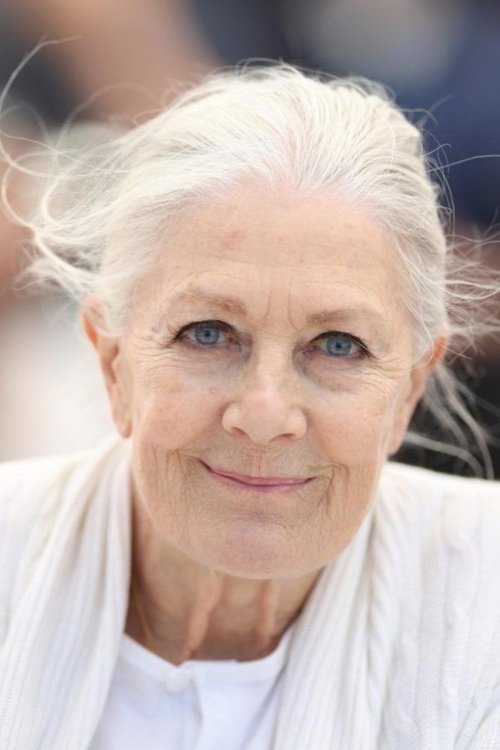
Anonymous is a 2011 period drama film directed by Roland Emmerich and written by John Orloff. The film is a fictionalized version of the life of Edward de Vere, 17th Earl of Oxford, an Elizabethan courtier, playwright, poet and patron of the arts, and suggests he was the actual author of William Shakespeare's plays. It stars Rhys Ifans as de Vere and Vanessa Redgrave as Queen Elizabeth I of England.
The film premiered at the Toronto International Film Festival on September 11, 2011. Produced by Centropolis Entertainment and Studio Babelsberg and distributed by Sony Pictures Releasing through its Columbia Pictures label, Anonymous was released on October 28, 2011 in the United States, Canada and the United Kingdom, expanding to theatres around the world in the following weeks. The film performed poorly at the box office and received mixed reviews from critics for praising its performances and visual achievements, but criticising the film's time-jumping format, factual errors, and promotion of the Oxfordian theory of Shakespeare authorship.
Contents
Plot
In modern-day New York, Derek Jacobi arrives at a theatre where he delivers a monologue questioning the lack of manuscript writings of William Shakespeare, despite the undeniable fact that he is the most performed playwright of all time. Ben Jonson is preparing to enter the stage. The narrator offers to take the viewers into a different story behind the origin of Shakespeare's plays: "one of quills and swords, of power and betrayal, of a stage conquered and a throne lost."
Jumping to Elizabethan London, Ben Jonson is running through the streets carrying a parcel and being pursued by soldiers. He enters the theatre called The Rose and hides the manuscripts he carries as the soldiers set fire to the theatre. Ben is detained at the Tower of London to face the questioning of puritanical Robert Cecil. The writings by Edward de Vere that Robert Cecil thought Ben had are not found on him.
In a flashback of five years, an adult Edward lives, disgraced and banished from court, in the last years of the reign of Queen Elizabeth I. The queen is old and in failing health, but, as she has remained unmarried, lacks an heir. The elderly Lord William Cecil, the Queen's primary adviser, and his son Robert manage the kingdom's affairs. A growing group of malcontent nobles gather at court, led by Robert Devereux, 2nd Earl of Essex, who is widely believed to be Elizabeth's bastard son. The Cecils have secretly been planning to solve the succession crisis by offering the crown to Elizabeth's cousin, King James VI of Scotland; the idea of a foreign king inheriting the crown of the Tudors angers enough nobles that they begin to muster support for Essex to claim the throne when Elizabeth dies. Edward's young friend, Henry Wriothesley, 3rd Earl of Southampton, is pledged to support Essex but Edward warns him against any rash action and that any move they make has to be managed carefully to avoid civil war.
When Edward and Henry visit a public theatre to see a play written by Ben Jonson, Edward witnesses how a play can sway people, and thinks that it can be used to thwart the influence of the Cecils, who as devout Puritans reject theatre as the 'worship of false idols', with Queen Elizabeth concerning her successor. After the Cecils declare Ben's play illegal and arrest him, Edward arranges for his release and instructs him to stage a play he wrote and act as the author. The play, Henry V, galvanizes the people and even Ben, who had contemptuously dismissed Edward's skill as a writer as the passing fancy of a bored nobleman, is impressed. At curtain call, however, William Shakespeare, an actor and "drunken oaf", steps forward to be recognized as the author of the play.
Production
Background and development
Screenwriter John Orloff (Band of Brothers, A Mighty Heart) became interested in the authorship debate after watching a 1989 Frontline programme about the controversy. He penned his first draft in the late 1990s, but commercial interest waned after Shakespeare in Love was released in 1998. It was almost green lit as The Soul of the Age for a 2005 release, with a budget of $30 to $35 million. However, financing proved to be "a risky undertaking", according to director Roland Emmerich. In October 2009, Emmerich stated, "It's very hard to get a movie like this made, and I want to make it in a certain way. I've actually had this project for eight years." At a press conference at Studio Babelsberg on April 29, 2010, Emmerich noted that the success of his more commercial films made this one possible, and that he got the cast he wanted without the pressure to come up with "at least two A-list American actors."
Emmerich noted he knew little of either Elizabethan history or the authorship question until he came across John Orloff's script, after which he "steeped" himself in the various theories. Wary of similarities with Amadeus, Emmerich decided to recast it as a film on the politics of succession and the monarchy, a tragedy about kings, queens and princes, with broad plot lines including murder, illegitimacy and incest – "all the elements of a Shakespeare play."
In a November 2009 interview, Emmerich said the heart of the movie is in the original title The Soul of the Age, and it revolved around three main characters: Ben Jonson, William Shakespeare, and the Earl of Oxford. In a subsequent announcement in 2010, Emmerich detailed the finalised plot line:
It's a mix of a lot of things: it's an historical thriller because it's about who will succeed Queen Elizabeth and the struggle of the people who want to have a hand in it. It's the Tudors on one side and the Cecils on the other, and in between [the two] is the Queen. Through that story we tell how the plays written by the Earl of Oxford ended up labelled "William Shakespeare".
Filming
Anonymous was the first motion picture to be shot with the Arri Alexa camera, with most of the period backgrounds created and enhanced via new CGI technology. In addition, Elizabethan London was recreated for the film with more than 70 painstakingly hand-built sets at Germany's Studio Babelsberg, including a full-scale replica of London's imposing The Rose theatre.
Reception
Critical response
On the review aggregator website Rotten Tomatoes, 47% of 174 critics' reviews are positive. The website's consensus reads: "Roland Emmerich delivers his trademark visual and emotional bombast, but the more Anonymous stops and tries to convince the audience of its half-baked theory, the less convincing it becomes." Metacritic, which uses a weighted average, assigned the film a score of 50 out of 100, based on 43 critics, indicating "mixed or average" reviews. Audiences polled by CinemaScore gave the film an average grade of "A−" on an A+ to F scale.
Rex Reed regards Anonymous as "one of the most exciting on-screen literary rows since Norman Mailer was beaten with a hammer", and well worth the stamina required to sit out what is an otherwise exhausting film. Not only Shakespeare's identity, but also that of Queen Elizabeth, the "Virgin Queen" is challenged by Orloff's script, which has her as "a randy piece of work who had many lovers and bore several children." Visually, the film gives us a "dazzling panorama of Tudor history" which will not bore viewers. It boasts a cast of pure gold, and its "recreation of the Old Globe, the fame that brought ruin and dishonour to both Oxford and the money-grubbing Shakespeare, and the sacrifice of Oxford's own property and family fortune to write plays he believed in against a background of danger and violence make for a bloody good yarn, masterfully told, lushly appointed, slavishly researched and brilliantly acted." He adds the caveats that it does play "hopscotch with history", has a bewildering and confusing cast of characters and is jumpy in its timeframes.
Michael Phillips of the Chicago Tribune writes that the film is ridiculous but not dull. Displaying a "rollicking belief in its own nutty bombast" as "history is simultaneously being made up and rewritten", its best scenes are those of the candle-lit interiors caught by the Alexa digital camera on a lovely copper-and-honey-toned palette. After a week, what remains in Phillips' memory is not the de Vere/Shakespeare conspiracy theory but "the way Redgrave gazes out a window, her reign near the end, her eyes full of regret but also of fiery defiance of the balderdash lapping at her feet."
Roger Ebert gave it three and half stars on four, he finds Orloff's screenplay "ingenious", Emmerich's direction "precise", and the cast "memorable". Though "profoundly mistaken", Anonymous is "a marvellous historical film", giving viewers "a splendid experience: the dialogue, the acting, the depiction of London, the lust, jealousy and intrigue." However, Ebert stated he must "tiresomely insist that Edward de Vere did not write Shakespeare's plays."
Box office
Anonymous was originally slated for worldwide release in a Shakespeare in Love-style opening, but was rescheduled for restricted release on 28 October 2011 in 265 theatres in the United States, Canada, Ireland, and the United Kingdom, expanding to 513 screens in its second week. Pre-release surveys had predicted a weak opening weekend (under $5 million), leading Sony to stagger release dates and depend on word-of-mouth to support a more gradual release strategy (as they did with Company Town). According to Brendan Bettinger, "Anonymous came out of Toronto with surprisingly positive early reviews for a Roland Emmerich picture." Sony distribution president Rory Bruer said, "We love the picture and think it's going to get great word of mouth. We're committed to expanding it until it plays wide." In the end, the film was a "box office disaster," bringing in US $15.4 million at the box office against a budget of $30 million.
Accolades
Anonymous was nominated for an Academy Award for Best Costume Design for German Costume Designer Lisy Christl's work, but lost to Best Picture winner The Artist. That same year, it was also nominated for 7 Lolas, winning in 6 Categories including Best Cinematography for Anna J. Foerster, Best Art Direction for Stephan O. Gessler and Sebastian T. Krawinkel and Best Costume Design for Lisy Christl. At the Satellite Awards, the film was nominated in two categories including Best Art Direction (and Production Design) for Stephan O. Gessler and Sebastian T. Krawinkel, and Best Costume Design for Lisy Christl. Vanessa Redgrave was nominated for Best British Actress of the Year at the London Film Critics Circle Awards for Anonymous and Coriolanus. The film also received a nomination from the Art Directors Guild for Period Film, honouring Production designer Sebastian T. Krawinkel and two nominations from the Visual Effects Society in the categories of Outstanding Supporting Visual Effects in a Feature Motion Picture and Outstanding Created Environment in a Live Action Feature Motion Picture.
Controversy
Pre-release arguments
In a trailer for the movie, Emmerich lists ten reasons why in his view Shakespeare did not write the plays attributed to him. Other plans envisaged the release of a documentary about the Shakespeare authorship question, and providing materials for teachers. According to Sony Pictures, "The objective for our Anonymous program, as stated in the classroom literature, is 'to encourage critical thinking by challenging students to examine the theories about the authorship of Shakespeare's works and to formulate their own opinions.' The study guide does not state that Edward de Vere is the writer of Shakespeare's work, but it does pose the authorship question which has been debated by scholars for decades". In response, on September 1, 2011, the Shakespeare Birthplace Trust launched a programme to debunk conspiracy theories about Shakespeare, mounting an Internet video in which 60 scholars and writers reply to common queries and doubts about Shakespeare's identity for one minute each. In Shakespeare's home county of Warwickshire, the Shakespeare Birthplace Trust promoted a protest against the film by temporarily covering or crossing out Shakespeare's image or name on pub signs and road signs.
Columbia University's James Shapiro, in an interview with The Wall Street Journal noted that according to an article in the same journal in 2009, three U.S. Supreme Court Justices now lent support to the Oxfordian theory, whereas in a moot court judgment in 1987, Justices John Paul Stevens, Harry Blackmun and William Brennan had "ruled unanimously in favor of Shakespeare and against the Earl of Oxford." "The attraction of these ideas owes something to the Internet, where conspiracy theories proliferate", he argued, adding that "Emmerich's film is one more sign that conspiracy theories about the authorship of Shakespeare's plays have gone mainstream". Scriptwriter John Orloff replied that Shapiro oversimplified the facts, since Justice Stevens later affirmed that he had had "lingering concerns" and "gnawing doubts" that Shakespeare might have been someone else, and that if the author was not Shakespeare, then there was a high probability he was Edward de Vere.
Emmerich complains of what he sees as the "arrogance of the literary establishment" to say: "We know it, we teach it, so shut the fuck up." He has singled out James Shapiro, an expert on these theories, as a member of that establishment, accusing him of being a liar:
He [Shapiro] ... sometimes claims certain things which then I then [sic] as a scholar cannot dispute, but later I check on it and find out he was totally lying. Just outright lying. It's bizarre. But they also have a lot to lose. He wrote a bestseller about William Shakespeare called "1599" which is one year in the life of this mine [sic] which is incredible to read when you all of a sudden realize where did he get all of this stuff from?
Expectations
Emmerich is on record as believing that "everybody in the Stratfordian side is so pissed off because we've called them on their lies." Shapiro believes that while supporters of de Vere's candidacy as the author of Shakespeare's plays have awaited this film with excitement, in his view, they may live to regret it. Robert McCrum in The Guardian wrote that the Internet is the natural home of conspiracy theories; therefore, the Oxford case, "a conspiracy theory in doublet and hose with a vengeance", means that Anonymous, irrespective of its merits or lack of them, will usher in an "open season for every denomination of literary fanatic."
Screenwriter John Orloff argued that the film would reshape the way we read Shakespeare. Derek Jacobi said that making the film was "a very risky thing to do", and imagines that "the orthodox Stratfordians are going to be apoplectic with rage."
Bert Fields, a lawyer who wrote a book about the authorship issue, thinks scholars may be missing the larger benefit that Anonymous provides – widespread appreciation of the Bard's work. "Why do these academics feel threatened by this? It isn't threatening anybody", Fields commented. "The movie does things that I don't necessarily agree with. But if anything, it makes the work more important. It focuses attention on the most important body of work in the English language."
Fictional drama
In an interview with The Atlantic, scriptwriter John Orloff was asked, "In crafting your characters and the narrative, how were you able to find the right balance between historical fact, fiction, and speculation?" Orloff responded, "Ultimately, Shakespeare himself was our guide. The Shakespeare histories are not really histories. They're dramas. He compresses time. He adds characters that have been dead by the time the events are occurring. He'll invent characters out of whole cloth, like Falstaff in the history plays. First and foremost it's a drama, and just like Shakespeare we're creating drama."
Emmerich, when given examples of details that do not correspond to the facts, was reported as being more concerned with the mood of the film. He agreed that there were many historical mistakes in his film, but said movies have a right to do this, citing Amadeus. Emmerich also notes that Shakespeare was not concerned with historical accuracy, and argues that examining the inner truth of history was his objective.
Crace, in discussing the notion of Emmerich as a "literary detective", comments that the director "has never knowingly let the facts get in the way of a good story." Historian Simon Schama called the film 'inadvertently comic', and said of its thesis that the real problem was not so much the "idiotic misunderstanding of history and the world of the theater", but rather the "fatal lack of imagination on the subject of the imagination." James Shapiro wrote that it is a film for our time, "in which claims based on conviction are as valid as those based on hard evidence", which ingeniously circumvents objections that there is not a scrap of documentary evidence for de Vere's authorship by assuming a conspiracy to suppress the truth. The result is that "the very absence of surviving evidence proves the case."
Tiffany Stern, professor of early modern drama at Oxford University, says that the film is fictional, and should be enjoyed as such. Gordon McMullan, professor of English at King's College, says Shakespeare wrote the plays, and the idea he didn't is related to a conspiracy theory that coincides with the emergence of the detective genre. For Orloff, criticisms by scholars that call the film fictional rather than factual are kneejerk reactions to the "academic subversion of normality".
Historical accuracy
In a pre-release interview, scriptwriter Orloff said that, with the exception of whether Shakespeare wrote the plays or not, "The movie is unbelievably historically accurate ... What I mean by that is that I, like Henry James, Mark Twain, Walt Whitman, Derek Jacobi and John Gielgud, don't think Shakespeare wrote the plays, but obviously a lot more people do think Shakespeare wrote the plays. Obviously, in my movie, he didn't, so a lot of people will say that's not historically accurate and they are totally welcome to that opinion. But, the world within the movie, that that story takes place in, is incredibly accurate, like the Essex Rebellion and the ages of the characters."
Orloff also described the attention given to creating a "real London", noting that the effects crew "took 30,000 pictures in England, of every Tudor building they could find, and then they scanned them all into the computer and built real London in 1600."
According to Holger Syme, Stephen Marche and James Shapiro, the film does contain a number of historical inaccuracies. These include standard theatrical techniques such as time compression and the conflating of supporting characters and locations, as well as larger deviations from recorded history.
Essex was King James of Scotland's most avid supporter in England during the closing years of Elizabeth's reign. The film presents James as the Cecils' candidate, and Essex as a threat to his succession. In fact William Cecil feared James, believing he bore a grudge against him for his role in the death of James' mother, Mary Queen of Scots.
The film redates some plays and poems to fit the story of the 1601 Essex Rebellion. Most significantly, it was Richard II that was performed on the eve of Essex's uprising, not Richard III. Richard III is advertised as brand-new in 1601, written for the uprising, when in fact it was printed four years earlier in 1597. The crowd watching Richard III swarms out of the theatre towards the court, but are gunned down on Cecil's orders. This event never occurred. The poem Venus and Adonis is presented as a "hot-off-the-press bestseller" written and printed by de Vere especially for the ageing Queen in 1601 to encourage her to support Essex. It was published in 1593.
The film also shows the first production of a play by the Earl of Oxford, credited to Shakespeare, as being Henry V – although in reality that play is a sequel, completing the stories of several characters introduced in Henry IV Part I and Henry IV Part II. Later, Macbeth is shown being staged after Julius Caesar and before Richard III and Hamlet, though those plays are estimated by scholars to have been performed around 1593 and 1600–1601 respectively whereas Macbeth, often called "the Scottish play" because of its Scottish setting and plot, is generally believed to have been written to commemorate the ascent of the Scottish King James to the English throne. That did not happen until 1603.