
Alexander George Karras (July 15, 1935 – October 10, 2012) was an American professional football player, professional wrestler, sportscaster, and actor. He was a four-time Pro Bowl selection while playing defensive tackle for the Detroit Lions of the National Football League (NFL) from 1958 to 1970. He is a member of the College Football Hall of Fame and was elected to the Pro Football Hall of Fame in the Centennial class.
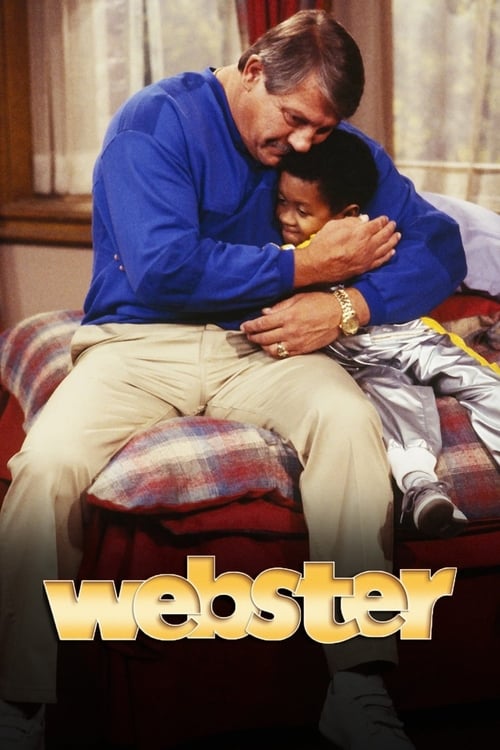
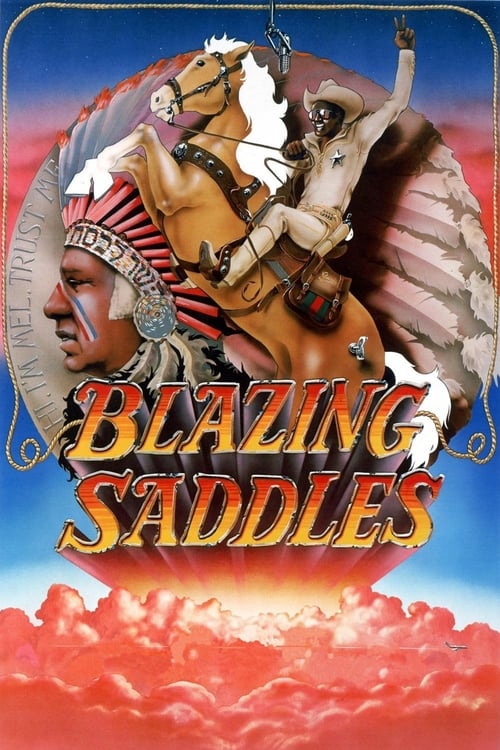
As an actor, Karras played Mongo in the 1974 comedy film Blazing Saddles. He starred as George Papadopolis, the adoptive father of Webster Long (Emmanuel Lewis), in the ABC sitcom Webster (1983–1989) alongside his wife Susan Clark. Karras also had a prominent role in Victor/Victoria, starring Julie Andrews and James Garner.
Contents
Early life
Karras was born and raised in Gary, Indiana, the son of Dr. George Karras, a Greek immigrant from Chios. A graduate of the University of Chicago, George studied medicine in Canada, where met and married Emmeline (née Wilson), a native-born registered nurse. George opened a medical practice in Gary, but died when Alex was thirteen years old. By that time, Alex Karras had learned to play football in a parking lot near his home, with and against his athletically inclined brothers. Excelling at high school football, baseball, track, wrestling, and basketball, he blossomed into a four-time Indiana all-state selection at Gary's Emerson High School. Karras also excelled in numerous other sports in high He graduated in 1954.
College career
Karras' older brothers Lou and Ted played college football. Lou (a future member of the Redskins) at Purdue, and Ted (who later played with the Bears and Lions) also at Purdue before transferring to Indiana. Because of Ted's move Alex maintained that "Indiana had the inside track" on recruiting him. Shortly after he graduated from high school, three coaches from the Iowa Hawkeyes met Karras at his brother Lou's house with an airplane and flew him to Spencer, Iowa, where he remained incommunicado through the summer. Writing in the Detroit Free Press in 1971, Karras said that "nobody knew where I was, not even my mom, although Louie told her not to worry. Obviously, Iowa came up with something, I have no intention of stirring up any mess. I'll only say that, as Louie explained it, some accommodations were made by the people at Iowa that would make things easier for the family, and so away I went. It was the beginning of some awful years."
Initially, Karras struggled at Iowa with classwork, homesickness, and with his coach, Forest Evashevski. He was a pledge at Sigma Nu fraternity as a freshman. Karras probably would have left Iowa had he not befriended a Greek theater owner, Ernie Pannos, as well as fellow players Cal Jones and Bob Commings. Karras's sophomore year with Iowa in 1955 got off to a rocky start when he showed up for practice forty pounds (18 kg) overweight.
Karras had been (dubiously) advised that year that he would need to gain substantial weight to have a chance at success in pro football, prompting him to report to camp at 260–270 pounds, in contrast to the 225–230 the Iowa coaching staff had expected.
Karras was also hampered that season by a fractured anklebone. After being disappointed at not getting to play in the season finale, Karras threw a shoe at Evashevski and quit the team. Karras did not earn a football letter for the 1955 season.
Karras went to summer classes, lost the excess weight, and rejoined the football team, but a strained relationship resurfaced. Evashevski promised to start Karras in the 1956 season opener against Indiana, when he would square off against his brother, Ted.
But Evashevski played Karras off the bench instead, and Karras quit the team again. This time, Karras agreed to return only after making Evashevski promise he would not talk to him other than in a coaching capacity. (Evashevski always denied any special agreement with Karras.) Iowa took the lead in the 1956 Big Ten title race with a 7–0 victory over Minnesota. The Hawkeyes then clinched the Big Ten title and Iowa's first-ever Rose Bowl berth by defeating Ohio State 6–0. Karras sealed the game with a sack on the game's final play.
Professional football
Before his NFL career got underway, Karras signed a contract as a professional wrestler on December 13, 1957, earning $25,000 during the six-month off-season. Karras was the tenth selection of the 1958 NFL draft, taken by the Detroit Lions. He signed with the Lions, spurning an offer from the Canadian Football League's Winnipeg Blue Bombers. He quickly became one of the dominant defensive tackles in the NFL, playing for 12 seasons (1958–1962, 1964–1970) all with the Lions.
As a rookie in 1958, joining the championship-contending Lions, Karras was adopted in training camp as an off-field flunky, chauffeur, and wingman by superstar quarterback Bobby Layne for his legendary late-night party activities.
By many accounts Karras would marvel at Layne's ability to recover from heavy drinking sessions at night and being able to function effectively at practices or games the next day. Karras himself admitted he was frequently heavily hung over as a result of late night bar-hopping.
Layne was traded to the Pittsburgh Steelers early in the 1958 season and Karras eventually assumed a veteran leadership position himself.
On January 7, 1963, Karras's ownership share in Detroit's Lindell AC Bar became a source of controversy when league officials urged him to sell his financial interests in the place because of reports of gambling and organized crime influence.
After first threatening to retire rather than give up the bar ownership, Karras admitted placing bets on NFL games and was suspended by the league, along with Green Bay Packers running back Paul Hornung, for one season (1963). During his exile, Karras returned to pro wrestling, taking on such memorable characters as Dick the Bruiser. He was reinstated, along with Hornung, on March 16, 1964, by NFL commissioner Pete Rozelle. Upon returning to action in 1964, Karras once refused when an official asked him to call the pregame coin toss. "I'm sorry, sir," Karras replied. "I'm not permitted to gamble." During his first year back, player discontent with head coach George Wilson resulted in Karras asking to be traded. However, the Lions settled the issue when they fired Wilson after the season.
Film and television
Karras's sense of humor came to the attention of writer George Plimpton, who heard many stories about Karras while training with the Lions for his book Paper Lion during the summer of 1963.
When the film version of the book was made in 1968, Karras made his film debut playing himself.
Following his release by the Lions in 1971, he made several appearances on The Tonight Show Starring Johnny Carson and also played a bit part in The Mary Tyler Moore Show, appearing in the farewell party scene where Rhoda moves back to New York. Karras soon began acting on a full-time basis, playing a Tennessee boy turned Olympic weightlifter named Hugh Ray Feather in 1973's The 500 Pound Jerk. He played a hulking villain who menaced Clint Walker in the ABC TV film Hardcase. A minor but memorable role came one year later in the western parody Blazing Saddles (1974): the very strong and slow-witted thug Mongo. In 1974, he also played the part of Lyle, a Marine saved by Hawkeye Pierce in M*A*S*H. That same year, he was quickly brought in by ABC in September to replace fellow Gary, Indiana native Fred Williamson (who had replaced Don Meredith) as a commentator for Monday Night Football. He served three years in that role until leaving after the 1976 season, with his most memorable comment coming in his first game, when he joked that bald Oakland Raiders lineman Otis Sistrunk, who never attended college, was from "the University of Mars", after seeing steam coming off his head.
In 1972, Karras hosted a local weekly football program for Windsor, Ontario, CBC affiliate CKLW-TV, The Alex Karras Football Show; his program generally preceded the CBC's Wednesday night CFL telecasts. In 1973, Karras made several cameo appearances on the January 8 broadcast of Rowan and Martin's Laugh-In.
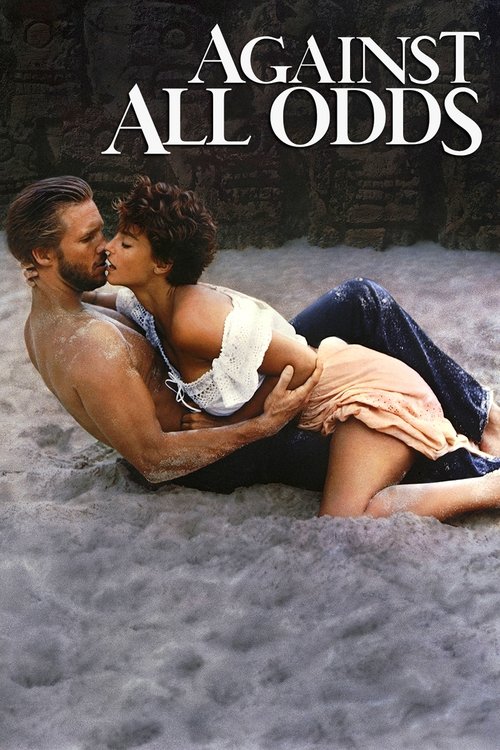
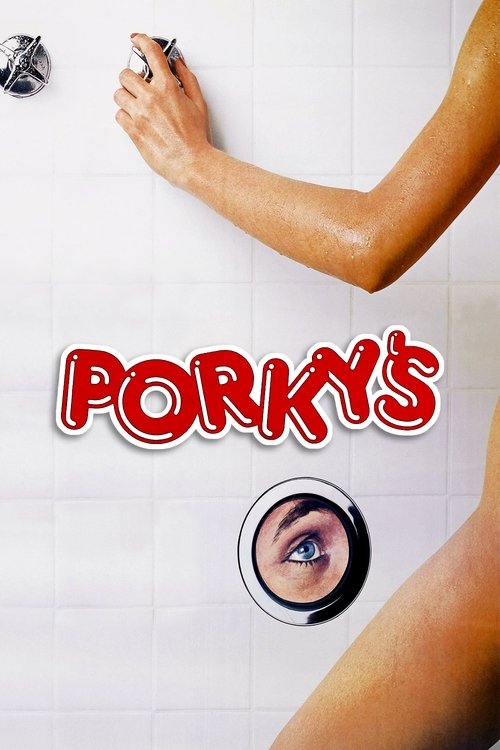
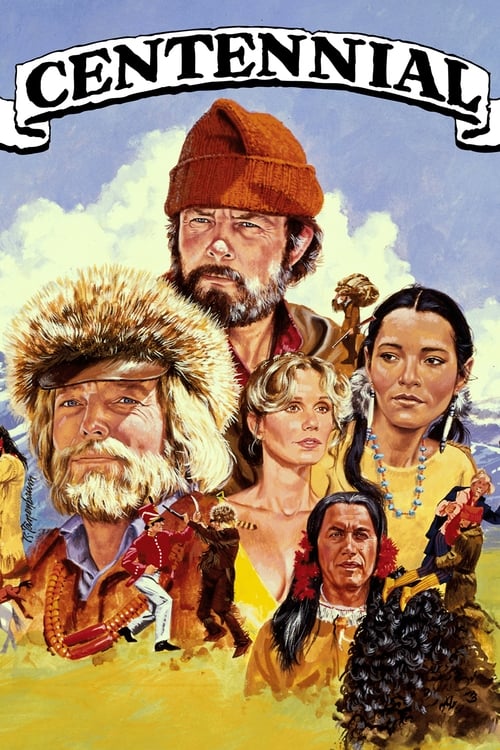
Karras returned to acting with roles that included playing Sheriff Wallace in Porky's (in which his wife, Susan Clark, also starred), and as western settler Hans Brumbaugh in Centennial. He played James Garner's closeted gay bodyguard in the 1982 Blake Edwards film Victor/Victoria. Karras played a darker role as Hank Sully, the right-hand man of villain Jake Wise (played by James Woods) in the 1984 film Against All Odds.
In 1975, Karras appeared on MNF colleague Howard Cosell's ill-fated variety show Saturday Night Live with Howard Cosell wearing a wig (a la Mongo) and performing "Already Gone" on the beach with The Eagles who were dubbed the "Alex Karras Blues Band" due to t-shirts the band members wore bearing that moniker. Karras later hosted NBC's Saturday Night Live in 1985.
Writing
Besides being one of the subjects of George Plimpton's nonfiction book Paper Lion (published in 1966), he was one of the two principal subjects of Plimpton's follow-up book, Mad Ducks and Bears (1973), in which fellow Detroit Lion John Gordy was the "bear" to Karras's "mad duck". Karras named one of his sons after Plimpton. During his last years as a Detroit Lion, Karras wrote a journal of his experiences that was published in the Detroit Free Press. He subsequently wrote a memoir, Even Big Guys Cry (1978), and a novel, Tuesday Night Football (1991).
Honors
In conjunction with the 100 Years of Hawkeye Football celebration in 1989, Iowa Hawkeye fans selected an all-time team. The squad featured 11 players on offense and defense, two kickers, and 15 special-mention players who received strong fan support. Karras was voted to the team as a defensive lineman. He was elected to the Iowa Sports Hall of Fame in 1977 and the College Football Hall of Fame in 1991.
On December 12, 2014, the Big Ten Network included Karras on "The Mount Rushmore of Iowa Football", as chosen by online fan voting. Karras was joined in the honor by Nile Kinnick, Chuck Long, and Tim Dwight.
On October 28, 2018, the Detroit Lions enshrined Karras in the franchise ring of honor along with former Detroit Lions Herman Moore and Roger Brown.
On January 15, 2020, the NFL announced that Karras had been elected to the Pro Football Hall of Fame as part of the Centennial Slate, honoring the league's 100th anniversary.
Later activities
Karras also worked briefly as a football coach in 2007 and 2008. He worked for the SIL as an assistant coach to Bob Lombardi. He owned an ice cream parlor in Surfside Beach, South Carolina, called The Cow.
Personal life
Karras was married twice. In 1958, he married Joan Jurgensen, with whom he had five children. The marriage ended in divorce in 1975. He married actress Susan Clark on March 21, 1980, and they had a daughter together.
Illness and death
In his later years, Karras suffered from dementia, heart disease, and cancer.
Karras was among 3,500 former NFL players who filed lawsuits against the NFL in early 2012, over the long-term damage caused by concussions and repeated hits to the head.
On October 8, 2012, it was revealed by friend Tom McInerney that Karras had been diagnosed with kidney failure. He was treated at the Saint John's Health Center in Santa Monica, California, before being released into hospice care. After returning to his Los Angeles home with family, Karras died on the morning of October 10.