Cinematic influence
Alain Delon's interpretations have influenced many colleagues, both in France and internationally, especially thanks to his role in Le Samouraï (The Samurai), often cited as one of the most influential films in history. Director Jean-Pierre Melville wrote the film for Alain Delon and describes the genesis of this film:
Suddenly, [Delon] looked at his watch and stopped me: "You've been reading the script for seven-and-a-half minutes and there hasn't been a word of dialogue … that's good enough for me. I'll do the film. What's the title?" Le samouraï I told him … and he then led me to his bedroom: all it contained was a leather couch and a samurai lance, his sword and dagger.
Director Bertrand Blier speculates that the meeting between Alain Delon and the filmmaker Jean-Pierre Melville, "historic, charged with a mutual fascination", was at the origin of the success of this classic: "The Samurai was a completely bizarre film. There has only been one film made like this in France. And it's so much like Delon, this film: a mute, completely narcissistic role, where practically nothing happens. Delon sits in front of a mirror for an hour correcting the position of his hat! It had a lot of charm, it was a fascinating film. It was an extraordinary analysis of these two men, a formidable joint portrait of Melville / Delon".
Stephen Teo calls Le Samouraï "possibly the most influential French crime thriller ever made, a mixture of a police procedural (le film policier) and a suspenseful action thriller concentrated on a professional hit man, Jef (spelled with one "f") Costello, played by Alain Delon, giving the definitive performance of his career".
Delon and Melville crystallize a film cited as one of the most influential in history, which will become an essential reference for many filmmakers. Many New Hollywood films and critical successes such as William Friedkin's The French Connection (1971) and Francis Ford Coppola's The Conversation (1974) contain explicit references to Le Samouraï and the character of Jef Costello played by Delon.
Alain Delon is cited as one of "the most beautiful actors in the history of cinema". His on-screen presence and physical appearance have earned him the status of an "icon" and a "legend" of cinema, both in France and internationally. His fame, linked as much to his looks as to his acting, has inspired and continues to influence many international actors.
Only a few films draw more inspiration from Delon's distinctive style and personality rather than his acting performance.
The German film Liebe ist kälter als der Tod pays tribute to French cinema masters such as Claude Chabrol and Éric Rohmer. Furthermore, the directing style is inspired by Melville's Le Samouraï, while the artwork on the poster resembles the silhouette of Alain Delon in Le Samouraï. The character Bruno (Ulli Lommel) is also inspired by the character portrayed by Delon.
The influence of French cinema on Italian cinema is significant, particularly in the neo-noir or poliziottesco genre. This cinematic movement found in Alain Delon a representative figure of the cold, methodical hitman. The character of Jef Costello, portrayed by Delon in Le Samouraï (1967), had a major impact on Fernando Di Leo and his Milieu Trilogy (Caliber 9, The Italian Connection, Il Boss).
Luc Besson drew inspiration from Jef Costello (played by Delon in Le Samouraï) to create Léon, the titular character embodied by Jean Reno in Léon: The Professional.
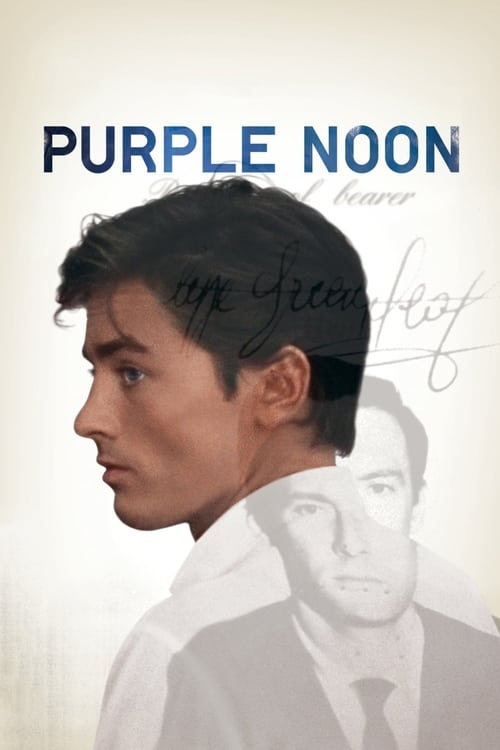
The protagonist of Bad Education (La mala educación), played by Gael García Bernal, was inspired by Patricia Highsmith's Tom Ripley, as portrayed by Alain Delon in René Clément's Purple Noon (Plein Soleil). He stated that the performance he most sought to emulate was Delon's interpretation of Ripley in Purple Noon.
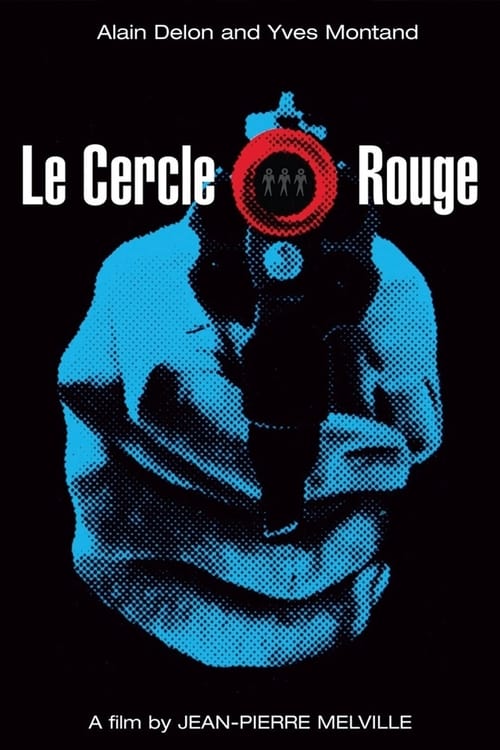
In The Skin I Live In (La piel que habito), Pedro Almodóvar instructed Antonio Banderas to draw inspiration from Alain Delon's performance in Le Cercle Rouge, aiming for a portrayal that was “icy, calculating, restrained, and economical.”
Richard Ayoade cites The Samurai as a major inspiration for his films. In Submarine, Oliver Tate's character wears the same costume as Delon in The Samurai and displays a poster of the film in his room, out of admiration for the character he plays. Some scenes in the film are directly inspired by the French classic.
The film Final Cut : Mesdames et Messieurs by György Pálfi combines scenes from over 450 international movies, including one in which Alain Delon is seen exchanging glances with Marilyn Monroe.
Fabio Grassadonia and Antonio Piazza, in Salvo, sought to recreate the aura of French film noir and specifically drew inspiration from Delon for their protagonist. Their choice of Saleh Bakri to play Salvo, a Sicilian hitman, stemmed from this vision: “We wanted a strong physical presence that would dominate the screen with charisma, thinking of Jean-Pierre Melville, French film noir, and actors like Alain Delon.”
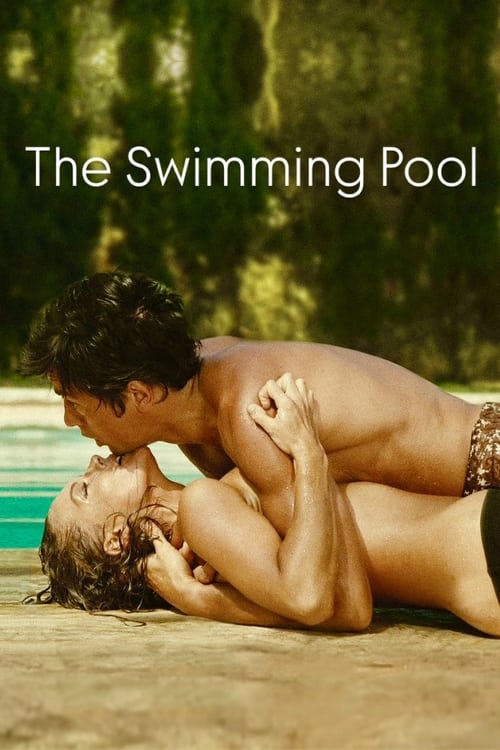
The film A Bigger Splash, directed by Luca Guadagnino, is a modern adaptation of the French thriller La Piscine by Jacques Deray. A loose adaptation of the French film, Guadagnino has soaked up the atmosphere and erotic tension that Delon and Romy Schneider represented in 1969. Matthias Schoenaerts takes over the role played by Delon.
Pierre Niney in A Perfect Man works to recreate a resemblance to the character played by Delon in Purple Noon.
In A Whale by Pablo Hernando, the main character, played by Ingrid García-Jonsson (a hitwoman), is inspired by Jef Costello. The director confirms this influence: "I understand the comparisons, but I didn't mix references. The only one I used was the archetype of Alain Delon's lone hitman (...)." Additionally, the name of the main antagonist, Melville, is a tribute to Jean-Pierre Melville, the director of Le Samouraï.
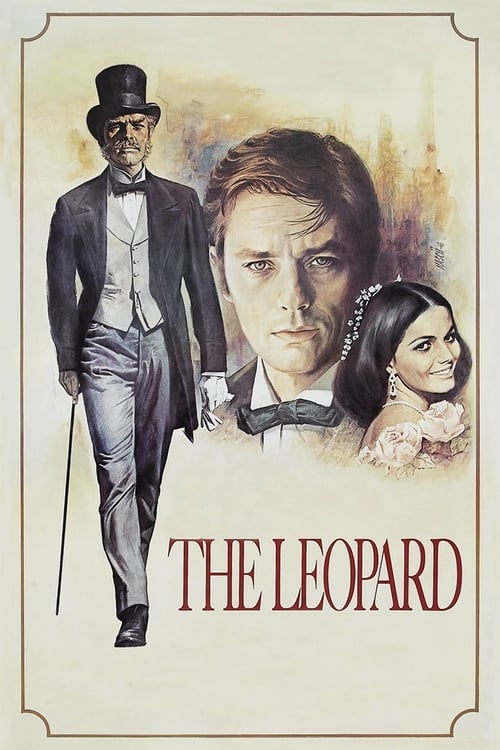
Saul Nanni takes over the role of Tancredi Falconeri in the series The Leopard, previously played by Alain Delon in 1963. The actor says he is honored to play such an "iconic" character and to be able to follow in the footsteps of an actor as "incredible" as Delon, without being afraid of being confronted with this "icon". To prepare for the role of Tancredi, he reread Giuseppe Tomasi di Lampedusa's novel and rewatched Visconti's film, trying to understand the twists and turns of the family and social dynamics of the Sicilian aristocracy of the 1860s.
The overall atmosphere, character development, and narrative style of the American film The French Connection are largely influenced by Le Samouraï (1967) by Jean-Pierre Melville. William Friedkin also drew inspiration from the character played by Alain Delon—a solitary and methodical hitman—to shape the character of Popeye Doyle (Gene Hackman). Moreover, the subway chase scene in The French Connection is directly inspired by Bullitt and Le Samouraï.
Through his portrayal of Jef Costello, Alain Delon established the archetype of the "silent and stoic antihero." Ryan O'Neal's character in The Driver is almost entirely based on Jef Costello. The Driver is also considered an unofficial adaptation of Le Samouraï.
In Rocco and His Brothers, Delon plays the character of Rocco Parondi, a tormented young man, a street wrestler who has become famous and has a tumultuous career in an Italian family in the 1940s. The film influenced a number of filmmakers, including Martin Scorsese, who closely studied Visconti's directing, especially the way the fight scenes are filmed, a technique he later integrated into his Raging Bull. In addition, Scorsese was inspired for this same film by the character of Rocco (Delon) to help shape Robert De Niro's interpretation of Jake LaMotta. Scorsese also noted that Jef Costello, played by Delon in Le Samouraï, served as an inspiration for the creation of Travis Bickle, the protagonist of Taxi Driver (a role that was offered to Alain Delon).
While filming American Gigolo, screenwriter and director Paul Schrader had Richard Gere watch several films starring Delon to draw inspiration from his performance: “I screened Purple Noon for Richard Gere before American Gigolo. I said: ‘Watch this guy [Alain Delon]. The way he walks. He knows the room is a better place just because he's walked into it.’” Richard Gere also cites the French actor as a source of inspiration: “It was by watching Alain Delon's films that I learned how to play seducers on screen. Alain Delon truly inspired me to portray that kind of character.”
Le Samouraï is one of Quentin Tarantino's favorite films. In a 1992 interview, Tarantino said he liked the title Reservoir Dogs because “it sounds like it's from an Alain Delon film by Jean-Pierre Melville... I could picture Alain Delon in a black suit saying: ‘I'm Mr. Blonde.’” The French classic influenced his creation of the world of Reservoir Dogs and Pulp Fiction. In this regard, the costume design for Reservoir Dogs and Pulp Fiction stemmed from a discussion between Tarantino and costume designer Betsy Heimann about French noir films featuring Alain Delon.
Michael Mann, for Heat (just like for Collateral), creates the character of Neil McCauley, played by Robert De Niro, drawing inspiration from the minimalist and detached style of Delon in Le Samouraï and the various protagonists Melville portrays in Le Cercle Rouge. The line "I am alone, not lonely" from McCauley (De Niro in Heat) directly echoes the one from Jeff Costello (Delon in Le Samouraï) : "I never lose, never really".
Forest Whitaker also drew inspiration from Delon's role as Jef Costello in Le Samouraï for his performance in Ghost Dog: The Way of the Samurai by Jim Jarmusch : “As part of my preparation, I watched this masterpiece with Alain Delon. Thanks to him, I understood the virtue of silence.” The film's ending openly pays homage to Le Samouraï, as both Alain Delon and Ghost Dog carry an unloaded firearm in a scenario where they are fully aware of their impending fate. Whitaker would later reprise a role originally played by Alain Delon in Deux Hommes dans la ville (Two Men in Town), adapting it to a contemporary setting.
To prepare for his role as Vincent in Collateral, Tom Cruise stated that he “first watched several films about professional killers, including Le Samouraï by Jean-Pierre Melville with Alain Delon. I was [Tom Cruise] deeply fascinated by his solitary and melancholic charisma in carrying out his ruthless business.” Cruise's appearance and demeanor in the film strongly recall Jef Costello from Le Samouraï.
The film by Anton Corbijn, The American (inspired by Melville's Le Samouraï) stars George Clooney as an assassin, who resembles Costello. Clooney also draws inspiration from Delon for his role in Out of Sight.
Delon's influence also extends to films such as Drive by Nicolas Winding Refn and Baby Driver by Edgar Wright. Both directors drew inspiration from Le Samouraï, crafting protagonists—played by Ryan Gosling and Ansel Elgort, respectively—who are taciturn yet charismatic getaway drivers, reminiscent of Jef Costello. Ryan Gosling has stated that his acting in Drive was influenced by Delon's performance in Le Samouraï .
In developing The Equalizer film franchise, director Antoine Fuqua acknowledged that Delon influenced the character of Robert McCall, a solitary man with strong moral motivations who acts as a vigilante for those unable to defend themselves. Played by Denzel Washington, Fuqua explained: “My biggest inspirations were foreign films from the 1970s, really […]. And of course, all those Alain Delon films, particularly the French ones, like Le Samouraï (1967), with that kind of slow rhythm and character development as the story unfolds. That's the kind of film that inspires me.”
Keanu Reeves, in John Wick: Chapter 4, plays a fearsome hitman but imbued with a certain emotional depth, imitating Alain Delon, whom Reeves has as a model. Chad Stahelski, the director behind the John Wick franchise, is also a great admirer of Alain Delon and Jean-Pierre Melville. Stahelski drew inspiration from Le Cercle Rouge and Le Samouraï when crafting John Wick : "The John Wick films are all love letters from Keanu, myself, our stunt team and our creative team to everyone from Wong Kar-wai to Sammo Hung to Sergio Leone, Kurosawa, Alain Delon and "The Samurai", Spielberg, Tarantino... To all those people we loved growing up."
Michael Fassbender is inspired in David Fincher's The Killer by the character played by Alain Delon in Melville's The Samurai.
Jon Watts (director of the Spider-Man trilogy) cites Alain Delon among his influences, with The Samurai which he considers a model of "lone wolf movies", inspiring the creation of the characters of George Clooney and Brad Pitt in Wolfs. In addition, the film begins in a fictionally deluxe suite named Delon Hotel, an obvious nod to the French actor.
In the 2024 remake of The Killer, John Woo pays explicit tribute to Delon by setting the action in Paris.
Forty years after American Gigolo, Paul Schrader once again turned to Richard Gere, asking him to draw inspiration from Alain Delon for his role in Oh, Canada.
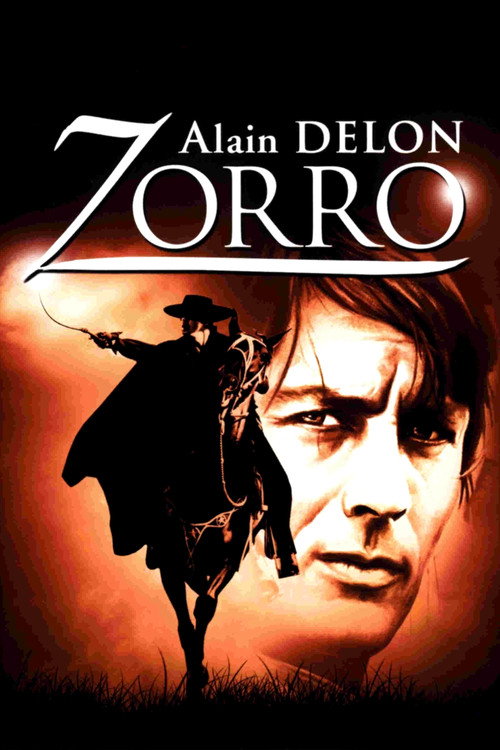
Delon is indirectly responsible for the ongoing superhero franchise films which continue to this day. After seeing a poster for Delon's 1974 cinematic turn as Zorro while in Paris, Ilya Salkind was inspired to make 1978's Superman with Christopher Reeve, the film that started it all.
From South Korea to China, numerous filmmakers have drawn inspiration from Alain Delon's career, particularly his portrayal of Jeff Costello in Le Samouraï (1967).
John Woo chose Chow Yun-fat for the role of Mark Lee in A Better Tomorrow (1986) because of his resemblance to Alain Delon. In the film and its sequels, Chow also wore sunglasses that were marketed under Delon's name. The sunglasses brand became especially popular in Hong Kong, and Alain Delon personally thanked Chow Yun-fat for it.
Chow Yun-Fat, in John Woo's The Killer, does not merely reprise Alain Delon's role in Le Samouraï; he embodies a character who dreams of being Alain Delon. Woo specifically asked Chow to take inspiration from Delon's acting, seeing him as the embodiment of French charm: “handsome, brooding, and dangerous.”
Tony Leung, in his role as the undercover inspector in Hard Boiled, adopts characteristics reminiscent of Delon's Le Samouraï. His character is even named after Alain Delon—he is called Alan.
Johnnie To's films frequently pay homage to Delon's work, with Fulltime Killer and Vengeance serving as notable examples. A great admirer of Melville and his films Le Cercle Rouge and Le Samouraï, To has often expressed his desire to work with Alain Delon. Although Delon ultimately declined the lead role in Vengeance, To retained the character Francis Costello—his name a direct reference to Jeff Costello from Le Samouraï.
Kim Jee-woon, director of A Bittersweet Life, instructed lead actor Lee Byung-hun to take inspiration from Delon's performances in Jean-Pierre Melville's films. The protagonist of A Bittersweet Life, named "Jeff" after Costello, is a direct descendant of Jeff Costello, sharing the same traits as the betrayed, solitary assassin.
In Pang Ho-Cheung's comedy You Shoot, I Shoot, Eric Kot plays a hitman who idolizes Jeff Costello, dressing like him and even speaking to a Le Samouraï movie poster in his apartment.
South Korean actor Jung Woo Sung also drew inspiration from Alain Delon's performance in Le Samouraï for his first criminal role in Cold Eyes.
Kazakh filmmaker Adilkhan Yerzhanov's Yellow Cat features a solitary character roaming the vast Kazakh steppes while donning the trench coat and fedora made iconic by Alain Delon in Le Samouraï. The character sees himself as the guardian of a unique talent: the ability to imitate Alain Delon. He envisions himself as the French actor, fully embodying his cinematic persona.
Rocco Siffredi chose his stage name in reference to the characters Roch Siffredi (Borsalino and Borsalino & Co) and Rocco Parondi (Rocco and his brothers), both played by Alain Delon. Hong Kong actor Ti Lung chose his stage name from a verbal derivation close to the name of his favorite actor Alain Delon.
Borsalino, a film released in 1969, tells the adventures of Roch Siffredi and François Cappella, two gangsters in Marseille in the 1930s. Played by Alain Delon and Jean-Paul Belmondo, Borsalino marks their only collaboration. This tandem, made up of two of the most popular French actors, inspired Robert Redford and Paul Newman to stage The Sting in 1973.
Ilaria Urbinati, stylist for Ryan Reynolds, Bradley Cooper, and Donald Glover among others, counts Alain Delon as one of the style icons who inspire her: "Alain Delon, a young Pacino and a young DeNiro are my all-time style icons. And probably Paul Newman at all ages. They'll keep you right."
Playwright Adrienne Kennedy was an admirer of Delon. A mystery novella by Kennedy, Deadly Triplets featured a fictional version of Kennedy who has written a play titled, The Heart Of Alain Delon.