Alfredo James Pacino ( pə-CHEE-noh; Italian: [paˈtʃiːno]; born April 25, 1940) is an American actor. Known for his intense performances on stage and screen, Pacino is widely regarded as one of the greatest actors of all time. His career spans more than five decades, during which he has earned many accolades, achieving the Triple Crown of Acting by winning an Academy Award, a Tony Award, and an Emmy Award. He was honored with the Cecil B. DeMille Award in 2001, the AFI Life Achievement Award in 2007, the National Medal of Arts in 2011, the Kennedy Center Honors in 2016, and the Sam Wanamaker Award in 2026. A method actor, Pacino studied at HB Studio and the Actors Studio where he was taught by Charlie Laughton and Lee Strasberg. Films in which he has appeared have grossed over $3 billion worldwide.
Pacino started acting in theater, ranging from underground to off-Broadway and out-of-town productions to Broadway. He won two Tony Awards for Best Featured Actor in a Play for Does a Tiger Wear a Necktie? (1969) and Best Actor in a Play for The Basic Training of Pavlo Hummel (1977). He also played "Teach" in Off-Broadway, Broadway, and West End productions of David Mamet's American Buffalo (1981–1984), starred in multiple productions of Oscar Wilde's Salome (1992, 2003, 2006), and earned a third Tony Award nomination for portraying Shylock in The Merchant of Venice (2010), a role he played in the 2004 feature film adaptation.
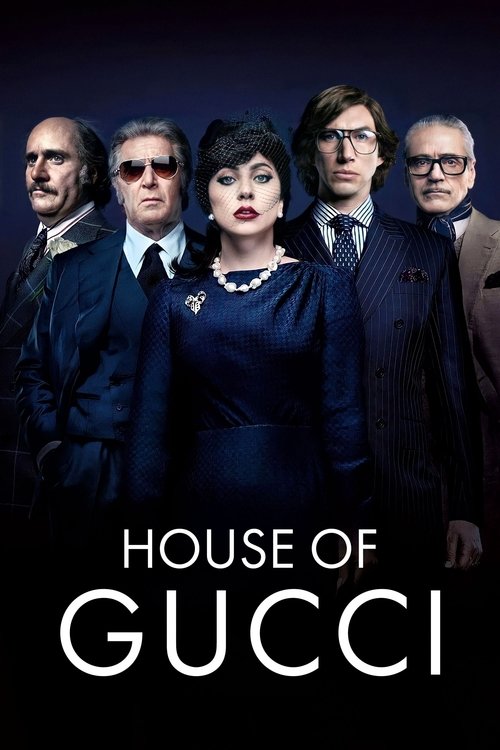
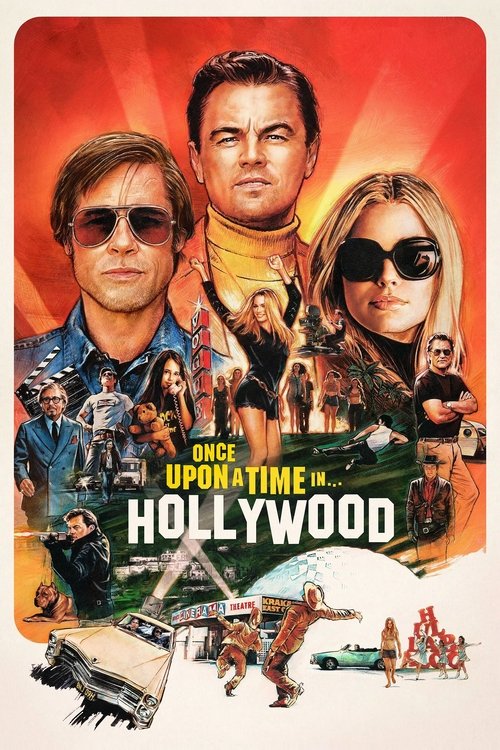
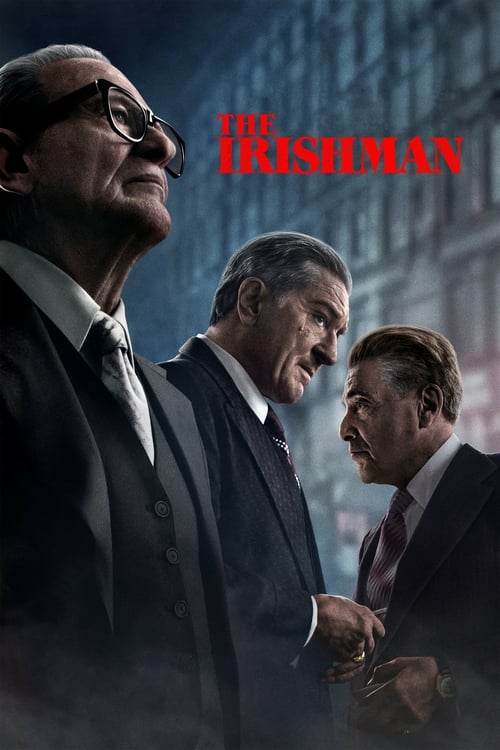
After garnering acclaim for his first lead film role in The Panic in Needle Park (1971), Pacino was cast as Michael Corleone in The Godfather (1972), reprising the role in its two sequels (1974, 1990). He was nominated for Academy Awards for the first two films. Pacino would go on to win an Academy Award for Best Actor for his role in Scent of a Woman (1992). His other Oscar-nominated roles were in Serpico (1973), Dog Day Afternoon (1975), ...And Justice for All (1979), Dick Tracy (1990), Glengarry Glen Ross (1992), and The Irishman (2019). Pacino has also starred in Scarecrow (1973), Scarface (1983), Sea of Love (1989), Carlito's Way (1993), Heat (1995), Donnie Brasco, The Devil's Advocate (both 1997), The Insider, Any Given Sunday (both 1999), Insomnia (2002), Ocean's Thirteen (2007), Once Upon a Time in Hollywood (2019), and House of Gucci (2021), among others. On television, Pacino has acted in multiple productions for HBO, including Angels in America (2003) and the Jack Kevorkian biopic You Don't Know Jack (2010), winning a Primetime Emmy Award for Outstanding Lead Actor in a Miniseries or a Movie for each. Pacino starred in the Amazon Prime Video series Hunters (2020–2023).
Pacino made his directorial debut with the documentary Looking for Richard (1996), for which he won a Directors Guild of America Award for Outstanding Directorial Achievement in Documentary. He directed and starred in Chinese Coffee (2000), Wilde Salomé (2011), and Salomé (2013). He wrote his memoir Sonny Boy, which was published by Penguin Press in 2024. Since 1995, Pacino has been co-president of the Actors Studio (he was the co-artistic director from 1981 to 1983).
Contents
Early life and education
Alfredo James Pacino was born in the East Harlem neighborhood of Manhattan, New York City, on April 25, 1940, the only child of Sicilian American parents Rose (née Gerardi) and Salvatore Pacino. His grandparents had emigrated from San Fratello. His parents divorced when he was two years old. Following the separation, his mother took him to the South Bronx and they lived with his maternal grandparents, Kate and James Gerardi, who had emigrated from Corleone when young. Pacino's father moved to California to work as an insurance salesman and restaurateur in Covina, California. From the age of three or four, his mother would take him to the movies and he began to run the characters' lines through his head. "Sonny Boy" was his mother's nickname for Pacino, taken from the popular song by Al Jolson, which she often sang to him.
During his teenage years, Pacino's friends called him "Sonny," "Pacchi," and "Pistachio" (derived from his favorite flavor of ice cream). He had ambitions to become a baseball player and was also nicknamed "The Actor". Pacino began smoking and drinking at age nine and used marijuana casually at age 13, but he abstained from hard drugs. His two closest friends died from drug abuse at the ages of 19 and 30. Growing up in the South Bronx, Pacino got into occasional fights and was considered something of a troublemaker at school. Pacino said that his mother saved his life and kept him off drugs.
He attended Herman Ridder Junior High School, but soon dropped out of most of his classes except for English. Blanche Rothstein, who was his junior high school teacher, saw his acting potential at a young age, casting him in school plays and having him read the Bible passages at their student assemblies. She notably visited their family's tenement apartment to speak with his grandmother that he was "made to do this," which Pacino credited as the turning point in his life. He subsequently attended the High School of Performing Arts, after gaining admission by audition. His mother disagreed with his decision, believing that "poor people don't do acting." After an argument, he left home.
To finance himself and pursue his dreams, Pacino took low-paying jobs as a messenger, busboy, janitor, switchboard operator, usher, and postal clerk, as well as once working in the mailroom for Commentary. He acted in basement plays in New York's theatrical underground. As a teenager, he tried to join the membership organization Actors Studio but was rejected. Instead, Pacino joined HB Studio, where he met acting teacher Charlie Laughton, who became his mentor and best friend. The studio let him go to classes for free, in exchange for cleaning the hallways and dance studios. At night, Pacino would practice Shakespeare soliloquies while wandering the streets. In this period, he was often unemployed or homeless, and sometimes slept on the street, in theaters, or at a friend's home.
Career
1967–1971: Theater roles and film debut
In 1967, Pacino spent a season at the Charles Playhouse in Boston, performing in Clifford Odets' Awake and Sing! (his first major paycheck: US$125 a week); and in Jean-Claude Van Itallie's America Hurrah. He met actress Jill Clayburgh on this play. They had a five-year romance and moved back to New York City. In 1968, Pacino starred in Israel Horovitz's The Indian Wants the Bronx at the Astor Place Theatre, playing Murph, a street punk. The play opened January 17, 1968, and ran for 177 performances; it was staged in a double bill with Horovitz's It's Called the Sugar Plum, starring Clayburgh. Pacino won an Obie Award for Best Actor for his role, with John Cazale winning for Best Supporting Actor and Horowitz for Best New Play. Martin Bregman saw the play and became Pacino's manager, a partnership that became fruitful in the years to come, as Bregman encouraged Pacino to do The Godfather, Serpico, and Dog Day Afternoon. About his stage career, Pacino said, "Martin Bregman discovered me ... I was 26, 25 ... he discovered me and became my manager. And that's why I'm here. I owe it to Marty, I really do".
Pacino took the production of The Indian Wants the Bronx to Italy for a performance at the Festival dei Due Mondi in Spoleto. It was Pacino's first journey to Italy; he later recalled that "performing for an Italian audience was a marvelous experience". Pacino and Clayburgh were cast in "Deadly Circle of Violence", an episode of the ABC television series NYPD, premiering November 12, 1968. Clayburgh at the time was also appearing on the soap opera Search for Tomorrow, playing the role of Grace Bolton. Her father would send the couple money each month to help with finances.
On February 25, 1969, Pacino made his Broadway debut in Don Petersen's Does a Tiger Wear a Necktie? at the Belasco Theater, produced by A&P heir Huntington Hartford. It closed after 39 performances on March 29, 1969, but Pacino received rave reviews and won the Tony Award on April 20, 1969. Pacino continued performing onstage in the 1970s, winning a second Tony Award for The Basic Training of Pavlo Hummel and performing the title role in Richard III. In the 1980s, Pacino again achieved critical success on stage while appearing in David Mamet's American Buffalo, for which Pacino was nominated for a Drama Desk Award. Since 1990, Pacino's stage work has included revivals of Eugene O'Neill's Hughie, Oscar Wilde's Salome and in 2005 Lyle Kessler's Orphans. Pacino found acting enjoyable and realized he had a gift for it while studying at The Actors Studio. However, his early work was not financially rewarding. After his success on stage, Pacino made his film debut in 1969 with a brief appearance in Me, Natalie, an independent film starring Patty Duke. In 1970, Pacino signed with the talent agency Creative Management Associates (CMA). Pacino made his feature film debut portraying a heroin addict in The Panic in Needle Park (1971).
1972–1983: Stardom and acclaim
Francis Ford Coppola cast him as Michael Corleone in what became a blockbuster Mafia film, The Godfather (1972). Although Jack Nicholson, Robert Redford, Warren Beatty, and the little-known Robert De Niro tried out for the part, Coppola selected Pacino, to the dismay of studio executives who wanted someone better known. Pacino's performance earned him an Academy Award nomination, and offered a prime example of his early acting style, described by Halliwell's Film Guide as "intense" and "tightly clenched". The longstanding rumor was that Pacino boycotted the Academy Award ceremony, insulted at being nominated for the Supporting Acting award as he had more screen time than co-star and Best Actor winner Marlon Brando—who also boycotted the awards, but for unrelated reasons. However, in Pacino's memoir released in 2024, he said it was appalling to learn about the rumor now and clarified that he skipped the ceremony due to his struggles with fame. He was terrified, and it overlapped with him working in Boston in the theatre.
In 1973, Pacino co-starred in Scarecrow with Gene Hackman, which won the Palme d'Or at the Cannes Film Festival. That same year, Pacino was nominated for an Academy Award for Best Actor after starring in Serpico, based on the true story of New York City policeman Frank Serpico, who went undercover to expose the corruption of fellow officers. In 1974, Pacino reprised his role as Michael Corleone in The Godfather Part II, which was the first sequel to win the Best Picture Oscar; Pacino was nominated a third time for an Oscar, this second nomination for the Corleone role being in the lead category. Newsweek has described his performance in The Godfather Part II as "arguably cinema's greatest portrayal of the hardening of a heart".
In 1975, he enjoyed further success with the release of Dog Day Afternoon, based on the true story of bank robber John Wojtowicz. It was directed by Sidney Lumet, who had directed him in Serpico a few years earlier, and Pacino was again nominated for Best Actor. In 1977, Pacino starred as a race-car driver in Bobby Deerfield, directed by Sydney Pollack, and received a Golden Globe nomination for Best Actor – Motion Picture Drama for his portrayal of the title role. His next film was the courtroom drama ...And Justice for All. Pacino was lauded by critics for his wide range of acting abilities, and nominated for the Best Actor Oscar for a fourth time. He lost out that year to Dustin Hoffman in Kramer vs. Kramer—a role that Pacino had declined. During the 1970s, Pacino had five Oscar nominations, including four for Best Actor for his performances in Serpico, The Godfather Part II, Dog Day Afternoon, and ...And Justice for All.
1984–1988: Setback and hiatus
His 1985 film Revolution about a fur trapper during the American Revolutionary War, was a commercial and critical failure, which Pacino blamed on a rushed production, resulting in a four-year hiatus from films. At this time Pacino returned to the stage. He mounted workshop productions of Crystal Clear, National Anthems and other plays; he appeared in Julius Caesar in 1988 in producer Joseph Papp's New York Shakespeare Festival. Pacino remarked on his hiatus from film: "I remember back when everything was happening, '74, '75, doing The Resistible Rise of Arturo Ui on stage and reading that the reason I'd gone back to the stage was that my movie career was waning! That's been the kind of ethos, the way in which theater's perceived, unfortunately."
In 1985, Pacino offered The Mirror Theater Ltd his production of Hughie by Eugene O'Neill, but the company was unable to do it at the time due to the small cast. In 1985, Pacino worked on his personal project, The Local Stigmatic, a 1969 off-Broadway play by the English writer Heathcote Williams. He starred in the play, remounting it with director David Wheeler and the Theater Company of Boston in a 50-minute film version. The film was not released theatrically, but was later released as part of the Pacino: An Actor's Vision box set in 2007.
1989–1999: Resurgence
Pacino returned to film in 1989's Sea of Love, when he portrayed a detective hunting a serial killer who finds victims through the singles column in a newspaper. The film earned solid reviews. Pacino received an Academy Award nomination for playing Big Boy Caprice in the box office hit Dick Tracy in 1990, of which critic Roger Ebert described Pacino as "the scene-stealer". Later in the year he followed this up in a return to one of his most famous characters, Michael Corleone, in The Godfather Part III (1990).
In 1991, Pacino starred in Frankie and Johnny with Michelle Pfeiffer, who co-starred with Pacino in Scarface. Pacino played a recently paroled cook who begins a relationship with a waitress (Pfeiffer) in the diner where they work. It was adapted by Terrence McNally from his own off-Broadway play Frankie and Johnny in the Clair de Lune (1987), that featured Kenneth Welsh and Kathy Bates. The film received mixed reviews, although Pacino later said he enjoyed playing the part. Janet Maslin in The New York Times wrote, "Mr. Pacino has not been this uncomplicatedly appealing since his Dog Day Afternoon days, and he makes Johnny's endless enterprise in wooing Frankie a delight. His scenes alone with Ms. Pfeiffer have a precision and honesty that keep the film's maudlin aspects at bay." For his portrayal of the irascible, blind U.S. Army Lieutenant Colonel Frank Slade in Martin Brest's Scent of a Woman (1992) Pacino won the Academy Award for Best Actor next year. He was also nominated for Best Supporting Actor for Glengarry Glen Ross, making Pacino the first male actor ever to receive two acting nominations for two movies in the same year, and to win for the lead role.
Pacino starred alongside Sean Penn in the crime drama Carlito's Way in 1993, in which he played Carlito Brigante, a gangster released from prison with the help of his corrupt lawyer (Penn) and vows to go straight. Pacino starred in Michael Mann's Heat (1995), in which he and Robert De Niro appeared on-screen together for the first time (though both Pacino and De Niro starred in The Godfather Part II, they did not share any scenes). In 1996, Pacino starred in his theatrical docudrama Looking for Richard, a performance of selected scenes of William Shakespeare's Richard III and a broader examination of Shakespeare's continuing role and relevance in popular culture. The cast brought together for the performance included Alec Baldwin, Kevin Spacey, and Winona Ryder.
Pacino played Satan in the supernatural thriller The Devil's Advocate (1997) which co-starred Keanu Reeves. The film was a success at the box office, taking US$150 million worldwide. Roger Ebert wrote in the Chicago Sun-Times, "The satanic character is played by Pacino with relish bordering on glee." In 1997's Donnie Brasco, Pacino played gangster "Lefty" in the true story of undercover FBI agent Donnie Brasco (Johnny Depp) and his work in bringing down the Mafia from the inside. In 1999, Pacino starred as 60 Minutes producer Lowell Bergman in the multi-Oscar nominated The Insider opposite Russell Crowe, and in Oliver Stone's Any Given Sunday.
2000–2018: Television roles and return to Broadway
Pacino won three Golden Globes since 2000; the first being the Cecil B. DeMille Award in 2001 for lifetime achievement in motion pictures. In 2000, Pacino starred alongside Jerry Orbach in a low-budget film adaptation of Ira Lewis' play Chinese Coffee, which was released to film festivals. Shot almost exclusively as a one-on-one conversation between two main characters, the project took nearly three years to complete and was funded entirely by Pacino. Chinese Coffee was included with Pacino's two other rare films he was involved in producing, The Local Stigmatic and Looking for Richard, on a special DVD box set titled Pacino: An Actor's Vision, which was released in 2007. Pacino produced prologues and epilogues for the discs containing the films.
In October 2002, Pacino starred in Bertolt Brecht's The Resistible Rise of Arturo Ui for the National Actor's Theater and Complicite. Directed by Simon McBurney, the production starred a host of Hollywood names, including John Goodman, Charles Durning, Tony Randall, Steve Buscemi, Chazz Palminteri, Paul Giamatti, Jacqueline McKenzie, Billy Crudup, Lothaire Bluteau, Dominic Chianese, and Sterling K. Brown. The production was a critical success in which "Pacino grabs and holds the attention like a coiled spring about to snap. He is all brooding menace and crocodile grimace, butchering his way to the top with unnervingly sinister glee." Director Christopher Nolan worked with Pacino on Insomnia, a remake of the Norwegian film of the same name, co-starring Robin Williams. Newsweek stated that "he [Pacino] can play small as rivetingly as he can play big, that he can implode as well as explode". The film and Pacino's performance were well received, gaining a favorable rating of 93 percent on the review aggregation website Rotten Tomatoes. The film did moderately well at the box office, taking in $113 million worldwide. His next film, S1m0ne, however, did not receive much critical praise or box office success. He played a publicist in People I Know (2002), a small film that received little attention despite Pacino's well-received performance.
Rarely taking a supporting role since his commercial breakthrough, he accepted a small part in the critical and box office flop Gigli, in 2003, as a favor to director Martin Brest. The Recruit, released in 2003, featured Pacino as a CIA recruiter and co-stars Colin Farrell. The film received mixed reviews, and has been described by Pacino as something he "personally couldn't follow". Pacino next starred as lawyer Roy Cohn in the 2003 HBO miniseries Angels in America, an adaptation of Tony Kushner's Pulitzer Prize winning play of the same name. For this performance, Pacino won his third Golden Globe, for Best Performance by an Actor, in 2004.
2019–present: Late career
Pacino starred alongside Brad Pitt and Leonardo DiCaprio in Quentin Tarantino's comedy-drama Once Upon a Time in Hollywood, which was released on July 26, 2019. Later in 2019, Pacino played Teamsters chief Jimmy Hoffa, alongside Robert De Niro and Joe Pesci, in Martin Scorsese's Netflix film The Irishman, based on the 2004 book I Heard You Paint Houses by Charles Brandt. This was the first time Pacino was directed by Scorsese, and he received a Best Supporting Actor nomination at the 92nd Academy Awards—his ninth to date. Pacino's performance received positive reviews. Peter Bradshaw described it as "glorious" in The Guardian. Justin Chang wrote, "De Niro, Pesci and Pacino are at the top of their game, in part because they aren't simply rehashing the iconic gangster types they've played before."
In February 2020, Pacino starred as Meyer Offerman, a fictional Nazi hunter, in the Amazon Prime Video series Hunters. This is Pacino's first television series since Angels in America (2003). Hunters was renewed for a second season in August 2020. In 2021, Pacino played Aldo Gucci in Ridley Scott's House of Gucci. The film received mixed to positive reviews, with Pacino's performance being highlighted as a standout, along with Lady Gaga's and Jared Leto's. That same year, he played the lead defense attorney in American Traitor: The Trial of Axis Sally.
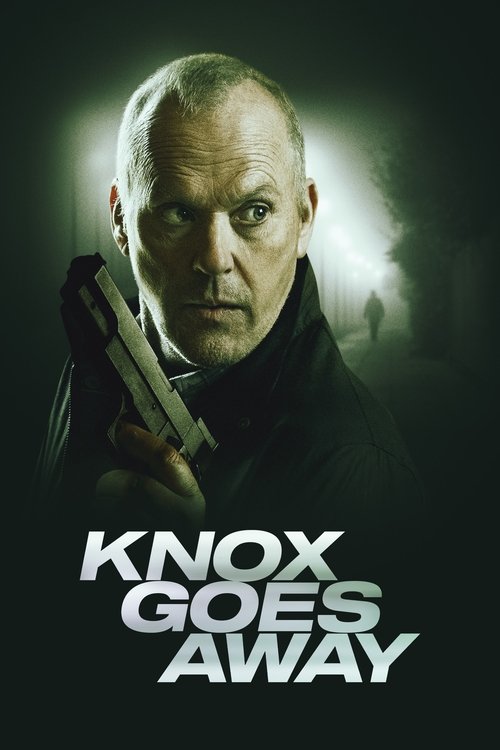
In 2023, Pacino returned to the screen in a supporting role by playing a thief and fixer Xavier Crane in Michael Keaton's Knox Goes Away, a noir thriller that follows a contract killer diagnosed with a fast-moving form of dementia, which premiered at the 48th Toronto International Film Festival.
In 2024, Pacino starred in Modì, Three Days on the Wing of Madness, a film about Amedeo Modigliani, which he co-produced alongside Johnny Depp and Barry Navidi. The film is based on a play by Dennis McIntyre, which was previously adapted for the 2004 film of the same name. Principal photography commenced in September 2023. On March 10, 2024, Pacino presented the Academy Award for Best Picture at the 96th Academy Awards, the third time he presented the Academy Award for Best Picture (first in 1995 with Robert de Niro and second in 1997). On October 15, 2024, Pacino released his bestselling memoir titled Sonny Boy with Penguin Press that covers his life from a challenging childhood in the South Bronx to becoming an iconic actor.
Other ventures
Speaking engagements
Pacino made several appearances as a guest and keynote speaker at universities and film schools, often sharing his acting expertise and reflections on his career. On November 19, 1999, he visited Yale University to conduct a master class for the Yale Dramatic Association, attend a question-and-answer session following screenings of his films, The Insider and Looking for Richard, and receive an award in recognition of his contribution to acting. On November 22, 2006, he visited Trinity College Dublin to accept the honorary patronage of the University Philosophical Society for his contribution to theatre and for bringing the work of Oscar Wilde to Broadway audiences. He gave a speech, including a dramatic monologue, followed by a Q&A session with students.
On October 16, 2010, he was the distinguished speaker at the Rochester Institute of Technology's Brick City Homecoming and Family Weekend to a sold-out crowd of 4,800. On December 4, 2014, he appeared as the guest speaker to share stories and experience with the New York Film Academy students after a special advanced screening of his film, The Humbling and participated in a Q&A with them.
Philanthropy
Pacino has participated in several benefit productions and staged readings to raise funds for theater companies and arts programs. In 1992, he appeared in the double-bill of Salome and Chinese Coffee, which served as a $50-a-show fundraiser for the Circle in the Square Theatre to reduce its debt and was a successful run. In 1996, he continued his support for the theater by directing and starring in the revival of Eugene O'Neill's Hughie production. In 2019, he joined Geoffrey Rush for Simply Shakespeare: The Merchant of Venice, a one-night-only staged benefit reading to support the Shakespeare Center of Los Angeles. In 2020, he participated in the same activity for David Rabe's The Basic Training of Pavlo Hummel at the Wallis Annenberg Center for the Performing Arts. Proceeds from the reading supported the National Association of Veteran-Serving Organizations and the SCLA's Veterans in Art program. In 2022, he did a one-night-only fundraiser, Al Pacino Live on Stage, featuring a career retrospective and Q&A session, to support SCLA.
Pacino has also appeared in public service announcements and campaigns supporting social causes and charitable initiatives. In 2001, alongside other actors, he volunteered in the America: A Tribute to Heroes charity telethon to take telephone pledges from the public during the live broadcast to raise funds for the victims and families impacted by the September 11 attacks. In 2005, he was involved with the ONE Campaign, which focuses on fighting extreme poverty, hunger, and AIDS, through their Make Poverty History television and print campaigns with other personalities. In 2012, he joined public figures in appealing for financial support for Hurricane Sandy relief in a PSA. In 2023, Pacino agreed with the Halftime campaign, releasing a new version of the famous 'inch by inch' locker room speech delivered by him from the film Any Given Sunday, which highlighted the importance of the United Nations' Sustainable Development Goals reaching the halfway mark.
In 2009, Pacino received the "Jane Wyman Humanitarian Award," the highest honor given by the Southern California Chapter of the Arthritis Foundation for his history of charitable giving and lifelong contributions and support to the foundation's mission to find a cure. Pacino, who has supported many causes anonymously, spoke of its importance in a rare interview with CBS News: "I don't think people are aware of how it strikes children and how it manifests," adding that if speaking out can help those with arthritis, then it's worth it.
In 2024, Pacino revealed in his memoir Sonny Boy that he felt that the 1980 film Cruising was "exploitative" of the LGBTQ+ community after seeing the finished product. He did not promote the film, and he anonymously donated the money he earned from it to an irrevocable trust fund for charitable purposes.
Production company
Pacino was the owner of Chal Productions, a production shingle for theater and film based in New York, co-founded with his friend and mentor Charlie Laughton. Founded roughly two decades prior to 2001, it operates as a flexible development company adjusting its focus based on Pacino's work. Its following credits included Looking for Richard, Chinese Coffee, People I Know, and Wilde Salomé.
Reception and legacy
Al Pacino is often regarded as one of the greatest and most influential actors in the realm of cinema and theatre. Known for his "signature intensity," "tightly clenched," and "explosive" performances, he gained a reputation as a titan of the New Hollywood era. The Globe and Mail described him as the "icon for the early 1970s counterculture generation." Ron Rosenbaum called him the "Hamlet of Hollywood," and Oliver Stone referred to him as the "Street Hamlet," recognizing Pacino as an avid admirer of William Shakespeare's works and his ability to bring "Shakespearean depths of tragic grandeur" to his roles.
In 2003, British television viewers voted Pacino as the Greatest Movie Star of All Time in a poll by Channel 4, and he is included on VH1's list of the "200 Greatest Pop Culture Icons of All Time." In 2022, Pacino was ranked number six on Esquire's list of The 100 Greatest Actors in Film History. The following year, Esquire also included him on its list of "The 10 Best Living Actors."
On his intense screen style, Encyclopædia Britannica described it with "brooding seriousness and explosive rage." Smithsonian attributed his early popularity to his portrayal of troubled characters "on the edge of crazy, or going over it." Ron Silver of The New York Times noted that the actor was not concerned with making the character likeable but with playing the role honestly and "making that human being understandable." Variety pointed out, "sparkling with unusual ebullience, he brings to his roles a mixture of strong presence, brooding intensity, acute vulnerability, seductive malevolence and light self-mockery." The publication also noted that while Jack Nicholson "played cool, alienated anti-heroes," Pacino specialized in "doomed ethnic outsiders (often immigrants), emotionally explosive men who carry themselves with blustery bravado despite defeating surroundings." Under Lee Strasberg's tutelage, he grasped the method acting style. Strasberg said, "Some actors play characters. Al Pacino becomes them. He assumes their identity so completely that he continues to live a role long after a play or movie is over." Pacino, however, believes that he is not strictly a method actor but believes that the words should be "an extension of [his] emotional state" and engages in off-script improvisational exercises. Chicago Reader complemented it, saying, that he is "the outsize method actor who's never afraid to embarrass himself in the pursuit of spontaneous expression."
The director of Dog Day Afternoon and Serpico, Sidney Lumet, said, "Everything stems from some incredible core inside of him. I wouldn't think of trying to get near it, because it would be like getting somewhere near the center of the earth. What comes out of his core is so uniquely his own." The Godfather trilogy director Francis Ford Coppola said, "His intelligence is what I noted first. He knows how to use his gifts [...] He uses what he has, this striking magnetic quality, this smoldering ambiance." Marcia Lucas, who was tasked with editing multiple screen tests thought Pacino "undresses you with his eyes." Film critic Tom Shone in a Prospect feature has stated, "If the power of a Pacino performance comes from his voice, the subtlety is often to be found in his eyes. He makes only fleeting eye contact with his fellow actors—even before Scent of a Woman, where he played a blind man—his gaze, in close-up, drifting around the screen, allowing the audience alone to witness the crackle of panic or premeditation to be found crossing his face. He has always had a gut instinct for where the camera is. He has the peripheral vision of a deer." On Scarface's continuing resonance with audiences decades after its release, Glenn Kenny said, "Pacino's performance is larger than life and so compelling that it just sucks you in."
In popular culture
Pacino has been heavily referenced in television, music, films, and wider pop culture, largely due to his roles, which have made him an enduring cultural touchstone for grit and power. Vulture affirmed, "It's tempting to call him 'the inimitable Al Pacino,' although he is the most imitated actor in the world." Entertainment Weekly said that his performative idiosyncrasies "gave gainful employment to entire generations of comedic impersonators." Among his most notable impersonators are Kevin Spacey and Alec Baldwin. Spacey said, "The reason we all love to do an impersonation of Al Pacino is because he has created characters that are unforgettable, and that's because for Al Pacino it's not just business, it's craft."
His remarkable character portrayals have been featured on American Film Institute 100 Years... series, with two on the list of the 100 greatest screen characters (Frank Serpico for hero and Michael Corleone for villain) and with three on the list of the top 100 quotations in American cinema ("Keep your friends close, but your enemies closer" by Michael Corleone; "Say 'hello' to my little friend!" by Tony Montana; and "Attica! Attica!" by Sonny Wortzik). Other phrases that transcended the big screen were "The whole trial is out of order!" from ...And Justice for All, "Hoo-ah!" from Scent of a Woman, and "Just when I thought I was out, they pull me back in" from The Godfather Part III. The Washington Post said, "More indelible lines of dialogue are associated with him than with almost any other actor, a testament not only to the way the roles were written but to how he came to own them." Empire selected Michael Corleone and Tony Montana as two of the greatest movie characters of all time, voted by their readers worldwide. Entertainment Weekly included his Lefty Ruggiero role in Donnie Brasco for the "100 Greatest Performances that should have won Oscars but didn't" list.
Musicians from across genres referenced him, mostly paying homage to his Tony Montana role in Scarface, such as Jay-Z, The Notorious B.I.G., Nas, Future, August D., Nicki Minaj, Drake, and Tony Yayo. Bob Dylan's 2020 song "My Own Version of You" from his album Rough and Rowdy Ways referenced it with the line, "I'll take the Scarface Pacino and the Godfather Brando / Mix 'em up in a tank and get a robot commando."
Pacino has influenced and been praised by numerous figures in the entertainment industry, including Steve Buscemi, Jeffrey Wright, Bobby Cannavale, Javier Bardem, Michael Imperioli, and Jamie Foxx, among others. Several of his co-stars agreed to participate in such projects once Pacino's involvement was confirmed, including John Cusack, Russell Crowe, Johnny Depp, Colin Farrell, and Matthew McConaughey.
Personal life
Relationships and children
Pacino had a relationship with his The Godfather Trilogy co-star Diane Keaton. Their on-again, off-again relationship ended after the filming of The Godfather Part III. He has had relationships with Jill Clayburgh, Tuesday Weld, Marthe Keller, Veruschka von Lehndorff, Kathleen Quinlan, Lyndall Hobbs, and Penelope Ann Miller. Pacino had a ten-year relationship with Argentine actress Lucila Polak from 2008 to 2018.
Pacino has four children. The eldest, Julie Marie (born October 16, 1989), is his daughter with acting coach Jan Tarrant. He has twins conceived through IVF and born January 25, 2001, with actress Beverly D'Angelo, with whom he had a relationship from 1997 until 2003. He has a son, born June 15, 2023, with producer Noor Alfallah, with whom he had a relationship from 2022 to 2024. Pacino, at age 83, is one of the oldest fathers on record. He has never been married.
Health and addiction
Pacino has admitted to abusing alcohol and pills (specifically downers) early in his career, partly because he found his sudden rise to fame after The Godfather difficult to cope with. He achieved sobriety in 1977. In his memoir, Pacino stated that he has never taken cocaine in his life, even though there's the "general belief" that he is a cocaine addict due to his roles in films like Scarface.
Pacino said in 2024 that he almost died of COVID-19 in 2020; his near-death experience has led him to doubt the existence of an afterlife.
Acting credits and accolades
Pacino has won and been nominated for many awards during his acting career, including nine Oscar nominations (winning one) and five BAFTA nominations (winning one) for his film work; 19 Golden Globe nominations (winning four) and seven SAG Award nominations (winning two), each recognizing both his film and TV work; three Primetime Emmy Award nominations (winning two) solely for his work on television; and three Tony Award nominations (winning two) for his stage work.
Pacino completed the triple crown in 2004 and has been recognized by the highest awards in American film, television, and theater for the following performances:
Academy Awards
45th Academy Awards (1973): Best Supporting Actor, nomination, for The Godfather
46th Academy Awards (1974): Best Actor, nomination, for Serpico
47th Academy Awards (1975): Best Actor, nomination, for The Godfather Part II
48th Academy Awards (1976): Best Actor, nomination, for Dog Day Afternoon
52nd Academy Awards (1980): Best Actor, nomination, for ...And Justice for All
63rd Academy Awards (1991): Best Supporting Actor, nomination, for Dick Tracy
65th Academy Awards (1993): Best Supporting Actor, nomination, for Glengarry Glen Ross
65th Academy Awards (1993): Best Actor, win, for Scent of a Woman
92nd Academy Awards (2020): Best Supporting Actor, nomination, for The Irishman