Established actress and success (2000–2008)
In 2000, Rai starred in Kandukondain Kandukondain, a Tamil-language adaptation of Jane Austen's novel Sense and Sensibility. Rajiv Menon directed the film, which also stars Mammooty, Tabu and Ajith Kumar. She was cast as Meenakshi, who is based on Marianne Dashwood, the younger sister of Tabu's character. The film was a critical and commercial success, and earned Rai positive comments from critics; a review carried by The Indian Express said: "Attacking her role with just the perfect dollop of innocence, Rai does full justice to her part, and matches up perfectly to Tabu".
Rai next starred alongside Shah Rukh Khan and Chandrachur Singh in the action drama Josh. She portrayed Shirley Dias, the twin sister of Khan's character who falls in love with his arch enemy's brother (played by Singh). The casting of Rai as Khan's sister was considered an unusual pairing at the time but director Mansoor Khan described it as "perfect". Critics gave Josh mixed reviews and it was a commercial success. In Satish Kaushik's social drama Hamara Dil Aapke Paas Hai, Rai played a rape victim. The film co-stars Anil Kapoor and Sonali Bendre, and was well-received by critics and did well at the box office. Sukanya Verma praised Rai's decision to star in the film and said she "conveys the turmoil and pain of a rape victim well. But it is her transition from an emotional wreck trying to gather the broken pieces of her life back together, that is amazing." Her performance in the film earned her a third Best Actress nomination at Filmfare.
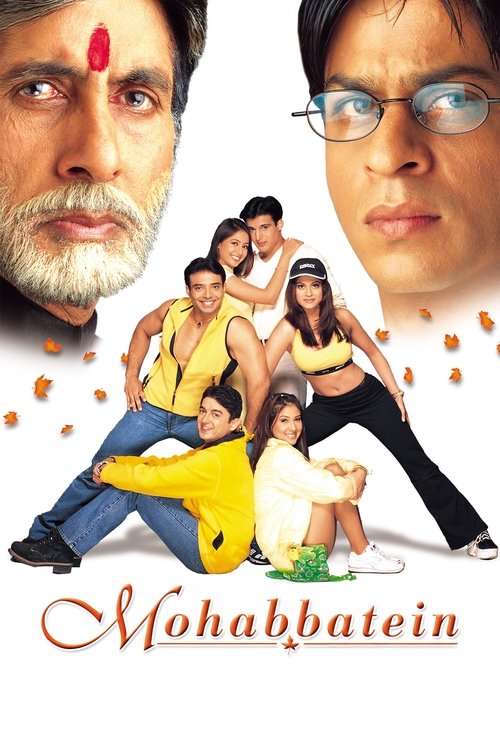
Following a leading role in the box-office failure Dhai Akshar Prem Ke, Rai played a supporting role in Aditya Chopra's musical romantic drama Mohabbatein. She played Megha Shankar, the daughter of Amitabh Bachchan's character, who commits suicide after realizing her father will not accept her romance with one of his students (played by Shah Rukh Khan). Mohabbatein received positive reviews from critics, became the highest-grossing film of the year and earned Rai a nomination for the Filmfare Award for Best Supporting Actress. The following year, she starred alongside Govinda and Jackie Shroff in the romantic comedy Albela, which together with her performance, received mostly negative reviews; Taran Adarsh of Bollywood Hungama criticised the film and said Rai is "plastic in some scenes".
After featuring in David Dhawan's slapstick comedy film Hum Kisise Kum Nahin, Rai appeared alongside Shah Rukh Khan and Madhuri Dixit in Sanjay Leela Bhansali's period romantic drama Devdas, an adaptation of Sharat Chandra Chattopadhyay's novel of the same name. Rai played the role of Paro (Parvati), the love interest of the protagonist (Khan). The film was screened at the 2002 Cannes Film Festival and it was featured by Time in its listing of the "10 Best Films of the Millennium". Devdas was a major international success with a revenue of over ₹840 million (US$8.7 million). Alan Morrison, writing for Empire, praised the performances of the three leads and wrote: "Rai proves she has the acting talent to back up her flawless looks". Devdas was chosen as India's official entry for the Academy Award for Best Foreign Language Film and received a nomination at the BAFTA Awards in the Best Foreign Language Film category. In India, the film won 10 Filmfare Awards, including a second Best Actress award for Rai. Also in 2002, she participated in the UK television show From India with Love along with Amitabh Bachchan, Aamir Khan, Shah Rukh Khan and Preity Zinta. The show took place at Manchester's Old Trafford and London's Hyde Park, with over 100,000 spectators.
In 2003, Rai starred in two romantic dramas—her brother's production début Dil Ka Rishta alongside Arjun Rampal and Rohan Sippy's Kuch Naa Kaho alongside Abhishek Bachchan. Neither of these films fared well critically or commercially. She was later noted for her starring role in Rituparno Ghosh's independent Bengali film Chokher Bali, an adaptation of Rabindranath Tagore's eponymous novel. Rai portrayed Binodini, an emotionally manipulative widow who is struggling with her sexual desires in early-20th century Bengal. The film was a major critical success and Rai earned praise for her performance; Derek Elley of Variety noted: "Rai dominates the film with her delicately sensual presence and physical grace". Commercially, the film was a sleeper hit.
After the success of Chokher Bali, Rai returned to mainstream Hindi film in Rajkumar Santoshi's Khakee (2004), an action thriller featuring Amitabh Bachchan, Akshay Kumar, Ajay Devgn and Tusshar Kapoor. The film tells the story of five constables involved in a mystery surrounding a terrorist attack; Rai played Mahalakshmi, a gun moll. While filming for Khakee, she was accidentally hit by a running car that caused a fracture in her left foot. Upon release, the film was a moderate critical and commercial success. In her next release, the romantic comedy Kyun! Ho Gaya Na..., Rai played Diya Malhotra, a university student who develops a one-sided attraction toward her friend Arjun Khanna (played by Vivek Oberoi). The film received mixed-to-positive reviews from critics but was commercially unsuccessful.
In 2004, Rai garnered international recognition for her starring role opposite Martin Henderson in Gurinder Chadha's British film Bride and Prejudice, a Bollywood-style adaptation of Jane Austen's novel Pride and Prejudice. International film critics expressed mixed views on Rai's performance as the Punjabi version of Elizabeth Bennet; a review carried by The New York Times called her "radiantly beautiful but inert" while Rolling Stone noted "she is a world-class hottie with talent to match, as she proves in her first English-speaking role". With a worldwide gross of $24 million against a production budget of $7 million, Bride and Prejudice was a commercial success. Rai next collaborated with director Rituparno Ghosh for the second time on the 2004 relationship drama Raincoat, an adaptation of O. Henry's The Gift of the Magi, which won the National Film Award for Best Feature Film in Hindi. Critics praised the film and noted the lack of glamour in Rai's role, which earned her a Best Actress nomination at Filmfare. Derek Elley of Variety called Raincoat a "chamber-sized gem" and said Rai had shunned "her usual immaculate makeup and duds, and looking more like a broken, malfunctioning doll". Gautaman Bhaskaran of The Hindu said Rai "looks quite plain [and] seems to have made an earnest effort to emote, using less of her body and limbs and more of her face, and eyes in particular".
Rai next co-starred alongside Sanjay Dutt and Zayed Khan in the 2005 adult drama Shabd, which tells the story of an author who as research for his next book, persuades his wife to pursue a relationship with a younger man. The film received predominantly negative reviews and was a commercial failure. The Times of India said: "For the umpteenth time, Ms. Rai looks drop-dead gorgeous. And that's about it. She is like that picture postcard you get when what you were actually waiting for is a letter. It's very beautiful to look at, but is of no use because it says nothing." In the same year, Rai took on the lead role of Tilo in Paul Mayeda Berges's romantic fantasy film The Mistress of Spices, an adaptation of the eponymous novel by Chitra Banerjee Divakaruni. Critics gave the film negative reviews and it was a commercial failure. Peter Bradshaw of The Guardian called Rai's performance "annoying" and wrote she "wafts and simpers" through the entire film. Her only successful venture of 2005 was a special appearance in Shaad Ali's crime comedy Bunty Aur Babli, in which she featured in the popular item number "Kajra Re".
In 2006, Rai starred in J. P. Dutta's Umrao Jaan and Yash Raj Films' Dhoom 2. Umrao Jaan is an adaptation of Mirza Hadi Ruswa's Urdu novel Umrao Jaan Ada (1905), which tells the story of a doomed courtesan from 19th-century Lucknow. Rai played the titular role, which was played by Rekha in the first film adaptation of the novel (1981). Reviewers, while comparing the film to the 1981 adaptation, were critical of the film and of her performance. According to Joshi Poonam of the BBC: "While only Rai could emulate the grace and poise of Rekha, she doesn't quite capture the intensity of Umrao's abiding melancholy", and "Rai's incandescent beauty and artistry [..] does indeed keep the audience watching, though not necessarily emotionally engaged". In the Sanjay Gadhvi-directed adventure film Dhoom 2, Rai portrayed Sunehri, a petty thief who helps police catch an illusive criminal; the film has an ensemble cast including Hrithik Roshan, Abhishek Bachchan, Bipasha Basu and Uday Chopra. Critics gave Dhoom 2 mixed-to-positive reviews and the film was Rai's first major commercial success since Devdas. The film was declared a blockbuster, and became the highest-grossing Indian film of 2006 with gross revenues of over ₹1.11 billion (US$12 million). Rediff.com commented: "[Rai] is all gloss and no depth. You seldom feel any tension in her behaviour and expressions. ...Sunehri enters the film nearly 50 minutes after its opening in a disguise. In no time, she is wearing the flimsiest of clothes. Once she opens her mouth—and she does it two minutes after appearing in the film—she spoils the image." Nonetheless, her performance earned her a sixth Filmfare Award nomination in the Best Actress category.
In 2007, Rai played the wife of Abhishek Bachchan's character in Mani Ratnam's social drama Guru, which is fictionalised biography of businessman Dhirubhai Ambani. Guru tells the rag to riches story of an uneducated man who builds a multinational corporation. The film met with international critical acclaim and was a box-office success. Richard Corliss of Time called Rai's character as an "ornament" but Raja Sen from Rediff.com said she had given "arguably her finest performance, visible especially when she takes over the film's climax." Rai received her seventh Best Actress nomination at Filmfare for her performance in the film.
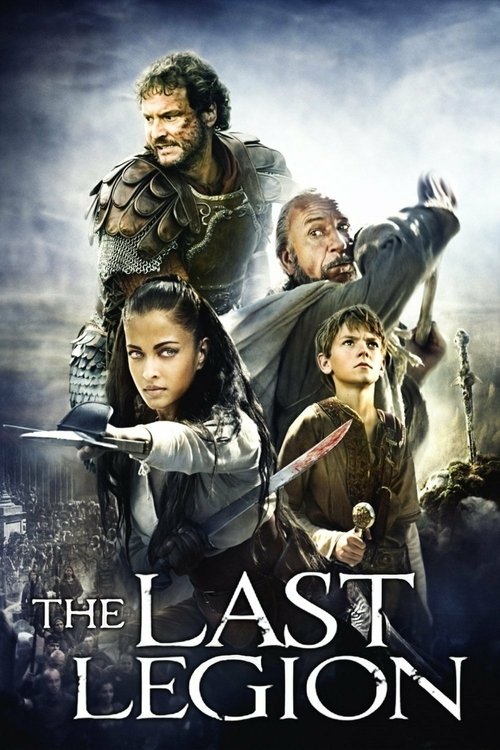
She next starred alongside Naveen Andrews and Miranda Richardson in Jag Mundhra's independent British drama Provoked as the real-life character Kiranjit Ahluwalia, a non-resident Indian who murders her husband after suffering years of domestic abuse. Rai earned mostly positive comments for her performance. Critic Indu Mirani from Daily News and Analysis wrote: "Aishwarya Rai plays the battered wife in what is undoubtedly one of her best performances to date. Rai convincingly goes through the various stages of shock, bewilderment, remorse and finally vindication". The film was internationally well-received and was a moderate commercial success in the UK. That same year, she starred alongside Ben Kingsley, Colin Firth and Thomas Sangster as the Indian warrior Mira in Doug Lefler's epic film The Last Legion.
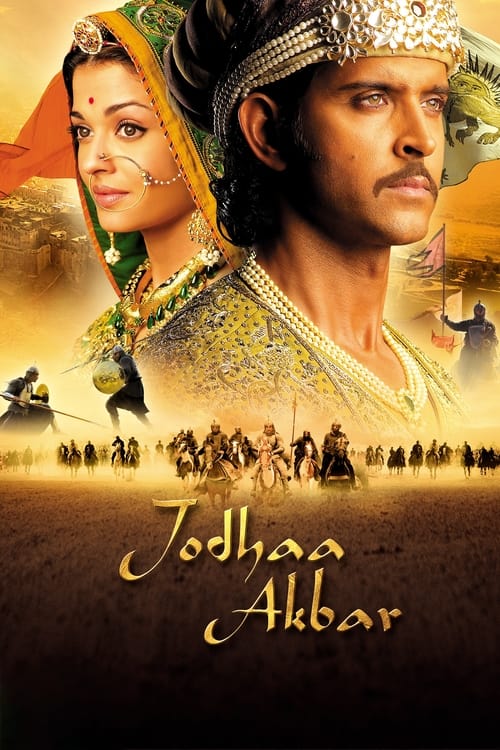
In 2008, she garnered critical and box-office success with Ashutosh Gowariker's period romantic drama Jodhaa Akbar (now credited as Rai Bachchan, following her marriage to Abhishek Bachchan the previous year). The film narrates a partly fictionalised account of a marriage of convenience between the Mughal emperor Jalaluddin Muhammad Akbar (played by Hrithik Roshan) and the Rajput princess Jodha Bai (played by Rai Bachchan). Rajeev Masand noted: "Rai is wonderfully restrained and uses her eyes expertly to communicate so much, making this one of her finest outings on screen". The film grossed ₹1.12 billion (US$12 million) and earned Rai Bachchan a Best Actress nomination at the Filmfare Awards ceremony. She then co-starred with her husband Abhishek Bachchan and her father-in-law Amitabh Bachchan, in Ram Gopal Verma's political drama Sarkar Raj, a sequel to the 2005 box-office hit Sarkar. Rai Bachchan was cast as Anita Rajan, the CEO of an international power firm who proposes to set up a plant in rural Maharashtra. The film was a critical and commercial success, and praise was directed towards the three leads' performances.