


.jpg?width=400)
.jpg?width=400)


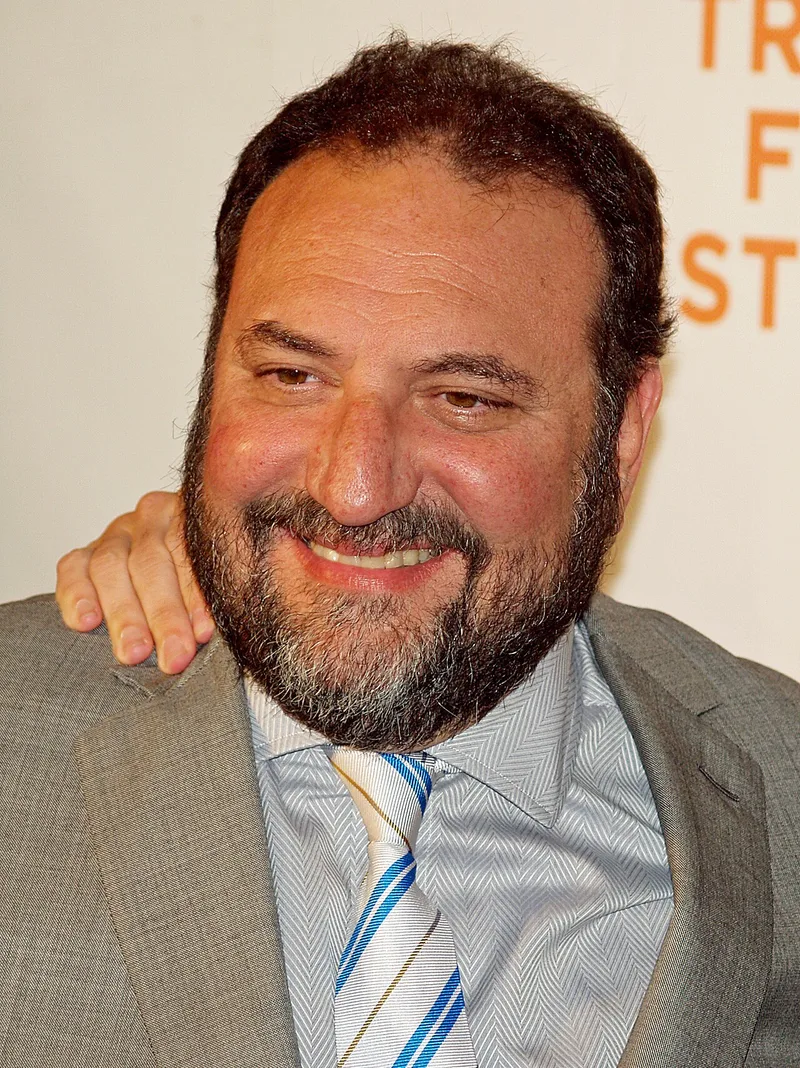


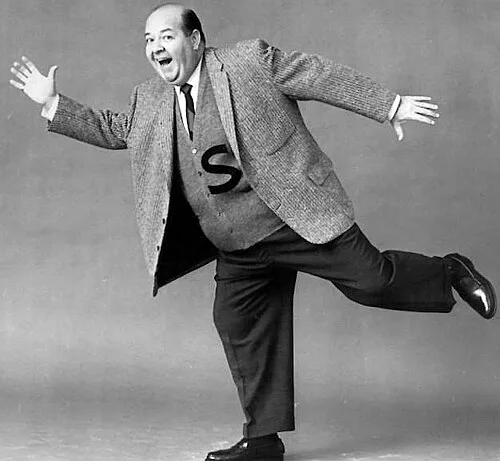
Who Framed Roger Rabbit is a 1988 American fantasy comedy film directed by Robert Zemeckis from a screenplay written by Jeffrey Price and Peter S. Seaman. The film, which combines live-action and animation, is loosely based on Gary K. Wolf's novel Who Censored Roger Rabbit? The film stars Bob Hoskins, Christopher Lloyd, Stubby Kaye and Joanna Cassidy, with Charles Fleischer providing the voice of the title character. Set in an alternative history Hollywood in 1947, where humans and cartoon characters (referred to as "toons") co-exist, Who Framed Roger Rabbit follows Eddie Valiant, a private investigator with a grudge against toons, who must help exonerate Roger, a toon who has been framed for murder.
Walt Disney Studios purchased the film rights to the novel shortly after its publication in 1981. Price and Seaman wrote two drafts of the script before Disney brought in executive producer Steven Spielberg and his production company, Amblin Entertainment. Zemeckis was brought on to direct and Canadian-British animator Richard Williams was hired to supervise the animation sequences. Production was moved from Los Angeles to Elstree Studios in England to accommodate Williams and his group of animators. While filming, the production budget rapidly expanded and the shooting schedule ran longer than expected.
Who Framed Roger Rabbit was released through Disney's Touchstone Pictures banner in the United States on June 22, 1988. The film received critical acclaim for its visuals, humor, writing, performances and groundbreaking combination of live-action and animation. It grossed $351.5 million worldwide, becoming the second-highest-grossing film of 1988, behind Rain Man. It brought a renewed interest in the golden age of American animation, spearheading the renaissance age of American animation and the Disney Renaissance. It won three Academy Awards for Best Film Editing, Best Sound Effects Editing and Best Visual Effects and received a Special Achievement Academy Award for Williams' animation direction.
In 2016, the film was selected for preservation in the United States National Film Registry by the Library of Congress as "culturally, historically, or aesthetically significant".
Contents
Plot
In 1947 Los Angeles, animated cartoon characters, or "toons", co-exist with humans. Private detective Eddie Valiant, once a staunch ally of the toons, has become a depressed alcoholic following his brother Teddy's murder by an unknown toon five years prior. Maroon Cartoon Studios owner R.K. Maroon, upset about the recent poor performance of his toon star Roger Rabbit, hires Eddie to investigate rumors that Roger's glamorous toon wife, Jessica, is having an affair with Marvin Acme, owner of the Acme Corporation and Toontown, the animated metropolis in which toons reside.
After watching Jessica perform at The Ink and Paint Club, Eddie secretly photographs her and Acme playing patty-cake. He shows the pictures to Roger, who becomes distraught, refusing to believe Jessica was unfaithful. The next morning, Acme is found murdered, and evidence implicates Roger. At the crime scene, Eddie meets Judge Doom, the sinister human judge of Toontown—having bribed the electorate for their votes—and his five weasel minions, the Toon Patrol. Doom reveals that he will execute Roger using the "dip", a chemical concoction of acetone, benzene, and turpentine, which can destroy the otherwise invulnerable toons.
Roger's toon co-star, Baby Herman, believes Roger is innocent and suggests to Eddie that Acme's missing will, which supposedly bequeaths Toontown to the toons, may have been the killer's true motive. Eddie returns to his office and finds Roger hiding there, insisting that he has been framed. Eddie agrees to help after finding evidence of Acme's will; he hides Roger in a bar tended by his girlfriend, Dolores. Later, Jessica tells Eddie that Maroon threatened Roger's career unless she posed for the compromising photos. Meanwhile, Dolores uncovers that Cloverleaf Industries recently bought the city's Pacific Electric railway system and will purchase Toontown at midnight unless Acme's will is found. Doom and the Toon Patrol find Roger, but he and Eddie escape with help from Benny, a toon taxi cab. Sheltering in a movie theater, Eddie sees a newsreel of Maroon selling his studio to Cloverleaf.
While Eddie goes to the studio to interrogate Maroon, Jessica abducts Roger. Maroon denies involvement in Acme's murder, admitting he intended to blackmail Acme into selling his company, as otherwise Cloverleaf would not buy the studio. In the middle of his confession, Maroon is assassinated, and Eddie spots Jessica fleeing. Assuming she is the assailant, he reluctantly follows her into Toontown after throwing away his remaining alcohol. After saving Eddie from being shot by Doom, Jessica reveals that her actions were to ensure Roger's safety, and it was Doom who killed Acme and Maroon. Acme gave his will to Jessica for safety. When she examined it, the paper was blank.
Cast
Voice cast
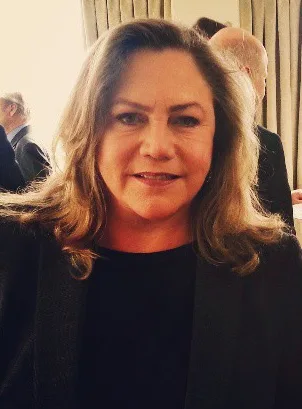
Uncredited cast members include Kathleen Turner as Jessica Rabbit, Roger Rabbit's wife; Frank Welker as Dumbo, Winchell as a cow practising lines, Nancy Cartwright as Yoyo Dodo and a toon shoe destroyed by the Dip, Bill Farmer as Koko the Clown and Goofy's singing voice, and Dave Spafford as Daffy Duck's "woo-hoos".
Production
Development
Walt Disney Productions purchased the film rights to Gary K. Wolf's novel Who Censored Roger Rabbit? shortly after its publication in 1981. Ron W. Miller, then president of Disney, saw it as a perfect opportunity to produce a blockbuster. Jeffrey Price and Peter S. Seaman were hired to write the script, penning two drafts. In 1982, Robert Zemeckis offered his services as director, but Disney declined as his two previous films (I Wanna Hold Your Hand and Used Cars) had been box-office bombs. Between 1981 and 1983 Disney developed test footage with Darrell Van Citters as animation director, Paul Reubens voicing Roger Rabbit, Peter Renaday as Eddie Valiant, Russi Taylor as Jessica Rabbit, and Jack Angel as Captain Cleaver. The project was revamped in 1985 by Michael Eisner, the then-new CEO of Disney. Amblin Entertainment, which consisted of Steven Spielberg, Frank Marshall and Kathleen Kennedy, were approached to produce Who Framed Roger Rabbit alongside Disney. The original budget was projected at $50 million, which Disney felt was too expensive.
The film was finally green-lit when the budget decreased to $30 million, which at the time would have still made it the most expensive animated film ever produced. Walt Disney Studios chairman Jeffrey Katzenberg argued that the hybrid of live-action and animation would "save" Walt Disney Feature Animation. Spielberg's contract included an extensive amount of creative control and a large percentage of the box-office profits. Disney kept all merchandising rights. Spielberg convinced Warner Bros., Fleischer Studios, Harvey Comics, King Features Syndicate, Felix the Cat Productions, Turner Entertainment Co., and Universal Pictures/Walter Lantz Productions to "lend" their characters to appear in the film with (in some cases) stipulations on how those characters were portrayed; for example, Disney's Donald Duck and Warner Bros.' Daffy Duck appear as equally talented dueling pianists, Mickey Mouse and Bugs Bunny also share a scene as skydivers, and Tinker Bell and Porky Pig close the film. Apart from the agreement, and some of the original voice artists reprising their roles, Warner Bros. and the various other companies were not involved in the production of Roger Rabbit. Executives at Warner Bros. were displeased by animators using the Daffy design by Bob Clampett and demanded they use the design by Chuck Jones; in response Zemeckis had separate artists animate Daffy using Jones' design to satisfy Warner Bros., in order to have Clampett's design in the final film. The producers were unable to acquire the rights to use Popeye, Tom and Jerry, Little Lulu, Casper the Friendly Ghost, the Fox and the Crow, the Terrytoons characters, or Rocky and Bullwinkle for appearances from their respective owners (King Features, Turner, Western Publishing, Harvey Comics, Viacom, Screen Gems, and Jay Ward Productions). Other characters like Warner Bros.' Bosko and Junior Bear, Fleischer Studios' Fitz the Dog and Bimbo; Ub Iwerks' Flip the Frog, and Hanna-Barbera's Yakky Doodle were also planned to appear in the film. Despite acquiring the rights to use Betty Boop and Koko the Clown, King Features valued Koko highly, asking for $50,000 for a simple cameo appearance. To get around the high price and legal issues, the animators redesigned Koko to have hair resembling that of Bozo the Clown instead of a hat, and changed his colors at the end of the film. The film was initially planned to not feature cameo appearances of characters created after 1947, with the exception of Wile E. Coyote and the Road Runner, who were Zemeckis' favorite cartoon characters.
Casting
Peter Renaday originally portrayed Eddie Valiant in the original test footage from 1983, while animator Mike Gabriel played him in some publicity photographs. Joe Pantoliano portrayed Eddie Valiant in a screen test in 1986.
Harrison Ford was Spielberg's original choice to play Eddie Valiant, but his price was too high. Eddie Murphy rejected the role after misunderstanding the film's "toon" concept, a decision he later regretted. In 2025, Murphy elaborated, "[It] sounded ridiculous to me, and I passed on it. And afterwards, I was like, 'Oh, that's fucking amazing.'" Likewise, Paul Newman turned down the role, not liking the film's concept. Bill Murray was also considered for the role, but due to his idiosyncratic method of receiving offers for roles, Murray missed out on it. Ed Harris and James Woods auditioned for the part. Ultimately, Bob Hoskins was chosen by Spielberg because of his acting skill and because Spielberg believed he had a hopeful demeanor and he looked like he belonged in that era.
Paul Reubens originally auditioned for the role of Roger Rabbit and even provided his voice in an early 1983 screen test, but lost out. Eddie Deezen, who had worked with Zemeckis previously, also auditioned for the role, but lost out. The role was eventually given to Charles Fleischer. Before filming, Fleischer was asked to come up with a speech impediment for Roger. He gave Roger a lisp and the stammering catchphrase "P-p-p-please!" as a tribute to all the other famous cartoon characters with speech impediments, which was inspired by Huntz Hall's Sach Jones in The Bowery Boys. He had invented the "cheek flutter" while performing the voice of B.B. in Deadly Friend. His portrayal of Roger was also inspired by Screwy Squirrel. To facilitate Hoskins' performance, Fleischer dressed in a Roger Rabbit costume and "stood in" behind camera for most scenes. Roger was originally designed by Michael Giaimo to resemble and act like Michael J. Fox, but was redesigned by Williams. Williams explained that Roger was a combination of "Tex Avery's cashew nut-shaped head, the swatch of red hair... like Droopy's, Goofy's overalls, Porky Pig's bow tie, Mickey Mouse's gloves, Br'er Rabbit's feet, and Bugs Bunny-like cheeks and ears." Spielberg suggested that Roger's mouth resemble that of Thumper from Bambi (who was made Roger's uncle in the film), but this idea was ignored. Williams also cited Wile E. Coyote as an influence for Roger's expressions, and wanted the character to have ladle-shaped ears, though his animators would sometimes draw Roger with pointy ears similar to Bugs, much to Williams' frustration. He described the process of creating him like an "American flag" with the red overalls, white fur and blue bow tie so that American audiences would enjoy him subliminally.
Writing
Price and Seaman were brought aboard to continue writing the script once Spielberg and Zemeckis were hired. For inspiration, the two writers studied the work of Walt Disney and Warner Bros. Cartoons from the Golden Age of American animation, especially Tex Avery and Bob Clampett cartoons. The Cloverleaf streetcar subplot was inspired by Chinatown. Price and Seaman said that "the Red Car plot, suburb expansion, urban and political corruption really did happen". "In Los Angeles, during the 1940s, car and tire companies teamed up against the Pacific Electric Railway system and bought them out of business. Where the freeway runs in Los Angeles is where the Red Car used to be." In Wolf's novel Who Censored Roger Rabbit?, the toons were comic-strip characters rather than movie stars.
During the writing process, Price and Seaman were unsure of whom to include as the villain in the plot. They wrote scripts that had either Jessica Rabbit or Baby Herman as the villain, but ultimately chose the newly created character Judge Doom. Doom was supposed to have an animated vulture sit on his shoulder, but this was deleted due to the technical challenges this posed. Doom would also have a suitcase of 12 small, animated kangaroos that act as a jury (a play on "kangaroo court"), by having their joeys pop out of their pouches, each with letters, when put together would spell YOU ARE GUILTY. This was also cut for budget and technical reasons.
The Toon Patrol (Stupid, Smart Ass, Greasy, Wheezy, and Psycho) satirizes the Seven Dwarfs (Doc, Grumpy, Happy, Sleepy, Bashful, Sneezy, and Dopey), who appeared in Snow White and the Seven Dwarfs (1937). Originally seven weasels were to mimic the dwarfs complement, but eventually two of them, Slimey and Sleazy, were written out of the script. The Dwarfs themselves appear briefly in the finished film, in the background after Valiant crashes his car in Toontown. Further references included The Ink and Paint Club resembling the Harlem Cotton Club, while Zemeckis compared Judge Doom's invention of the Dip to eliminate all the toons to Hitler's Final Solution. Doom was originally the hunter who killed Bambi's mother. Benny the Cab was first conceived to be a Volkswagen Beetle before being changed to a taxi cab. The "dueling pianists" scene was originally storyboarded by Williams and Chuck Jones (later by Joe Ranft and Mark Kausler), in which Donald Duck would receive praise from the audience, and Daffy Duck would only gain the attention of crickets chirping; the scene was changed to fit the film's atmosphere. While working on that scene, Dave Spafford snuck in a frame of Daffy using a baby tied up in rope as one of the props with which to play the piano, which was later removed at Williams' insistence. The animators originally did an homage to the original Betty Boop shorts at Zemeckis' request, having Betty's dress slide down to reveal her bosom in a single frame; this was removed for later home video releases. A scene at the Ink and Paint Club in which Bugs Bunny converses with Walt Disney was planned, but was cut. A blue cow was included as an Easter egg in the Toontown scene, inspired by a childhood drawing by Wolf. Ideas originally conceived for the story also included a sequence set at Marvin Acme's funeral, whose attendees included Eddie, Foghorn Leghorn, Mickey Mouse, Minnie Mouse, Donald Duck, Goofy, the Three Little Pigs, Bugs Bunny, Daffy Duck, Porky and Petunia Pig, Elmer Fudd, Yosemite Sam, Sylvester the Cat, Hippety Hopper, Tom and Jerry, Droopy, Tex Avery's Big Bad Wolf, Heckle and Jeckle, Chip 'n' Dale, Felix the Cat, Herman and Katnip, Mighty Mouse, Superman, Dick Tracy, Popeye, Olive Oyl, Bluto, Clarabelle Cow, Horace Horsecollar, the Seven Dwarfs, Andy Panda, Baby Huey, Casper the Friendly Ghost, Humphrey Bogart, and Clark Gable in cameo appearances. This scene was cut for pacing reasons at the storyboard stage. Before finally agreeing on Who Framed Roger Rabbit as the film's title, working titles included Murder in Toontown, Toons, Dead Toons Don't Pay Bills, The Toontown Trial, Trouble in Toontown, and Eddie Goes to Toontown.
Filming
Williams admitted he was "openly disdainful of the Disney bureaucracy" and refused to work in Los Angeles. Accommodating Williams and his animators, production moved to England where a studio, Walt Disney Animation UK (subsuming Richard Williams Animation), was created for this purpose; located at The Forum, 74–80 Camden Street, in Camden Town, London, while the live-action production was based at Elstree Studios. Disney and Spielberg also told Williams that in return for doing the film, they would help distribute his unfinished film The Thief and the Cobbler. Supervising animators and additional animators and artists included Van Citters, Dale Baer, Jane Baer, Michael Peraza, Joe Ranft, Tom Sito, James Baxter, Jacques Muller, Colin White, David Bowers, Andreas Deja, Russell Hall, Mike Gabriel, Chris Jenkins, Phil Nibbelink, Nik Ranieri, Roy Naisbitt, Simon Wells, Matthew O'Callaghan, Chuck Gammage, Harald Siepermann, Hans Bacher, Bruce W. Smith, Peter Western, Roger Chiasson, Uli Meyer, Dave Spafford, Mark Kausler, Alexander Williams, Fraser MacLean, and Ron Dias; Williams and associate producer Don Hahn spearheaded the animation production, with the former animating almost every frame of Baby Herman, whom Williams said was his favorite character. The animation production was split between Walt Disney Animation UK and a specialized unit in Glendale, California, set up by Walt Disney Feature Animation and supervised by Baer. Kathleen Swain of Ocatillo Pictures produced backgrounds for the Somethin's Cookin' and Toontown scenes. The production budget continued to escalate, while the shooting schedule ran longer than expected. When the budget reached $40 million, Disney CEO Michael Eisner seriously considered shutting down production, but studio chairman Jeffrey Katzenberg talked him out of it. Despite the budget escalating to over $50 million, Disney moved forward on production because they were enthusiastic to work with Spielberg.
VistaVision cameras installed with motion-control technology were used for the photography of the live-action scenes, which would be composited with animation. Rubber mannequins of Roger Rabbit, Baby Herman, and the Toon Patrol portrayed the animated characters during rehearsals to teach the actors where to look when acting with "open air and imaginative cartoon characters". Many of the live-action props held by cartoon characters were shot on set with the props either held by robotic arms (designed by George Gibbs) or manipulated with strings, similar to a marionette. For example, a test was shot at Industrial Light & Magic (ILM) where an actor playing the detective would climb down a fire escape, and the rabbit would follow and knock down some stacked boxes. Naturally, there would not be an actual rabbit during the test, so the camera would go down the fire escape and the boxes would fall when a wire was pulled. Puppeteers included Don Austen, Michael Barclay, David Barclay, Mike Quinn, Toby Philpott, Christopher Leith, Geoff Felix, Ian Tregonning, David Bulbeck, Michael Bayliss, Marcus Clarke, William Todd-Jones, Patty Webb, James Barton, Mak Wilson, John Reed, Sue Dacre, Frazer Diamond, and Charles Schneider. Bob Hoskins studied his daughter Rosa playing with her imaginary friends to get the feel of acting with cartoon characters. He was required to take mime training courses in preparation and performed his own stunts for the film. He experienced hallucinations of weasels and rabbits "creep[ing] out of the wall at [him]" for months after production wrapped, and did not appear in another film until Heart Condition in 1990. Hoskins' son Jack refused to talk to him for two weeks after seeing the film, later revealing his dissatisfaction of his father working with cartoon characters like Mickey Mouse, Bugs Bunny, Daffy Duck and Yosemite Sam and not letting him meet them. Charles Fleischer insisted on wearing a Roger Rabbit costume while on the set, to get into character. Principal photography began on December 12, 1986, and lasted for seven and a half months at Elstree Studios, with an additional month in Los Angeles and at ILM for blue screen effects of Toontown.
Animation and post-production
Post-production lasted for 14 months. ILM had already used CGI and digital compositing in a few movies, such as the stained glass knight scene in Young Sherlock Holmes, but the computers were still not powerful enough to make a complicated movie like Who Framed Roger Rabbit, so all the animation was done using cels and optical compositing. First, the animators and layout artists were given black-and-white printouts of the live-action scenes (known as "photostats"), and they placed their animation paper on top of them. The artists then drew the animated characters in relationship to the live-action footage. Due to Zemeckis' dynamic camera moves, the animators had to confront the challenge of ensuring the characters were not "slipping all over the place." Ensuring this did not happen and that the characters looked real, Zemeckis and Spielberg met for about an hour and a half and came up with an idea: "If the rabbit sits down in an old chair, dust comes up. He should always be touching something real." After the rough animation was complete, it was run through the normal process of traditional animation until the cels were shot on the rostrum camera with no background. Williams came up with the idea of making the cartoon characters "2.5-dimensional", and the animated footage was sent to ILM for compositing, where technicians animated three lighting layers (shadows, highlights, and tone mattes) separately, to give the characters a sense of depth and create the illusion of them affected by the set lighting. Finally, the lighting effects were optically composited on to the cartoon characters, who were, in turn, composited into the live-action footage. One of the most difficult effects in the film was Jessica's dress in the nightclub scene because it had to flash sequins, an effect accomplished by filtering light through a plastic bag scratched with steel wool.
Music
Regular Zemeckis collaborator Alan Silvestri composed the film score, performed by the London Symphony Orchestra (LSO) under the direction of Silvestri. Zemeckis joked that "the British [musicians] could not keep up with Silvestri's jazz tempo". The performances of the music themes written for Jessica Rabbit were entirely improvised by a jazz combo performing with the LSO. The work of American composer Carl Stalling heavily influenced Silvestri's work on Who Framed Roger Rabbit. The film's soundtrack was originally released by Buena Vista Records on June 22, 1988, and reissued on CD on April 16, 2002.
On January 23, 2018, Intrada Records released a three-CD set with the complete score, alternates, and a remastered version of the original 1988 album, plus music from three Roger Rabbit short films, composed and conducted by Bruce Broughton and James Horner. Mondo Records and Walt Disney Records reissued the original 1988 album on vinyl on September 17, 2021.
The film features performances of "Hungarian Rhapsody" (Tony Anselmo and Mel Blanc), "Why Don't You Do Right?" (Amy Irving), "The Merry-Go-Round Broke Down" (Charles Fleischer), and "Smile, Darn Ya, Smile!" (Toon Chorus; the film's animators).
Release
Michael Eisner, then-CEO, and Roy E. Disney, who was the vice chairman of The Walt Disney Company, felt the film was too risqué with adult themes and sexual references. Eisner and Zemeckis disagreed over various elements of it but since Zemeckis had final cut privilege, he refused to make alterations. Roy E. Disney, head of Walt Disney Feature Animation along with studio chief Jeffrey Katzenberg, felt it was appropriate to release the film under the studio's adult-oriented Touchstone Pictures banner instead of the flagship Walt Disney Pictures banner.
Box office
The film opened in the United States on June 22, 1988, grossing $11.2 million in 1,045 theaters during its opening weekend; it was in first place at the US box office. It was Disney's biggest opening weekend ever at the time of its release. It went on to gross $154.1 million in the United States and Canada and $197.4 million internationally, coming to a worldwide total of $351.5 million. At the time of release, it was the 20th-highest-grossing film of all time. It was also the second-highest-grossing film of 1988, behind only Rain Man. In the United Kingdom, the film also set a record opening for a Disney film.
Home media
The film was first released on VHS on October 12, 1989, and on DVD on September 28, 1999.
On March 25, 2003, Buena Vista Home Entertainment released it as a part of the "Vista Series" line in a two-disc collection with many extra features including a documentary, Behind the Ears: The True Story of Roger Rabbit; a deleted scene in which a pig's head is "tooned" onto Eddie's; the three Roger Rabbit shorts, Tummy Trouble, Roller Coaster Rabbit, and Trail Mix-Up; as well as a booklet and interactive games. The only short on the 2003 VHS release was Tummy Trouble. The 2003 DVD release is also THX certified and presents the film in Full Screen (1.33:1) on Disc 1 and Widescreen (1.85:1) on Disc 2.
On March 12, 2013, Disney released the film on Blu-ray and DVD combo pack special edition for the film's 25th anniversary. The film was also digitally restored for the release; frame-by-frame digital restoration was done by Prasad Studios removing dirt, tears, scratches, and other defects. Walt Disney Studios Home Entertainment released the film on Ultra HD Blu-ray on December 7, 2021.
Reception
Critical response
Who Framed Roger Rabbit received near-universal acclaim from critics, making Business Insider's "best comedy movies of all time, according to critics" list. Review aggregator Rotten Tomatoes gives the film an approval rating of 96% based on 76 reviews, and an average rating of 8.5/10. The site's critical consensus reads, "Who Framed Roger Rabbit is an innovative and entertaining film that features a groundbreaking mix of live action and animation, with a touching and original story to boot." Aggregator Metacritic has calculated a weighted average score of 83 out of 100 based on 15 reviews, indicating "universal acclaim". Who Framed Roger Rabbit was placed on 43 critics' top ten lists, third to only The Thin Blue Line and Bull Durham in 1988. Audiences polled by CinemaScore gave the film an average grade of "A" on an A+ to F scale.
Roger Ebert of the Chicago Sun-Times gave the film four stars out of four, calling it "sheer, enchanted entertainment from the first frame to the last-- a joyous, giddy, goofy celebration of the kind of fun you can have with a movie camera." He writes that the opening cartoon is "a masterpiece; I can't remember the last time I laughed so hard at an animated short. But then when a stunt goes wrong and the cartoon 'baby' stalks off the set and lights a cigar and tells the human director to go to hell, we know we're in a new and special universe." Gene Siskel of the Chicago Tribune praised the film's "dazzling, jaw-dropping opening four-minute sequence"; he noted that the sequence alone took nearly nine months to animate. Siskel gave the film three-and-a-half stars out of four. Ebert and his colleague Siskel spent a considerable amount of time in the Siskel & Ebert episode in which they reviewed the film analyzing its painstaking filmmaking. In evaluating their top ten films of the year, Siskel ranked it number two while Ebert ranked it as number eight. Janet Maslin of The New York Times commented that this is "a film whose best moments are so novel, so deliriously funny and so crazily unexpected that they truly must be seen to be believed." Desson Thomson of The Washington Post considered Roger Rabbit to be "a definitive collaboration of pure talent. Zemeckis had Walt Disney Pictures' enthusiastic backing, producer Steven Spielberg's pull, Warner Bros.'s blessing, Canadian animator Richard Williams' ink and paint, Mel Blanc's voice; Jeffrey Price and Peter S. Seaman's witty, frenetic screenplay; George Lucas' Industrial Light and Magic, and Bob Hoskins' comical performance as the burliest, shaggiest private eye." Gene Shalit on the Today Show also praised the film, calling it "one of the most extraordinary movies ever made". Filmsite.org called it "a technically-marvelous film" and a "landmark" that resulted from "unprecedented cooperation" between Warner Bros. and Disney. On CNN's 2019 miniseries The Movies, Tom Hanks called it the "most complicated movie ever made."
Legacy
The critical and commercial success of the film rekindled an interest in the golden age of American animation, and in addition to sparking the renaissance age of American animation and the Disney Renaissance, it has also gained a cult following. In November 1988, a few months after the film's release, Roger Rabbit made a guest appearance in the live-action/animated television special Mickey's 60th Birthday, meant to coincide with the 60th anniversary of Mickey Mouse. In 1991, Walt Disney Imagineering began to develop Mickey's Toontown for Disneyland, based on the Toontown that appeared in the film. The attraction also features a ride called Roger Rabbit's Car Toon Spin. Three theatrical animated shorts were also produced: Tummy Trouble was shown before Honey, I Shrunk the Kids (1989); Roller Coaster Rabbit was shown before Dick Tracy (1990); and Trail Mix-Up was shown before A Far Off Place (1993). The film also inspired a short-lived comic book and video game spin-offs, including two PC games, the Japanese version of The Bugs Bunny Crazy Castle (which features Roger instead of Bugs), a 1989 game released on the Nintendo Entertainment System, and a 1991 game released on the Game Boy.
In December 2016, the film was selected for preservation in the United States National Film Registry by the Library of Congress as "culturally, historically, or aesthetically significant".
Bob Hoskins' portrayal of Eddie Valiant and his interaction with the animated characters was praised, and he subsequently landed the role of Mario in the live-action film Super Mario Bros. (1993). Furthermore, the cartoonish aesthetic of the animated characters in the film served as inspiration for the design of the characters in Crash Bandicoot (1996).
While the film inspired Disney to produce other crossover-themed feature movies, such as Wreck-It Ralph (2012) and Chip 'n Dale: Rescue Rangers (2022), the premise of uniting cartoon characters as actors who interact with humans had a greater impact on Warner Bros., producing similar films such as Space Jam (1996), Looney Tunes: Back in Action (2003), Tom & Jerry (2021), and Coyote vs. Acme (2026).
Controversies
With the film's LaserDisc release, Variety first reported in March 1994 that observers uncovered several scenes of antics from the animators that supposedly featured brief nudity of Jessica Rabbit, including one animated by Colin White. While undetectable when played at the usual rate of 24 film frames per second, the LaserDisc player allowed the viewer to advance frame-by-frame to uncover these visuals. Whether or not they were actually intended to depict the nudity of the character remains unknown. Many retailers said that within minutes of the LaserDisc debut, their entire inventory was sold out. The run was fueled by media reports about the controversy, including stories on CNN and various newspapers.
Another frequently debated scene includes one in which Baby Herman extends his middle finger as he passes under a woman's dress and re-emerges with drool on his lip. In the scene where Daffy Duck and Donald Duck are dueling on pianos, some heard Donald call Daffy a "goddamn stupid nigger", rather than the scripted and recorded line "doggone stubborn little".
Legal issue
Gary K. Wolf, author of the novel Who Censored Roger Rabbit?, filed a lawsuit in 2001 against The Walt Disney Company. He claimed he was owed royalties based on the value of "gross receipts" and merchandising sales. In 2002, the trial court in the case ruled that these only referred to actual cash receipts Disney collected and denied Wolf's claim. In its January 2004 ruling, the California Court of Appeal disagreed, finding that expert testimony introduced by Wolf regarding the customary use of "gross receipts" in the entertainment business could support a broader reading of the term. The ruling vacated the trial court's order in favor of Disney and remanded the case for further proceedings. In a March 2005 hearing, Wolf estimated he was owed $7 million. Disney's attorneys not only disputed the claim but also said Wolf owed Disney $500,000–$1 million because of an accounting error discovered in preparing for the lawsuit. Wolf won the decision in 2005, receiving between $180,000 and $400,000 in damages.
Cancelled sequel
Spielberg discussed a sequel in 1989 with J. J. Abrams as writer and Zemeckis as producer. Abrams' outline was eventually abandoned. Nat Mauldin was hired to write a prequel titled Roger Rabbit: The Toon Platoon, set from 1941 to 1943. Similar to the previous film, Toon Platoon featured many cameo appearances by characters from the golden age of American animation. It began with Roger Rabbit's early years, living on a farm in the midwestern United States. With human Ritchie Davenport, Roger travels west to seek his mother, in the process meeting Jessica Krupnick (his future wife), a struggling Hollywood actress. While Roger and Ritchie are enlisting in the Army, Jessica is kidnapped and forced to make pro-Nazi German broadcasts. Roger and Ritchie must save her by going into Nazi-occupied Europe accompanied by several other Toons in their Army platoon. After their triumph, Roger and Ritchie are given a Hollywood Boulevard parade, and Roger is finally reunited with his mother, and his father, Bugs Bunny.
Mauldin later retitled his script Who Discovered Roger Rabbit. Spielberg left the project when deciding he could not satirize Nazis after directing Schindler's List. Eisner commissioned a rewrite in 1997 with Sherri Stoner and Deanna Oliver. Although they kept Roger's search for his mother, Stoner and Oliver replaced the WWII subplot with Roger's inadvertent rise to stardom on Broadway and Hollywood. Disney was impressed and Alan Menken was hired along with Glenn Slater to write five songs for the film and offered his services as executive producer. One of the songs, "This Only Happens in the Movies", was recorded in 2008 on the debut album of Broadway actress Kerry Butler. Eric Goldberg was set to be the new animation director, and began to redesign Roger's new character appearance.
Spielberg became busy establishing DreamWorks, so James Pentecost was set to be the producer, collaborating with remaining producers Frank Marshall and Kathleen Kennedy. Test footage for Who Discovered Roger Rabbit was shot sometime in 1998 at the Disney animation unit in Lake Buena Vista, Florida; the results were a mix of CGI, traditional animation, and live-action that did not please Disney. A second test had the toons completely converted to CGI. The tests were animated by Tom Bancroft, Barry Temple, Trey Finney, David Nethery, Sherrie Sinclair, James Harris, Teresa Quezada, Jason Peltz, Lon Smart, Eric Guaglione, Rob Bekhurs, and Guner Behich. The second test was dropped as the film's projected budget would escalate past $100 million. Eisner felt it was best to cancel the film. In March 2003, producer Don Hahn doubted a sequel, arguing that public tastes had changed since the 1990s with the rise of computer animation. "There was something very special about that time when animation was not as much in the forefront as it is now."


